Understanding Sodium Bicarbonate Feed Grade in Industrial Supply Chains
Sodium bicarbonate feed grade has become an essential material in commercial animal nutrition due to its role in feed formulation and digestive stability. Modern feed manufacturers increasingly use specialized feed additives to improve productivity and maintain livestock health.
The feed ingredient market continues to evolve as industrial farming operations expand and nutrition programs become more sophisticated. Procurement teams now evaluate ingredients not only for nutritional value but also for consistency and supply reliability.
Product Characteristics and Functional Properties
Sodium bicarbonate feed grade functions primarily as a buffering compound that helps regulate acidity in animal digestive systems. It supports stable biological conditions that contribute to feed utilization and animal performance.
According to technical information published by the United States Department of Agriculture (USDA), balanced nutritional inputs and feed efficiency continue to influence livestock productivity and commercial feed strategies.
Role in Commercial Feed Manufacturing
Feed manufacturers integrate sodium bicarbonate feed grade into production systems because it offers operational flexibility and compatibility with different formulations. Its ability to support controlled nutritional environments makes it valuable in industrial feed processing.
As feed operations scale globally, ingredient standardization has become increasingly important for maintaining production consistency across regions.
Major Applications Across Feed and Livestock Industries
Industrial demand for sodium bicarbonate feed grade is driven by diverse animal nutrition requirements. Different livestock sectors use the material for specific operational objectives and productivity targets.
Feed manufacturers tailor formulations according to animal species, production stages, and nutritional objectives. As a result, application diversity contributes to stable market demand.
Applications in Dairy and Livestock Nutrition
Dairy cattle operations commonly utilize sodium bicarbonate feed grade as a rumen buffering ingredient. High-energy diets may increase digestive acidity, creating the need for ingredients that support more stable digestive conditions.
Research data published by animal nutrition institutions and feed organizations indicate that rumen health management remains a critical component in improving milk productivity and feed conversion rates.
Applications in Poultry and Aquaculture Feed
Poultry and aquaculture sectors increasingly require optimized nutritional solutions because production systems prioritize growth efficiency and feed performance. Sodium bicarbonate may be incorporated to support nutritional balance under specific conditions.
Global growth in protein consumption continues influencing feed demand, resulting in expanded opportunities for ingredient suppliers and feed manufacturers.
Market Demand and Industry Growth Drivers
Demand for feed additives has increased because global agricultural systems require higher productivity and improved efficiency. Large-scale animal farming operations increasingly adopt performance-oriented nutritional programs.
Population growth and dietary changes continue influencing livestock production worldwide. This trend creates long-term demand for feed ingredients and functional additives.
Expansion of Industrial Animal Production
Commercial livestock operations increasingly emphasize productivity metrics and operational efficiency. Nutritional inputs now play a strategic role in achieving performance objectives.
According to market analysis published by the Food and Agriculture Organization and agricultural industry reports, feed production volumes continue rising in developing and mature markets.
Increasing Focus on Animal Health and Efficiency
Animal health management has become a major purchasing factor across agricultural industries. Buyers increasingly consider ingredients that support performance while aligning with evolving production standards.
Feed producers also seek ingredients that can integrate effectively into modern formulations without negatively affecting manufacturing processes.
Buyer Intent and Procurement Considerations
Procurement strategies for feed ingredients increasingly focus on long-term supply stability and measurable product performance. Sodium bicarbonate feed grade is commonly evaluated not only as a nutritional input but also as a supply chain component that affects operational continuity.
As feed manufacturing expands globally, purchasing teams are placing greater emphasis on supplier reliability and documentation quality. Consistent product specifications have become important factors in industrial procurement processes.
Who Typically Purchases Sodium Bicarbonate Feed Grade
Feed manufacturers, animal nutrition companies, livestock integrators, agricultural distributors, and feed mills represent the major buyer groups for sodium bicarbonate feed grade. These organizations generally purchase materials in large volumes for continuous production operations.
According to technical information from the Food and Agriculture Organization (FAO), feed formulation strategies increasingly rely on specialized additives to improve productivity and operational efficiency. Industrial buyers often establish long-term purchasing agreements to reduce sourcing risks.
Procurement Evaluation Criteria
Procurement teams commonly assess product purity, regulatory compliance, quality certifications, packaging specifications, logistics capability, and supply continuity. International buyers may also evaluate export documentation and regional regulatory requirements.
Buyers compare suppliers because differences in manufacturing standards, pricing structures, lead times, and supply capabilities can directly affect production planning and operational costs.
Global Supply Chain and Sourcing Dynamics
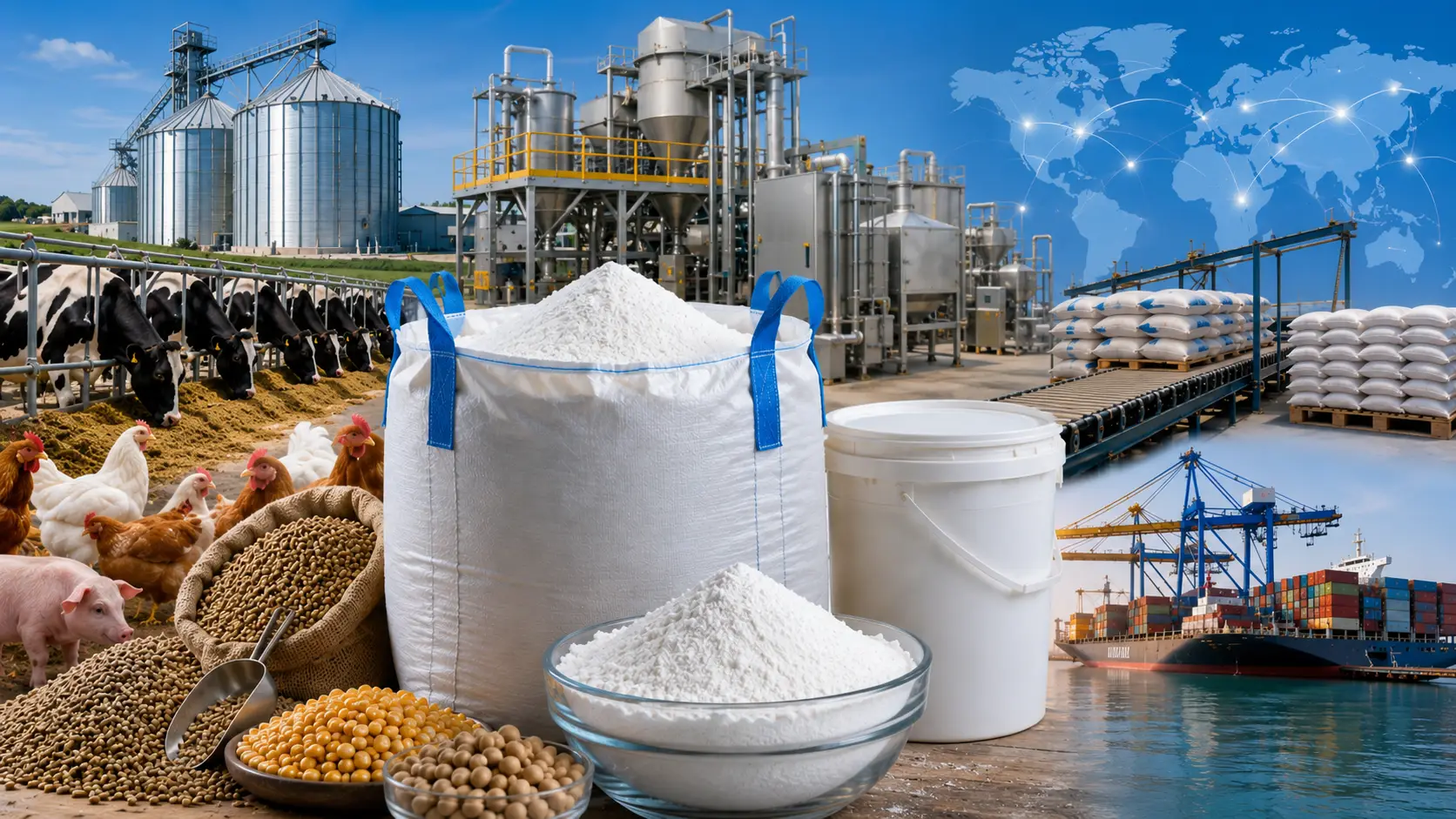
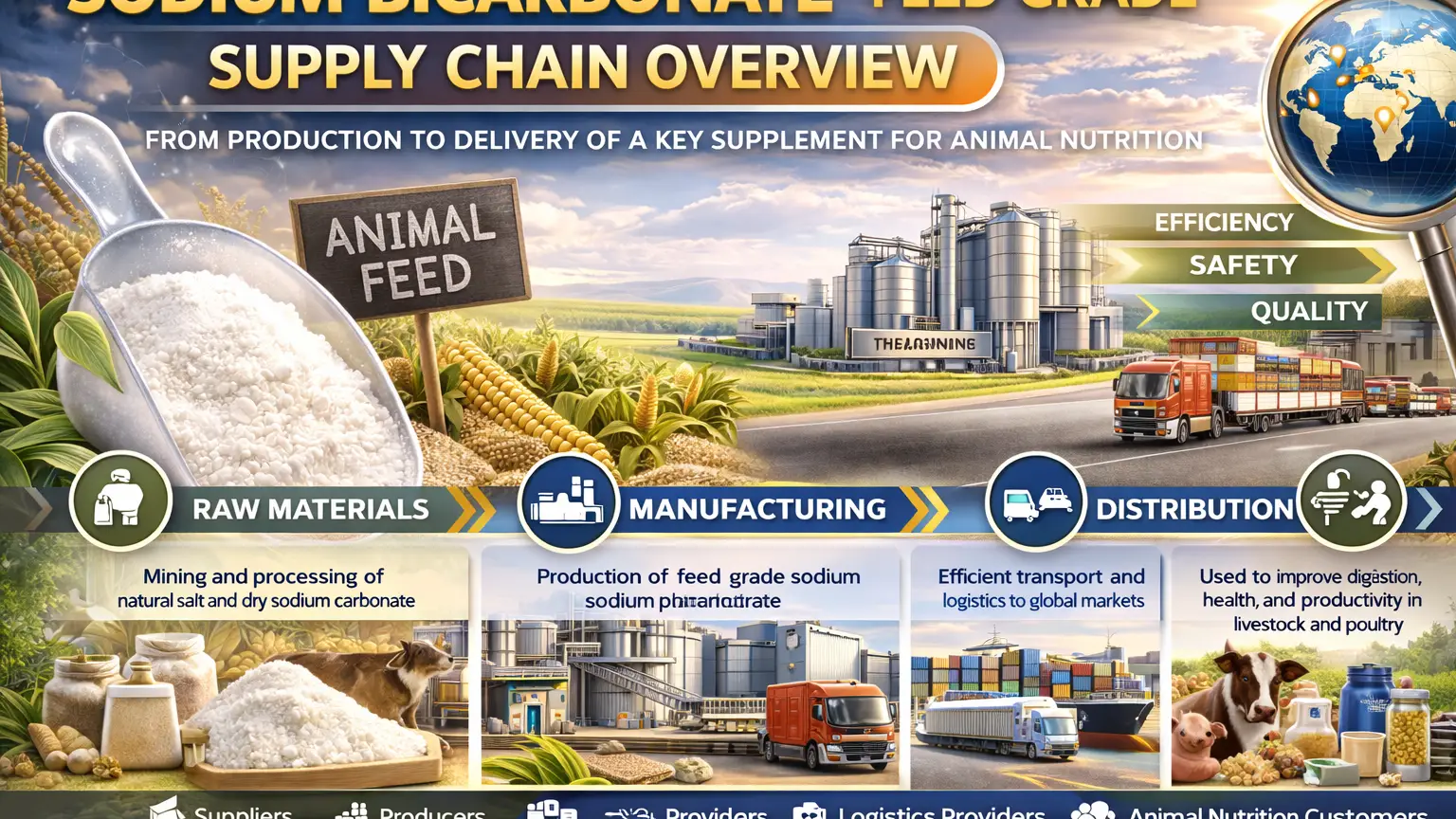
The sodium bicarbonate feed grade supply chain involves raw material production, processing facilities, quality management systems, packaging operations, and international logistics networks. Market participants increasingly focus on maintaining resilient sourcing structures.
Supply chain performance can influence cost structures and delivery timelines for industrial buyers. Procurement teams therefore monitor regional manufacturing capacity and logistics conditions.
Regional Production and Trade Activity
Asia-Pacific remains a significant manufacturing and export region for many feed ingredients because of its extensive industrial infrastructure and growing agricultural sector. North America and Europe also continue serving important roles in production and technological development.
Industry information from agricultural and feed associations indicates that regional manufacturing investment continues expanding to support increasing global feed demand.
Supply Chain Risks and Procurement Strategies
Feed ingredient buyers increasingly diversify sourcing activities to reduce exposure to transportation disruptions, raw material fluctuations, and supply constraints. Multiple sourcing channels can help minimize operational risk.
Procurement departments also establish strategic partnerships with suppliers to improve inventory planning and maintain stable supply conditions across production cycles.
Future Outlook for Sodium Bicarbonate Feed Grade Markets
The long-term market outlook for sodium bicarbonate feed grade remains linked to broader trends in animal nutrition, agricultural development, and industrial farming expansion. Growing food demand continues influencing production requirements across multiple livestock sectors.
As nutritional science advances, feed manufacturers are expected to develop more specialized formulations that optimize animal performance and resource efficiency.
Technology and Innovation Trends
Feed manufacturers increasingly adopt precision nutrition strategies supported by data-driven production methods and advanced formulation systems. Ingredient selection is becoming more integrated with performance monitoring technologies.
According to research published by agricultural institutions and feed industry organizations, digitalization and production efficiency initiatives continue influencing feed manufacturing decisions.
Strategic Opportunities for B2B Buyers
Procurement teams may increasingly prioritize suppliers capable of providing reliable documentation, technical support, and scalable supply capabilities. Buyers are expected to focus on partnerships that strengthen long-term operational planning.
For suppliers, distributors, and B2B marketplaces, growing demand creates opportunities to support buyers seeking transparent sourcing information and dependable international trade channels.
Sources
Food and Agriculture Organization (FAO)
United States Department of Agriculture (USDA)
American Feed Industry Association (AFIA)
Leave a Comment