The Middle East's personal care and hygiene manufacturing sector is expanding at a pace that consistently outperforms global averages, driven by population growth, rising disposable incomes, a deeply embedded hygiene culture, and sustained demand from the region's hospitality and institutional sectors. At the raw material core of this expansion is soap noodle. The semi-processed oleochemical base from which bar soaps of every grade and formulation are produced. For B2B buyers in the region, understanding what soap noodles are, how they function across different personal care applications, and what procurement decisions govern their sourcing is foundational to competitive manufacturing.
What Is Soap Noodle and How Is It Made
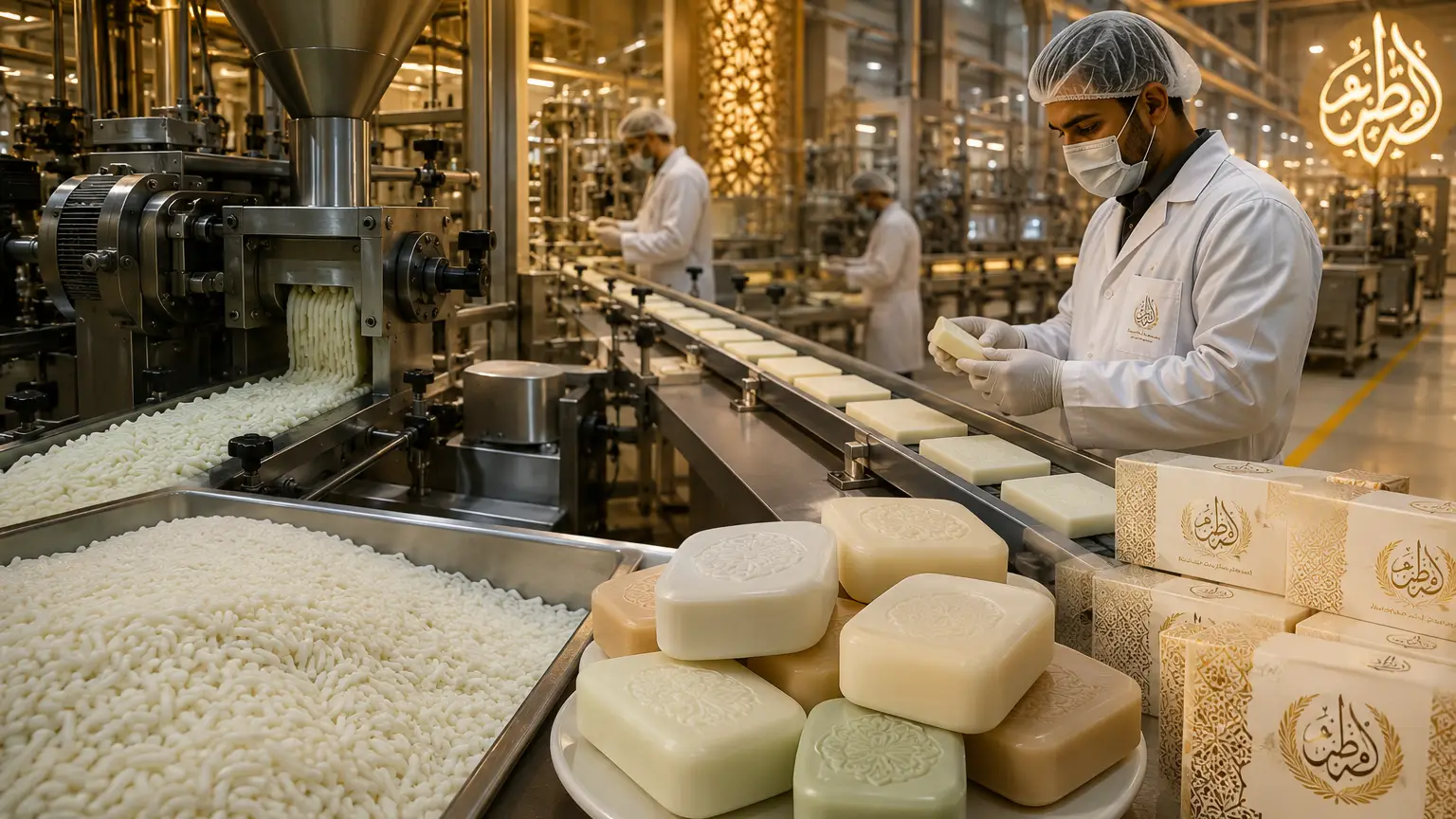
Soap noodle is a semi-processed raw material produced through the saponification of vegetable oils or animal fats with sodium hydroxide (NaOH), or through the neutralization of pre-split fatty acids with NaOH. The result is a solid, pellet-shaped compound, resembling short pasta noodles in form composed primarily of sodium fatty acid salts, which are the active cleansing molecules in bar soap. The physical form of soap noodles as dry, solid pellets is commercially significant: it allows for efficient storage, shipping, and handling at ambient temperatures without the complexities of liquid oleochemical logistics, making the material accessible to soap manufacturers of all scales from artisanal producers to industrial-scale facilities.
The two principal feedstock routes for soap noodle production are vegetable oil-based and tallow-based. Vegetable oil-based soap noodles produced predominantly from palm oil, palm kernel oil, and coconut oil hold approximately 67% of global market share and dominate supply into the Middle East. The standard commercial blend is an 80:20 ratio of palm oil to palm kernel oil or coconut oil, which delivers an optimal balance of lather volume, cleansing efficacy, bar hardness, and skin feel. This specific blend is the procurement standard across the GCC's toilet soap manufacturing base.
For the Middle East specifically, the feedstock origin matters for reasons beyond performance. Palm-based soap noodles are inherently Halal-compatible when produced using certified raw materials and process chemicals, making them the default procurement grade for a market where Halal status is a baseline product requirement. Tallow-based soap noodles produced from rendered animal fat require additional scrutiny under Halal certification frameworks and are generally avoided by Middle East manufacturers unless the tallow origin and slaughter method can be fully documented and certified.
What Is Total Fatty Matter (TFM) and Why It Determines Grade Selection
The single most commercially important specification parameter in soap noodle procurement is Total Fatty Matter (TFM), measured according to ASTM D460 or ISO 684 methodology. TFM expresses the percentage of fatty acid content in the soap noodle on a dry weight basis and directly determines the cleansing performance, lather quality, skin feel, and hardness of the finished bar soap produced from the noodle.
High-TFM soap noodles those with TFM of 78% and above are the standard input for premium toilet soap and personal care bar soap manufacturing. At this TFM level, the resulting soap bar delivers the rich, stable lather, smooth skin feel, and conditioning properties that consumer expectations in the GCC associate with quality personal care products. High-TFM noodles are the preferred procurement grade across the Middle East's personal care segment, where consumer spending on beauty and hygiene products is among the highest globally.
Mid-range TFM grades typically 72–76% are used for standard-quality toilet soaps and multipurpose cleansing bars. Lower TFM grades (60–72%) are deployed primarily in laundry and household soap bars rather than personal care applications. Understanding this TFM hierarchy allows buyers to specify precisely the grade required for their production line and avoid the common procurement error of accepting lower-TFM material at a price discount that creates downstream product quality problems.
Beyond TFM, the procurement specification for soap noodles in personal care applications should include: free caustic alkali content (maximum 0.1% to avoid skin irritation in finished products), chloride (NaCl) content (maximum 0.3–0.7% depending on grade), moisture content (typically 10–14%), color (measured by Lovibond or APHA scale), and absence of impurities. Buyers supplying premium soap brands or hotel amenity products in the Middle East increasingly add odor specifications and titanium dioxide whiteness requirements to their purchase orders.
Applications of Soap Noodle in Personal Care and Hygiene Manufacturing
Toilet and Bath Soap Bars
Toilet soap manufacturing is the dominant personal care application for soap noodles across the Middle East. The standard toilet soap production process: milling, plodding, and stamping begins with high-TFM soap noodles (78–80%) that are combined in sigma blade mixers or amalgamators with fragrance oils (0.5–3%), colorants, titanium dioxide for whiteness, coconut oil fatty acid sodium salt for enhanced lather, glycerine for skin conditioning, and active ingredients such as moisturizers, vitamin E, aloe vera, or antibacterial agents. The amalgamated mass is then processed through a three-roll mill to achieve uniform homogeneity, extruded through a vacuum plodder to form a continuous bar, cut to bar weight, and stamped with the final brand impression.
The GCC's bar soap market reflects consumer preferences that are distinct from other global markets. Antibacterial soap bars formulated with zinc pyrithione or triclosan equivalents carry strong consumer preference in Saudi Arabia, the UAE, and Kuwait, where hygiene awareness is both culturally embedded and reinforced by Islamic personal care practices. Premium moisturizing bars with enriched glycerine content and skin-conditioning actives have gained significant market share across the region's modern retail channels. Both these product categories require high-TFM noodles as their base, driving demand for the premium grade among GCC manufacturers.
Hotel and Hospitality Amenity Soaps
The Middle East's hospitality sector represents a specialized and commercially significant buyer segment for high-grade soap noodles. The UAE, Saudi Arabia, Qatar, and Bahrain together host some of the world's highest concentrations of five-star and luxury hotel properties, each operating with proprietary amenity soap programs that require consistent, premium-quality bar soaps at volume. Hotel amenity soap manufacturers in the region source high-TFM (minimum 78%) soap noodles with tightly controlled color and odor specifications, as the finished product must maintain visual and sensory consistency across large production batches destined for hotel room placement.
This segment is also among the most receptive to premium and specialty soap noodle formulations including those incorporating natural botanical extracts, essential oils, or traditional Middle Eastern ingredients such as oud, rose water, and camel milk derivatives where the soap noodle serves as the functional base into which these premium actives are incorporated. Specialty soap manufacturers supplying the regional luxury hospitality market represent one of the fastest-growing buyer segments for high-grade soap noodles in the Middle East.
Antibacterial and Medicated Soap Bars
Antibacterial soap manufacturing is a well-developed segment across the Middle East, particularly in Saudi Arabia and Egypt, where domestic soap manufacturers supply both the GCC market and export channels into Africa and the broader Arab world. These formulations use high-TFM soap noodles as the base into which antibacterial active ingredients are incorporated during the amalgamation stage. The requirements for soap noodles feeding these production lines are exacting: consistent TFM at 78% or above, low free caustic content to avoid interaction with active ingredients, and tight color specification to maintain the finished bar's white appearance.
Medicated soap bars, incorporating specific pharmaceutical actives for conditions such as acne, eczema, or fungal infection represent a smaller but higher-value segment where soap noodle specifications are the most demanding, typically requiring pharmaceutical-grade glycerine additions and documentation of raw material purity to satisfy regulatory requirements under Saudi Arabia's SFDA cosmetics framework.
Baby and Sensitive Skin Soaps
The baby and sensitive skin soap category is a growing segment in Middle East personal care manufacturing, driven by increasing parental awareness of skin care ingredients and rising demand for hypoallergenic and dermatologically tested products. These formulations require soap noodles with neutral or no fragrance addition, low free caustic content, and high glycerine retention to deliver the mildness profile required for infant skin or clinically sensitive skin conditions. Some manufacturers in this segment source specialty coconut oil-dominant soap noodle grades that deliver a milder soap base with a higher lauric acid content, which produces a creamier lather at lower TFM than standard palm-based blends.
Who Buys Soap Noodles for Personal Care in the Middle East
Domestic Soap Manufacturers
The primary B2B buyers of soap noodles for personal care in the Middle East are domestic soap manufacturers operating in Saudi Arabia, the UAE, Egypt, Jordan, and Kuwait. These companies range from large integrated producers, such as those operating under FMCG brand licenses to mid-scale regional manufacturers supplying private-label products to GCC retail chains. Saudi Arabia in particular has a well-developed domestic soap manufacturing base, with multiple producers running continuous bar soap production lines that consume soap noodles as their primary raw material input.
These manufacturers typically procure soap noodles on monthly or quarterly supply contracts, often with Indonesian and Malaysian origin preferences given the established trade corridors between Southeast Asian oleochemical hubs and GCC import ports including Jebel Ali, Dammam, and Salalah. Documentation requirements from this buyer segment have tightened significantly: Halal certification from an accredited body, Certificate of Analysis (COA), Material Safety Data Sheet (MSDS), and Technical Data Sheet (TDS) are standard procurement qualifiers. Saudi Arabia's SFDA Cosmetics Technical Regulation requires that personal care products meet defined safety and ingredient standards, adding a compliance dimension to raw material qualification that filters supplier shortlists.
Private-Label and Contract Manufacturers
Private-label soap manufacturing is a structurally expanding segment in the Middle East, driven by the growth of regional retail chains in Saudi Arabia, the UAE, and Egypt that want proprietary branded hygiene products without operating their own manufacturing facilities. Contract manufacturers serving these buyers typically operate flexible production lines capable of producing multiple bar soap formats such as toilet bars, antibacterial bars, moisturizing bars, and hotel amenities from the same soap noodle base through formulation customization at the amalgamation stage.
These buyers are among the most specification-conscious in the region, as the private-label brands they supply often carry quality guarantees to retail partners. For soap noodle suppliers, this segment represents an opportunity to establish stable, recurring supply relationships with buyers who prioritize consistency and documentation reliability over marginal price advantages.
Artisanal and Specialty Soap Brands
A growing buyer segment in the Middle East is the artisanal and specialty soap manufacturing cluster like small-batch producers creating premium soaps infused with regional ingredients, heritage botanicals, and luxury fragrance compounds for retail in specialty stores, hotel gift shops, and e-commerce channels. Dubai and Riyadh have both developed active artisanal soap markets, where consumer interest in traditional Middle Eastern ingredients positions locally manufactured specialty soaps as premium lifestyle products.
These buyers typically source soap noodles in smaller volumes, from bags to small pallet quantities and prioritize odor neutrality, high TFM, and color consistency, as their formulations incorporate expensive premium additives where any off-note from the base noodle would compromise the finished product. Several specialty soap brands in the UAE have also adopted RSPO-certified (Roundtable on Sustainable Palm Oil) soap noodles as a brand differentiator, responding to the growing sustainability consciousness among the region's premium consumer segment.
Sourcing Soap Noodles for the Middle East: What Buyers Should Know
The Middle East is structurally an import-dependent market for soap noodles, sourcing primarily from Indonesia and Malaysia which together account for over 70% of global soap noodle exports. Indonesia is the largest single exporter globally, with export values reaching approximately USD 485 million in 2024, while Malaysia is the preferred origin for buyers requiring premium quality, consistent specifications, and strong certification coverage including RSPO and Halal documentation.
For GCC buyers, the UAE's Jebel Ali Port is the primary entry and redistribution hub for soap noodles into the broader region, with re-export flows servicing markets in Saudi Arabia, Kuwait, Bahrain, Qatar, Oman, and East Africa. Buyers in Egypt and Jordan typically import directly from Southeast Asian origins via their own port infrastructure, with transit times from Indonesian and Malaysian loading ports running approximately 15–22 days to GCC destinations.
The most important procurement consideration for Middle East personal care manufacturers in 2026 is the alignment of Halal certification from the supplier with the specific Halal certification body recognized by the buyer's domestic market regulator. Different GCC markets recognize different accreditation bodies, and a Halal certificate from an Indonesian body may not satisfy Saudi SFDA or UAE ESMA requirements without confirmation of mutual recognition. Buyers should verify this certification chain before finalizing supplier qualification.
Tradeasia International supplies soap noodles including high-TFM (78–80%) palm-based grades with Halal certification to personal care manufacturers, private-label producers, and specialty soap brands across the Middle East. With operations in the UAE and a sourcing network connecting Indonesian and Malaysian production origins to GCC import channels, Tradeasia offers both spot and contract procurement support with full documentation including COA, Halal certificate, MSDS, and TDS. Buyers can contact our Middle East team to discuss grade specifications, minimum order quantities, and delivery terms.
Outlook: How Personal Care Demand Will Shape Soap Noodle Procurement Through 2030
The GCC soap and detergent market was valued at approximately USD 1.56 billion in 2024 and is projected to grow at a CAGR of 9.4% through the forecast period, one of the fastest growth rates globally for this category. This trajectory directly translates into expanding soap noodle procurement volumes across the region's personal care manufacturing base. The value growth within this expansion will be disproportionately concentrated in premium and specialty segments like antibacterial, moisturizing, dermatologically tested, and natural ingredient formats, all of which require high-TFM, well-documented soap noodle inputs.
Two structural developments will further shape soap noodle procurement in the Middle East through 2030. First, Saudi Arabia's Vision 2030 manufacturing expansion is encouraging domestic production of personal care goods that were previously imported as finished products, creating incremental soap noodle demand from new manufacturing entrants who will require qualified supply chains from scratch. Second, the growing sustainability expectation among GCC consumers. Particularly in the UAE and Saudi Arabia, where premium retail buyers are increasingly signaling preference for certified sustainable ingredients will accelerate the shift toward RSPO-certified soap noodles, even in a market that has historically prioritized Halal certification above other sustainability frameworks.
FAQ (Frequently Asked Questions)
What is soap noodle? Soap noodle is a semi-processed oleochemical raw material produced by the saponification of vegetable oils or animal fats with sodium hydroxide. It is supplied in solid pellet form and is the primary base material used by soap manufacturers to produce bar soaps for personal care, hygiene, household, and institutional applications.
What is soap noodle used for in personal care? In personal care manufacturing, soap noodles are used as the base material for toilet soap bars, antibacterial soaps, moisturizing bars, baby soaps, medicated soaps, hotel amenity soaps, and specialty soap products. The noodles are combined with fragrance, colorants, skin-care actives, and other additives to produce finished bar soap products.
What does TFM mean in soap noodles? TFM stands for Total Fatty Matter, the percentage of fatty acid content in the soap noodle. Higher TFM levels produce higher-quality soap with better lather, skin feel, and cleansing performance. High-TFM noodles (78–80%) are used for premium toilet and personal care soaps, while lower TFM grades are used for laundry and industrial soap applications.
Why is Halal certification important for soap noodle buyers in the Middle East? Halal certification is a procurement baseline requirement for personal care products sold in GCC markets, where Muslim consumers expect soap and hygiene products to be free from prohibited (haram) ingredients including non-Halal animal fats. Palm-based soap noodles from certified Halal sources are the standard procurement grade for the Middle East's personal care manufacturing sector.
What are the main origins for soap noodles imported into the Middle East? Indonesia and Malaysia are the dominant supply origins for soap noodles entering the Middle East, accounting for over 70% of global soap noodle exports. The UAE's Jebel Ali Port serves as the primary import and redistribution hub for the broader GCC region. Indonesia leads by export volume, while Malaysia is preferred by buyers requiring premium quality and RSPO certification.
What certifications should Middle East buyers require from soap noodle suppliers? Buyers should require Halal certification (from a body recognized in their target market), a Certificate of Analysis (COA), Material Safety Data Sheet (MSDS), and Technical Data Sheet (TDS) as standard documentation. Buyers supplying sustainability-conscious retail channels should also request RSPO certification for palm-based noodles.
Where can I find a reliable soap noodle supplier in the Middle East? Tradeasia International supplies Halal-certified, high-TFM soap noodles to personal care manufacturers and private-label producers across the Middle East, with UAE-based operations and Southeast Asian sourcing. Contact our team to request product specifications, certification documentation, and procurement terms.
Leave a Comment