Introduction to RBD Palm Stearin in Global Supply Chains
Understanding the role of RBD Palm Stearin in commodity flows
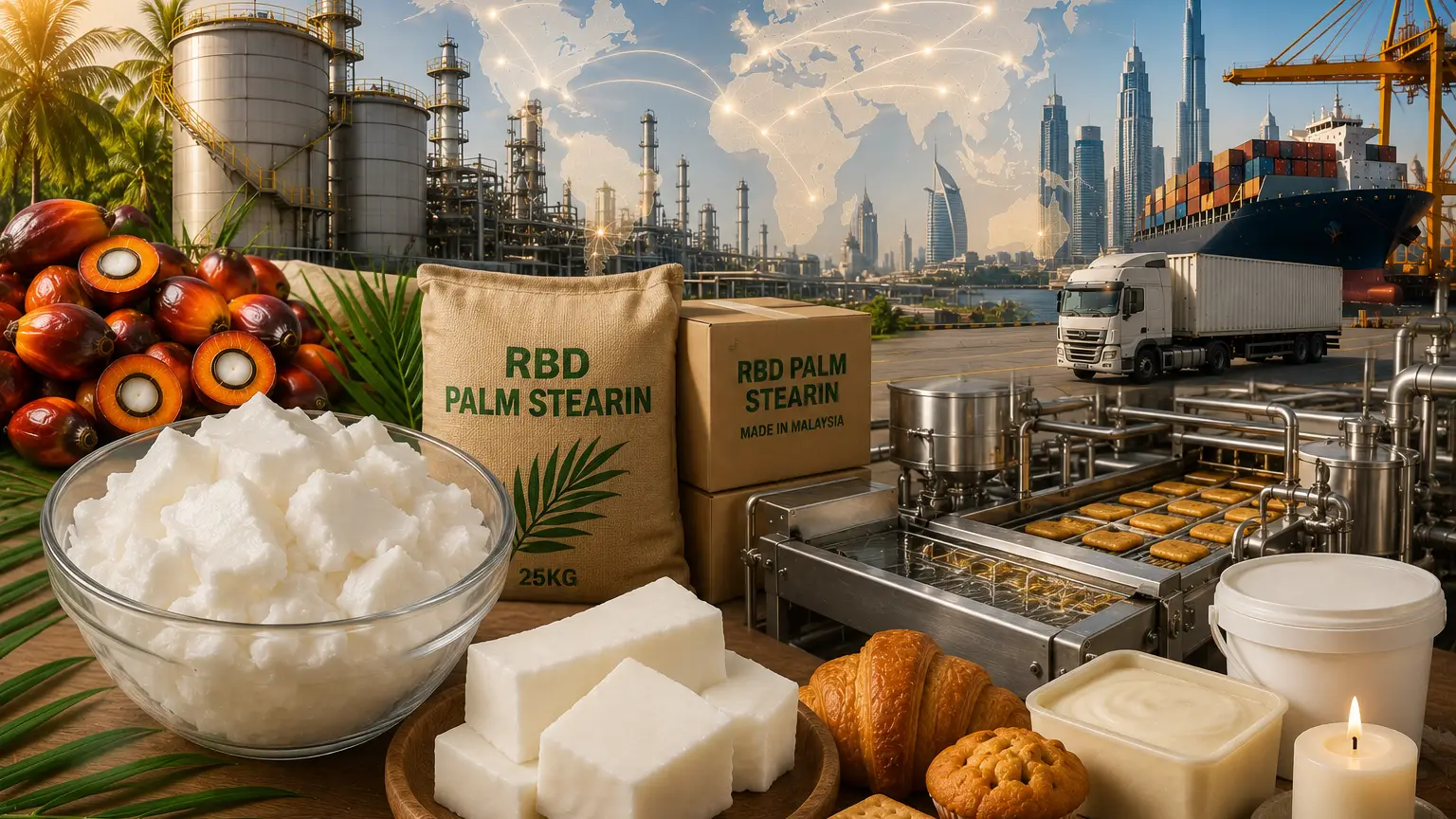
RBD Palm Stearin is the higher-melting fraction obtained after the fractionation of refined, bleached, and deodorized palm oil. It is widely used as a structured fat in industrial applications due to its stability and consistency. According to the Food and Agriculture Organization (FAO), palm oil derivatives remain among the most traded vegetable oil fractions globally, driven by food and non-food industries.
As a semi-solid fat at room temperature, RBD Palm Stearin plays a crucial role in global edible oil blending and oleochemical production. Its consistency makes it valuable for manufacturers seeking predictable performance in large-scale production. This positions it as a strategic raw material in supply chains spanning Asia, the Middle East, and Europe.
In the UAE and GCC markets, demand is closely tied to import-based food manufacturing and industrial processing sectors. Procurement teams often source from integrated suppliers to ensure continuity and compliance with international standards.
Supply chain integration and Tradeasia marketplace relevance
Global supply chains for palm stearin are deeply integrated with palm oil-producing regions such as Indonesia and Malaysia, where production capacity is high. The Malaysian Palm Oil Board (MPOB) highlights fractionation as a key process in maximizing palm oil value streams for industrial use.
Trade networks such as RBD Palm Stearin product page help bridge producers and downstream manufacturers by ensuring consistent product specifications. This is essential for industries requiring standardized fat compositions.
For B2B buyers, especially in the UAE, access to reliable suppliers reduces volatility risks in pricing and availability. It also supports long-term procurement contracts in food processing and chemical manufacturing.
Industrial Applications Across Food, Oleochemicals, and Personal Care
Food manufacturing and structured fat applications
RBD Palm Stearin is widely used in the food industry for margarine, shortening, and bakery fats due to its solid fat content and oxidative stability. The USDA notes that structured vegetable fats are essential for texture and shelf-life improvement in processed foods.
Its melting profile allows manufacturers to achieve desired consistency in products exposed to warm climates such as those in the GCC region. This makes it especially relevant for UAE-based food producers supplying regional markets.
Food-grade applications require strict quality control, making refined palm stearin a preferred ingredient in industrial formulations.
Oleochemicals and personal care industry usage
In oleochemical manufacturing, RBD Palm Stearin is a key feedstock for producing fatty acids, soaps, and surfactants. Industry analysis from OECD chemical reports shows increasing demand for bio-based feedstocks in detergents and cleaning agents.
Personal care manufacturers use palm stearin derivatives to create stable emulsions and solid formulations such as soaps and creams. Its fatty acid composition contributes to hardness and foaming characteristics.
This makes it a strategic raw material for manufacturers focusing on cost efficiency and performance consistency in product lines.
Market Demand Drivers in GCC and UAE Manufacturing
Regional industrial expansion and import dependency
The GCC region relies heavily on imported vegetable oils and derivatives due to limited agricultural production capacity. According to World Bank trade data, food and chemical imports continue to grow in the Gulf economies driven by population growth and industrial diversification.
RBD Palm Stearin demand in the UAE is strongly linked to food processing, hospitality, and consumer goods manufacturing sectors. These industries require stable and scalable raw materials for continuous production cycles.
As a result, procurement strategies often emphasize supplier reliability and logistics efficiency.
Growth in downstream manufacturing sectors
The UAE’s manufacturing ecosystem has expanded in packaged foods, detergents, and personal care goods. This growth directly influences demand for oleochemical inputs like palm stearin.
Industrial buyers prioritize consistent supply chains that support both export-oriented and domestic production. This increases the importance of global sourcing platforms and integrated distributors.
Such demand dynamics position palm stearin as a critical commodity in regional industrial planning.
Key Sourcing Considerations for B2B Buyers
Quality consistency and specification control
B2B buyers of RBD Palm Stearin evaluate parameters such as melting point, iodine value, and fatty acid composition. These specifications determine suitability for food or industrial applications.
According to FAO and industry technical papers, consistent fractionation processes are essential to maintaining predictable product quality in global trade.
Buyers often request COA (Certificate of Analysis) and batch traceability to ensure compliance with production standards.
Supplier reliability and logistics efficiency
Reliable sourcing is critical in maintaining uninterrupted production, especially in high-demand markets like the UAE. Logistics delays can significantly impact manufacturing schedules and costs.
Platforms such as the Tradeasia network provide structured procurement pathways for bulk buyers seeking dependable supply. The RBD Palm Stearin sourcing page supports technical evaluation and commercial inquiries.
Efficient supplier coordination reduces risk and improves long-term contract stability for industrial buyers.
Quality Standards, Compliance, and Sustainability Factors
International quality and safety standards
RBD Palm Stearin used in food applications must comply with international food safety standards such as Codex Alimentarius guidelines. These standards ensure safe consumption and consistent quality across global markets.
The USDA and other regulatory bodies emphasize the importance of refining processes in eliminating impurities and ensuring stability.
Compliance is particularly important for exporters supplying multinational food manufacturers.
Sustainability and certified sourcing trends
Sustainability has become a major focus in palm oil supply chains. The Roundtable on Sustainable Palm Oil (RSPO) promotes certified production practices to reduce environmental impact.
Buyers in the GCC increasingly prefer sustainably sourced raw materials to align with corporate ESG goals. This trend is influencing procurement policies across food and personal care industries.
Certified palm stearin enhances brand credibility and long-term supply security.
Future Outlook and Procurement Strategy for Buyers
Market outlook and industrial demand expansion
Global demand for palm-derived fractions continues to grow due to their versatility in food and industrial applications. Market studies from OECD-FAO agricultural outlook reports indicate steady long-term consumption growth for vegetable oils and derivatives.
In the UAE, diversification of manufacturing sectors will continue to support demand for RBD Palm Stearin. This includes food production, detergents, and chemical processing industries.
Such trends reinforce its role as a core industrial commodity.
Strategic procurement and supply chain planning
Buyers are increasingly adopting long-term procurement strategies to stabilize pricing and ensure supply continuity. Direct sourcing through structured platforms improves transparency and reduces intermediaries.
The RBD Palm Stearin product page provides procurement teams with technical and commercial insights to support decision-making.
In the evolving GCC industrial landscape, strategic sourcing of palm stearin is essential for maintaining competitiveness and production efficiency.
Sources
- FAO – Vegetable Oil Market Analysis (Food and Agriculture Organization)
https://www.fao.org
- OECD-FAO Agricultural Outlook – Oils and Fats Market Trends
https://www.oecd.org/agriculture/oecd-fao-agricultural-outlook/
- RSPO – Roundtable on Sustainable Palm Oil Overview and Standards
https://rspo.org
Leave a Comment