Quinoa Supply Chain: B2B Sourcing, Processing and Market Opportunities
Quinoa Supply Chain Overview
Understanding Quinoa as a B2B Commodity
Quinoa has developed from a traditional Andean crop into an internationally traded food ingredient with relevance across food manufacturing, ingredient distribution, retail supply, and specialized nutrition markets. For B2B procurement teams, quinoa is not simply an agricultural commodity; it is a supply-chain product whose commercial value depends on origin, processing, quality consistency, logistics, documentation, and the intended application. FAO identifies Peru and Bolivia as historically important quinoa-producing countries while also documenting the crop's expansion into other producing regions.
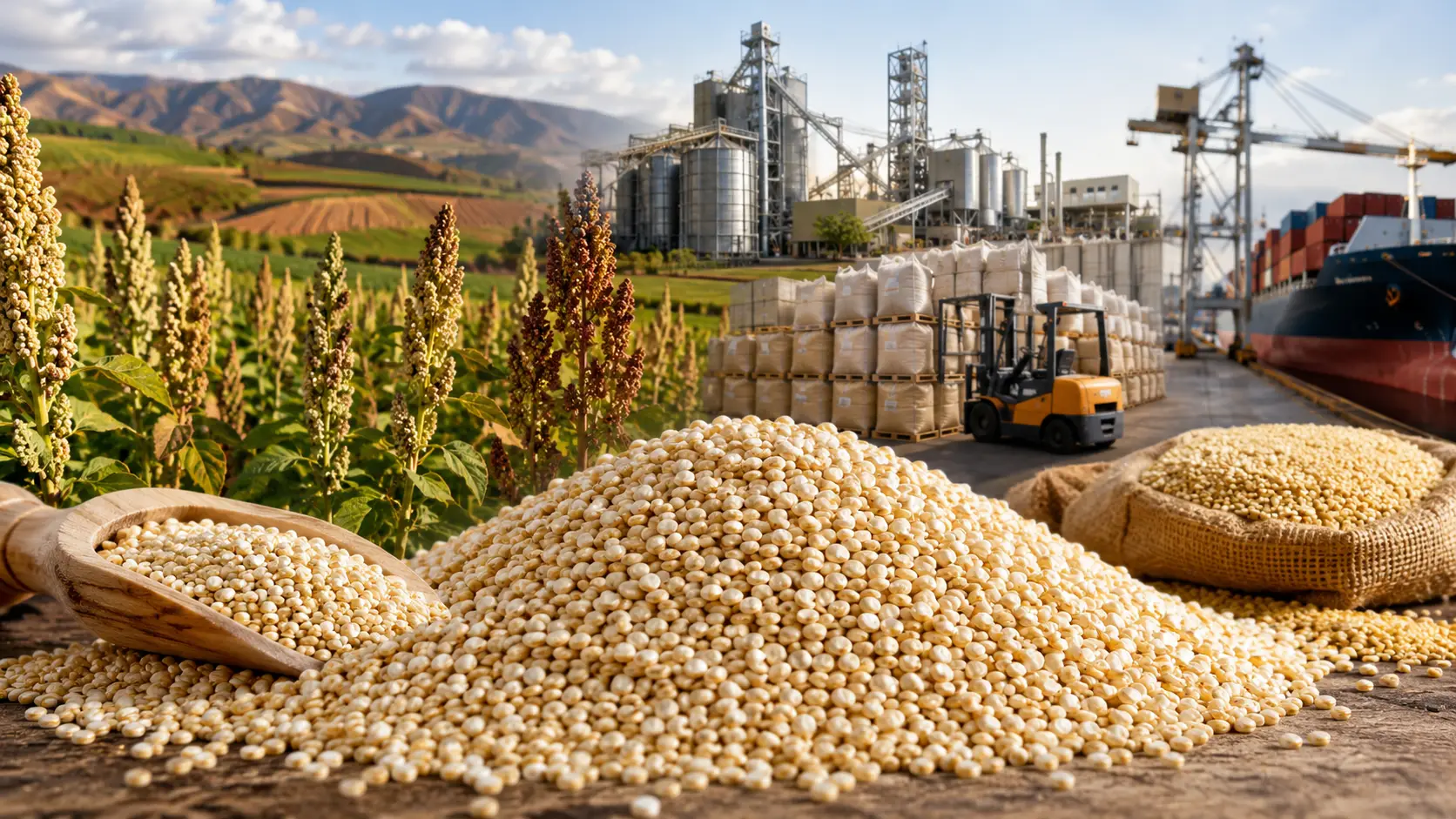
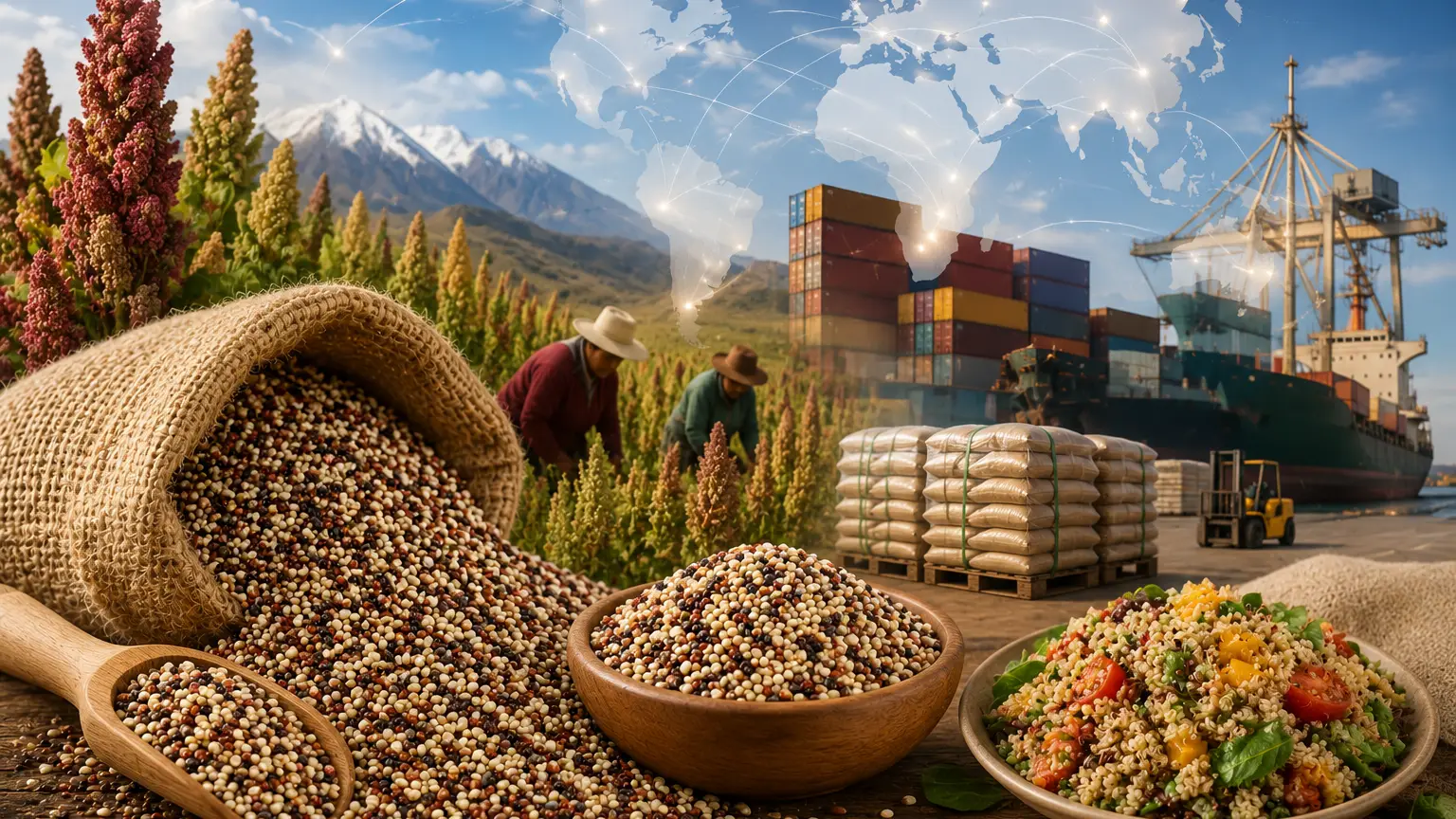
The commercial supply chain generally connects agricultural producers with collection networks, processors, exporters, importers, distributors, manufacturers, and downstream food businesses. Each stage can influence the final specification available to buyers. Procurement teams therefore need to evaluate the entire supply pathway rather than focusing exclusively on quoted product price. A dependable supply strategy considers availability, processing capability, shipment planning, quality documentation, and the ability of suppliers to maintain consistent specifications across multiple orders.
Quinoa also presents an interesting sourcing profile because production is geographically diversified while traditional Andean production remains commercially significant. FAO initiatives in recent years have highlighted efforts to strengthen quinoa value chains through improved production, processing, traceability, sustainability, and market access. This creates opportunities for B2B buyers to consider both established origins and developing supply regions when evaluating procurement strategies.
For distributors and manufacturers, an effective quinoa sourcing program should align product specification with downstream use before purchase commitments are finalized. Bulk grain for further processing may have different requirements from quinoa intended for packaged foods, flour production, snacks, or prepared-food applications. Establishing those requirements early can reduce specification mismatches, improve supplier communication, and make international procurement more efficient.
Quinoa Production and Supply Origins
Quinoa has its historical production base in the Andean region, particularly Peru and Bolivia, with Ecuador also forming part of the traditional production landscape. FAO material describes quinoa production across diverse altitudes and climates and notes that the crop has subsequently been introduced or commercially explored in countries outside its traditional growing areas. For international buyers, origin is consequently an important component of supplier evaluation because agricultural conditions and production systems can affect supply characteristics.
The expansion of quinoa cultivation into additional countries has gradually created a broader geographical supply base. FAO's recent work on quinoa value-chain development in Asia illustrates how governments and agricultural stakeholders are exploring production, processing, and market-development opportunities beyond the Andes. Such diversification can be strategically relevant to B2B buyers seeking alternative sourcing channels or greater resilience against concentration in a limited number of origins.
Agricultural supply remains exposed to variables that are common to food commodities, including weather conditions, crop performance, agricultural inputs, harvesting conditions, and infrastructure. FAO's reporting on quinoa development in Bhutan, for example, highlights the role of improved production technologies, weather information, research, processing, and market access in strengthening the value chain. These considerations demonstrate why procurement planning should account for upstream agricultural realities rather than treating supply as a static inventory.
For buyers operating on recurring purchasing schedules, origin diversification can become part of broader supply-chain risk management. A supplier with access to multiple qualified production or processing channels may offer greater flexibility than a source dependent on a single agricultural region. However, diversification should not compromise specification consistency, traceability, or regulatory documentation. The objective is to create a dependable sourcing network that balances availability, quality, commercial terms, and operational continuity.
Processing and Quality Considerations
Processing is a critical stage in transforming harvested quinoa into a commercially suitable ingredient. Depending on the supply chain and final specification, activities can include cleaning, removal of foreign material, grading, drying or moisture management, sorting, and preparation for bulk or packaged distribution. For B2B buyers, these processes matter because the physical condition of the supplied material directly influences handling, storage, further processing, and finished-product performance.
Quality management should begin with a clearly defined purchasing specification. Buyers may need to establish requirements covering physical appearance, cleanliness, moisture, foreign material, microbiological parameters, packaging, labeling, traceability, and other applicable food-safety criteria. The precise specification should reflect the destination market and intended application rather than relying on a generic description of quinoa.
Processing capability can also influence commercial scalability. A supplier serving industrial customers should be able to communicate how raw material is received, processed, inspected, packed, stored, and released for shipment. This transparency helps procurement and technical teams understand where quality controls occur and makes it easier to compare alternative suppliers on a like-for-like basis.
FAO's recent quinoa value-chain initiatives emphasize strengthening production, processing, competitiveness, traceability, and market access. These priorities are increasingly relevant to international B2B sourcing because buyers need more than physical product availability. They need a supply chain capable of supporting consistent quality, documented origin, appropriate handling, and reliable commercial execution.
Logistics and International Supply Chain
International quinoa supply involves multiple logistical stages between the producing region and the final buyer. Depending on the commercial structure, product can move from farms or producer organizations to local collection points, processing facilities, exporters, ports, importers, warehouses, and distributors before reaching a food manufacturer or other downstream customer. Each transfer introduces potential costs, timing considerations, and handling requirements.
For procurement teams, shipping strategy should be developed alongside purchasing rather than after the supplier has been selected. Factors such as order volume, shipment frequency, destination, packaging configuration, lead time, warehouse capacity, and required documentation can influence the overall landed cost. A lower initial product quotation may not necessarily represent the most competitive supply option once freight, handling, storage, and import-related costs are considered.
Traceability is another important logistical consideration. Modern food supply chains increasingly require buyers to understand where products originate and how they move through the chain. FAO's work on quinoa value-chain development specifically identifies traceability and market access as areas where improved systems can strengthen agricultural value chains. For B2B buyers, documentation supporting origin and product movement can therefore become an important part of supplier qualification.
International trade data can also support procurement planning by helping businesses examine import and export flows, supplier-country relationships, and commodity trade patterns. The USDA's Foreign Agricultural Trade of the United States system, for example, provides agricultural import and export data by commodity and trading partner and is updated regularly. Combining trade intelligence with supplier-level due diligence can give purchasing teams a stronger basis for planning recurring quinoa requirements.
Quinoa Applications and Demand Drivers
Quinoa's commercial versatility supports its use across several food categories. It can be incorporated into prepared foods, cereals, snacks, bakery products, flour-based formulations, and other food products where its grain-like characteristics and nutritional positioning are relevant. USDA research also identifies applications including flour, bread, pasta, soups, cereals, snack foods, and other food uses. This application diversity allows B2B buyers to source quinoa for different product-development strategies.
For ingredient manufacturers, quinoa can function as a component within formulations rather than simply as a finished consumer food. Processors may therefore purchase whole quinoa for further transformation into ingredients or food products. The commercial requirement can differ substantially according to whether the buyer needs whole seed, processed material, flour, or another application-specific format.
Demand is also connected with broader interest in food diversification and nutritional positioning. FAO has documented quinoa's expansion into international markets and its potential role in food and nutrition security, while recent value-chain programs have focused on improving production and market access. For commercial buyers, these developments indicate that quinoa demand should be assessed through both established food applications and emerging product-development opportunities.
The strongest sourcing strategies connect the intended application with a precise product specification. A snack manufacturer, bakery ingredient buyer, foodservice distributor, and packaged-food producer may all purchase quinoa but have different requirements for processing, packaging, consistency, and delivery. Suppliers that understand these distinctions can support more efficient procurement, while buyers can reduce unnecessary cost by purchasing specifications that directly match their manufacturing needs.
B2B Buyers and Sourcing Requirements
Quinoa buyers typically evaluate suppliers through a combination of commercial, technical, logistical, and compliance criteria. Food manufacturers may prioritize consistent specifications and dependable delivery, while distributors can place greater emphasis on packaging flexibility, shipment economics, and continuity of availability. Procurement teams should therefore define their purchasing requirements before comparing quotations from different suppliers.
Supplier qualification should cover more than price. Buyers can assess product specifications, origin information, processing capability, quality-control procedures, documentation, packaging options, minimum order quantities, lead times, and export experience. Where quinoa is destined for regulated food markets, buyers should also confirm that the supplier can provide documentation appropriate to the destination market and intended use.
A B2B marketplace can simplify the initial sourcing process by connecting buyers with suppliers and enabling commercial discussions around product requirements. However, marketplace discovery should be followed by appropriate supplier verification and technical evaluation. The objective is to move from a broad supplier search toward a dependable procurement relationship supported by clear specifications and transparent commercial terms.
For recurring procurement, buyers should also examine supplier scalability. A source that can fulfill a small trial order may not automatically be capable of supporting larger or repeated requirements. Evaluating production access, processing capacity, inventory practices, export documentation, and logistics coordination can help procurement teams identify suppliers capable of supporting long-term business rather than only one-time transactions.
Strategic Outlook for Quinoa Supply Chains
The quinoa supply chain is becoming increasingly relevant to discussions around agricultural diversification, value addition, sustainability, and international food trade. FAO's recent work demonstrates that quinoa value-chain development is extending beyond traditional production areas, with initiatives focused on strengthening production, processing, sustainability, and market access. This creates a broader commercial landscape for buyers evaluating future sourcing options.
One strategic opportunity is the development of diversified sourcing networks. Buyers can monitor established production origins while also assessing emerging producing regions as they develop commercial-scale capabilities. Diversification can improve flexibility, but successful implementation requires comparable quality standards, dependable documentation, and reliable logistics across different supply channels.
Value-added processing is another area with potential significance for the supply chain. FAO's reporting on Peru highlights investment interest in processed quinoa products such as flours and snacks, alongside initiatives involving irrigation, climate-resilient varieties, storage infrastructure, and improved value chains. Such developments indicate that future commercial opportunities may increasingly involve processing and product differentiation rather than simple movement of agricultural commodities.
For B2B procurement teams, the strategic priority is therefore to treat quinoa sourcing as an integrated supply-chain decision. Origin, processing, quality, logistics, documentation, application, and supplier capability should be evaluated together. Tradeasia International can support this type of commercial sourcing approach by connecting businesses with international trade opportunities and helping procurement teams navigate supplier and product requirements across global markets.
Conclusion
Quinoa has evolved into a globally relevant food commodity with a supply chain extending from traditional Andean production regions to developing production areas and international food markets. Its commercial potential is supported by diverse applications and continued attention to production, processing, value-chain development, and market access. For businesses, this makes supply-chain visibility increasingly important when planning procurement.
A competitive quinoa sourcing strategy should combine product quality with dependable supplier relationships, appropriate documentation, efficient logistics, and application-specific specifications. Buyers that evaluate the full landed supply chain rather than focusing only on the purchase price can make more informed procurement decisions and improve continuity of supply.
The expansion of quinoa production and value-chain initiatives also creates opportunities for distributors, food manufacturers, ingredient processors, and other B2B participants to explore new commercial relationships. As international markets continue to develop, supplier access, traceability, processing capabilities, and supply-chain resilience will remain important considerations.
For businesses seeking dependable quinoa sourcing opportunities, Tradeasia International provides a platform-oriented approach to international B2B trade, helping buyers and suppliers explore commercial connections, product requirements, and cross-border sourcing opportunities. The focus remains on creating practical links between supply availability and the procurement needs of global businesses.
Sources
Food and Agriculture Organization of the United Nations – Quinoa Resources
USDA Agricultural Research Service – Quinoa Research
USDA Economic Research Service – Agricultural Trade Data
Leave a Comment