What Is Protein Liquid and Why Does It Matter?
Understanding the Product Category
Protein Liquid is best understood commercially as a liquid-form protein ingredient or protein-containing formulation intended for incorporation into downstream industrial products. Because the supplied product information does not identify the protein source, concentration, hydrolysis level, or grade, buyers should not assume that every Protein Liquid product has identical nutritional, functional, or regulatory characteristics. In B2B procurement, the product specification is therefore as important as the generic product name.
The distinction becomes particularly important when comparing conventional liquid proteins with protein hydrolysates. Hydrolyzed proteins are produced by breaking proteins into smaller peptides and amino acids, and scientific literature identifies applications across food, feed, nutraceutical, pharmaceutical, and related sectors. A review published in the Journal of Cleaner Production highlights the growing use of animal- and plant-derived protein hydrolysates as value-added ingredients, including applications in food and feed.
Why Liquid Form Can Matter
The commercial value of a liquid protein ingredient is influenced not only by protein content but also by handling characteristics such as solubility, viscosity, stability, compatibility with other ingredients, storage requirements, and ease of incorporation into a manufacturing process. For industrial buyers, these properties can determine whether a material fits an existing production line or requires additional processing before use.
Liquid ingredients can also create different logistics and formulation considerations from dry protein ingredients. Buyers may need to evaluate packaging, shelf life, temperature requirements, transportation conditions, and concentration when calculating the delivered cost. Consequently, a procurement decision should compare the cost per unit of usable protein or functional ingredient, rather than simply the quoted price per kilogram.
Key Industrial Applications of Protein Liquid
Food and Beverage Formulation
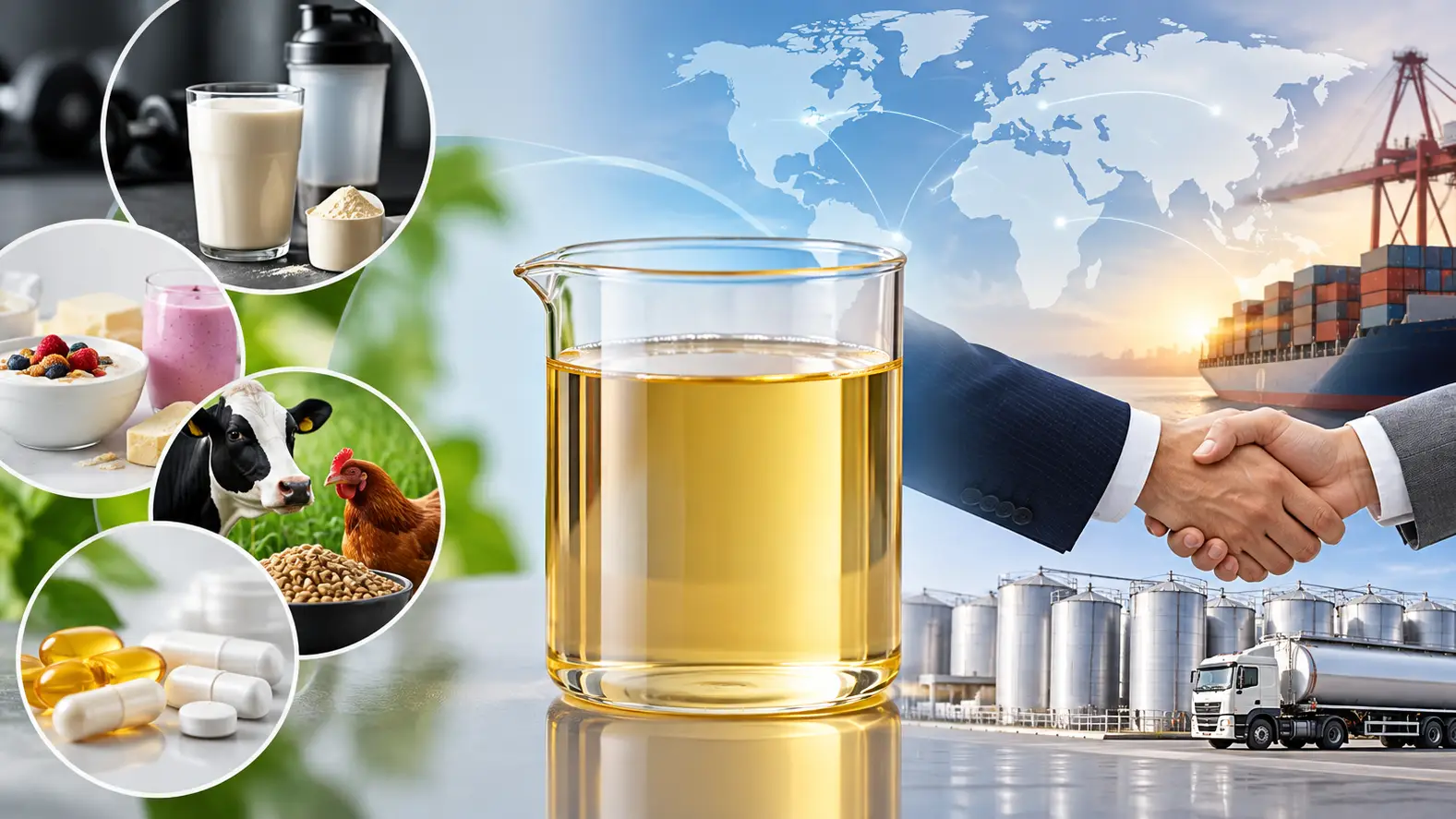
Food and beverage manufacturing represents one of the most commercially relevant areas for protein ingredients. Depending on its composition and specification, Protein Liquid may be considered for applications where manufacturers require protein enrichment, functional properties, or a liquid-compatible ingredient system. The broader protein hydrolysate sector demonstrates particularly wide use in functional foods, beverages, sports nutrition, and specialized nutrition products. Recent market analysis identifies food and beverage as a major application category for protein hydrolysates.
For manufacturers, application suitability depends on the precise characteristics of the material. Protein concentration, flavor profile, solubility, pH, viscosity, microbiological quality, allergen status, and compatibility with the finished formulation can all affect commercial feasibility. Buyers should therefore request a technical data sheet and certificate of analysis before qualifying a Protein Liquid supplier for production.
Animal Feed and Aquaculture
Animal nutrition is another significant potential market for liquid protein ingredients and protein-derived materials. Scientific literature reports the use of protein hydrolysates and peptide-rich ingredients in diets for livestock, poultry, fish, and companion animals, with research focusing on nutritional quality, digestibility, palatability, and functional effects.
The aquaculture sector is especially relevant to the broader protein ingredient supply chain because manufacturers continue to investigate alternative protein sources and methods for improving feed utilization. A 2025 study indexed by FAO AGRIS examined shrimp protein hydrolysate as a feed component for Nile tilapia, illustrating the continuing research interest in converting agricultural and fisheries resources into higher-value protein ingredients.
Protein Liquid Market Demand and Emerging Trends
Growing Demand for Functional Protein Ingredients
The broader market for protein hydrolysates provides useful context for the commercial trajectory of specialized protein ingredients. Grand View Research has previously identified sports nutrition, dietary supplements, infant nutrition, and nutraceuticals as important drivers for protein hydrolysate demand, while more recent market research continues to point to applications across food, nutrition, animal feed, cosmetics, and pharmaceutical-related segments.
A notable trend is the move toward protein ingredients that provide more than basic nutritional content. Manufacturers increasingly evaluate digestibility, solubility, formulation performance, sensory characteristics, and suitability for specialized nutritional products. This creates opportunities for suppliers able to provide consistent specifications and application-oriented technical documentation rather than treating Protein Liquid as a commodity with only a price-based purchasing decision.
Sustainability and Ingredient Innovation
Sustainability is also influencing protein ingredient development. Scientific research has examined the conversion of animal, poultry, and aquatic processing by-products into value-added protein hydrolysates, linking protein recovery with resource efficiency and waste reduction. A 2024 study indexed through FAO AGRIS, for example, investigated poultry by-products as a source for protein hydrolysate production and evaluated the resulting material for potential food, pet food, and animal-feed applications.
For B2B buyers, this trend can translate into greater interest in traceable raw materials, responsible sourcing, efficient processing, and clearly documented supply chains. However, sustainability claims should be assessed against actual supplier documentation rather than inferred from the generic term “Protein Liquid.” Source material, processing technology, manufacturing location, certifications, and traceability can all influence the credibility of an environmental or circular-economy positioning.
Who Buys Protein Liquid?
Primary B2B Buyer Groups
Typical commercial buyers may include food ingredient manufacturers, functional food producers, beverage manufacturers, animal-feed companies, aquaculture feed producers, nutraceutical manufacturers, ingredient distributors, contract manufacturers, and industrial procurement teams. The relevance of each buyer group depends on the exact source and grade of the Protein Liquid being offered.
Market research on protein hydrolysates identifies B2B food and beverage manufacturers as important end users while also highlighting nutraceutical, pharmaceutical, animal-feed, pet-food, cosmetics, and personal-care companies. This demonstrates why supplier positioning should be application-specific rather than based only on a generic protein description.
What Procurement Teams Evaluate
Before approving a Protein Liquid supplier, procurement and technical teams generally need to establish the material's identity, protein source, protein concentration, physical form, pH, moisture or solids content, microbiological profile, shelf life, packaging, and applicable certifications. Where hydrolysis is involved, degree of hydrolysis, peptide distribution, residual protein, amino-acid profile, and batch consistency can become particularly important.
EFSA guidance for protein hydrolysates illustrates the level of technical characterization that can be relevant in highly regulated applications. The guidance discusses source material, degree of hydrolysis, residual protein, peptides, free amino acids, molecular-weight distribution, amino-acid pattern, total nitrogen, and batch-to-batch variability. Although those requirements are specific to particular regulatory contexts, they demonstrate why professional buyers need more than a product name when qualifying a protein ingredient.
What B2B Buyers Should Evaluate Before Sourcing
Technical and Quality Requirements
A successful Protein Liquid sourcing process should begin with a clearly defined specification. Buyers should establish the intended application and then identify the properties required for that application, including protein content, concentration, viscosity, pH, solubility, sensory characteristics, microbiological limits, and stability. If the product is intended for a regulated food, nutrition, feed, or pharmaceutical application, the relevant regulatory and documentation requirements should also be established before supplier selection.
This approach reduces the risk of comparing technically different materials under the same generic product name. It also enables procurement teams to compare suppliers on a like-for-like basis. For example, a lower-priced liquid may not provide better economics if its lower protein concentration, higher handling cost, shorter shelf life, or additional processing requirements increase the total cost of use.
Supplier Reliability and Documentation
Supplier reliability is equally important because protein ingredients can become integral to continuous manufacturing operations. Buyers should examine the supplier's ability to provide consistent batches, appropriate certificates of analysis, technical documentation, packaging information, traceability, and commercially realistic lead times. Where relevant, certifications and quality-management systems should be verified rather than assumed.
This is particularly important in specialized nutrition. EFSA's guidance on protein-hydrolysate-based infant and follow-on formula emphasizes detailed characterization, manufacturing information, nutritional suitability, safety evidence, and batch consistency. The lesson for B2B sourcing extends beyond infant nutrition: the greater the technical and regulatory sensitivity of the application, the more important supplier transparency becomes.
Commercial Sourcing Opportunities for Protein Liquid
Why Buyers Compare Multiple Suppliers
Protein Liquid procurement is rarely based on unit price alone. Buyers compare suppliers because source material, concentration, quality specifications, packaging, lead time, regulatory status, and application performance can vary significantly between products. A multi-supplier sourcing strategy can help procurement teams identify alternatives and reduce exposure to disruptions affecting a single producer or trading channel.
The broader protein ingredient market is also becoming more differentiated. Recent market analysis highlights growth in plant-based protein hydrolysates, specialized nutrition, sports nutrition, clinical nutrition, animal feed, and other application segments. These developments create opportunities for buyers to source products tailored to particular formulation requirements rather than purchasing generic protein materials without application specifications.
Tradeasia Marketplace Positioning
For a B2B chemical and ingredient marketplace such as Tradeasia, Chemtradeasia, or Tradechem Marketplace, Protein Liquid can function as a commercial entry point connecting product discovery with industrial sourcing requirements. The most useful marketplace proposition is not simply presenting a product name; it is helping buyers identify the appropriate specification, application, supplier information, and commercial pathway for their requirements.
A strong product page can support procurement by presenting technical information clearly, helping buyers understand potential applications, and facilitating supplier comparisons. For manufacturers, traders, distributors, and procurement teams, this creates a more practical purchasing journey: identify the material, define the application, verify specifications, compare supply options, and proceed toward commercial inquiry.
Conclusion: Building a Reliable Protein Liquid Supply Strategy
From Product Discovery to Procurement
Protein Liquid occupies a potentially broad position within the industrial protein ingredient landscape because liquid protein materials can serve different formulation and processing requirements depending on their source and specification. Food and beverage, animal nutrition, aquaculture, functional nutrition, nutraceuticals, and other specialty sectors can represent relevant commercial opportunities, but the precise application depends on the actual product characteristics.
Current market evidence surrounding protein hydrolysates points toward continued demand for functional, digestible, application-specific protein ingredients. Research and market analysis also show increasing interest in plant-derived proteins, specialized nutrition, sports nutrition, animal feed, and resource-efficient production. For suppliers, this means that technical differentiation and reliable documentation can be as important as production capacity.
A Practical B2B Sourcing Outlook
For buyers, the most effective approach is to evaluate Protein Liquid through the lens of the intended end use. Procurement teams should establish technical specifications, confirm regulatory suitability, compare total delivered economics, assess supplier reliability, and verify quality documentation before moving from inquiry to purchase. This approach is particularly valuable where the product will become part of a controlled manufacturing formulation.
For manufacturers, traders, distributors, and procurement professionals, a B2B marketplace can simplify the early stages of this process by bringing product information and sourcing opportunities together. Tradeasia, Chemtradeasia, and Tradechem Marketplace can position Protein Liquid around transparent specifications, application relevance, and supplier connectivity—helping industrial buyers move from Protein Liquid sourcing research to qualified commercial inquiry without relying on generic product descriptions.
Leave a Comment