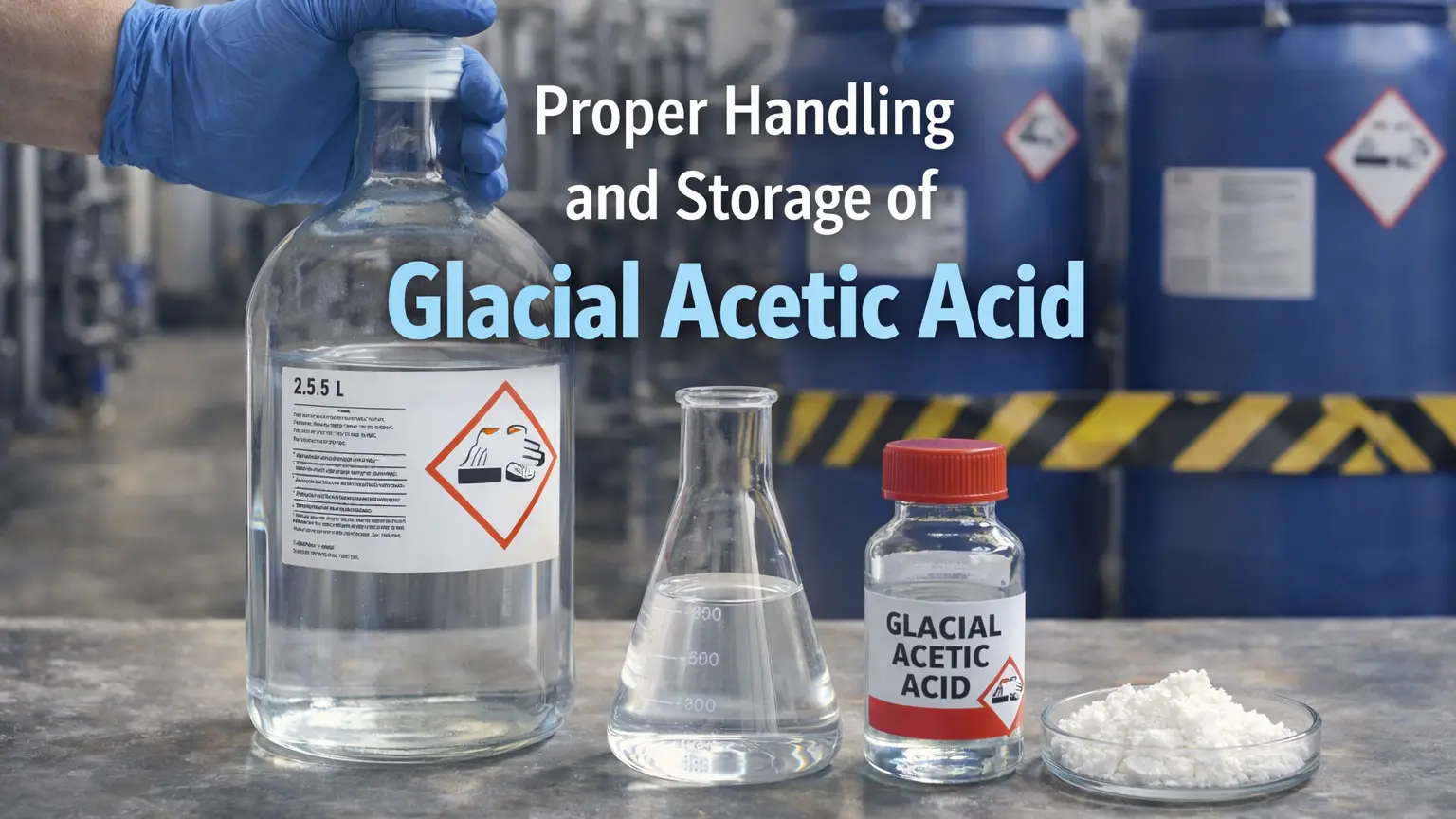
Proper handling and storage of glacial acetic acid is critical for industrial safety, regulatory compliance, and operational continuity. As a highly corrosive and reactive chemical, glacial acetic acid requires strict control measures throughout handling, storage, and transportation. Industries using this material must implement robust safety protocols to protect workers, facilities, and surrounding environments.
This article outlines best practices for handling and storing glacial acetic acid, covering hazard classification, protective equipment, storage requirements, emergency response, and compliance considerations relevant to chemical manufacturers and industrial users.
Introduction to Glacial Acetic Acid
Glacial acetic acid refers to concentrated acetic acid with a purity of 99 to 100 percent. It is a clear, colorless liquid with a sharp, vinegar-like odor and a freezing point of 16.6°C, which gives rise to the term “glacial.” This chemical plays an essential role in industries such as chemical synthesis, textile processing, pharmaceuticals, food manufacturing, and acetate production.
Despite its widespread use, glacial acetic acid presents serious hazards. Its corrosive nature can cause severe skin burns and eye damage upon contact. Vapors can irritate the respiratory system and may cause lung injury with prolonged exposure. Additionally, glacial acetic acid is combustible at elevated temperatures, increasing fire risk in poorly controlled environments. These characteristics make proper handling and storage procedures non-negotiable in industrial operations.
Hazard Classification and Safety Overview
Under the Globally Harmonized System, glacial acetic acid is classified as a corrosive substance and a flammable liquid. It carries hazard categories for acute toxicity, skin corrosion, and serious eye damage. The flash point is approximately 39°C, meaning vapors can ignite under certain conditions.
Exposure limits are strictly regulated, with occupational guidelines generally setting a time-weighted average of 10 ppm for airborne concentration. Exceeding this level increases the risk of respiratory irritation and long-term health effects. All facilities handling glacial acetic acid must ensure these hazards are clearly communicated through Safety Data Sheets and hazard labeling.
Personal Protective Equipment for Safe Handling
Appropriate personal protective equipment is essential when working with glacial acetic acid. Operators should wear chemical resistant gloves made from materials such as nitrile or neoprene, along with chemical splash goggles or full face shields to protect the eyes.
Acid resistant clothing, including aprons or full protective suits, should be used during transfers and maintenance activities. Closed toe safety boots are required to prevent foot exposure. In areas where vapor concentrations may exceed permissible limits, respiratory protection with acid gas cartridges is necessary. For high risk operations, such as spill response or confined space work, self-contained breathing apparatus is recommended.
Regular inspection and proper training on PPE usage significantly reduce the risk of chemical exposure.
Safe Handling Practices in Industrial Operations
Handling glacial acetic acid safely begins with adequate ventilation. Transfers should be conducted in well ventilated areas or under local exhaust systems to prevent vapor accumulation. Pumps and transfer equipment should be made from compatible materials such as stainless steel or HDPE and must be grounded to avoid static discharge.
Dilution operations require careful control. Acid should always be added slowly into water with continuous agitation to manage heat generation. Reversing this process can cause violent reactions and splashing.
Workplace rules should prohibit eating or drinking in handling areas, and emergency eyewash stations and safety showers must be accessible within seconds. Training programs should include spill response drills and clear communication procedures to ensure rapid action during incidents.
Storage Requirements for Glacial Acetic Acid
Glacial acetic acid must be stored in cool, well ventilated areas away from direct heat sources. Recommended storage temperatures remain below 30°C to limit vapor pressure buildup. Suitable containers include HDPE tanks, fluorinated plastics, or lined steel drums designed for corrosive liquids.
Secondary containment systems should be installed to capture potential leaks or spills, typically sized to hold at least 110 percent of the largest container volume. Storage areas must feature corrosion resistant flooring and explosion proof electrical installations.
Proper labeling according to GHS standards is mandatory, including hazard warnings, product identification, and batch tracking information.
Compatible and Incompatible Materials
Material compatibility plays a crucial role in safe storage and handling. Glacial acetic acid is compatible with stainless steel grades such as 316, HDPE, PTFE, and certain elastomers like Viton.
Incompatible materials include carbon steel, aluminum, copper, and zinc, which corrode rapidly and may release hydrogen gas. The acid must also be stored separately from strong bases, oxidizing agents, and alcohols to prevent dangerous chemical reactions.
Clear segregation zones and physical barriers in warehouses help prevent accidental mixing with incompatible substances.
Spill Prevention and Emergency Response
Preventive measures such as overfill alarms, routine equipment inspections, and drip trays under valves reduce the likelihood of spills. In the event of a release, the affected area should be isolated immediately, and non-essential personnel evacuated.
Spills should be contained using inert absorbents like vermiculite or sand. Combustible materials must not be used. Neutralization with sodium bicarbonate can be performed once the spill is controlled, followed by thorough ventilation.
Facilities should maintain fully stocked spill kits, emergency showers, and eyewash stations, with routine audits to confirm readiness.
Transportation and Internal Logistics
During internal transport, drums and containers must be secured on spill pallets or approved handling equipment. Vehicles used for transfer should comply with hazardous material transport guidelines and remain grounded during loading and unloading.
For bulk transportation, glacial acetic acid is classified under UN 2789 and must be labeled accordingly. Loading operations should minimize vapor release, often using bottom filling systems and vapor recovery where applicable.
Regulatory Compliance and Documentation
Compliance with local and international regulations is essential. Facilities must maintain updated Safety Data Sheets and conduct regular training in line with occupational safety standards. Waste disposal must follow environmental regulations, ensuring neutralization and proper treatment before discharge.
Routine risk assessments and audits support compliance with safety management systems and reduce liability exposure.
Best Practices for Long-Term Storage and Inventory Management
Under controlled conditions, glacial acetic acid has a shelf life of several years. Regular inspections should check container integrity, color changes, and contamination indicators. Inventory systems using FIFO principles help minimize prolonged storage risks.
Climate controlled warehouses and digital tracking systems further support safe and efficient inventory management.
Conclusion
Safe handling and storage of glacial acetic acid protects workers, assets, and regulatory standing. By implementing proper containment, training, and monitoring practices, industries can significantly reduce operational risks while maintaining productivity.
For companies seeking a reliable supply of glacial acetic acid supported by proper documentation and technical guidance, Chemtradeasia provides consistent sourcing solutions across industrial markets. Partnering with an experienced supplier helps ensure safety standards are met from procurement through final application.
Leave a Comment