Introduction
Poultry meal has emerged as a critical platform ingredient within the global animal nutrition industry, valued for its high protein density and consistent amino acid profile. Derived from rendered poultry by-products, it plays a central role in aquafeed, pet food, and livestock formulations. As of 2026, the poultry meal market is evolving alongside shifting protein demand, feed efficiency priorities, and sustainability mandates. With a projected CAGR of 4.8% through 2030, the supply chain is under increasing scrutiny, particularly in terms of sourcing stability, processing costs, and international trade flows. Understanding these dynamics is essential for buyers and producers navigating a market where global production has exceeded 18 million metric tons annually.
Raw Material Sourcing and Rendering Efficiency
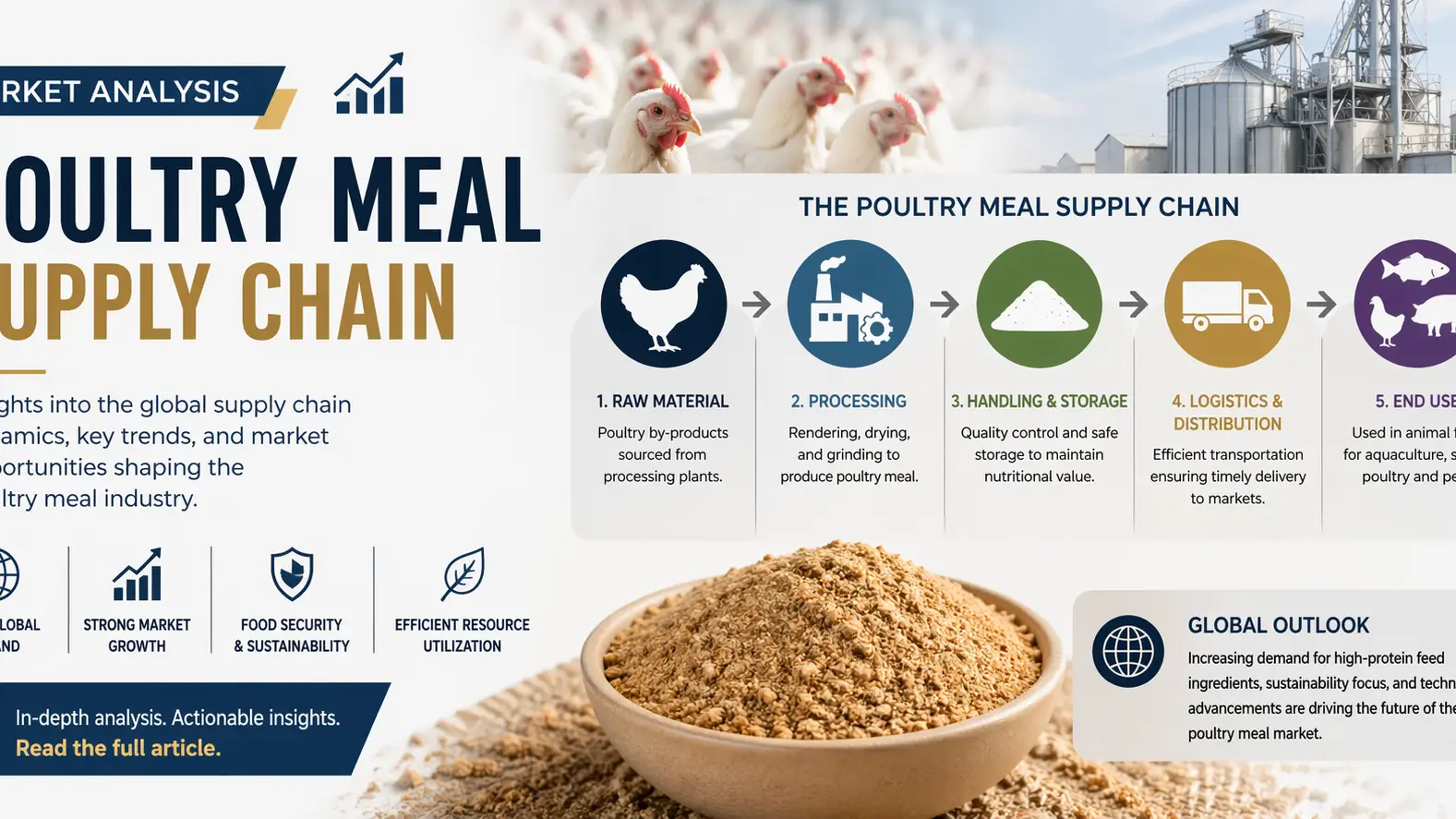
The supply chain begins at poultry processing plants, where by-products such as offal, feathers, and trimmings are collected. Efficiency at this stage directly impacts yield and quality. In 2026, vertically integrated poultry producers in regions like the U.S., Brazil, and China dominate raw material access, ensuring consistent throughput. Rendering yields typically range between 28–32% conversion efficiency, depending on moisture content and technology. However, supply volatility arises from fluctuations in poultry slaughter rates, disease outbreaks, and feed costs, all of which ripple downstream into meal availability.
Processing Infrastructure and Cost Structures
Rendering facilities remain capital-intensive, with energy and logistics accounting for a significant portion of operational costs. Modern plants equipped with continuous cooking systems and fat separation technologies are achieving higher protein recovery and lower contamination rates. Production costs for poultry meal currently average between USD 320–420/MT, while market prices fluctuate in the range of USD 450–650/MT depending on protein content and regional demand. Energy prices and transportation costs remain critical variables, especially in export-driven markets.
Global Trade Flows and Price Volatility
Poultry meal is widely traded, with key exporters including Brazil and the United States, while Asia-Pacific and the Middle East represent major import hubs. Trade flows are influenced by currency movements, freight rates, and feed industry demand cycles. In 2026, freight normalization has stabilized supply routes, yet geopolitical disruptions and tariff policies continue to create periodic price swings. Spot market prices have shown volatility of up to 15–20% annually, reflecting both supply shocks and shifting aquaculture demand.
Sustainability Pressures and Regulatory Influence
Sustainability is reshaping the poultry meal supply chain. Regulators and buyers increasingly demand traceability, pathogen control, and reduced environmental impact. Rendering is inherently circular, converting waste into value, but emissions, water use, and waste handling are under tighter scrutiny. Compliance with international feed safety standards and certifications has become a prerequisite for market access, especially in premium pet food and aquaculture segments. Companies investing in low-emission technologies and transparent sourcing are gaining competitive advantage.
Conclusion
As a platform ingredient in the global protein economy, poultry meal continues to bridge efficiency and sustainability in feed systems. Its supply chain, while robust, faces ongoing pressure from cost volatility, regulatory demands, and shifting trade patterns. For buyers and producers alike, aligning with reliable partners is becoming increasingly important. In this context, Tradeasia International positions itself as a global solution provider, offering consistent sourcing, quality assurance, and logistical expertise to support evolving market needs with confidence and agility
Sources
-
https://www.grandviewresearch.com/industry-analysis/poultry-feed-market
-
https://www.datainsightsmarket.com/reports/poultry-meal-407961
-
https://www.futuremarketreport.com/industry-report/poultry-byproduct-meal-market
Leave a Comment