Understanding Poultry Meal and Its Role in the Animal Feed Supply Chain
What Is Poultry Meal?
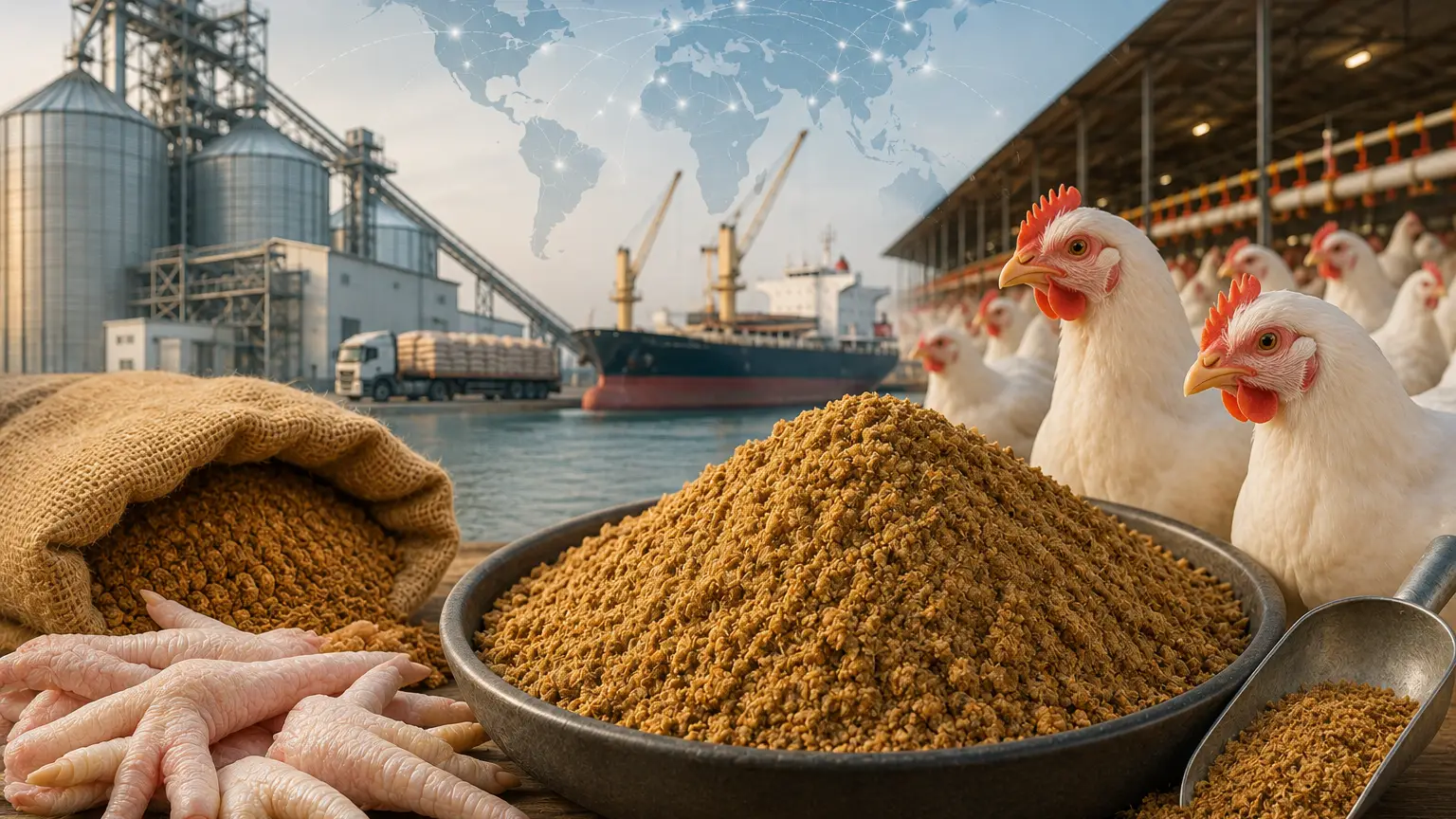
Poultry meal is an animal-derived protein ingredient produced through the rendering of poultry processing by-products. The process converts poultry residues into a concentrated nutritional material containing protein, minerals, and other nutrients that can support animal feed formulation. As a processed feed ingredient, poultry meal provides an alternative protein source for manufacturers developing balanced diets for livestock and companion animals. According to technical information from the Association of American Feed Control Officials, rendered animal products are commonly categorized based on their composition and intended use in animal nutrition.
The commercial value of poultry meal comes from its ability to transform poultry processing materials into useful feed resources. This supports circularity within the agricultural supply chain by allowing processors to recover nutritional components from materials that would otherwise require disposal. The ingredient is typically evaluated according to nutritional specifications, processing standards, and suitability for different feed formulations.
Role of Poultry Meal in Feed Ingredient Supply Chains
Poultry meal plays an important role in global feed ingredient supply chains because feed manufacturers continuously seek reliable sources of animal protein. Protein ingredients are essential components in animal diets, influencing feed performance, formulation costs, and production efficiency. Market participants often compare poultry meal with other animal-based and plant-based protein sources when developing commercial feed products.
For buyers searching for consistent supply, the availability of dependable poultry meal suppliers is a key procurement consideration. Trade platforms such as the Poultry Meal product page provide sourcing information that helps manufacturers, distributors, and traders evaluate potential supply opportunities.
According to the Food and Agriculture Organization of the United Nations, rising global demand for animal protein continues to influence the development of efficient livestock production systems, including the need for dependable feed ingredient supply chains.
Industrial Applications of Poultry Meal in Modern Animal Nutrition
Poultry Meal Applications in Feed Manufacturing
The primary application of poultry meal is as a protein ingredient in animal feed manufacturing. Feed producers incorporate poultry meal into formulations designed for different species depending on nutritional requirements, regulatory considerations, and target market specifications. Its protein content and nutrient profile make it relevant for feed manufacturers producing commercial diets for livestock and other animal categories.
Industrial feed producers evaluate poultry meal based on factors such as nutritional consistency, processing quality, availability, and compatibility with existing formulations. These considerations are especially important for large-scale manufacturers managing multiple production lines and international distribution networks.
Supporting Livestock and Animal Nutrition Industries
The livestock industry depends on a broad range of feed ingredients to maintain production efficiency. Poultry meal contributes to this ecosystem by providing an additional protein source that can support feed diversification strategies. As feed producers face changing raw material costs and supply challenges, alternative protein ingredients continue to receive attention from procurement teams.
Technical research published by scientific institutions, including information reviewed through the National Research Council, highlights the importance of nutrient composition and ingredient evaluation when developing animal feed formulations.
For companies seeking industrial supply solutions, poultry meal sourcing requires understanding both application requirements and supply chain capabilities. Buyers commonly assess suppliers based on documentation, quality controls, production capacity, and ability to meet regional import requirements.
Market Demand Trends Driving Poultry Meal Procurement Worldwide
Growing Demand for Efficient Feed Ingredients
Demand for poultry meal is closely connected to developments in global animal agriculture. Expanding livestock production, increasing consumption of animal protein, and efforts to optimize feed efficiency contribute to continued interest in protein-rich feed ingredients. Feed manufacturers are increasingly examining diverse ingredient portfolios to manage cost, availability, and nutritional performance.
According to market analysis from the International Feed Industry Federation, the global feed sector continues to focus on improving ingredient efficiency, sustainability, and supply chain resilience.
Sustainability and Circular Economy Influence
Sustainability considerations are becoming increasingly relevant in agricultural ingredient sourcing. Poultry meal supports resource recovery by utilizing poultry processing by-products as functional feed materials. This aligns with broader industry discussions around reducing waste and improving resource utilization throughout food and agricultural systems.
For procurement teams, sustainability is becoming one factor among many when comparing suppliers. Buyers still need to consider technical specifications, regulatory compliance, logistics capabilities, and long-term supply reliability before selecting a poultry meal partner.
The growing attention toward responsible sourcing creates opportunities for suppliers and distributors that can provide transparent product information and dependable supply chain support. B2B marketplaces help connect manufacturers and buyers by improving access to international sourcing channels.
Buyer Intent and Key Factors in Poultry Meal Sourcing Decisions
Who Buys Poultry Meal?
Typical poultry meal buyers include animal feed manufacturers, livestock nutrition companies, agricultural commodity traders, distributors, and procurement departments managing feed ingredient inventories. These organizations purchase poultry meal based on production requirements, market demand forecasts, and supply availability.
Feed manufacturers often require regular supply volumes, while distributors may focus on regional market demand and customer networks. International buyers may also evaluate suppliers based on export capability, documentation support, and consistency of product specifications.
What Procurement Teams Evaluate Before Purchasing
Before purchasing poultry meal, procurement teams usually review several factors including nutritional specifications, supplier reliability, production capacity, logistics arrangements, and compliance documentation. Buyers compare suppliers because differences in quality consistency and supply reliability can directly affect manufacturing operations.
A reliable sourcing channel allows buyers to identify suitable suppliers more efficiently. The Poultry Meal sourcing page supports commercial buyers by providing product-specific information for companies exploring feed ingredient procurement opportunities.
Tradeasia and Chemtradeasia marketplace positioning helps connect industrial buyers with supply chain networks while supporting transparency in product discovery. For B2B buyers, supplier comparison is an essential step in reducing procurement risks and maintaining stable production.
Supply Chain Considerations for Poultry Meal Manufacturers and Distributors
Importance of Reliable Poultry Meal Supply Networks
A stable supply chain is critical for poultry meal buyers because feed production depends on consistent access to raw materials. Manufacturers and distributors need suppliers capable of maintaining predictable availability, quality documentation, and commercial communication throughout purchasing cycles.
Supply chain reliability becomes especially important when buyers operate across multiple regions. International sourcing requires coordination between producers, traders, logistics providers, and end users to ensure products meet market expectations.
Regional Trade and Distribution Opportunities
Global trade in feed ingredients creates opportunities for manufacturers, distributors, and marketplace platforms to connect across regions. Poultry meal suppliers that understand export requirements and buyer expectations can participate more effectively in international markets.
According to industry information from the World Organisation for Animal Health, maintaining safe and controlled animal production systems requires attention to supply chain practices throughout the livestock sector.
For companies entering poultry meal procurement, marketplace platforms provide a structured environment to identify suppliers and evaluate commercial opportunities. Effective sourcing strategies combine product knowledge, supplier assessment, and understanding of regional demand patterns.
Commercial Opportunities and Future Outlook for Poultry Meal Buyers
Why Poultry Meal Remains Commercially Relevant
Poultry meal remains commercially relevant because it supports the continuous need for protein ingredients in animal nutrition markets. Feed manufacturers, distributors, and traders evaluate poultry meal as part of broader strategies to secure competitive and reliable ingredient sources.
Market opportunities are influenced by livestock production growth, feed industry innovation, and increasing attention toward efficient resource utilization. These factors encourage businesses to maintain flexible sourcing strategies and monitor supplier developments.
Building Long-Term Sourcing Strategies
Long-term procurement success depends on selecting suppliers that can provide consistent information, dependable communication, and products aligned with industrial requirements. Buyers benefit from working with platforms that simplify supplier discovery and improve access to international market opportunities.
Tradeasia / Chemtradeasia’s marketplace approach supports B2B sourcing by helping buyers explore industrial ingredient categories and connect with relevant supply networks. Companies interested in poultry meal applications can review the Poultry Meal for industrial applications information to understand available sourcing opportunities.
As feed markets continue evolving, businesses that combine technical evaluation with strategic supplier management are better positioned to respond to changing demand conditions.
Conclusion: Building Reliable Poultry Meal Sourcing Strategies for Global Markets
Future Role of Poultry Meal in Feed Supply Chains
Poultry meal will continue to play a role in animal feed supply chains as manufacturers seek diverse protein ingredient options. Its connection with resource recovery, feed formulation, and agricultural efficiency makes it relevant for companies operating across the livestock value chain.
Buyers evaluating poultry meal suppliers should consider more than product availability. Factors such as quality consistency, supply capability, documentation, and commercial reliability remain important in building sustainable sourcing relationships.
Connecting Buyers With Commercial Supply Opportunities
For manufacturers, distributors, and procurement teams, finding dependable poultry meal suppliers is an important part of maintaining competitive feed production operations. A transparent marketplace environment can help buyers compare sourcing options and identify suitable business partners.
Companies exploring poultry meal procurement can use the Poultry Meal supplier information page as a starting point for evaluating product details and supply chain opportunities. Through structured sourcing, industry buyers can strengthen their feed ingredient strategies and respond to future market requirements.
Sources
Leave a Comment