Understanding Poultry Meal as an Industrial Feed Ingredient
What Is Poultry Meal and Why Does It Matter Commercially?
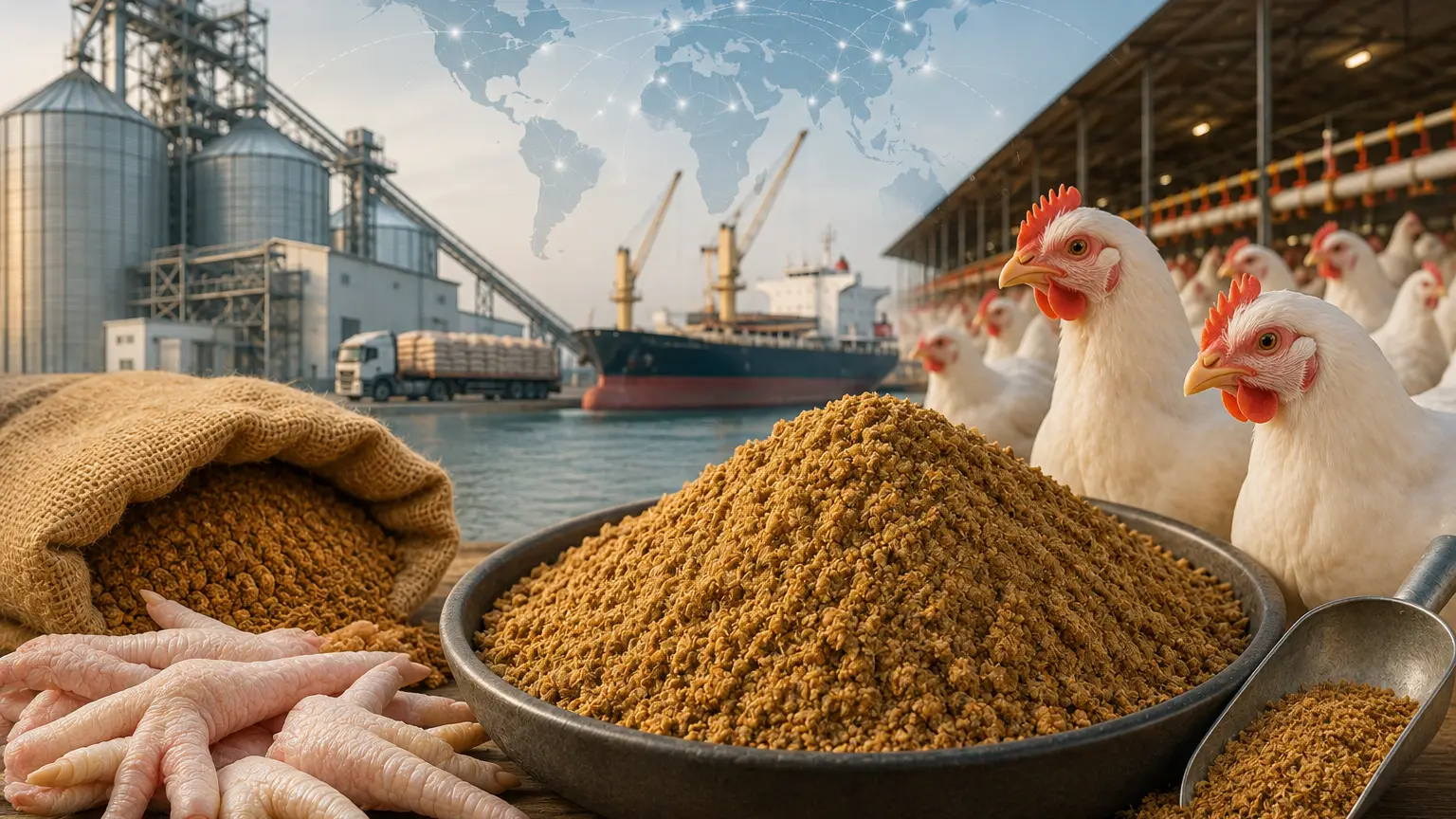
Poultry meal is a rendered animal protein ingredient produced from processed poultry materials. It is commonly manufactured through controlled rendering processes that convert poultry-derived materials into a stable protein-rich meal suitable for industrial feed applications. Technical references describe poultry meal as a rendered product derived from cleaned poultry carcass materials and recognized as an important source of protein in animal nutrition.
For commercial buyers, poultry meal represents more than a feed component; it is a strategic ingredient used to support balanced formulations where protein quality, amino acid availability, and cost efficiency are important factors. Feed manufacturers evaluate poultry meal based on nutritional specifications, consistency, processing standards, and compatibility with their production requirements.
The increasing scale of global animal production has strengthened demand for efficient feed ingredients. According to the FAO, feed represents one of the most significant production inputs in intensive poultry farming, making access to suitable feed ingredients essential for industry expansion.
For companies seeking industrial supply options, the poultry meal product page provides a sourcing reference for buyers evaluating poultry meal availability, applications, and supplier information.
Role of Poultry Meal in Modern Feed Formulation
Modern feed manufacturers combine multiple ingredients to achieve nutritional targets for different animal categories. Poultry meal can contribute animal-based protein, minerals, and nutritional value when incorporated into properly formulated diets.
The commercial importance of poultry meal is linked to its role as an alternative protein ingredient within feed supply chains. As feed producers face challenges related to raw material costs and ingredient availability, animal-derived protein sources remain part of broader strategies for formulation flexibility.
Scientific and technical literature highlights that poultry meal has been used in companion animal diets and other animal nutrition applications because of its protein contribution and improvements in processing quality.
Poultry Meal Applications Across Animal Nutrition Industries
Poultry Meal for Animal Feed Manufacturing
Animal feed manufacturing is one of the primary industrial applications for poultry meal. Feed producers use protein ingredients to develop balanced diets for different production systems, including poultry, livestock, and specialty animal nutrition products.
Poultry producers require consistent access to high-quality feed ingredients because feed efficiency directly influences production performance. The FAO notes that poultry nutrition depends on adequate supplies of energy, protein, amino acids, minerals, and vitamins, with feed formulation efficiency remaining a key industry focus.
For feed companies, poultry meal suppliers must provide reliable specifications, quality documentation, and consistent availability. These factors influence purchasing decisions, especially for manufacturers managing large-scale production schedules.
Poultry Meal in Pet Food and Specialty Nutrition
The pet food industry represents another important application area for poultry meal. Protein ingredients derived from poultry are commonly considered by manufacturers developing formulations that require animal-based nutritional sources.
Pet food producers typically assess ingredients according to protein quality, digestibility, traceability, and regulatory compliance. Suppliers that can provide transparent product information and dependable logistics are better positioned to support international procurement requirements.
As consumer interest in premium pet nutrition continues to influence product development, ingredient sourcing has become increasingly important for manufacturers seeking dependable animal protein inputs.
Market Drivers Influencing Poultry Meal Demand
Growth of Animal Protein Production and Feed Ingredient Requirements
Poultry meal demand is closely connected to global growth in animal production and the continued expansion of commercial feed manufacturing. As poultry, livestock, and aquaculture producers increase output to meet food demand, feed manufacturers require dependable sources of protein ingredients that can support efficient formulation strategies.
According to the Food and Agriculture Organization of the United Nations, improving feed quality, availability, and production efficiency remains an important factor in sustainable livestock development. Feed manufacturers increasingly evaluate ingredients based on nutritional contribution, supply reliability, and cost management.
The poultry meal market is influenced by several procurement factors, including changes in raw material availability, regional livestock production trends, and feed formulation requirements. Buyers are increasingly interested in suppliers that can provide consistent product specifications and support long-term sourcing strategies.
For industrial buyers, understanding these market drivers helps procurement teams anticipate supply conditions and identify suitable poultry meal suppliers that can meet production requirements across different regions.
Increasing Demand for Alternative Protein Ingredients
Feed producers continue to explore alternative protein sources as they manage fluctuations in conventional feed ingredient markets. Poultry meal provides an animal-derived protein option that can complement other ingredients used in commercial feed formulations.
Industry research from the International Feed Industry Federation highlights that efficient feed production depends on access to diverse ingredient sources, technological improvements, and responsible supply chain management.
The search for alternative protein ingredients has encouraged manufacturers and distributors to compare suppliers based on quality standards, processing methods, documentation, and logistics capability. These considerations are particularly important for international buyers sourcing through B2B marketplaces.
As feed ingredient markets become increasingly interconnected, poultry meal suppliers that provide transparent information and reliable commercial support can better serve manufacturers looking for stable sourcing partnerships.
Key Buyers and Procurement Considerations for Poultry Meal
Who Buys Poultry Meal in Global Markets?
The main buyers of poultry meal are companies involved in animal nutrition supply chains. These include commercial feed manufacturers, livestock nutrition companies, pet food producers, aquaculture feed companies, ingredient distributors, and agricultural commodity traders.
Feed manufacturers purchase poultry meal primarily as a functional protein ingredient for industrial formulations. Pet food companies evaluate poultry meal as part of ingredient portfolios designed to provide animal-based nutrition, while distributors purchase the product to supply regional markets requiring dependable feed ingredient availability.
According to industry analysis from the American Feed Industry Association, feed manufacturing depends on coordinated supply networks involving ingredient suppliers, processors, distributors, and end users.
For B2B marketplaces such as Tradeasia and Chemtradeasia, understanding these buyer groups is essential because purchasing decisions are often driven by technical specifications, commercial reliability, and supplier responsiveness rather than price alone.
What Procurement Teams Evaluate Before Purchasing
Industrial buyers typically assess multiple factors before selecting a poultry meal supplier. Product specifications, protein content, processing quality, documentation, packaging options, and shipment capability are among the major evaluation criteria.
Procurement teams also consider supplier transparency, consistency between batches, export experience, and the ability to meet regulatory requirements in destination markets. These factors reduce operational risks for manufacturers managing continuous feed production.
Technical information from organizations such as the Association of American Feed Control Officials demonstrates the importance of defined ingredient standards and accurate product descriptions within animal feed supply chains.
For buyers comparing suppliers, a dedicated poultry meal sourcing page can support initial evaluation by providing product information and helping procurement teams identify suitable supply opportunities.
Sourcing Strategies for Reliable Poultry Meal Supply
Importance of Supplier Qualification in Poultry Meal Procurement
Selecting the right poultry meal supplier is a critical step for feed manufacturers and distributors because ingredient reliability directly affects production continuity. Buyers generally prefer suppliers that demonstrate consistent quality management, clear product documentation, and experience handling international trade requirements.
Supplier qualification often involves reviewing technical specifications, production capabilities, quality assurance practices, and commercial terms. Companies purchasing large volumes require confidence that suppliers can maintain stable supply throughout long-term business relationships.
Market conditions can affect availability and pricing of feed ingredients, making supplier diversification an important strategy. Buyers increasingly compare multiple sourcing channels to improve resilience and maintain flexibility in procurement planning.
Tradeasia and Chemtradeasia marketplace platforms support B2B sourcing by connecting industrial buyers with suppliers and providing structured product information for ingredient evaluation.
Role of Digital Marketplaces in Feed Ingredient Sourcing
Digital B2B marketplaces have become increasingly important tools for companies searching for industrial ingredients. Buyers can use marketplace platforms to compare product information, identify potential suppliers, and initiate commercial discussions more efficiently.
For poultry meal buyers, online sourcing platforms provide access to broader supplier networks while reducing the time required for initial supplier discovery. However, technical verification and commercial due diligence remain important parts of the purchasing process.
The growth of digital procurement is reflected across global industrial sectors as companies increasingly integrate online platforms into supplier identification and sourcing workflows.
A specialized marketplace listing, such as the poultry meal supplier information page, allows buyers to better understand available product options and evaluate potential sourcing opportunities.
Commercial Opportunities for Poultry Meal Suppliers and Buyers
Business Opportunities Across the Feed Ingredient Supply Chain
Poultry meal creates commercial opportunities for manufacturers, traders, distributors, and feed producers involved in animal nutrition markets. Suppliers can support growing demand by providing consistent products that meet the technical and logistical requirements of industrial customers.
Manufacturers benefit from expanding their market reach by connecting with international buyers seeking reliable protein ingredient sources. Traders and distributors can create value by managing regional supply networks and helping customers access suitable products.
For buyers, establishing relationships with dependable suppliers can improve supply chain stability and provide access to alternative sourcing options when market conditions change.
The commercial value of poultry meal is therefore connected not only to the ingredient itself but also to the efficiency of the supply chain supporting its movement from producers to end users.
How Tradeasia Marketplace Supports Poultry Meal Buyers
B2B marketplaces help bridge the gap between ingredient suppliers and industrial buyers by improving product visibility and simplifying supplier discovery. Platforms serving chemical and feed ingredient markets provide businesses with structured information to support purchasing decisions.
For poultry meal procurement teams, marketplace-based sourcing can assist with supplier comparison, product research, and early-stage commercial communication. This approach is particularly valuable for international buyers seeking new supply channels.
Tradeasia, Chemtradeasia, and Tradechem Marketplace positioning focuses on connecting industrial buyers with global suppliers across multiple product categories while supporting efficient business-to-business sourcing.
Companies evaluating poultry meal opportunities can review the poultry meal product page as part of their supplier research process.
Conclusion: Building Reliable Poultry Meal Supply Networks for Future Demand
Poultry meal remains an important animal protein ingredient with applications across feed manufacturing, pet food, livestock nutrition, and related industries. Market demand is shaped by growth in animal production, feed efficiency requirements, and the need for diversified ingredient sourcing.
For buyers, successful procurement depends on evaluating supplier reliability, product specifications, regulatory considerations, and long-term supply capability. Comparing qualified suppliers allows companies to manage risks while maintaining consistent production requirements.
For suppliers and distributors, poultry meal represents an opportunity to participate in expanding global animal nutrition supply chains by serving manufacturers seeking dependable ingredient solutions.
Businesses looking for additional product information and sourcing opportunities can explore the poultry meal sourcing page to support their procurement evaluation.
Sources
Leave a Comment