Potato Starch Supply Chain Insights for Global Industrial Buyers
Understanding Potato Starch as a Strategic Industrial Raw Material
Functional Characteristics of Potato Starch
Potato starch is a natural carbohydrate extracted from potato tubers and is widely recognized as a high-performance starch ingredient for industrial manufacturing. Its strong thickening capacity, high water-binding ability, and smooth texture make it valuable for applications requiring consistent functional performance. Unlike modified starches, native potato starch maintains natural characteristics that support clean-label product development.
The growing demand for natural and plant-based ingredients has strengthened the position of potato starch in global supply chains. Food manufacturers, pharmaceutical companies, and industrial processors increasingly seek dependable sources of potato starch to support production continuity and meet changing consumer preferences.
Role of Potato Starch in Global Manufacturing
Potato starch functions as more than a food ingredient; it is an important industrial raw material used in diverse manufacturing processes. Its ability to create stable viscosity and improve product texture makes it suitable for industries requiring reliable processing performance.
For procurement teams, securing a consistent potato starch supply is essential because quality variations can affect production efficiency, formulation accuracy, and final product performance. Reliable suppliers help manufacturers maintain stable operations across international markets.
Global Potato Starch Supply Chain and Production Landscape
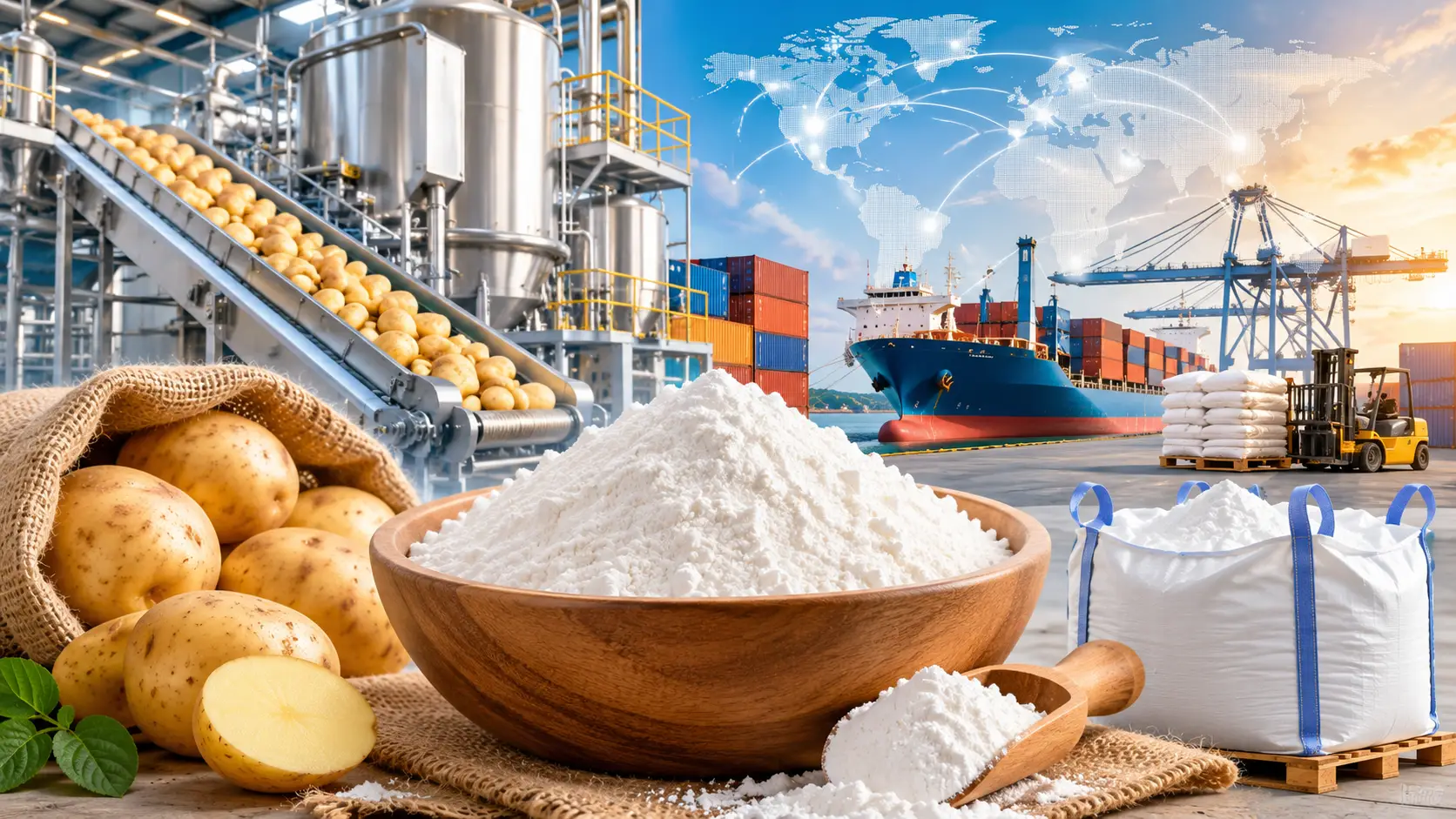
The global potato starch industry depends on agricultural production networks, processing facilities, and international logistics systems. Europe remains one of the leading regions for potato starch production due to established potato cultivation, advanced processing technologies, and strong industrial infrastructure.
Countries with significant potato farming capabilities provide important supply sources for international buyers. Seasonal potato availability, agricultural conditions, and processing capacity influence global supply stability and pricing conditions.
Supply Chain Challenges and Market Stability
Potato starch supply chains face challenges related to crop cycles, transportation costs, energy prices, and regional production changes. Since potato starch depends on agricultural raw materials, supply availability can fluctuate depending on harvest conditions.
Industrial buyers increasingly prioritize suppliers with strong sourcing networks, quality management systems, and international logistics capabilities. These factors help reduce supply risks and improve long-term procurement reliability.
Industrial Applications Driving Potato Starch Demand
The food industry represents one of the largest application areas for potato starch. Manufacturers use it as a thickener, stabilizer, and texture enhancer in products such as sauces, soups, bakery items, snacks, and processed foods.
Demand from food producers continues to grow as companies develop products with improved texture and consumer-friendly ingredient profiles. Potato starch provides functional benefits while supporting manufacturers seeking plant-based alternatives.
Pharmaceutical and Industrial Processing Uses
Beyond food applications, potato starch is used in pharmaceutical formulations as a binder and excipient material. Its purity and functional properties make it suitable for tablet manufacturing and other pharmaceutical processes.
Industrial sectors including paper production, textiles, and adhesives also utilize potato starch for its binding and film-forming characteristics. This broad application base supports continued demand from multiple manufacturing industries.
Market Trends and Procurement Factors for Potato Starch Buyers
Sustainability has become an important purchasing factor for global manufacturers. Companies are increasingly evaluating raw materials based on renewable sourcing, environmental impact, and supply chain transparency.
Potato starch benefits from its plant-based origin and compatibility with sustainable manufacturing strategies. This trend creates additional opportunities for suppliers that can provide traceable and responsibly sourced materials.
Pricing and Market Considerations
Potato starch pricing is influenced by potato crop availability, processing costs, energy expenses, and international transportation conditions. Bulk buyers typically evaluate pricing alongside quality consistency, supplier reliability, and delivery capability.
Procurement teams increasingly focus on total supply value rather than only unit cost. Long-term supplier relationships can help manufacturers manage market fluctuations and maintain predictable production planning.
Key Considerations for Global Potato Starch Sourcing
Industrial buyers require potato starch suppliers that can provide consistent specifications, including moisture content, purity, viscosity performance, and processing suitability. Quality documentation is essential for industries with strict manufacturing requirements.
Reliable suppliers support customers through technical documentation, quality assurance procedures, and product consistency. These factors are particularly important for pharmaceutical, food, and industrial users.
Logistics and Supply Reliability
International sourcing requires effective logistics planning, including packaging options, transportation management, and delivery scheduling. Supply chain efficiency directly affects manufacturing operations and inventory management.
Companies sourcing potato starch globally often prefer partners with established export experience and the ability to manage international trade requirements. Strong logistics capabilities improve supply continuity and reduce operational risks.
Buyer Requirements and Supplier Selection Strategies
Choosing a potato starch supplier requires evaluation of production capability, export experience, quality control systems, and market responsiveness. Buyers typically seek suppliers capable of supporting consistent volumes and meeting technical specifications.
A reliable supplier should demonstrate strong supply chain management, transparent communication, and the ability to serve different industrial applications. These qualities help manufacturers develop sustainable procurement strategies.
Importance of Global B2B Marketplaces
Digital B2B marketplaces have improved how industrial buyers connect with international suppliers. Platforms such as Tradeasia and Chemtradeasia help businesses explore sourcing opportunities and build connections across global chemical and ingredient markets.
For potato starch buyers, marketplace solutions provide access to supplier networks, product information, and international trade opportunities that support efficient procurement decisions.
Future Outlook of the Potato Starch Market
The potato starch market is expected to benefit from expanding demand for natural ingredients, processed foods, pharmaceutical manufacturing, and sustainable industrial materials. Increasing industrial diversification continues to strengthen demand beyond traditional food applications.
Manufacturers are also exploring starch-based solutions for environmentally responsible production. This creates opportunities for suppliers capable of delivering consistent quality and reliable global distribution.
Supply Chain Innovation and Long-Term Demand
Future competitiveness in the potato starch industry will depend on supply chain efficiency, production optimization, and stronger relationships between suppliers and buyers. Companies investing in transparent sourcing networks will be better positioned to respond to market changes.
As industries continue to prioritize reliable raw material access, potato starch will remain an important component of global manufacturing supply chains.
Conclusion: Building Reliable Potato Starch Supply Partnerships
Potato starch continues to serve as a valuable industrial ingredient supporting food, pharmaceutical, and manufacturing sectors worldwide. Its functional performance and renewable origin make it an attractive choice for companies seeking versatile raw materials.
For global buyers, successful sourcing depends on selecting suppliers that combine product quality, supply reliability, and international trade expertise. Strong supplier partnerships help businesses maintain stable production while adapting to evolving market requirements.
Tradeasia International provides a global sourcing platform that connects industrial buyers with reliable suppliers across international markets. Through efficient trade solutions and marketplace capabilities, businesses can explore dependable potato starch sourcing opportunities for diverse industrial applications.
Sources
https://www.fao.org
https://www.grandviewresearch.com

Leave a Comment