Introduction
The American food landscape is undergoing a profound transformation, driven by a consumer base that is increasingly informed, health-conscious, and ethically minded. At the heart of this shift is a growing demand for transparency and purity in food ingredients, moving beyond mere nutritional panels to scrutinize the very origins and genetic makeup of raw materials. This trend has propelled two interconnected concepts—Non-GMO and Identity-Preserved (IP)—from niche market specifications to mainstream market drivers. These demands are fundamentally altering agricultural practices, supply chain logistics, and product formulation across the industry.
Nowhere is this impact more evident than in the market for foundational food ingredients like soy lecithin. As a ubiquitous emulsifier and functional additive found in everything from chocolate and baked goods to dietary supplements, soy lecithin's sourcing is under new scrutiny. Manufacturers and brands are responding by seeking guaranteed Non-GMO soy lecithin and identity-preserved soy derivatives to meet consumer expectations and secure a competitive edge. This article delves into how this demand is reshaping the market, the specific value of IP ingredients, and what it means for suppliers and end-users in America.
The Rise of the Conscious Consumer in America
The modern American consumer is a powerful force for change. Fueled by greater access to information via digital media, documentaries, and advocacy groups, there is a heightened awareness of how food is produced. Concerns range from personal health and wellness to broader environmental sustainability and ethical farming practices. The Non-GMO Project's butterfly logo has become one of the most recognized food labels in the country, appearing on over 60,000 verified products. This is not a fleeting trend but a sustained movement reflecting a deep-seated desire for food perceived as more "natural" and less processed.
This consciousness extends beyond the end product to the ingredient deck. Shoppers are reading labels and seeking "clean label" products—those with simple, recognizable ingredients. For a complex ingredient like lecithin, which can be derived from various sources (soy, sunflower, rapeseed), the origin matters. Consumers are actively choosing products that specify "Non-GMO soy" or "sunflower lecithin" as a proxy for purity and a rejection of genetically modified crops. This purchasing power directly translates into reformulation mandates for food companies, creating a ripple effect that travels back through the supply chain to the farm gate.
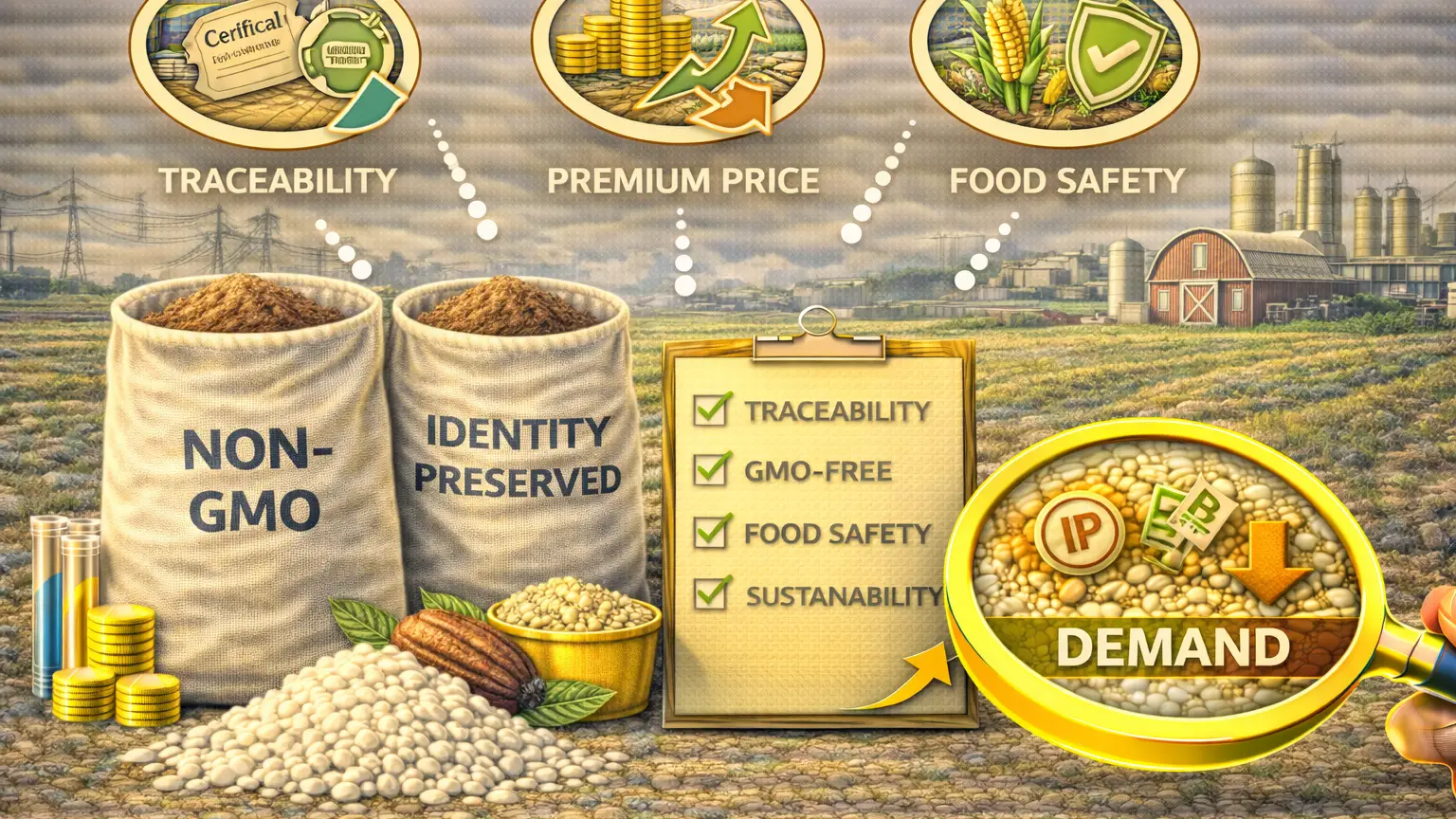
Furthermore, the demand is segmented. While a broad segment seeks Non-GMO verification, a more specialized market—including organic brands, functional food producers, and manufacturers serving specific export markets—requires Identity-Preserved (IP) certification. This tiered demand structure is creating new market opportunities and segmentation, allowing suppliers who can guarantee traceability and purity to command premium prices and build long-term brand loyalty with discerning clients.
Understanding Non-GMO and Identity-Preserved (IP) Supply Chains
While often used interchangeably, Non-GMO and Identity-Preserved (IP) represent different levels of supply chain rigor. Non-GMO verification, as administered by organizations like the Non-GMO Project, focuses on testing the final product to ensure it falls below a threshold for genetically modified material. It is an output-based standard that allows for comingling in the supply chain, provided testing confirms the end product's status. This system is robust for many applications but relies heavily on testing protocols and buffer zones to prevent contamination.
Identity-Preserved, however, is a process-based system. It involves segregating a specific crop variety—from seed selection and planting through harvest, storage, transportation, and processing—to maintain its unique identity and purity. An IP program for soybeans, for example, would track a specific, verified Non-GMO variety from a designated farm plot, through dedicated silos and trucks, to a processing facility that only handles that batch at a given time. The chain of custody is documented at every step, providing an unparalleled level of traceability.
The implementation of these systems presents significant logistical and economic challenges. It requires investment in separate storage, dedicated processing lines, meticulous record-keeping, and often, premium payments to farmers for growing the specified crop. For a global supplier like Chemtradeasia.com, managing such supply chains necessitates deep partnerships with trusted growers and processors, as well as a robust internal quality management system. The payoff, however, is a product that meets the most stringent market requirements and offers brands a compelling story of provenance and integrity to share with their customers.
Spotlight on Non-GMO Soy Lecithin: Features and Benefits
Non-GMO soy lecithin is emerging as a critical ingredient for formulators navigating the clean label revolution. As a natural emulsifier, it performs the essential function of blending ingredients that would otherwise separate, such as oil and water, ensuring smooth texture and consistent quality in finished products. Its functionality remains identical to conventional soy lecithin; the distinction and value lie entirely in its sourcing and verification.
The primary benefit of specifying Non-GMO or IP soy lecithin is market access and brand alignment. For a company producing organic cereal, a Non-GMO Project Verified snack bar, or a supplement sold in regions with strict GMO regulations, using a verified lecithin is not optional—it's a prerequisite. It allows the final product to carry desired certifications and labels, which are powerful marketing tools and often justify a higher price point. Furthermore, it mitigates supply chain risk by ensuring consistency and compliance with evolving regulatory and consumer standards.
From a technical and nutritional perspective, high-quality Non-GMO soy lecithin, such as that supplied by reputable sources, offers excellent functionality. It is typically available in various forms—liquid, powder, or granules—to suit different manufacturing processes. It contributes to improved shelf life, better dough handling in baking, controlled crystallization in confectionery, and enhanced nutrient delivery in supplements. By choosing a lecithin backed by verifiable IP or Non-GMO credentials, manufacturers are not compromising on performance; they are enhancing their product's overall marketability and trustworthiness.
Market Impact and Challenges for Producers and Suppliers
The surge in demand for Non-GMO and IP ingredients is creating a dualistic market impact. On one hand, it has opened lucrative premium segments and fostered innovation in supply chain management. Farmers participating in IP programs often benefit from contracted pricing that offers more stability than commodity markets. Processors and suppliers who have invested in segregation infrastructure are seeing growing demand for their specialized services. For ingredient suppliers, the ability to reliably source and supply verified Non-GMO soy lecithin has become a key differentiator and a value-added service for clients.
Conversely, the challenges are substantial. The costs associated with maintaining segregated supply chains—from farm incentives to duplicate handling facilities—are inevitably higher. These costs are passed along the chain, making Non-GMO and IP ingredients more expensive than their conventional counterparts. There is also the constant risk of accidental contamination (adventitious presence), which can invalidate an entire batch and lead to significant financial loss and reputational damage. This requires rigorous testing protocols and geographic planning, such as ensuring sufficient isolation distances between GMO and Non-GMO fields.
For a global supplier operating in the American market and beyond, like Chemtradeasia.com, navigating this landscape requires strategic foresight. It involves building long-term, transparent relationships with agricultural cooperatives and processors committed to IP protocols. It also means maintaining flexible inventory and a diverse portfolio—including alternative lecithins like sunflower—to meet specific client needs and provide solutions when soybean crop variations or supply constraints occur. Success in this new market is less about commodity trading and more about partnership and precision.
The Future of Food Ingredients: Trends and Predictions
The trajectory for Non-GMO and Identity-Preserved ingredients points toward continued growth and sophistication. As blockchain technology and other digital traceability solutions become more accessible, we can expect IP programs to become more efficient and transparent, potentially reducing costs and increasing consumer confidence. A consumer might one day scan a QR code on a chocolate bar to see the farm where the soy lecithin was sourced. This level of transparency will become a baseline expectation for premium brands.
Furthermore, the demand for "free-from" ingredients will continue to expand. While Non-GMO is firmly established, interest in allergen-free options is driving growth in alternative lecithins, such as sunflower-based products. The most successful suppliers will offer a portfolio of solutions, from premium IP soy lecithin to sunflower and rapeseed lecithin, allowing formulators to choose based on their specific label, functional, and cost requirements. The market will also see a greater integration of sustainability metrics, where the environmental impact of growing IP crops (water use, carbon footprint) becomes part of the product's value proposition.
Finally, regulatory landscapes will evolve. While the U.S. National Bioengineered Food Disclosure Standard (the federal GMO labeling law) provides a framework, state-level initiatives and stringent import regulations in key export markets like the European Union will keep supply chain integrity at the forefront. Suppliers who have already mastered the complexities of IP and verification will be best positioned to help their clients navigate this evolving regulatory environment, turning compliance from a challenge into a competitive advantage.
Conclusion
The demand for Non-GMO and Identity-Preserved ingredients is far more than a niche preference; it is a powerful market force redefining the food industry in America and globally. It represents a convergence of consumer values, brand strategy, and supply chain innovation. For critical ingredients like soy lecithin, this shift has elevated sourcing from a background procurement activity to a front-and-center component of product development and marketing. The ability to guarantee purity, traceability, and compliance has become a cornerstone of trust between brands and their customers.
For manufacturers and formulators, partnering with a knowledgeable and reliable supplier is paramount. Navigating the intricacies of IP contracts, certification, and segregated logistics requires expertise. Suppliers like Chemtradeasia.com, with a focus on transparent sourcing and a diverse portfolio of ingredient solutions, play a vital role in connecting the dots between conscientious farming, verified processing, and innovative final products. As the market continues to mature, this collaborative, integrity-focused approach will be the defining feature of successful food businesses.
Disclaimer: The information provided in this article is for general informational and market insight purposes only. It is not intended to serve as technical, safety, or professional advice for specific formulations or applications. While we strive for accuracy, market conditions and technical specifications are subject to change. We strongly advise readers to independently verify any information relevant to their operations, consult official product documentation such as Safety Data Sheets (SDS), and engage with qualified experts. For specific application guidance, product specifications, or sourcing inquiries, please contact our team directly for tailored support.
Leave a Comment