Global Native Tapioca Starch Supply Chain and B2B Sourcing
Native Tapioca Starch in the Global Supply Chain
Understanding the product's supply-chain role
Native Tapioca Starch is an important plant-based starch ingredient for manufacturers that require a dependable source of starch for food processing and other industrial applications. Tapioca starch is starch extracted from the cassava root, and FAO identifies cassava starch as an important industrial outlet for cassava. For B2B buyers, the commercial value of the product is therefore closely connected with reliable sourcing, consistent processing, quality management, and efficient distribution.
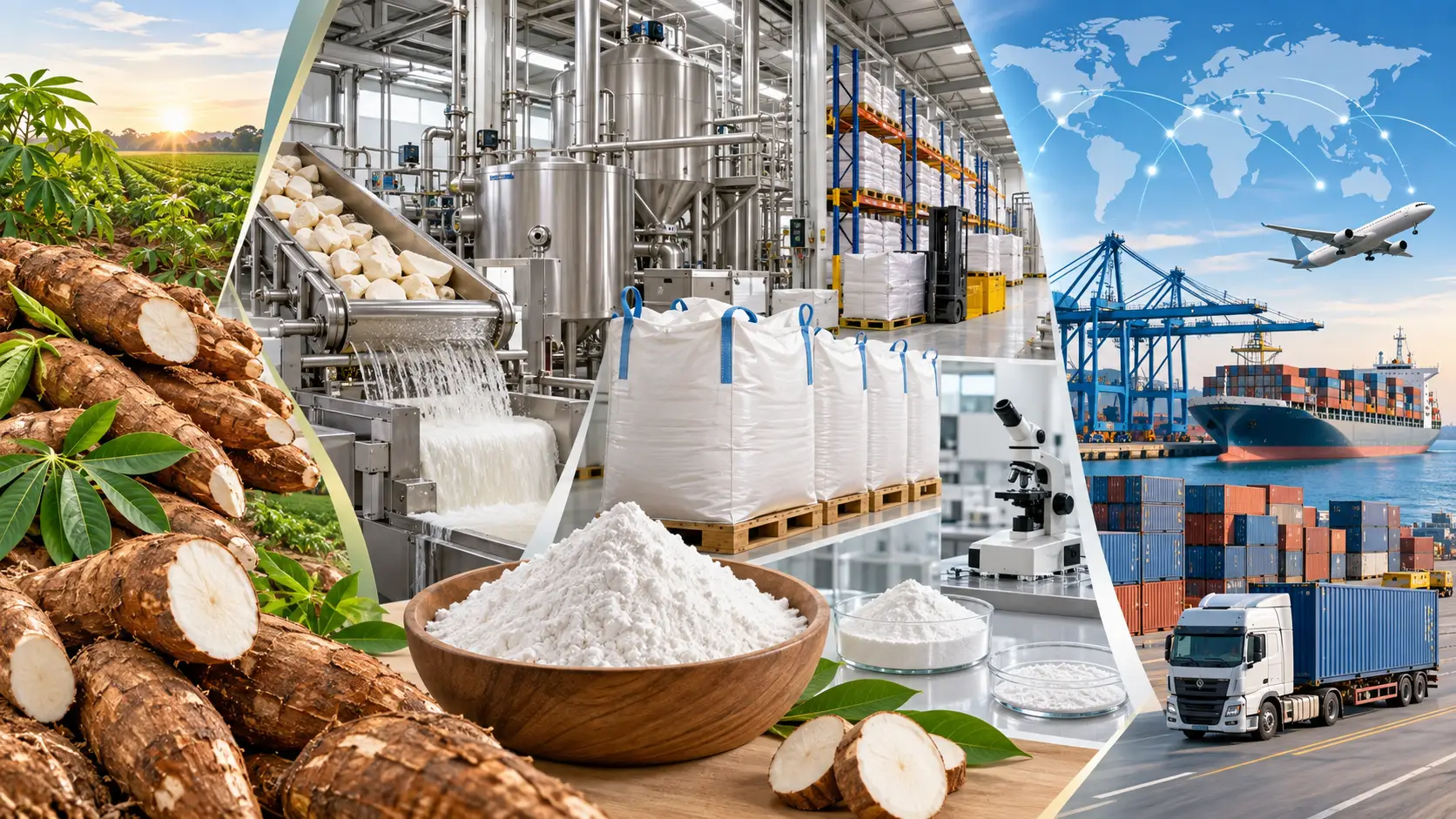
The supply chain begins with agricultural raw-material availability and continues through starch extraction, processing, quality control, packaging, storage, transportation, and delivery to industrial customers. Each stage can influence procurement continuity, making supply-chain coordination an important consideration for manufacturers and distributors purchasing Native Tapioca Starch at commercial scale.
Why supply reliability matters to buyers
For food processors and ingredient distributors, sourcing decisions are rarely based on product availability alone. Buyers also consider supplier consistency, documentation, packaging suitability, shipment planning, lead times, and the ability to maintain supply across multiple purchasing cycles. These factors become especially important when starch is incorporated into established manufacturing processes.
A well-organized B2B supply chain can connect cassava-processing operations with international buyers through coordinated procurement and logistics. Tradeasia / Chemtradeasia / Tradechem Marketplace can support this commercial sourcing approach by creating a marketplace environment where buyers can evaluate supply opportunities according to application, volume, quality expectations, and delivery requirements.
Raw Material and Native Starch Production
Cassava as the foundation of tapioca starch
Native Tapioca Starch originates from cassava, making agricultural supply an important foundation of the overall value chain. FAO terminology identifies tapioca starch, cassava starch, and manioc starch as terms associated with starch extracted from the cassava root. This relationship means that the availability and handling of cassava are fundamental considerations for the upstream starch industry.
From a procurement perspective, buyers benefit from understanding the connection between agricultural sourcing and starch production. Raw-material continuity can affect processing schedules, inventory planning, and the ability of suppliers to respond to recurring commercial demand. A transparent upstream supply chain therefore provides useful context when evaluating potential suppliers.
Processing and supply-chain coordination
Native starch is separated from its raw material through processes specific to the source material. The Codex General Standard for Food Additives describes native starch as starch separated through processes specific to the raw material, and identifies tapioca among plant sources of starch. This distinction is relevant for buyers looking for a native rather than modified starch ingredient.
For international B2B trade, production coordination extends beyond extraction. Suppliers need to manage processing schedules, quality-control procedures, packaging operations, warehouse availability, and shipment preparation. Coordinating these activities helps reduce supply interruptions and gives buyers greater confidence when planning regular procurement programs.
Quality Control and Supply Consistency
Quality as a procurement priority
Quality consistency is a central consideration when purchasing Native Tapioca Starch for industrial processing. Buyers typically need confidence that successive shipments will remain suitable for their intended production requirements. This makes supplier quality systems, product documentation, inspection procedures, and batch management important components of commercial sourcing.
Food-industry procurement also operates within broader international food standards and regulatory frameworks. Codex maintains standards and guidance covering food ingredients, food additives, labelling, contaminants, and related food-safety considerations. Buyers should therefore evaluate supplier documentation against the regulatory requirements applicable to their destination market and intended use.
Consistency across commercial shipments
For large manufacturers, one successful shipment is not enough to establish a dependable sourcing relationship. Procurement teams generally need suppliers capable of supporting repeat orders while maintaining agreed commercial and technical specifications. Consistency can become particularly important when a starch ingredient is integrated into standardized production formulas.
A strong B2B sourcing process should therefore consider more than a quoted price. Buyers can assess supplier communication, documentation, batch traceability, packaging performance, production capacity, shipment readiness, and responsiveness to quality-related questions. These factors help turn individual transactions into a more reliable long-term supply relationship.
Packaging, Warehousing, and Inventory Planning
Commercial packaging requirements
Packaging forms an important link between production and transportation. Native Tapioca Starch must be prepared in a format appropriate for commercial handling, storage, and onward distribution. For B2B buyers, packaging discussions may include order volume, bag or bulk requirements, palletization, labelling, protection from contamination, and suitability for warehouse operations.
Packaging also affects logistics efficiency. Properly prepared shipments can be easier to inspect, consolidate, load, unload, and transfer between distribution points. For international buyers, packaging and labelling should be aligned with applicable destination-market requirements and the buyer's internal receiving procedures.
Warehouse and inventory management
Warehousing connects supply availability with manufacturing demand. A buyer may need to maintain sufficient Native Tapioca Starch inventory to support production while avoiding unnecessary inventory costs. This makes lead-time visibility and supplier communication important elements of procurement planning.
For suppliers and distributors, effective inventory management can also improve responsiveness to changing order schedules. Maintaining appropriate stock levels, coordinating incoming production with outgoing shipments, and monitoring customer demand can help create a more flexible supply chain. B2B marketplaces can provide an additional channel for connecting available supply with buyers seeking specific quantities and delivery arrangements.
Logistics and International Distribution
Moving starch from origin to destination
International logistics is a major component of the Native Tapioca Starch supply chain. Once processing and packaging are completed, the product must move through domestic transportation, export handling, freight arrangements, port operations, and destination-country distribution before reaching the end customer.
The logistics strategy should reflect shipment volume, destination, delivery schedule, packaging configuration, and commercial terms. Buyers benefit when suppliers provide clear shipment information and coordinate closely with logistics partners. This can improve visibility and reduce avoidable delays between order confirmation and final delivery.
Managing international sourcing risks
Cross-border procurement can involve several variables, including freight availability, port congestion, documentation requirements, customs procedures, changing lead times, and destination-market regulations. These factors make supply-chain planning an important part of commercial sourcing rather than a separate activity after purchasing.
A diversified sourcing approach can provide additional resilience when market conditions change. Buyers may evaluate multiple qualified suppliers, compare logistics routes, establish realistic lead times, and maintain appropriate inventory buffers. Such planning can help manufacturers reduce dependence on a single shipment or isolated sourcing channel.
Buyer Requirements and Procurement Strategy
What B2B buyers should evaluate
Native Tapioca Starch buyers can approach procurement by defining their requirements before requesting quotations. Important considerations may include intended application, required quantity, delivery destination, packaging format, documentation, quality expectations, order frequency, and commercial terms.
Application is particularly important because the same ingredient category may be purchased by different industries for different production purposes. FAO notes that cassava starch has applications across foodstuffs as well as textile, paper, plywood and veneer, adhesives, glucose, and dextrine production. This broad industrial relevance makes clear communication between buyers and suppliers essential.
From price comparison to total sourcing value
Price remains an important procurement factor, but the lowest quoted price does not necessarily represent the strongest commercial option. Buyers should also consider freight, packaging, minimum order requirements, lead time, documentation, quality consistency, supplier responsiveness, and the potential cost of supply interruptions.
A total-sourcing-value approach can help procurement teams compare offers more effectively. When suppliers are evaluated on both commercial and operational performance, buyers can identify sourcing relationships that support production continuity rather than focusing solely on the initial purchase price.
B2B Market Opportunities and Supplier Selection
Demand across ingredient and industrial sectors
Native Tapioca Starch can serve multiple industrial markets because starch is used across food and non-food processing. The FAO describes cassava starch as having applications in food, textile, paper, plywood and veneer, adhesives, glucose, and dextrine production. This creates opportunities for suppliers and distributors serving different industrial buyer groups.
Within food-related procurement, starch-based products form part of a broad category of processed foods and ingredients. Codex's food-category framework includes starch-based products and specifically references tapioca pudding within its starch-based dessert category. For suppliers, understanding the application landscape can help them position Native Tapioca Starch more effectively for relevant B2B customers.
Selecting dependable suppliers
Supplier selection should combine technical, commercial, and logistical evaluation. Procurement teams can examine product information, quality documentation, manufacturing capabilities, packaging options, supply capacity, delivery history, communication standards, and responsiveness before establishing a recurring purchasing relationship.
A B2B marketplace can simplify supplier discovery by bringing product-focused sourcing opportunities into one commercial environment. For Tradeasia / Chemtradeasia / Tradechem Marketplace, Native Tapioca Starch can be positioned as a sourcing category connecting ingredient buyers, distributors, manufacturers, and international trade partners seeking dependable supply solutions.
Building a Reliable Native Tapioca Starch Supply Chain
Creating stronger supplier relationships
Long-term supplier relationships can provide greater visibility into production schedules, expected availability, order planning, and logistics. Instead of treating each Native Tapioca Starch purchase as an isolated transaction, procurement teams can establish recurring communication around forecasts, volumes, quality requirements, and delivery expectations.
Suppliers can strengthen these relationships by providing clear commercial information and responding efficiently to buyer inquiries. Consistent documentation and transparent communication also help procurement, technical, quality, and logistics teams coordinate their responsibilities throughout the purchasing cycle.
Connecting supply, demand, and global trade
A reliable Native Tapioca Starch supply chain ultimately depends on coordination across multiple stages: cassava sourcing, starch production, quality control, packaging, warehousing, freight, customs, distribution, and customer delivery. Each stage contributes to the overall performance experienced by the buyer.
For international B2B trade, digital marketplaces can connect these supply-chain requirements with a broader network of buyers and suppliers. Tradeasia / Chemtradeasia / Tradechem Marketplace provides a commercial context for sourcing Native Tapioca Starch while allowing procurement teams to focus on supplier suitability, application requirements, shipment planning, and long-term supply potential.
Conclusion: Strengthening B2B Native Tapioca Starch Sourcing
A supply-chain approach to procurement
Native Tapioca Starch is more than a commodity purchase for industrial buyers; it is a supply-chain input whose commercial value depends on dependable sourcing and consistent delivery. From cassava-based raw-material supply to starch processing, quality management, packaging, warehousing, and international logistics, each stage contributes to procurement performance.
For buyers, a structured sourcing strategy can improve visibility and help identify suppliers capable of meeting recurring requirements. Evaluating quality, documentation, packaging, logistics, commercial terms, and supplier responsiveness provides a more complete basis for purchasing decisions than price comparison alone.
Building reliable B2B sourcing networks
For suppliers and distributors, the opportunity lies in presenting Native Tapioca Starch as a dependable ingredient within an integrated international supply chain. Clear product positioning, reliable communication, appropriate documentation, and coordinated logistics can strengthen commercial relationships with manufacturers and procurement teams.
As global B2B sourcing becomes increasingly focused on reliability, transparency, and supply continuity, Native Tapioca Starch suppliers can benefit from marketplace-based trade connections. A coordinated approach linking production, quality assurance, inventory, logistics, and buyers can create a stronger foundation for sustainable international sourcing.
Sources
FAO
FAO/WHO Codex
FAO/WHO Codex

Leave a Comment