Native Tapioca Starch Market Overview
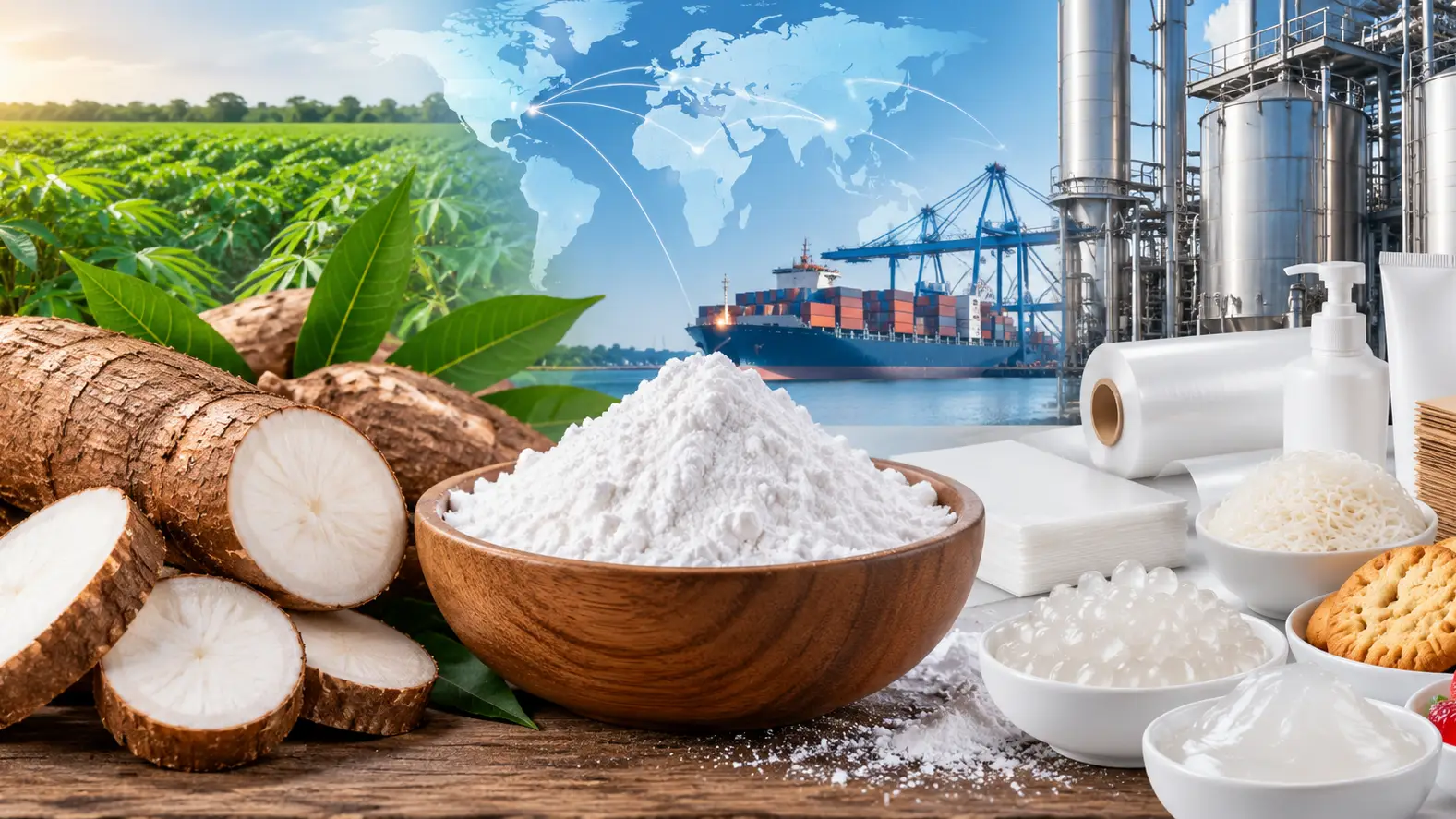
Native Tapioca Starch is a plant-derived starch obtained from cassava roots and is widely used as a functional ingredient and industrial raw material. Its commercial relevance comes from a combination of availability, comparatively low cost, neutral flavor contribution, and functional characteristics that allow manufacturers to use it across food and non-food formulations. Scientific literature describes cassava starch as a high-demand material with applications extending from food processing to paper, textiles, adhesives, pharmaceuticals, and bio-based production.
What Native Tapioca Starch Is
Native tapioca starch refers to starch that has been extracted and processed without deliberate chemical, physical, or enzymatic modification intended to alter its native functionality. It is primarily composed of amylose and amylopectin, with the balance between these components and other quality characteristics influencing pasting, gelatinization, viscosity, stability, and processing behavior. These characteristics make specification control important when the starch is purchased for a defined manufacturing process.
Why Industrial Buyers Use It
For industrial buyers, Native Tapioca Starch is valuable because one raw material can serve several formulation and processing purposes. Depending on the application, manufacturers may use it as a thickener, binder, stabilizer, sizing material, adhesive component, or functional carbohydrate source. Its broad applicability also means that demand is influenced by several downstream sectors rather than a single end-use market.
Market Demand Drivers
Recent market analysis points to continued expansion in the cassava starch sector. Grand View Research estimates the global cassava starch market at USD 5.8 billion in 2024 and projects growth through 2030, with food and beverage identified as the largest application segment. Such growth creates opportunities not only for starch producers but also for traders, distributors, formulators, and procurement teams seeking dependable sources of application-grade material.
Native Tapioca Starch Industrial Applications
Native Tapioca Starch has a particularly broad industrial footprint because starch functionality can be adapted to different processing environments without changing the fundamental raw-material identity. Its established use in food is complemented by applications in paper, textiles, adhesives, pharmaceuticals, and fermentation. For B2B suppliers, understanding these applications is important because the requirements of a food manufacturer can differ significantly from those of a paper mill or adhesive producer.
Food Manufacturing Applications
Food manufacturing remains one of the most important markets for tapioca starch. Native tapioca starch can be used in products such as bakery and pastry formulations, noodles, soups, confectionery products, dairy-related formulations, sauces, and other processed foods where starch functionality contributes to texture, viscosity, stability, or formulation structure. Its relatively neutral flavor is also commercially useful when manufacturers want functionality without a strong taste contribution.
Paper and Packaging Applications
The paper industry uses starch in several manufacturing stages, including wet-end processing, sizing, calendaring, and coating. FAO technical information notes that starch can improve paper strength, fiber retention, appearance, and coating performance. These applications create procurement demand for starch with consistent quality, suitable color characteristics, controlled impurities, and predictable processing behavior.
Textile and Adhesive Applications
Textile manufacturers use starch in sizing, finishing, and printing, while starch-based adhesives are relevant to paper, cardboard, textile, and other industrial applications. FAO describes cassava starch as a natural adhesive material, while recent technical literature continues to identify starch as an important component in industrial adhesive systems. These applications demonstrate why Native Tapioca Starch should be evaluated according to end-use requirements rather than treated as a commodity with identical performance in every formulation.
Food and Ingredient Manufacturing Demand
Food and beverage is a central commercial segment for Native Tapioca Starch because manufacturers increasingly require functional starch ingredients that can perform consistently across high-volume formulations. Market research identifies food and beverage as the leading application area for cassava starch, while scientific reviews document its use in bakery products, noodles, soups, desserts, beverages, and other processed foods.
Gluten-Free and Clean-Label Formulations
Cassava-derived ingredients can be relevant to manufacturers developing gluten-free products because cassava itself is naturally gluten-free. Market analysis identifies demand for gluten-free alternatives and clean-label positioning as factors supporting cassava starch consumption. However, procurement teams still need to verify the specifications, processing environment, regulatory status, and documentation applicable to their particular finished product and market.
Texture and Processing Function
The commercial value of native tapioca starch is closely connected to its functional behavior during processing. Gelatinization, viscosity development, paste characteristics, water interaction, and stability can influence the suitability of a particular starch for a formulation. Consequently, food manufacturers should connect supplier specifications with actual processing requirements rather than selecting a material based only on the generic name "tapioca starch."
Ingredient Innovation
A continuing trend in the starch sector is the development of ingredients with more targeted functional properties. Recent scientific research has examined ways of modifying cassava starch to improve characteristics such as thermal stability, water binding, structural integrity, and resistant-starch content. Although these studies concern modified starch rather than Native Tapioca Starch itself, they demonstrate the wider commercial direction toward application-specific starch functionality and higher-value ingredients.
Non-Food Industrial Applications
Non-food applications broaden the commercial opportunity for Native Tapioca Starch beyond food ingredients. Paper, textiles, adhesives, pharmaceuticals, cardboard, leather, and bio-based production are among the sectors documented in scientific and technical literature. This diversity allows suppliers and distributors to serve multiple customer segments while giving industrial buyers an alternative raw material for starch-dependent processes.
Paper and Packaging Manufacturing
In paper and cardboard production, starch can function as a binder, sizing agent, or coating component. Its role can affect paper strength, surface characteristics, fiber retention, and coating performance. For procurement teams, the practical implication is that parameters such as whiteness, cleanliness, consistency, moisture, and functional performance may be important when comparing different commercial sources.
Textile Processing
Textile applications include warp sizing, finishing, and printing. In sizing operations, starch-based materials help provide a protective coating to yarn during weaving, while subsequent processing can remove the sizing material. The suitability of Native Tapioca Starch therefore depends on its behavior under the specific textile process, including preparation, application, drying, and removal conditions.
Adhesives and Bio-Based Processing
Starch has long been used as a raw material for adhesive systems because it can provide binding properties and is widely available. Cassava starch can also serve as a feedstock for microbial fermentation and bio-based products, expanding its relevance to manufacturers looking beyond conventional food and material applications. These uses support the commercial case for sourcing starch through suppliers capable of serving diverse industrial requirements.
Buyer Intent and Procurement Considerations
The buyer intent behind searches for Native Tapioca Starch is generally commercial rather than purely informational. A buyer may be looking for a supplier, comparing grades, evaluating an alternative raw material, identifying potential applications, or qualifying a new source for an existing production process. This makes Native Tapioca Starch a strong B2B marketplace product because educational search traffic can naturally progress toward supplier discovery and procurement discussions.
Who Buys Native Tapioca Starch
Typical buyers include food manufacturers, ingredient formulators, paper and packaging producers, textile processors, adhesive manufacturers, pharmaceutical companies, traders, distributors, and industrial procurement teams. The exact buyer profile depends on the required grade and intended application. For example, a food manufacturer may prioritize food-grade specifications and documentation, while an industrial adhesive buyer may place greater emphasis on viscosity, consistency, process compatibility, and cost efficiency.
What Procurement Teams Evaluate
Buyers commonly evaluate product specifications, consistency between lots, application suitability, packaging, minimum order quantities, lead times, origin, documentation, certifications where applicable, logistics, and total landed cost. Technical requirements can vary substantially between applications, so procurement teams benefit from suppliers that can clearly communicate product specifications and help connect those specifications with the intended manufacturing process.
Why Buyers Compare Suppliers
Supplier comparison is important because starch performance and commercial value are influenced by more than the quoted price per unit. Buyers need confidence that material supplied repeatedly will meet agreed specifications and arrive according to production schedules. A reliable B2B marketplace can help buyers move from broad supplier discovery toward a more structured evaluation of product fit, commercial terms, availability, and sourcing capability.
Market Trends and Supply Opportunities
The Native Tapioca Starch market is influenced by several overlapping trends, including food formulation demand, diversification into non-food applications, ingredient innovation, and interest in renewable raw materials. Scientific literature describes cassava starch as a renewable and widely available polymer with food and non-food uses, while recent market research indicates continued expansion of the broader cassava starch market.
Regional and Global Demand
Cassava starch production and consumption are particularly significant in regions with established cassava cultivation and starch-processing industries. Scientific reviews identify Thailand, Vietnam, and Cambodia among important Asian cassava-starch-producing countries. For international buyers, this creates a sourcing landscape in which origin, production capability, export infrastructure, supplier experience, and logistics can all influence purchasing decisions.
Application Diversification
Demand is not restricted to traditional food uses. Paper, textile, adhesive, pharmaceutical, fermentation, and other industrial applications create additional consumption channels. This diversification is commercially important because growth in one downstream segment can offset weaker demand elsewhere and create opportunities for suppliers serving multiple industries.
Sustainable Material Opportunities
Starch is increasingly relevant to research into renewable and bio-based materials. A 2023 review describes starch as a natural, renewable, affordable, and readily available polymer with applications extending into films, hydrogels, pharmaceuticals, textiles, plastics, paper, and adhesives. At the same time, recent research into more environmentally oriented cassava-starch modification indicates continued innovation around functionality and sustainable processing.
B2B Sourcing Strategy and Conclusion
For B2B buyers, sourcing Native Tapioca Starch should begin with the intended application and required technical profile rather than with price alone. A buyer looking for tapioca starch for food manufacturing, paper production, textile sizing, or adhesives may require different performance characteristics and documentation. Defining these requirements before supplier comparison can reduce qualification time and improve purchasing decisions.
Building a Supplier Shortlist
A practical supplier evaluation should consider product specifications, consistency, application experience, documentation, packaging formats, commercial terms, logistics capabilities, and supply continuity. Buyers should also clarify whether the material is native or modified, identify the intended grade, and confirm that the supplier's technical documentation corresponds to the application. These checks are especially important when a material is being introduced into an established production process.
Tradeasia Marketplace Positioning
For Tradeasia, Chemtradeasia, or Tradechem Marketplace, Native Tapioca Starch can function as both a product-level sourcing opportunity and an entry point into broader industrial ingredient procurement. Presenting the material alongside clear application information, buyer-oriented specifications, supplier capabilities, and sourcing context can help procurement teams move from product discovery toward qualified commercial inquiries without relying on exaggerated product claims.
Conclusion for B2B Buyers
Native Tapioca Starch remains commercially relevant because its application base extends across food and multiple industrial sectors. Market evidence indicates continued growth in cassava starch demand, while technical literature demonstrates established applications in food, paper, textile, adhesives, pharmaceuticals, and bio-based processing. For manufacturers, traders, distributors, and procurement teams, the key opportunity is therefore not simply to identify a tapioca starch supplier, but to find a dependable source whose product specifications, commercial terms, documentation, and supply capabilities align with the intended application.
Leave a Comment