Global Monosodium Glutamate Supply Chain and B2B Sourcing
Monosodium Glutamate in the Global Supply Chain
Role of MSG in Food Ingredient Trade
Monosodium glutamate, commonly known as MSG, is an important food ingredient used primarily as a flavor enhancer. The U.S. Food and Drug Administration identifies monosodium glutamate as a flavor enhancer and lists it among substances added to food. In international food ingredient trade, this creates demand from manufacturers that require consistent availability, specification control, and dependable delivery schedules.
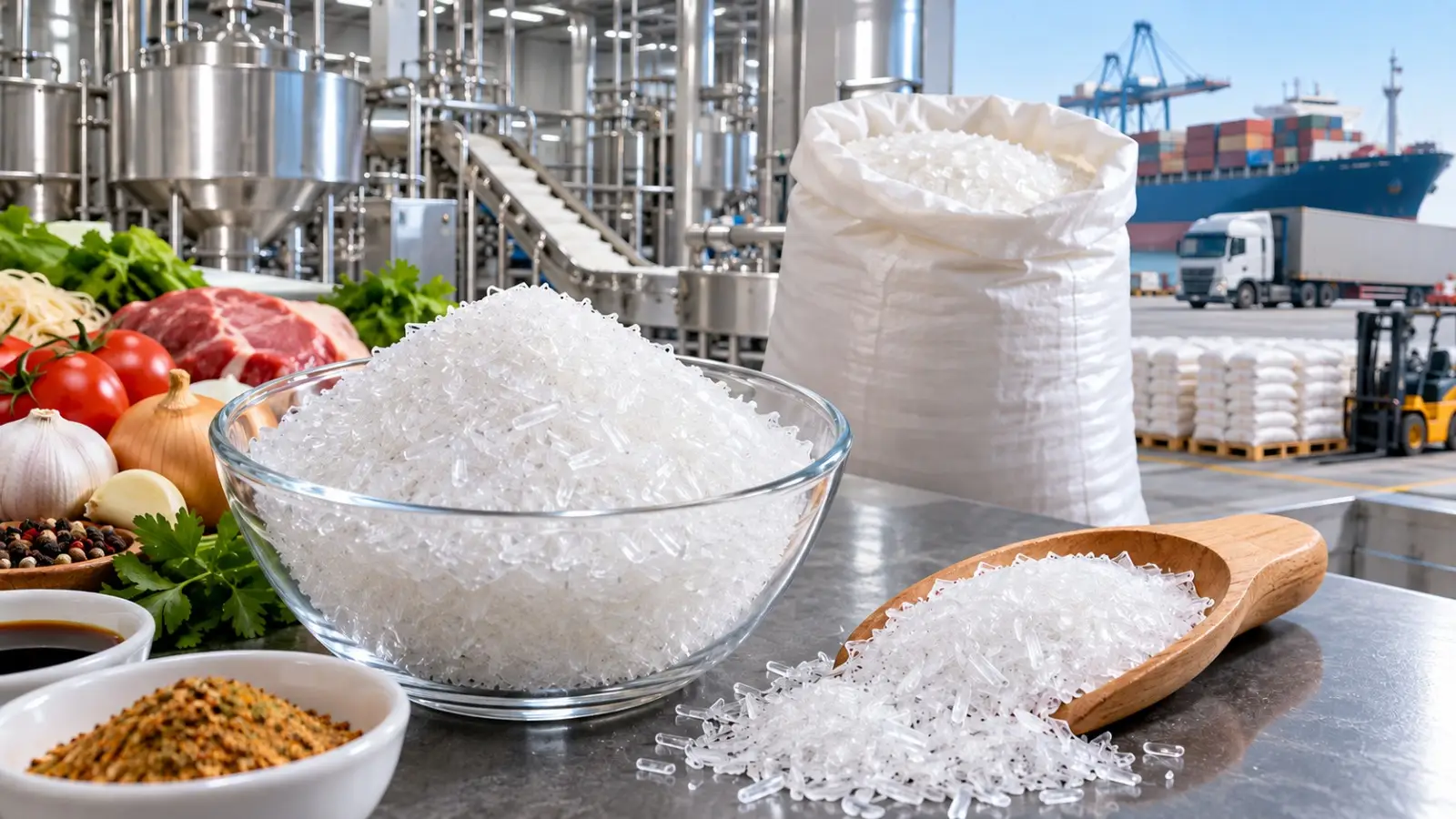
From a supply-chain perspective, MSG is more than a finished food ingredient. Its commercial movement connects raw-material procurement, fermentation-based production, purification, crystallization, quality assurance, packaging, warehousing, freight management, and final delivery. FDA notes that modern MSG production uses fermentation of materials such as starch, sugar beet, sugar cane, or molasses rather than the historical extraction approach.
Why Supply Reliability Matters
Food manufacturers typically operate continuous or scheduled production systems in which ingredient availability affects production planning. For MSG buyers, supply reliability therefore involves more than finding a supplier offering a competitive price. Procurement teams also need to consider product consistency, documentation, packaging suitability, shipment timing, and the supplier's ability to support recurring orders.
The international identity of the ingredient also supports standardized B2B communication. FAO/WHO JECFA identifies Monosodium L-Glutamate as MSG or sodium glutamate and lists Codex INS number 621. These identifiers can help buyers, distributors, quality teams, and suppliers maintain clarity when evaluating specifications and commercial documentation across markets.
Monosodium Glutamate Production and Upstream Supply
Fermentation-Based Manufacturing
The upstream MSG supply chain begins with materials suitable for fermentation. FDA describes contemporary MSG production as a fermentation process using sources including starch, sugar beets, sugar cane, or molasses. This production model connects the availability and economics of carbohydrate-based feedstocks with downstream food-ingredient manufacturing.
After fermentation, industrial processing involves recovery and purification steps before the material is converted into the commercial MSG product. For B2B procurement, understanding this production pathway is useful because upstream availability can influence manufacturing continuity, production planning, and the supplier's ability to maintain consistent commercial volumes.
Production Planning and Supplier Continuity
A dependable MSG supply chain requires coordination between manufacturing capacity and customer demand. Producers and distributors must plan inventories around recurring requirements from food processors, seasoning manufacturers, prepared-food producers, and other industrial users. Long-term purchasing arrangements can therefore involve forecast quantities, shipment schedules, specifications, and packaging requirements.
For international buyers, supplier continuity also depends on the connection between production facilities and export logistics. A supplier may need to coordinate finished-product inventory, warehouse capacity, documentation, container availability, and destination requirements. These factors make supply-chain visibility an important part of industrial MSG sourcing rather than treating procurement as a simple spot purchase.
Quality Control and Product Specifications
Standardized Product Identity
Quality assurance is central to the commercial movement of food-grade MSG. JECFA's food additive database identifies Monosodium L-Glutamate and provides its specification monograph, while the Codex GSFA identifies the additive under INS 621. Such recognized identifiers provide a useful reference framework for manufacturers and procurement teams reviewing product documentation.
FDA's food-substance database identifies monosodium glutamate under several related names, including MSG, monosodium L-glutamate, sodium L-glutamate, and other chemical naming forms. It also identifies technical effects including flavor enhancement. For commercial transactions, aligning product names, specifications, certificates, and regulatory documentation can reduce ambiguity between buyers and suppliers.
Quality Assurance Across the Supply Chain
Quality management should extend beyond the production facility. Storage, handling, packaging, transportation, and receiving procedures can all affect the condition of a finished food ingredient. Buyers therefore commonly review supplier documentation and product specifications before approving a source for regular procurement.
For distributors and food manufacturers, a structured quality process can include reviewing specification sheets, certificates of analysis, packaging information, batch identification, and applicable regulatory documentation. JECFA maintains an online compendium of food additive specifications, providing an established technical reference for evaluated additives.
Applications Driving MSG Supply Requirements
Food Manufacturing and Flavor Enhancement
MSG is primarily associated with flavor enhancement in food manufacturing. FDA describes flavor enhancers as ingredients that enhance flavors already present in foods rather than providing a separate flavor of their own, and lists monosodium glutamate among examples. This function creates demand across food formulations where manufacturers need consistent flavor performance.
The ingredient can therefore enter supply chains serving a range of processed-food applications. Codex material identifies monosodium L-glutamate, INS 621, as a flavor enhancer and includes food categories such as frozen vegetables and seasonings among its documented applications.
Seasonings and Processed Food Products
Seasoning systems represent an important commercial channel for MSG. Food manufacturers can incorporate MSG into seasoning blends and formulated foods as part of a broader flavor system. This creates procurement requirements for predictable product quality, suitable packaging, and repeatable supply.
The supply chain consequently connects MSG manufacturers with seasoning producers, processed-food companies, distributors, and industrial ingredient buyers. For procurement departments, application requirements can influence purchasing specifications, order quantities, delivery schedules, and the documentation expected from suppliers.
Packaging, Warehousing, and Logistics
Industrial Packaging and Storage
Once produced and quality-approved, MSG must be packaged in a manner appropriate for food-ingredient distribution and the buyer's handling system. Packaging selection can depend on order size, warehouse infrastructure, transportation requirements, and the customer's manufacturing process.
For B2B buyers, packaging is therefore part of the total sourcing specification. Procurement teams may need to coordinate pack size, pallet configuration, labeling, batch identification, and storage requirements with suppliers before confirming an order. Clear specifications can help minimize handling problems between supplier warehouses and manufacturing facilities.
International Freight and Distribution
International MSG distribution requires coordination among suppliers, exporters, freight providers, customs processes, warehouses, distributors, and final buyers. Container planning and shipment scheduling become especially important when procurement programs involve recurring or high-volume requirements.
A global B2B marketplace can support this process by connecting buyers with suppliers and creating a commercial channel for comparing product availability, specifications, and sourcing requirements. The objective is to make the supply chain more transparent while allowing procurement teams to coordinate purchasing with production and logistics planning.
B2B Buyers and Procurement Considerations
Food Manufacturers and Ingredient Buyers
The principal commercial audience for MSG includes food manufacturers, seasoning producers, ingredient distributors, and other businesses incorporating flavor-enhancing ingredients into formulations. Their purchasing requirements can differ according to production scale, application, destination market, and internal quality systems.
A procurement team may evaluate a supplier based on product specification, consistency, documentation, available volume, packaging format, lead time, and delivery capability. Rather than focusing exclusively on unit price, buyers can evaluate the complete landed supply proposition to understand how sourcing decisions affect manufacturing continuity.
Distributor and Wholesale Requirements
Distributors can have additional supply-chain requirements because they may purchase MSG in larger quantities and subsequently serve multiple customers or markets. Their priorities can include inventory availability, packaging flexibility, documentation, shipment consolidation, and supplier responsiveness.
Wholesale sourcing also requires careful coordination between expected downstream demand and available inventory. Maintaining appropriate stock levels can help distributors serve customers without unnecessarily increasing holding costs. Supplier communication therefore becomes an important component of maintaining a responsive B2B MSG distribution network.
Supplier Selection and Sourcing Strategy
Evaluating MSG Suppliers
Supplier evaluation should begin with technical and commercial requirements. Buyers can compare product identity, applicable specifications, quality documentation, packaging options, minimum order quantities, production capacity, lead times, and delivery terms. These factors provide a structured basis for supplier qualification.
Regulatory references can also support due diligence. FDA identifies MSG as a food ingredient and provides information concerning its use and regulatory status, while JECFA maintains specifications for Monosodium L-Glutamate. Buyers can use these authoritative references alongside supplier-specific documentation when reviewing potential sources.
Building a Resilient Sourcing Network
A resilient sourcing strategy can involve maintaining visibility across suppliers, inventories, production schedules, and logistics routes. For manufacturers with recurring MSG requirements, establishing clear purchasing forecasts can help suppliers prepare appropriate production and shipment volumes.
B2B sourcing platforms can also facilitate supplier discovery and commercial communication. A marketplace approach allows procurement teams to communicate requirements, compare available supply options, and identify suppliers capable of supporting particular specifications and delivery needs.
Market Supply Chain Outlook
Demand and Supply Coordination
The outlook for MSG supply is closely connected with continued demand for processed foods, seasoning systems, and formulated food products. However, procurement conditions can vary by region and by application. Buyers therefore benefit from monitoring supplier availability, raw-material conditions, freight considerations, and their own production forecasts.
For international sourcing, market information should be interpreted alongside actual supplier capacity and delivery conditions. A broad market trend does not automatically indicate availability for an individual buyer, making direct supplier communication and inventory planning important parts of procurement.
Digital B2B Sourcing
Digitalization is increasingly relevant to industrial ingredient sourcing because procurement teams need faster access to supplier information, product specifications, commercial discussions, and logistics coordination. For MSG buyers, digital B2B channels can help connect demand with suppliers across different production and distribution markets.
A structured digital sourcing process can also improve communication between procurement, quality assurance, logistics, and suppliers. When product specifications and commercial requirements are clearly communicated from the beginning, buyers can reduce avoidable delays and establish a more transparent purchasing workflow.
Conclusion: Building a Reliable MSG Supply Network
From Production to Procurement
The MSG supply chain connects fermentation-based manufacturing with purification, quality assurance, packaging, warehousing, freight, distribution, and final food production. FDA describes fermentation as the modern production method for MSG, while JECFA and Codex provide recognized technical and identification references for Monosodium L-Glutamate and INS 621.
For B2B buyers, these supply-chain stages translate into practical procurement considerations. Reliable sourcing requires attention to product specifications, documentation, packaging, production capacity, inventory, lead times, and logistics rather than evaluating the ingredient on price alone.
Connecting Global Buyers and Suppliers
As international food manufacturing becomes increasingly dependent on coordinated ingredient supply, MSG procurement benefits from clear supplier communication and structured sourcing. Manufacturers, distributors, and procurement teams can use B2B marketplaces to identify potential suppliers, communicate technical requirements, and coordinate commercial purchasing.
Tradeasia / Chemtradeasia / Tradechem Marketplace can position monosodium glutamate sourcing within this broader industrial supply-chain framework, connecting product requirements with supplier discovery and international B2B trade. The result is a procurement approach centered on specification alignment, supply visibility, and dependable commercial coordination.
Sources
www.fao.org
www.fda.gov
FDA Food Substance Database

Leave a Comment