Millet Market Demand and Commercial Positioning
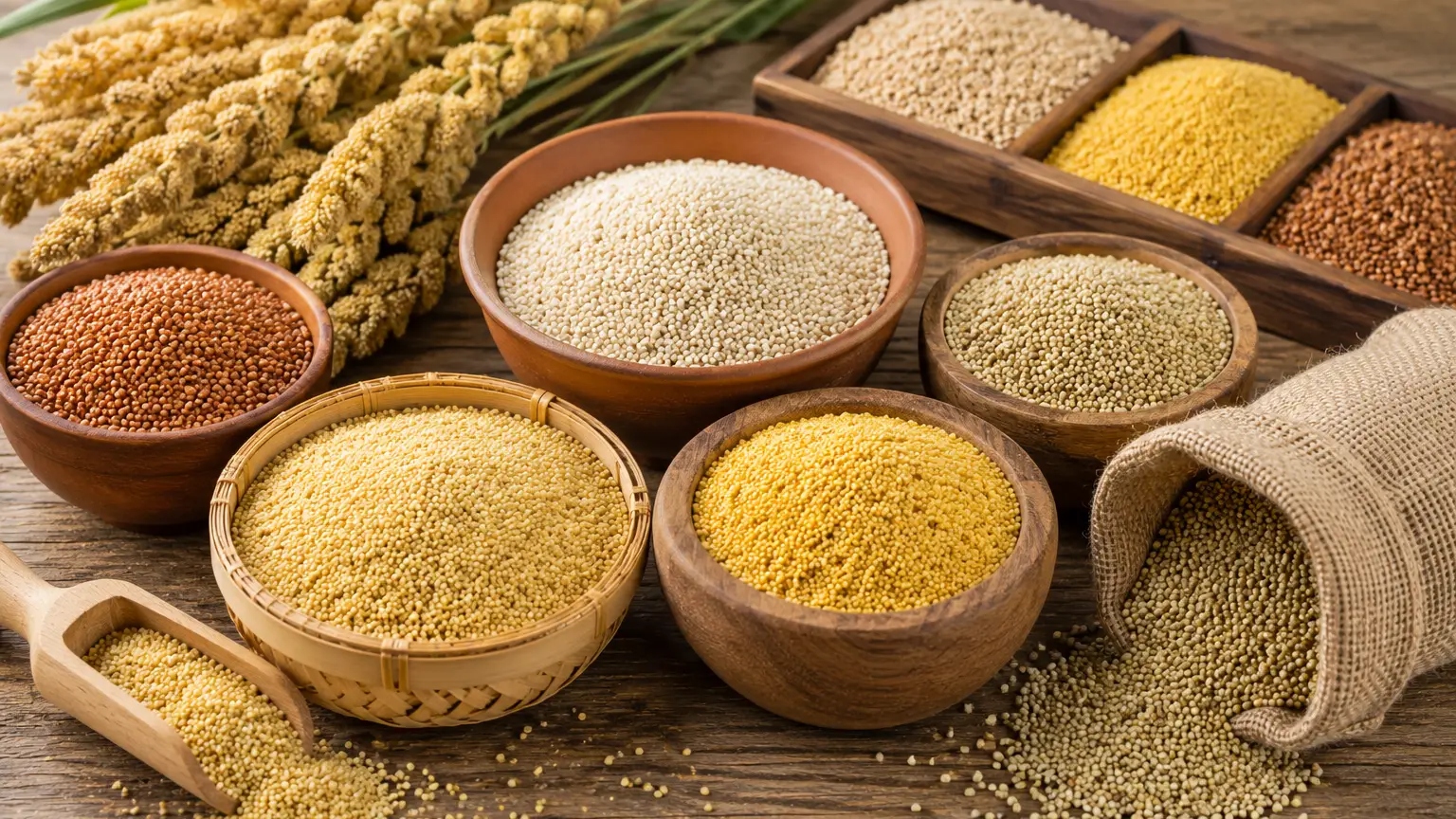
Millet is moving beyond its traditional role as a staple grain and becoming a more commercially relevant agricultural ingredient for food manufacturing, animal nutrition, specialty foods, and ingredient distribution. The product information for Millet identifies it as a small-seeded grass with multiple variants and applications as cereal grain, livestock feed, and bird feed. The listed product is of Australian origin, with HS Code 100829 and a white to off-white solid appearance. For B2B buyers, these characteristics make millet relevant not simply as a commodity but as a versatile raw material whose commercial value depends on application, processing, quality, origin, and supply reliability.
Demand drivers for millet
Recent research indicates that millet demand is being supported by interest in nutritious, gluten-free and diversified grain products. A 2024 review in Frontiers in Nutrition describes millets as multipurpose cereals containing carbohydrates, proteins, fats, dietary fiber, vitamins, minerals, and bioactive compounds, while also noting increasing awareness of millet-based foods and value-added products. This creates opportunities for ingredient manufacturers and food processors developing products positioned around grain diversification, nutritional density, and alternative cereal ingredients.
Market growth and commercial relevance
Market research also points to expanding commercial interest. Grand View Research estimates that the global millet market was valued at approximately USD 36.9 billion in 2023 and projects it to reach USD 55.7 billion by 2030, representing a 6.2% CAGR from 2024 to 2030. Its segmentation specifically includes B2B and B2C end-use channels, demonstrating that commercial procurement is an important component of the broader millet economy. For suppliers, distributors, and procurement teams, this reinforces the opportunity to treat millet as a strategic agricultural raw material rather than only a traditional grain.
Why supply capability matters
The commercial opportunity is closely connected to consistency of supply. Millet is an agricultural product, so availability, crop conditions, origin, processing, moisture management, storage, and transportation can influence procurement decisions. FAOSTAT provides agricultural production and commodity data across countries and territories, giving businesses a structured basis for monitoring production and supply conditions. Buyers therefore increasingly need sourcing partners that can connect product specifications with practical procurement, logistics, and delivery requirements.
Industrial Applications and End-Use Opportunities
Millet has a broad application profile because the grain can enter both conventional food systems and specialized product development. The Tradeasia product information specifically identifies cereal, livestock feed, and bird feed as uses, while scientific literature documents applications ranging from bakery and snack products to ready-to-eat foods and other value-added formulations. This application diversity gives B2B buyers several potential demand channels and allows processors to evaluate millet according to their specific formulation or production objectives.
Food manufacturing applications
Food manufacturers can use millet as a cereal ingredient in products such as flour-based formulations, bakery products, snacks, pasta-style products, beverages, and ready-to-eat or ready-to-cook foods. Research published in Frontiers in Nutrition describes successful millet applications in cakes, cookies, pasta, snack foods, beverages, composite breads, and other food formats. For procurement teams, the important commercial question is therefore not simply whether millet can be used in food, but whether the selected variety, processing condition, particle size, moisture profile, and other specifications are appropriate for the intended formulation.
Animal and bird feed applications
Animal nutrition represents another important market for millet. The product page identifies millet grain for livestock feed and bird feed, while also noting that millet hulls have substantially lower protein content and higher fiber content than the grain. This distinction matters when buyers evaluate whole grain, processed grain, or by-products because nutritional composition and feed formulation requirements can differ significantly between material streams.
Emerging value-added applications
Millet's potential extends into functional and specialized food ingredients. A 2024 scientific review notes that millet contains starch as its major carbohydrate component together with protein, fiber, minerals, vitamins, and phytochemicals, while highlighting opportunities for value-added products and end-use-specific genotypes. For ingredient developers, this supports continued exploration of millet flour, blends, extruded products, functional foods, and other formulations where cereal diversification is commercially relevant.
Key Millet Buyers and Procurement Intent
Millet buyers are not a single homogeneous group. Demand can originate from food manufacturers, ingredient distributors, feed manufacturers, animal nutrition businesses, grain traders, specialty food companies, and companies developing health-oriented or plant-based products. The precise purchasing specification will depend on the downstream application, meaning a food processor may prioritize food-grade characteristics and processing performance while a feed manufacturer may place greater emphasis on nutritional parameters, consistency, and delivered cost.
Food and ingredient buyers
Food manufacturers and ingredient companies are among the most commercially relevant buyers because millet can be incorporated into multiple finished-product categories. Scientific evidence shows that millet can be adapted to a variety of food preparations and processed formats, creating opportunities for companies seeking alternatives to conventional cereals. These buyers typically evaluate whether the supplied material is suitable for their manufacturing process, meets applicable food requirements, and can be delivered consistently at the required commercial volume.
Feed and agricultural commodity buyers
Feed manufacturers, livestock businesses, bird-feed producers, grain traders, and agricultural distributors form another important buyer segment. For these customers, purchasing decisions can be influenced by nutritional composition, grain condition, moisture, storage stability, availability, origin, and freight economics. The product specification notes that millet should be dried appropriately for storage, with grain at or below 14% moisture considered dry and a maximum of 13.5% moisture recommended for storage beyond six months.
What procurement teams compare
Professional buyers commonly compare suppliers on more than headline price. They may assess specification consistency, available documentation, origin, quantity, packaging, shipment terms, delivery reliability, technical support, and the supplier's ability to accommodate recurring requirements. The agricultural nature of millet also makes supplier diversification relevant because crop production and quality can vary across origins and seasons. FAOSTAT's broad agricultural database illustrates the importance of monitoring production and commodity conditions when planning procurement.
Quality, Processing and Product Evaluation
Quality assessment is central to commercial millet procurement because the same broad product name can cover different varieties, grades, processing levels, and end-use requirements. The Tradeasia product listing specifies Australian origin, CAS Number 90082-36-3, HS Code 100829, pure substance concentration, and a white to off-white solid appearance. For buyers, these identifiers can support initial product matching, customs classification, internal purchasing records, and communication between procurement and technical teams.
Moisture and storage requirements
Moisture is a particularly important consideration for grain buyers because it influences storage stability and post-harvest handling. The product information states that conventionally dried millet is considered dry at or below 14% moisture and recommends a maximum of 13.5% for storage periods exceeding six months. Buyers planning international shipments or longer inventory cycles should therefore incorporate moisture specifications into purchase discussions rather than treating them as secondary logistics details.
Processing and application suitability
Processing can influence the suitability of millet for downstream applications. The 2024 Frontiers in Nutrition review explains that different degrees of decortication can be selected according to end use, while also describing commercial technologies for ready-to-cook and ready-to-eat millet products. A procurement team sourcing millet for flour production, bakery, extrusion, feed, or direct grain use should consequently define its intended application before finalizing specifications.
Technical documentation and due diligence
Technical documentation is another part of professional purchasing. Buyers may need product specifications, safety or handling documentation where applicable, certificates, origin information, quality-control records, and shipment documentation before approving a supplier. The Millet product page provides access to technical documentation and an inquiry pathway for pricing, customization, quantity, and shipping requirements, allowing buyers to move from general product research toward a more application-specific sourcing discussion.
Millet Sourcing and Supply Chain Considerations
B2B millet sourcing involves more than identifying a supplier with available inventory. Buyers need to consider origin, production conditions, post-harvest processing, storage, shipment planning, and the ability to maintain specification consistency over repeat orders. Research on millet production emphasizes its resilience in drought-prone and semi-arid environments, but agricultural resilience does not eliminate normal risks associated with harvest variability, regional production, and post-harvest handling.
Origin and supply diversification
Origin can influence both product characteristics and supply planning. The Tradeasia listing identifies Australia as the origin for the referenced Millet product, giving buyers a specific source profile to evaluate against their application and market requirements. For procurement teams, understanding origin is useful when assessing supply continuity, landed cost, regulatory requirements, customer specifications, and potential supplier diversification.
Logistics and inventory planning
Millet requires appropriate post-harvest handling and storage controls. The product information describes cleaning, drying, threshing, and storage practices and highlights moisture thresholds for long-term storage.These considerations become especially important in international B2B trade, where transit time, warehouse conditions, container handling, and destination storage can affect the quality of agricultural raw materials before they enter manufacturing.
Building a resilient supply model
A resilient procurement strategy can combine clear specifications, reliable supplier communication, planned inventory levels, and visibility into agricultural market conditions. FAOSTAT's production datasets provide a foundation for monitoring agricultural commodity trends across countries, while scientific research continues to examine millet production challenges, climate resilience, and opportunities for expanded commercialization. For buyers seeking a commercial starting point, the Millet sourcing page provides product-specific information and an inquiry route for quantity, pricing, customization, and shipping discussions.
Supplier Comparison and B2B Purchasing Strategy
Supplier comparison should begin with the buyer's application rather than with price alone. A food manufacturer, feed producer, distributor, and commodity trader can have substantially different technical and commercial requirements even when they purchase the same underlying grain. The growth of value-added millet products described in recent research means buyers should evaluate whether a supplier can support the specifications and consistency required by the intended downstream application.
Comparing product specifications
A practical supplier assessment should examine origin, grade, processing condition, moisture, available quantities, documentation, packaging, and suitability for the intended application. The product listing's stated Australian origin, HS Code 100829, physical appearance, and moisture guidance provide examples of the types of information that can be relevant during commercial evaluation. Clear specifications reduce ambiguity between buyer and supplier and help procurement teams compare quotations on an equivalent basis.
Comparing commercial capability
Commercial capability also matters when purchasing agricultural commodities internationally. Buyers can evaluate minimum order quantities, lead times, shipping arrangements, payment terms, documentation support, communication responsiveness, and the ability to support repeat orders. Tradeasia describes its business as a global supply-chain and distribution company headquartered in Singapore, with a network of trading hubs and integrated procurement capabilities. For marketplace buyers, this type of supply-chain infrastructure can be relevant when the purchasing requirement extends beyond a single spot transaction.
Moving from inquiry to procurement
Once a buyer has established the required specification and quantity, the next step is a structured commercial inquiry. The Millet product and supplier information page enables buyers to submit product, quantity, unit-of-measure, email, and message details while requesting information on pricing, customization, and shipping. This creates a practical bridge between organic search traffic, product research, supplier evaluation, and qualified B2B purchasing conversations.
Commercial Outlook for Millet Buyers and Suppliers
The commercial outlook for millet is increasingly shaped by application diversification. Demand is supported by conventional grain consumption, animal feed, specialty foods, and the development of value-added products, while climate-resilient agriculture is increasing interest in crops that can perform under challenging growing conditions. Research published by Frontiers in Plant Science notes that the Food and Agriculture Organization designated 2023 as the International Year of Millets and highlights the crop's relevance to food and nutrition security.
Opportunities for manufacturers
For manufacturers, millet can provide a route into expanding product categories where cereal diversification, nutritional positioning, or specialized formulation is commercially relevant. The growing range of documented applications—from bakery and snacks to ready-to-eat products and beverages—suggests that future demand will depend increasingly on processing technology and application-specific performance rather than on grain availability alone. Manufacturers that define technical requirements early can make sourcing decisions more effectively and reduce the risk of purchasing material that is unsuitable for their production process.
Opportunities for traders and distributors
Traders and distributors can benefit from the fragmented nature of agricultural supply by connecting producers with buyers that require dependable specifications, quantities, and logistics. Market research from Grand View Research identifies Asia Pacific as the largest regional market in its 2023 analysis and forecasts continued global market growth through 2030. This creates potential commercial opportunities for supply-chain participants that can combine market access with quality management, logistics coordination, and responsive customer service.
The role of B2B marketplaces
For procurement teams, a B2B marketplace can shorten the distance between product discovery and supplier engagement by presenting product information alongside an inquiry pathway. Tradeasia positions its business around global raw-material supply, quality assurance, supply-chain reliability, and industrial customers, making this model relevant to buyers evaluating agricultural ingredients alongside their wider raw-material procurement needs. For businesses evaluating millet for industrial applications, the Millet supplier information and sourcing page offers a direct starting point for discussing product requirements, quantities, pricing, and shipment needs.
Millet is therefore best understood as a commercially versatile agricultural raw material whose B2B potential extends across food ingredients, animal nutrition, specialty products, and commodity distribution. Its market trajectory is supported by diversified applications, increasing attention to nutritious and climate-resilient crops, and continued development of value-added processing. For buyers, the strongest sourcing strategy is to align application requirements with measurable specifications, supplier capability, documentation, storage conditions, and reliable logistics before committing to recurring procurement.
Leave a Comment