Millet as a B2B Agricultural Raw Material
Product profile and supply characteristics
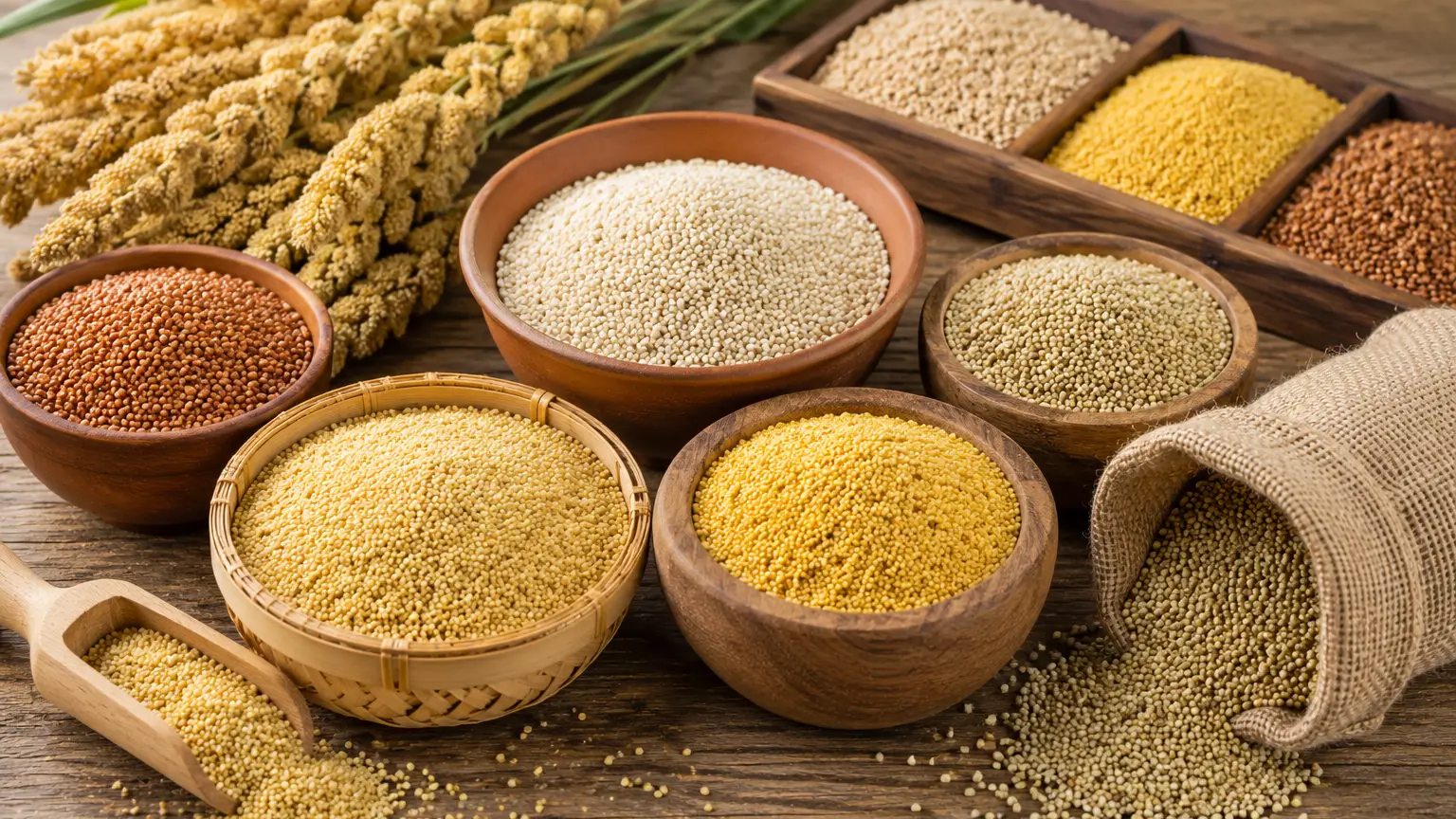
Millet is a group of small-seeded cereal grasses used primarily as grain, food ingredients and feed materials. The supplied product is listed as Millet, with Australian origin, HS Code 100829 and a white-to-off-white solid appearance. The product page classifies it within the energy-sources category and provides technical documentation and an inquiry pathway for buyers seeking pricing, customization and shipping information.
For B2B procurement, the important point is that millet is not a single uniform raw material. Different millet species and varieties can have different nutritional, functional and processing characteristics. FAO identifies pearl, finger, foxtail, little, proso, barnyard and other millet types, with composition varying according to species, variety, growing conditions and processing. This makes specification management important when a manufacturer is sourcing millet for a defined application.
The commercial value of millet comes from its ability to serve several downstream markets from the same broad crop category. It can enter conventional grain channels, food formulation, feed production and more specialized ingredient-development pathways. This diversity gives traders and distributors opportunities to serve multiple buyer segments, but it also means that application requirements should be understood before negotiating volume, quality and logistics.
For procurement teams, the practical starting point is therefore not simply asking for a "millet supplier," but defining the intended application, acceptable variety or specification, required quantity, packaging, origin preference, delivery location and documentation. The supplied Millet product page can support that initial sourcing process by providing product information and a direct inquiry route.
Industrial Applications Driving Millet Demand
Food and ingredient applications
Food manufacturing is one of the most commercially significant areas for millet. Scientific research describes millet as a nutrient-rich cereal containing carbohydrates, protein, lipids, minerals, vitamins, dietary fibre and bioactive compounds. Processing methods such as dehulling, soaking, germination, milling, fermentation and other techniques can alter its nutritional and functional properties, creating opportunities for different food formulations.
In industrial food production, millet can therefore move beyond whole-grain consumption into flour, cereal products, formulated foods, bakery applications, beverages and other processed products. The precise suitability depends on the millet type and processing technology. For manufacturers, this creates demand for raw material that performs consistently through cleaning, milling, formulation and downstream processing rather than merely meeting a basic commodity description.
Feed and animal nutrition
Animal feed represents another important application pathway. The supplied product information explicitly identifies millet as a crop used for livestock feed and bird feed. Research reviewing millet nutrition also identifies pearl and finger millet as potential feed grains and discusses their use as alternatives or complements to other cereal ingredients in animal diets.
The commercial opportunity is consequently broader than human food alone. Feed manufacturers, livestock producers and bird-feed formulators may evaluate millet according to energy contribution, nutritional profile, grain quality, moisture, cleanliness and economics relative to alternative cereals. This creates a procurement environment where dependable specifications and supply continuity can be as important as headline commodity pricing.
Millet Market Trends and Commercial Demand
Functional and higher-value applications
One of the clearest application trends is the movement from traditional grain consumption toward higher-value processed ingredients. Recent scientific reviews highlight industrial potential in functional foods, nutraceutical development, plant-based protein applications and extraction of millet-derived nutrients and bioactive compounds. These developments can expand the addressable market for millet beyond conventional grain buyers.
This trend matters commercially because ingredient manufacturers increasingly need raw materials that can support differentiated product concepts. Millet's nutritional composition, processing flexibility and diversity of varieties give developers several routes for experimentation. At the same time, research continues to identify gaps in standardized processing and characterization, meaning commercial buyers should avoid assuming that all millet supplies will behave identically in production.
Climate-resilient agriculture and supply diversification
Climate resilience is another factor shaping the longer-term commercial narrative around millet. FAO describes millets as crops capable of growing under difficult climatic conditions and in relatively dry environments, while emphasizing their potential contribution to resilient agrifood systems. FAO also highlights value-chain development, processing innovation and digital tools as opportunities for expanding millet markets.
For B2B buyers, however, resilience at the crop level does not eliminate supply-chain risk. Weather, regional production conditions, harvest timing, storage, transportation and quality variation can still affect delivered material. The stronger commercial strategy is therefore to combine interest in millet's resilient agricultural characteristics with disciplined supplier qualification, specification control and inventory planning.
Millet Buyer Intent and Procurement Requirements
Who buys millet
The most relevant millet buyers include food manufacturers, cereal and grain processors, functional-food companies, animal-feed manufacturers, bird-feed producers, ingredient distributors, commodity traders and procurement organizations. Each group approaches the same agricultural raw material differently because the economic value of the grain depends on its final use, processing requirements and market positioning.
Food buyers may prioritize cleanliness, moisture, variety, milling behavior and nutritional characteristics, while feed buyers may place greater emphasis on nutritional consistency, energy contribution, availability and delivered cost. Distributors and traders may additionally focus on origin, shipment size, packaging, documentation and resale-market requirements. This diversity makes application-specific qualification essential when evaluating a millet supplier.
What procurement teams evaluate
A professional procurement process should examine product identity, origin, specification, moisture, physical appearance, cleanliness, packaging, quantity, documentation, lead time and delivery terms. The supplied product page states that grain at or below 14% moisture is considered dry and that long-term storage of more than six months calls for a maximum moisture content of 13.5%. These parameters are particularly relevant to buyers planning storage and inventory cycles.
Buyers also compare suppliers because agricultural raw materials can vary by crop, harvest, processing method and origin. Price alone may therefore be an incomplete measure of purchasing value. A lower nominal price can be offset by higher logistics costs, inconsistent quality, excessive losses, unsuitable packaging or unreliable delivery. For manufacturers operating continuous production, supplier reliability and specification consistency can materially influence procurement decisions.
Millet Sourcing and Supply Chain Considerations
Quality and storage management
Millet sourcing should begin with a clearly defined product specification aligned with the buyer's application. Moisture management is particularly important because the product page specifies storage-related moisture thresholds. Proper drying and storage help protect the usability of grain during longer inventory periods, while handling and processing practices can affect physical and nutritional quality.
FAO also emphasizes that proper handling, timely harvesting, threshing and controlled dehusking can contribute to maintaining millet quality and reducing losses. Its guidance points toward mechanized processing as a means of improving efficiency and producing cleaner, more intact grains. For B2B buyers, these upstream practices can translate into more predictable raw-material performance downstream.
Logistics and supplier comparison
International millet procurement requires buyers to consider more than agricultural origin. Shipment planning should account for quantity, packaging, port logistics, transit time, documentation, storage capacity and destination requirements. A supplier that can coordinate these elements may provide greater practical value than one offering only a competitive ex-warehouse price.
This is where a structured B2B marketplace approach can simplify procurement. Buyers can use the Millet sourcing and supplier information page to initiate discussions around quantity, pricing, customization and shipping. For manufacturers and distributors, the objective is to establish a supply arrangement that aligns product specification with commercial logistics rather than treating sourcing as a one-time commodity purchase.
Regional Opportunities for Millet Suppliers and Buyers
India and Asian markets
India represents a particularly relevant market for millet because of its established production base, consumption patterns and food-processing ecosystem. FAO identifies India as the largest producer of finger millet, while several other millet varieties are also widely cultivated across Asian countries. This geographic concentration creates opportunities for regional processors, distributors and ingredient manufacturers to build specialized millet value chains.
Across Asia, demand opportunities can develop at different stages of the value chain. Traditional grain markets can coexist with modern food processing, functional-food development, ingredient production and feed applications. For suppliers, this means market development does not necessarily depend on a single end-use category; it can involve matching different millet specifications with different industrial customers.
Global trade and diversification
Globally, millet remains a relatively specialized cereal compared with major grains, but FAO identifies greater millet trade as an opportunity for food-system diversification. The organization notes that millets, including sorghum within its broader discussion, represent a small share of global grain trade and highlights market transparency and digitalization as important factors for strengthening value chains.
For international suppliers and distributors, this creates a market in which relationship management, transparent specifications and reliable logistics can help unlock opportunities. Rather than competing only on commodity price, suppliers can differentiate through dependable documentation, application knowledge, shipment coordination and responsiveness to buyer requirements. This approach is especially relevant for procurement teams entering millet sourcing for the first time.
Commercial Positioning and B2B Sourcing Outlook
Why millet matters commercially
Millet's commercial proposition rests on versatility. The same broad raw-material category can participate in food, feed, bird-feed and emerging functional-ingredient value chains, while research continues to investigate millet proteins, bioactive compounds and advanced processing technologies. Recent literature specifically points to opportunities for millet-derived proteins in plant-based and functional food applications.
For manufacturers, this application diversity can support raw-material substitution, new product development and portfolio expansion. For distributors and traders, it creates opportunities to connect agricultural supply with specialized industrial demand. The key is to understand that market potential is application-dependent: a variety suitable for one formulation or processing route may not automatically be optimal for another.
The B2B marketplace opportunity
For a B2B sourcing platform, millet is therefore best positioned around transparency, application relevance and supply-chain execution. Buyers need access to product specifications, origin information, documentation, quantities and logistics discussions before committing to a procurement program. A marketplace can help shorten the path between a qualified supplier and an industrial buyer by bringing these requirements into one sourcing workflow.
The Tradeasia International B2B supply network positions supply-chain services around raw-material sourcing, quality assurance and logistics, which aligns with the needs of buyers evaluating agricultural and ingredient materials. For millet procurement, the commercial objective should be dependable access to suitable material rather than an unsupported promise of the lowest price.
Looking ahead, millet demand is likely to be influenced by food-ingredient innovation, plant-based protein research, feed economics, consumer interest in diverse grains and the broader push toward resilient agricultural systems. The strongest sourcing strategies will connect these demand drivers with disciplined supplier qualification, quality control, storage planning and logistics execution. Buyers interested in evaluating available specifications can begin with the Millet product page for industrial sourcing and use it as a starting point for commercial inquiry.
Leave a Comment