Understanding Meat and Bone Meal in the B2B Supply Chain
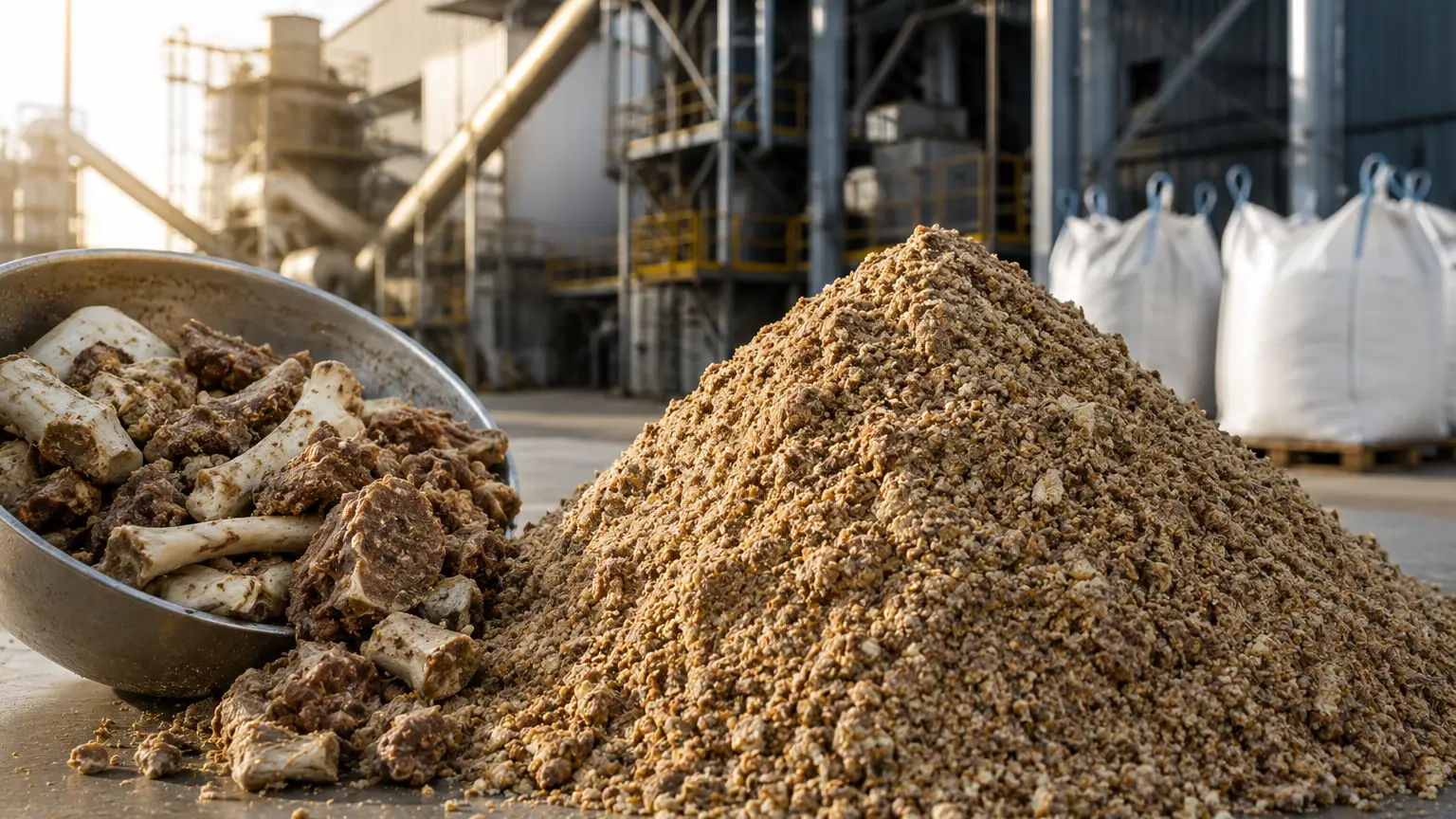
Meat and Bone Meal (MBM) is a rendered animal-derived material produced from processed animal tissues and bones. In commercial supply chains, its importance comes from its ability to convert animal by-products into materials with potential value in feed, fertilizer, energy, and other controlled industrial applications. The precise specification and permitted end use depend heavily on the origin of the material, processing method, regulatory classification, and destination market. The European Commission identifies animal by-products as materials that can have nutritional and energetic value but require controlled processing and traceability because of potential animal and public-health risks.
What Meat and Bone Meal Is
From a procurement perspective, MBM should not be treated as a single uniform commodity. Its commercial characteristics can vary according to animal source, bone-to-soft-tissue ratio, protein and mineral composition, moisture, particle size, processing conditions, and applicable regulatory category. These differences can affect whether a particular grade is suitable for feed, fertilizer, combustion, or another industrial application. Consequently, buyers need to match the specification with the intended end use rather than purchasing purely on product name or headline price.
MBM is also part of the broader rendering economy, in which animal-origin residual materials are processed into useful secondary products. FAO technical material describes meat and bone meal as a protein-rich rendered material and notes its historical role in supplying protein and minerals to animal diets while also providing a productive use for rendered by-products. This resource-recovery dimension remains commercially important because manufacturers and processors increasingly evaluate raw-material utilization alongside conventional cost considerations.
For B2B buyers, this means the commercial value of Meat and Bone Meal is determined by more than its physical appearance. A purchasing team may need to assess origin, processing controls, microbiological status, nutritional composition, documentation, packaging, logistics, and regulatory eligibility before approving a supplier. Buyers operating internationally must also consider the rules of both the exporting and importing markets, particularly where animal-derived materials cross borders.
Industrial Applications Driving Meat and Bone Meal Demand
The strongest demand opportunities for Meat and Bone Meal arise where its nutritional, mineral, or energy characteristics align with a controlled industrial process. Animal feed is one important historical application, while fertilizer and soil-improvement uses provide another route for appropriately classified animal-derived materials. Other applications can include energy recovery or combustion for specific categories and jurisdictions. The European Commission states that animal by-products can be used for feed, fertilizers or soil improvers, renewable fuels, and other controlled purposes depending on their category and processing requirements.
Animal Feed Applications
Where regulations permit, MBM can serve as an animal-feed ingredient because it contains protein and minerals. Its usefulness is therefore connected to formulation economics, nutrient requirements, ingredient availability, and the regulatory status of the relevant animal-derived material. FAO material on feed protein sources identifies MBM as a source historically used to increase protein and mineral levels and complement grain-based protein sources. For feed manufacturers, however, nutritional value must always be considered alongside species-specific restrictions and feed-safety controls.
Fertilizer and Soil-Improvement Applications
MBM can also enter fertilizer supply chains where the relevant material classification and local rules permit it. Animal-derived meals can provide nutrients to agricultural systems, making them relevant to organic or animal-origin fertilizer formulations. European Union legislation specifically recognizes meat-and-bone meal among animal-derived materials considered within the regulatory framework for organic fertilizers and soil improvers. This creates opportunities for suppliers serving fertilizer manufacturers, agricultural-input distributors, and formulators seeking animal-origin nutrient materials.
Energy and Resource-Recovery Applications
Another commercial pathway is resource recovery through controlled combustion or fuel applications. This area has become particularly relevant from a regulatory and circular-economy perspective because certain MBM categories cannot re-enter feed chains and therefore require alternative disposal or utilization routes. In January 2026, the European Union adopted a regulation addressing transitional measures for exports of meat-and-bone meal as a fuel for combustion, demonstrating that energy recovery remains a live regulatory and commercial issue.
Market Trends Shaping Meat and Bone Meal Procurement
The Meat and Bone Meal market is influenced by several interconnected trends rather than a single demand driver. Rendering capacity, livestock and meat-processing volumes, feed formulation economics, fertilizer demand, animal-health regulation, waste-reduction objectives, and international trade rules can all affect supply and purchasing conditions. For B2B buyers, this makes MBM a supply-chain product whose commercial availability can change according to both upstream animal-processing activity and downstream regulatory requirements.
Circularity and Resource Recovery
One significant trend is the increasing commercial focus on converting animal by-products into useful products rather than treating them solely as waste. The European Commission notes that large quantities of animal by-products arise from slaughterhouses and other food-related operations and emphasizes that these materials can possess nutritional and energetic value when safely processed. This supports a broader circular-resource model in which rendering creates marketable feed, fertilizer, energy, and other inputs from materials generated elsewhere in the food system.
Regulatory Segmentation
At the same time, the market is becoming increasingly segmented by regulatory classification and permitted use. The European Commission's animal-by-product framework uses risk-based categories and establishes requirements for safe sourcing, treatment, traceability, transport, and end use. For international traders, this means a product described commercially as MBM may not automatically be eligible for every application in every destination country.
Alternative End Uses
The development of alternative end uses is another important market signal. The EU's 2026 regulation concerning MBM used as fuel for combustion illustrates how policy can influence the commercial destination of animal-derived materials. This does not mean every MBM grade is suitable for fuel, but it shows why suppliers and buyers increasingly need to understand the relationship between product category, regulation, and end-use economics before committing to long-term supply arrangements.
Who Buys Meat and Bone Meal and What They Evaluate
The buyer base for Meat and Bone Meal can span feed manufacturers, fertilizer producers, agricultural-input distributors, rendering companies, industrial traders, and specialized procurement organizations. The appropriate buyer depends on the material's classification and intended application. Because animal-derived products are subject to different controls depending on their origin and end use, commercial buyers generally need more technical information than they would for an unrestricted industrial commodity.
Key B2B Buyer Groups
Animal-feed manufacturers can evaluate MBM as a source of protein and minerals where permitted by applicable feed regulations. Fertilizer manufacturers may consider suitable animal-origin material as an input for nutrient formulations, while distributors and traders may purchase MBM for resale into approved industrial or agricultural channels. Rendering and resource-recovery businesses can also be relevant buyers where MBM is directed toward non-feed applications. The European Commission confirms that animal by-products can have multiple potential uses but that those uses depend on risk category and regulatory controls.
Procurement Evaluation Criteria
A procurement team evaluating a Meat and Bone Meal supplier should typically examine product specifications, animal source, processing method, protein and mineral parameters, moisture, particle size, microbiological controls, contaminants, packaging, batch consistency, documentation, and applicable regulatory approvals. Feed-related buyers should pay particular attention to feed-chain eligibility, while fertilizer and industrial buyers need to verify the requirements applicable to their own end use and destination market.
Why Buyers Compare Suppliers
Supplier comparison is important because MBM is not necessarily interchangeable across origins or grades. Two products carrying the same commercial name may have different specifications, regulatory classifications, processing histories, or permitted applications. FAO guidance emphasizes that feed ingredients need to be obtained and preserved under conditions that prevent contamination or deterioration and that good manufacturing practices are important throughout the feed supply chain. As a result, procurement teams commonly compare suppliers on quality consistency and documentation as well as price.
How to Source Meat and Bone Meal for Industrial Use
Commercial sourcing should begin with the buyer's end-use specification rather than with a generic request for MBM. A feed manufacturer, fertilizer producer, and energy user may require different grades, documentation, and regulatory treatment. Establishing the application first allows procurement teams to define the necessary product characteristics and identify suppliers capable of meeting them.
Define the Required Specification
Before requesting quotations, buyers should establish the technical parameters that matter for their process. These can include protein content, mineral or ash content, moisture, particle size, animal origin, processing requirements, packaging, shelf-life expectations, and relevant microbiological or contaminant specifications. The specification should also identify the destination country and intended application because regulatory eligibility can affect which materials can legally be imported or used.
Verify Compliance and Traceability
Traceability is particularly important when sourcing animal-derived materials internationally. The European Commission describes safe sourcing, safe treatment, traceability, risk-based transport, processing, use, and imports as core elements of the EU animal-by-product framework. Buyers should therefore request relevant certificates, product specifications, origin information, processing documentation, and other evidence required by the destination market before finalizing a commercial agreement.
Compare Commercial Supply Conditions
Price is only one component of the total sourcing decision. Procurement teams should compare minimum order quantities, packaging formats, shipment options, lead times, production capacity, payment terms, documentation, quality consistency, and supplier responsiveness. A lower quoted price can become commercially unattractive if inconsistent specifications, delayed shipments, or missing compliance documents create production or customs problems.
For buyers exploring potential suppliers and product specifications, the Meat and Bone Meal supplier information provides a relevant starting point for evaluating the product within a B2B marketplace environment. In practice, procurement teams can use marketplace product information alongside their own technical specification and regulatory checks to shortlist potential supply partners.
Commercial Opportunities for Meat and Bone Meal Suppliers
For manufacturers, traders, distributors, and exporters, Meat and Bone Meal represents a product category where commercial differentiation can come from reliable specifications, regulatory knowledge, documentation, and supply continuity. Buyers are not simply searching for a material called MBM; they are looking for a product that can fit a defined industrial process and destination-market requirement. Suppliers that communicate those attributes clearly can improve their relevance to qualified B2B inquiries.
Opportunities for Manufacturers
Manufacturers and rendering companies can position their MBM supply around consistent production, controlled processing, traceability, and transparent specifications. This is particularly relevant when serving repeat industrial customers that require predictable material characteristics across multiple shipments. FAO notes the importance of proper handling, preservation, and manufacturing practices for feed ingredients, reinforcing why process control is commercially relevant.
Opportunities for Traders and Distributors
Traders and distributors can create value by connecting compliant supply sources with buyers that have specific application requirements. Their role may involve consolidating demand, coordinating logistics, supporting documentation, and identifying suitable grades for particular destinations. Because animal-derived products can be subject to different restrictions depending on category and use, specialist market knowledge can become an important part of the trading proposition.
Marketplace-Based Supply Development
A B2B marketplace can support this process by making product information more discoverable to manufacturers, distributors, procurement teams, and industrial traders. Tradeasia / Chemtradeasia / Tradechem Marketplace can position Meat and Bone Meal around application relevance and sourcing information rather than treating the product simply as a commodity listing. This approach can help buyers move from informational searches such as "Meat and Bone Meal applications" toward commercial searches such as "Meat and Bone Meal supplier" and "Meat and Bone Meal procurement."
Building a More Reliable Meat and Bone Meal Supply Strategy
A reliable MBM sourcing strategy connects technical requirements, regulatory eligibility, supplier capability, and logistics. Procurement teams should consider the complete supply chain from raw-material origin and rendering through storage, shipment, import controls, and final industrial use. This approach is particularly important for animal-derived products because the regulatory consequences of incorrect classification or documentation can extend beyond the purchasing department.
Align Supply With End-Use Requirements
The first priority is to make sure the purchased material matches its intended application. Feed, fertilizer, and combustion uses can have different eligibility requirements, and the same product name should not be assumed to mean identical regulatory treatment in every market. The European Commission's framework illustrates this risk-based approach by distinguishing animal-by-product categories and applying different requirements to feed, fertilizer, and other uses.
Develop Supplier Qualification Processes
Supplier qualification should combine technical, commercial, and compliance checks. Buyers can assess product specifications, quality-control procedures, traceability, production capacity, shipment history, certifications, packaging, and documentation before moving to larger purchase volumes. This creates a more defensible procurement process and reduces the risk of selecting a supplier based solely on price.
Use Market Intelligence to Improve Purchasing Decisions
Market intelligence is particularly valuable when the product's end-use mix is changing. The recent EU regulatory attention to MBM combustion applications shows how policy can influence alternative demand channels, while the continuing regulatory framework for feed and fertilizer uses demonstrates the importance of application-specific compliance. Procurement teams that monitor these developments can better anticipate changes in available supply, permitted applications, and documentation requirements.
Conclusion: Turning MBM Demand Into Sourcing Opportunities
Meat and Bone Meal occupies an important position within the broader animal by-product and resource-recovery supply chain. Its commercial relevance comes from multiple potential applications, including permitted animal-feed uses, fertilizer and soil-improvement inputs, and selected energy-recovery pathways. However, the value of an MBM supply is closely tied to its specification, origin, processing controls, regulatory classification, and destination-market eligibility.
What B2B Buyers Should Prioritize
For procurement teams, the most effective sourcing approach is to start with the intended application, define the technical specification, verify regulatory eligibility, and then compare qualified suppliers on quality, documentation, logistics, and commercial terms. This is more robust than treating Meat and Bone Meal as a standardized commodity because regulatory and technical differences can materially affect its suitability for a particular application.
The Role of B2B Marketplaces
For suppliers, manufacturers, traders, and distributors, the opportunity lies in presenting MBM as a clearly specified industrial input with transparent sourcing information. A marketplace can help connect relevant buyer intent with available supply while making product applications and procurement considerations easier to evaluate. Buyers seeking to investigate available supply can review the Meat and Bone Meal sourcing page as part of their supplier-shortlisting process.
Ultimately, Meat and Bone Meal sourcing is most effective when commercial demand is matched with technical suitability, regulatory compliance, and dependable supply. For B2B buyers operating across feed, fertilizer, agricultural-input, rendering, and resource-recovery markets, these factors provide a practical framework for evaluating suppliers and building resilient procurement channels.
Sources
- European Commission — Animal By-Products: The Commission explains animal-by-product categories, permitted uses, safety considerations, and the importance of controlled processing and traceability. European Commission: Animal By-Products
- FAO — Protein Sources for the Animal Feed Industry: Technical FAO material covering Meat and Bone Meal as a rendered protein and mineral source and its role in animal-feed supply chains. FAO: Protein Sources for the Animal Feed Industry
- EUR-Lex — Commission Regulation (EU) 2026/176: Current EU regulatory material concerning transitional measures for the export of Meat-and-Bone Meal as fuel for combustion, providing a recent signal on alternative MBM utilization. EUR-Lex: Commission Regulation (EU) 2026/176
Leave a Comment