Meat and Bone Meal Global Supply Chain and Market Demand Insights
Global Market Overview of Meat and Bone Meal
Meat and bone meal is a high-protein rendered animal by-product widely used in feed and agricultural industries. Its global demand is closely linked to livestock production cycles and protein feed requirements. According to the Food and Agriculture Organization (FAO), global animal protein feed demand continues to grow due to rising meat consumption and aquaculture expansion.
Demand Expansion in Protein Feed Markets
The global feed industry increasingly relies on alternative protein sources such as meat and bone meal to supplement fishmeal and soybean meal. This shift is driven by cost efficiency and protein density requirements in livestock diets. FAO and OECD agricultural outlook reports indicate sustained growth in compound feed production globally.
Protein-rich feed ingredients like meat and bone meal play a critical role in meeting rising demand from poultry and swine sectors. This demand is particularly strong in emerging markets where livestock production is rapidly industrializing.
Market Growth Drivers and Sustainability Trends
Sustainability is a major driver influencing meat and bone meal demand. The circular economy approach encourages utilization of animal by-products that would otherwise become waste. The European Commission’s animal by-products regulation framework supports controlled and safe use in feed applications.
This regulatory structure ensures safety while promoting resource efficiency in protein recycling systems across the livestock industry.
Rendering Industry and Supply Chain Structure
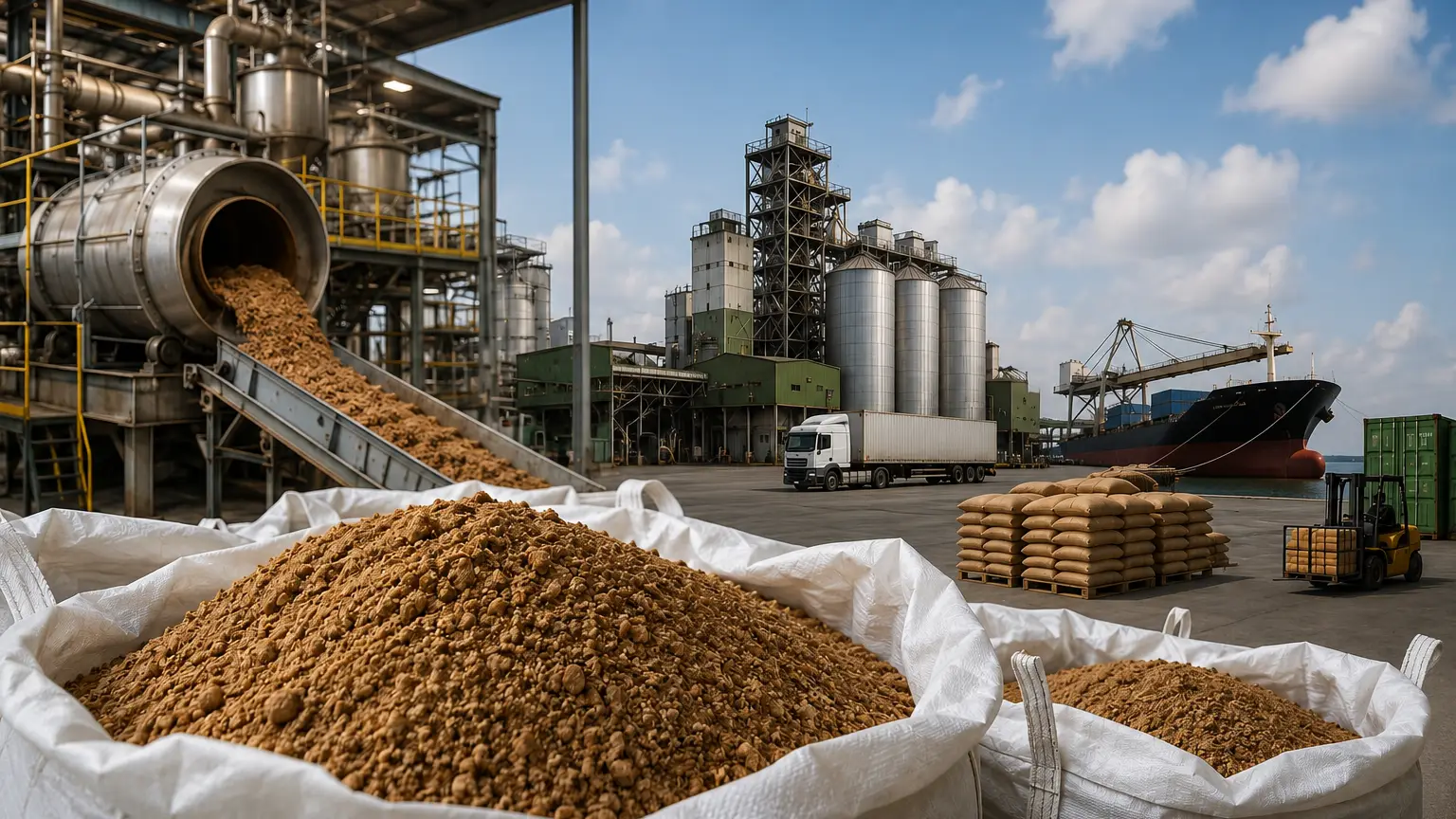
The production of meat and bone meal is rooted in the rendering industry, where animal by-products from slaughterhouses are processed into usable protein meals. According to the North American Renderers Association (NARA), rendering converts more than 50% of animal by-products into feed and industrial materials.
Raw Material Collection and Processing Systems
The supply chain begins at slaughterhouses, where inedible animal tissues are collected and transported to rendering facilities. These materials undergo sterilization, drying, and grinding processes to produce stable protein meal products. The USDA Food Safety and Inspection Service (FSIS) regulates rendering standards in the United States.
This ensures that meat and bone meal meets strict safety and pathogen control requirements before entering the feed supply chain.
Global Supply Chain Integration
International trade of meat and bone meal is influenced by regional livestock production and rendering capacity. Countries with strong meat processing industries, such as the United States, Brazil, and parts of Europe, are major exporters.
Global logistics networks connect rendering plants with feed manufacturers in Asia-Pacific and Middle Eastern markets where demand for protein feed is increasing.
Applications in Animal Feed and Nutrition Industries
Meat and bone meal is widely used in poultry, swine, aquaculture, and pet food industries due to its high protein and mineral content. According to research published in the Journal of Animal Science, animal protein meals improve feed efficiency and growth performance in livestock.
Poultry and Swine Feed Applications
In poultry and swine diets, meat and bone meal serves as a cost-effective protein and phosphorus source. It is often blended with plant-based proteins to balance amino acid profiles. Industry studies show improved feed conversion ratios when properly formulated.
Feed manufacturers value its nutrient density and consistent supply availability in large-scale production systems.
Aquaculture and Pet Food Utilization
Aquaculture feed formulations increasingly incorporate meat and bone meal as a partial replacement for fishmeal. The World Aquaculture Society highlights its role in reducing dependency on marine protein sources.
Pet food manufacturers also use refined grades of meat and bone meal for protein enrichment in dry kibble formulations.
Nutritional Value and Functional Role in Feed Formulation
Meat and bone meal provides essential amino acids, calcium, and phosphorus, making it a multifunctional ingredient in feed formulation. According to the National Research Council (NRC), balanced mineral content is crucial for livestock bone development and metabolic health.
Protein and Mineral Composition Benefits
The protein content in meat and bone meal typically ranges between 45% and 55%, depending on raw material composition. This makes it a valuable alternative protein source in cost-sensitive feed formulations.
Its high calcium and phosphorus levels also reduce the need for synthetic mineral supplementation in animal diets.
Role in Feed Efficiency Optimization
Feed formulators use meat and bone meal to optimize nutrient density while controlling production costs. Its digestibility profile supports efficient nutrient absorption in livestock.
This efficiency contributes to improved growth rates and reduced feed waste in commercial farming operations.
Global Trade Flow and Market Price Drivers
The global meat and bone meal market is influenced by livestock cycles, raw material availability, and regulatory frameworks. According to the World Bank commodity outlook reports, protein meal prices are closely linked to meat production trends and feed demand.
Export and Import Market Structure
Major exporters include rendering-intensive economies, while importers are typically feed-deficient regions. Asia-Pacific remains one of the largest import markets due to its expanding livestock sector.
Trade flows are also shaped by biosecurity regulations and feed safety compliance standards across regions.
Price Volatility and Supply Factors
Prices of meat and bone meal fluctuate based on slaughter rates, rendering capacity, and competing protein feed ingredients. Seasonal livestock production patterns also influence supply availability.
Feed manufacturers often hedge procurement strategies to manage price volatility in global commodity markets.
Procurement Strategy and Buyer Considerations
Buyers of meat and bone meal typically include feed manufacturers, aquaculture companies, pet food producers, and agricultural distributors. According to industry procurement research from Alltech Feed Survey, ingredient consistency and traceability are top priorities for buyers.
Supplier Evaluation Criteria
Procurement teams evaluate protein content, ash levels, safety certification, and supply consistency before selecting suppliers. Regulatory compliance and batch traceability are also critical factors in sourcing decisions.
Reliable suppliers must demonstrate consistent quality across large-volume shipments.
Role in B2B Sourcing Decisions
B2B buyers compare suppliers based on pricing stability, logistics capability, and certification standards. Online chemical and feed marketplaces streamline this process by offering transparent product specifications.
Digital procurement platforms reduce sourcing risks and improve global accessibility for bulk buyers.
Sources
https://www.fao.org
https://www.aphis.usda.gov
https://www.nationalacademies.org
Leave a Comment