Manganese Carbonate and Its Commercial Role
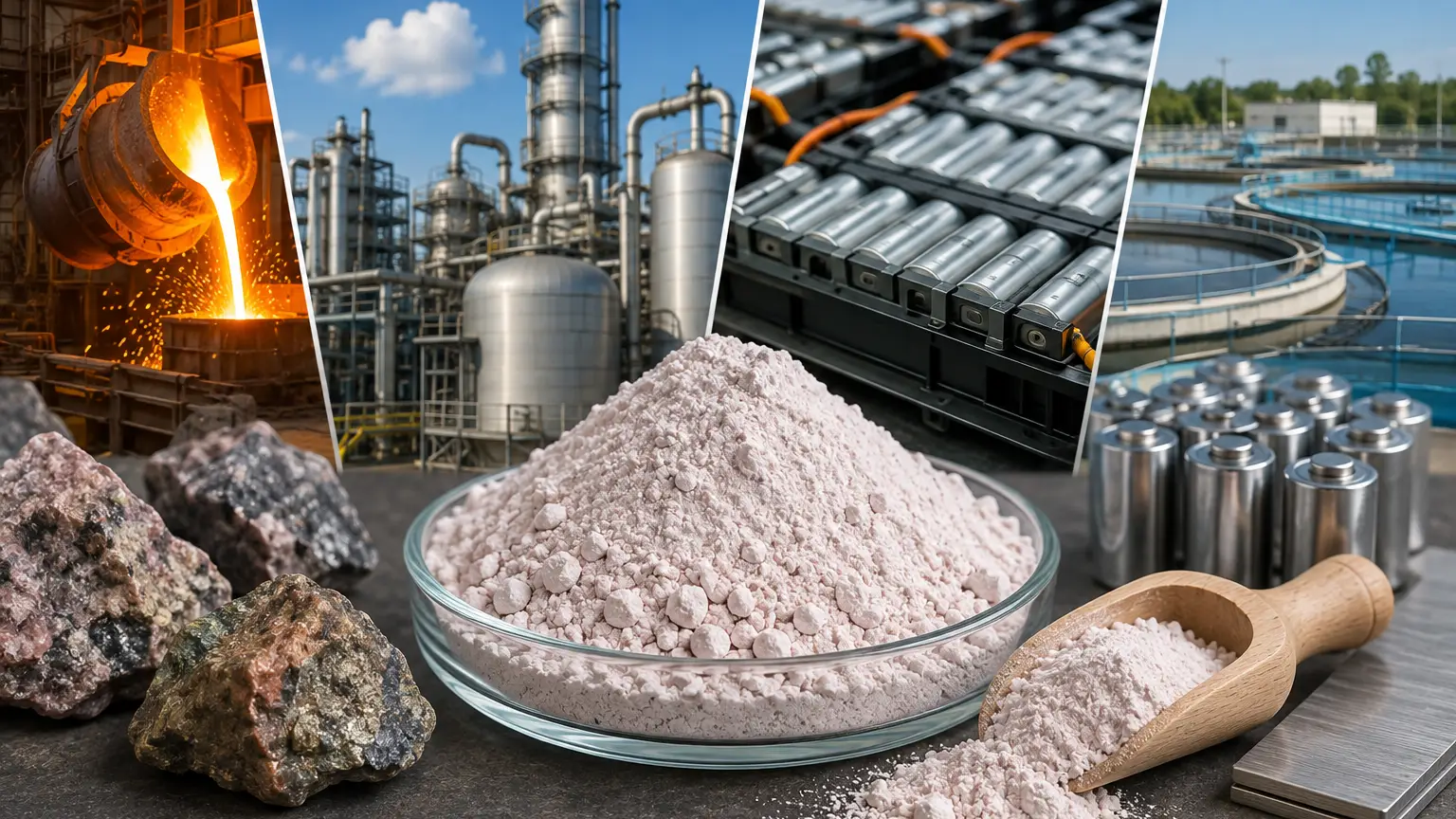
Manganese carbonate is an inorganic manganese compound with the chemical formula MnCO₃ and CAS number 598-62-9. It is commercially relevant because it can function as a manganese source, industrial intermediate, pigment-related material, and input for several downstream applications. PubChem identifies manganese carbonate as a compound used in plant fertilizers, ceramics, pigments, varnishes, animal feed, welding-related applications, and the manufacture of other manganese compounds.
Chemical Characteristics Relevant to Industry
From a procurement perspective, manganese carbonate is not simply a commodity chemical with one standardized end use. Its commercial value depends heavily on the required grade, manganese content, impurity profile, physical characteristics, and intended downstream process. This makes specification matching particularly important when buyers compare manganese carbonate suppliers for fertilizer, feed, ceramics, chemical processing, or other applications.
The compound is also useful as an intermediate because manganese carbonate can react with acids to form other manganese salts, while thermal processing can produce manganese oxide materials. PubChem's manufacturing and use information identifies its role in producing other manganese salts and battery-active manganese dioxide, illustrating why downstream processors may evaluate manganese carbonate based on conversion performance rather than price alone.
Why Manganese Carbonate Matters Commercially
The commercial significance of manganese carbonate comes from the breadth of industries that can use manganese-containing inputs. Agricultural applications create demand for manganese as a plant nutrient, while animal nutrition uses manganese as a trace mineral source. Ceramics, pigments, chemical intermediates, and other industrial applications create additional demand streams.
For B2B marketplaces, this diversified application base creates several potential buyer segments rather than a single procurement profile. A fertilizer manufacturer may prioritize nutrient content and agricultural suitability, whereas a chemical producer may focus more closely on purity, reaction behavior, trace impurities, and batch consistency. The result is a sourcing market in which product specifications and application fit are central to supplier selection.
Key Industrial Applications of Manganese Carbonate
Manganese carbonate has applications across agricultural, nutritional, chemical, ceramic, pigment, and related industrial value chains. The Australian Government's Department of Climate Change, Energy, the Environment and Water lists manganese carbonate among manganese compounds used in plant nutrition, animal feeds, ceramics, pigments, varnishes, pharmaceuticals, and manganese-salt manufacturing.
Fertilizer and Crop Nutrition
One of the established uses of manganese carbonate is as a manganese source in plant fertilizers. Manganese is an essential micronutrient for plants, so manganese-containing fertilizer formulations can be relevant where crop nutrition programs need to address manganese availability. PubChem likewise identifies manganese carbonate as an additive to plant fertilizers for addressing manganese-deficient crops.
For fertilizer manufacturers and agricultural input distributors, sourcing considerations therefore extend beyond the chemical name. Buyers may need to establish manganese concentration, suitability for the intended formulation, physical handling characteristics, contaminant limits, documentation, and consistency between shipments. These factors influence whether a manganese carbonate supplier can support repeatable production at commercial scale.
Animal Feed and Nutritional Applications
Manganese carbonate is also recognized as an animal feed additive and manganese source. FAO technical material lists manganese carbonate among manganese compounds used in animal nutrition and gives a reference manganese content for MnCO₃, demonstrating its established relevance in feed formulation.
Feed manufacturers and premix producers may therefore represent a distinct buyer group from fertilizer companies. Their procurement requirements can be driven by feed-grade suitability, regulatory compliance in the destination market, traceability, analytical documentation, and consistency. Suppliers serving this segment need to understand that a material suitable for one industrial application should not automatically be assumed suitable for another regulated application.
Manganese Carbonate Market Demand and Application Trends
Current market analysis points toward a more segmented manganese carbonate market in which conventional applications continue to provide volume demand while higher-specification downstream applications attract greater commercial attention. A 2026 market analysis from Fortune Business Insights identifies fertilizers, glaze colorants, chemical intermediates, and other applications as important segments in the manganese carbonate market.
Diversification of End-Use Demand
Fertilizer and agricultural micronutrient applications remain commercially important because manganese is required for plant nutrition. At the same time, manganese carbonate's role as an intermediate means that demand can also be connected to the production of other manganese compounds. This diversification can help buyers and suppliers evaluate the market through application-specific demand rather than treating all manganese carbonate volumes as interchangeable.
The chemical-intermediate segment is particularly relevant to manufacturers that convert manganese carbonate into downstream manganese products. For these buyers, consistency can directly influence processing efficiency and product quality. As a result, procurement teams may assess supplier performance through technical specifications, batch-to-batch variation, impurity control, and reliable delivery rather than relying exclusively on quoted unit price.
Emerging Interest in Manganese-Linked Materials
Manganese's wider industrial ecosystem also creates strategic interest in manganese-containing materials. Government information notes the importance of manganese compounds across chemicals, ceramics, fertilizers, animal feeds, and other applications, while manganese dioxide is separately associated with battery-related uses.
This distinction is important when assessing manganese carbonate market trends. Not every growth trend in the broader manganese or battery sector translates directly into demand for manganese carbonate. Instead, commercial opportunities should be evaluated according to the specific downstream process, required material grade, qualification requirements, and substitution possibilities. For B2B buyers, application-specific market intelligence is therefore more useful than assuming broad manganese growth automatically means equivalent growth for every manganese compound.
Who Buys Manganese Carbonate?
The buyer base for manganese carbonate includes manufacturers, formulators, chemical processors, distributors, traders, and procurement organizations whose requirements differ according to application. Because the compound can serve as a fertilizer nutrient, feed additive, ceramic and pigment input, or chemical intermediate, supplier selection is often driven by the intended end use.
Manufacturers and Formulators
Fertilizer manufacturers are potential buyers when manganese carbonate is incorporated into agricultural nutrient products. Animal feed manufacturers and premix producers may purchase it as a manganese source, while ceramics and pigment manufacturers can evaluate it for colorant, glaze, or flux-related applications. Chemical manufacturers can use it as an intermediate in the production of other manganese compounds.
These buyers generally need more than product availability. They may require a defined specification, consistent manganese content, suitable particle characteristics, reliable packaging, technical documentation, and repeatable supply. For manufacturers operating continuous production lines, supplier reliability can become a critical component of total procurement cost because inconsistent inputs can affect production scheduling and downstream quality.
Distributors, Traders, and Procurement Teams
Chemical distributors and traders may evaluate manganese carbonate based on market coverage, supplier reliability, commercial flexibility, packaging options, documentation, and the ability to serve customers across different end-use segments. Their objective is often to match available material with multiple buyer specifications while maintaining dependable inventory and logistics.
Procurement teams, meanwhile, typically compare multiple suppliers to establish the best balance between price, specification, delivery performance, documentation, and supply continuity. A B2B marketplace can support this process by helping buyers identify product information and supplier options in one commercial environment. For buyers researching manganese carbonate, the manganese carbonate supplier information provides a direct starting point for evaluating sourcing availability.
What B2B Buyers Evaluate When Sourcing
Manganese carbonate procurement should begin with application requirements rather than price alone. Buyers need to define the intended use and establish which specifications are critical to performance, regulatory acceptance, and downstream processing. Technical information from commercial suppliers demonstrates that manganese carbonate products can differ in manganese assay, physical form, appearance, packaging, and stated applications.
Quality and Technical Specifications
Depending on the application, procurement teams may evaluate manganese content, purity, moisture, particle size, physical appearance, impurity levels, and consistency between batches. For chemical-intermediate applications, trace impurities can affect downstream reactions, while fertilizer and feed applications may require compliance with relevant product and market requirements.
A certificate of analysis can therefore be an important part of the purchasing process. Buyers should compare supplier specifications on an equivalent basis and verify whether the quoted material actually meets the requirements of the intended formulation or manufacturing process. Technical data should be reviewed alongside safety documentation and any applicable regulatory information before commercial qualification.
Supplier Reliability and Documentation
Supply reliability is another important consideration because manganese carbonate can be an input into recurring manufacturing programs. Buyers may evaluate production capacity, lead times, packaging, export capability, batch traceability, documentation, and responsiveness to technical questions before establishing a long-term supplier relationship.
Supplier comparison is particularly important when purchasing for applications where material consistency affects production quality. A low initial price may not represent the lowest total procurement cost if a shipment fails specifications, arrives late, or requires additional processing. A structured B2B sourcing process allows procurement teams to compare commercial and technical factors together rather than evaluating price in isolation.
Regional and Supply Chain Considerations
Manganese supply chains are influenced by the geographic distribution of manganese resources, processing capacity, chemical manufacturing infrastructure, and international trade flows. The U.S. National Library of Medicine's PubChem information notes that major manganese resources and production are distributed across countries including South Africa, Australia, Brazil, Gabon, India, and others, highlighting the international character of the broader manganese supply chain.
Global Supply and Logistics
For manganese carbonate buyers, the geographic location of a supplier can affect freight costs, lead times, minimum order quantities, import procedures, and supply continuity. These variables become particularly relevant for buyers in markets such as the UAE and wider Middle East, where imported chemical raw materials can form an important part of industrial procurement strategies.
Procurement teams should therefore assess the full delivered cost rather than comparing ex-works or origin prices alone. Freight, insurance, packaging, customs requirements, warehousing, handling, and delivery schedules can all influence the economics of a manganese carbonate purchase. A supplier with a slightly higher material price may still be commercially competitive if it offers better logistics reliability or more suitable shipment terms.
Regional Buyer Requirements
Regional regulations and customer requirements can also affect which manganese carbonate grades are commercially acceptable. A product intended for fertilizer manufacturing may have different documentation requirements from material intended for industrial ceramics or chemical synthesis. Buyers should confirm applicable local regulations, labeling requirements, safety documentation, and application-specific standards before importing or incorporating the material into commercial products.
For UAE-based procurement teams, regional access to international suppliers can be particularly valuable when the buyer needs to diversify sourcing or identify alternative supply routes. The most useful sourcing platforms are those that present product information clearly enough for buyers to determine whether a supplier or material is worth progressing to technical and commercial qualification.
Manganese Carbonate Sourcing Opportunities for B2B Markets
Manganese carbonate presents a practical B2B sourcing opportunity because its applications span several established industrial value chains. Market research published in 2026 continues to identify fertilizer, chemical-intermediate, glaze-colorant, and other applications as meaningful segments, reinforcing the importance of application-specific positioning for suppliers and marketplaces.
Matching Supply With Application Demand
The strongest commercial positioning is based on matching product specifications to buyer requirements. Fertilizer manufacturers may seek a dependable manganese source, feed manufacturers may prioritize application suitability and documentation, and chemical processors may place greater emphasis on purity and conversion performance. Each segment creates a different sourcing conversation even when the underlying product is manganese carbonate.
For manufacturers, traders, and distributors, this means that clear product information can improve the efficiency of commercial qualification. Buyers can move more quickly from general product discovery toward specification review, supplier comparison, quotation requests, and technical discussions when the marketplace listing communicates the intended industrial relevance of the product.
Tradeasia Marketplace Positioning
For B2B chemical buyers, the manganese carbonate product page can serve as a commercial entry point for evaluating the material and progressing toward sourcing discussions. Positioning manganese carbonate within a broader marketplace context also helps connect product discovery with the needs of procurement professionals looking for suppliers, distributors, and international supply options.
The commercial opportunity ultimately depends on dependable quality, transparent specifications, responsive supplier communication, and reliable logistics rather than promotional claims alone. Buyers comparing manganese carbonate suppliers should define their application, establish technical requirements, evaluate documentation, and compare delivered commercial terms. For suppliers and marketplaces, providing this information clearly can turn search visibility into more qualified B2B sourcing opportunities.
Conclusion
Manganese carbonate occupies a diversified position within the industrial chemicals market, serving applications that include fertilizers, animal nutrition, ceramics, pigments, and the manufacture of other manganese compounds. Its role as both a manganese source and industrial intermediate gives the product relevance across multiple procurement categories.
For buyers, the key question is not simply where to buy manganese carbonate, but which specification and supply model best fit the intended application. Manganese content, purity, impurities, physical characteristics, documentation, regulatory suitability, packaging, delivery reliability, and total landed cost can all influence supplier selection.
As manganese-related supply chains evolve, application-specific sourcing intelligence becomes increasingly important. Fertilizer, feed, ceramics, chemical, and other industrial buyers can benefit from comparing suppliers based on both technical suitability and commercial reliability rather than treating manganese carbonate as a completely interchangeable commodity.
For procurement teams seeking a starting point, the manganese carbonate sourcing page provides a direct route to product information and supplier engagement. In a B2B marketplace environment, this combination of technical context, application knowledge, and sourcing access can help buyers move from market research to informed procurement decisions.
Sources
Leave a Comment