Global Supply Chain Guide for Magnesium Sulphate Feed Grade
Global Market Overview of Magnesium Sulphate Feed Grade
The global demand for magnesium sulphate feed grade is closely tied to the expansion of the livestock and compound feed industries. According to the Food and Agriculture Organization (FAO), increasing protein consumption worldwide continues to drive compound feed production, which in turn strengthens demand for essential mineral additives. Magnesium sulphate plays a vital role in maintaining dietary mineral balance in feed formulations.
As livestock production intensifies, feed manufacturers are increasingly incorporating magnesium-based compounds to improve animal productivity. The compound feed industry, as reported by the Alltech Global Feed Survey, continues to grow steadily across Asia-Pacific, Latin America, and parts of Africa. This growth creates a stable downstream demand for feed-grade magnesium sulphate in bulk procurement channels.
From a supply chain perspective, magnesium sulphate is typically sourced from both natural mineral extraction and chemical production processes. Global suppliers compete based on purity, consistency, and cost efficiency. For B2B buyers, this creates a dynamic procurement environment where supply reliability is as important as pricing.
Industry analysts from ICIS Chemical Market Intelligence highlight that feed mineral additives are increasingly integrated into long-term supply contracts due to volatility in raw material sourcing. This reinforces the importance of structured procurement strategies for magnesium sulphate feed grade.
Role in Animal Nutrition and Livestock Health
Magnesium sulphate feed grade is widely recognized for its role in supporting metabolic functions in livestock. According to research published by the National Research Council (NRC), magnesium is a critical macro-mineral involved in enzyme activation and energy metabolism in animals. This makes it an essential component of balanced feed formulations.
In ruminants, magnesium supplementation helps prevent deficiencies that can lead to reduced feed intake and productivity losses. The Journal of Animal Science highlights that proper mineral balance improves growth performance and reproductive efficiency in cattle and sheep. Magnesium sulphate provides a highly soluble form of magnesium that is easily absorbed.
Feed manufacturers rely on magnesium sulphate as a stable and cost-effective mineral additive. It is commonly blended with other trace minerals and vitamins in premix formulations. Its compatibility with different feed systems enhances its versatility in industrial feed production.
Veterinary nutrition guidelines emphasize the importance of controlled mineral supplementation. Over- or under-supply of magnesium can impact animal health outcomes, making feed-grade quality consistency a critical procurement factor for buyers.
Key Industrial Applications in Feed Manufacturing
Magnesium sulphate feed grade is widely used in compound feed manufacturing for poultry, swine, and ruminant nutrition. According to the European Feed Manufacturers’ Federation (FEFAC), mineral additives are essential components of modern feed formulations designed to optimize animal growth performance.
In poultry feed production, magnesium sulphate supports bone development and metabolic regulation. In swine nutrition, it contributes to enzymatic activity and stress reduction during growth phases. These applications make it a multifunctional additive in large-scale feed mills.
The feed manufacturing industry integrates magnesium sulphate into premix systems to ensure uniform distribution of minerals. This allows for precise nutritional control in industrial feed production lines. Its solubility also supports liquid feed and supplement formulations.
Industry reports from the International Feed Industry Federation (IFIF) indicate that demand for functional feed additives continues to rise as producers focus on efficiency and animal health optimization. Magnesium sulphate remains a core mineral ingredient in this transformation.
Global Supply Chain and Sourcing Dynamics
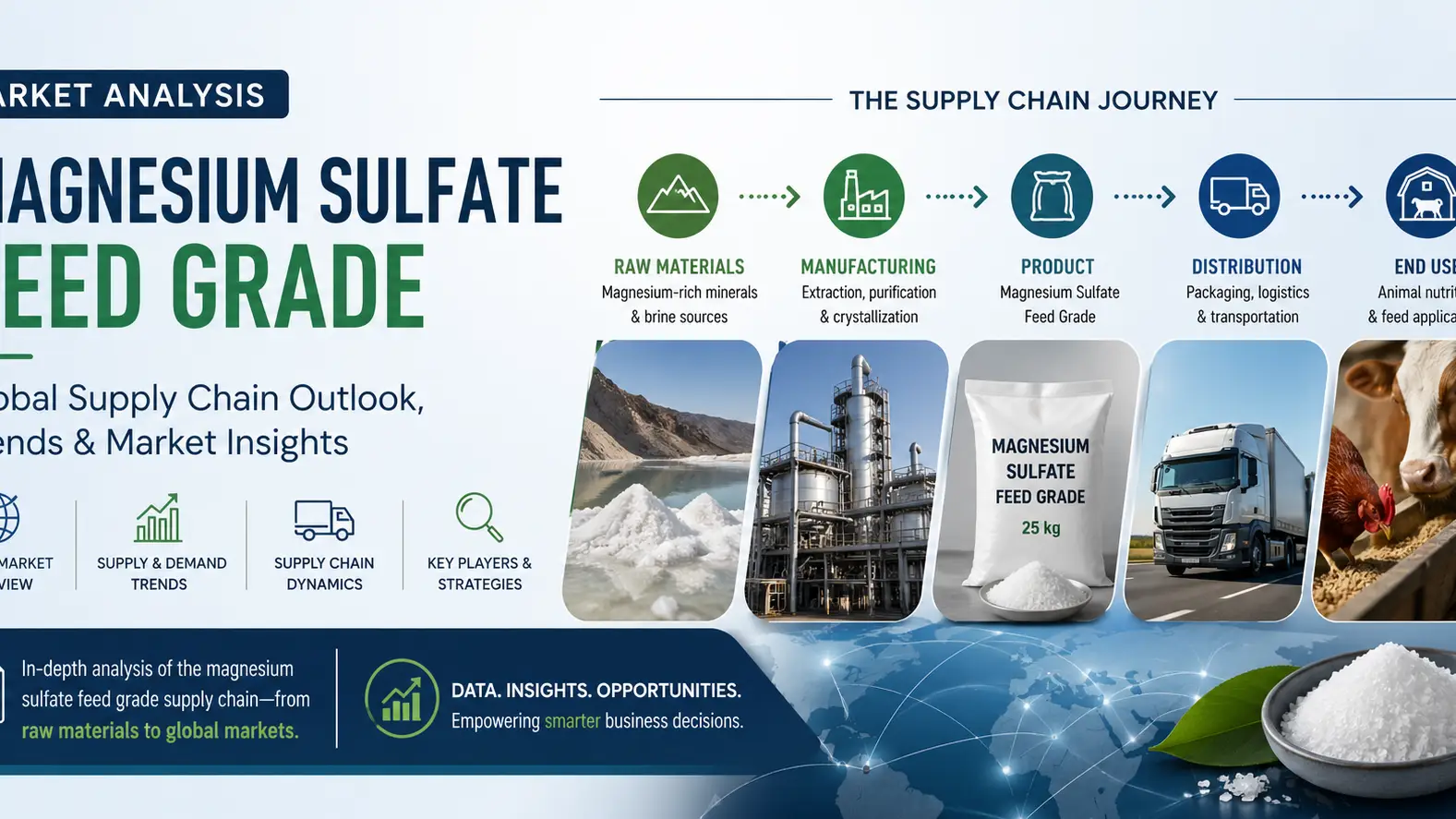
The supply chain for magnesium sulphate feed grade is highly globalized, with production hubs located in Asia, Europe, and North America. According to UN Comtrade data, international trade of mineral feed additives has increased significantly due to the expansion of global livestock production.
Raw materials are sourced from natural magnesium deposits or produced as by-products in chemical manufacturing processes. These upstream variations influence pricing and availability in the global market. Buyers must evaluate both origin and production method when selecting suppliers.
Logistics plays a critical role in the magnesium sulphate supply chain. Bulk shipments, packaging standards, and storage conditions directly affect product quality during transit. Disruptions in shipping routes can also impact lead times for feed manufacturers.
Trade intelligence from McKinsey Global Institute highlights the increasing importance of resilient supply chains in agricultural inputs. As a result, buyers are diversifying sourcing strategies to mitigate risks associated with regional supply disruptions.
Quality Standards, Compliance, and Procurement Considerations
Magnesium sulphate feed grade must comply with strict regulatory standards to ensure safety in animal consumption. According to the U.S. Food and Drug Administration (FDA), feed additives must meet purity and contaminant thresholds to be considered safe for livestock use.
In the European Union, feed materials are regulated under EU Feed Hygiene Regulations, which emphasize traceability and quality control. These frameworks ensure that magnesium sulphate used in feed is free from harmful impurities and consistent in composition.
Procurement teams evaluate suppliers based on certifications, including ISO and GMP+ standards. These certifications indicate compliance with global feed safety and manufacturing best practices. Consistency in particle size and solubility is also a key purchasing criterion.
Quality assurance is central to maintaining feed efficiency and animal health outcomes. Buyers increasingly require full documentation, including COA (Certificate of Analysis) and batch traceability, to ensure transparency across the supply chain.
Market Outlook and Buyer Demand Trends
The market outlook for magnesium sulphate feed grade remains positive, driven by rising global meat and dairy consumption. According to OECD-FAO Agricultural Outlook reports, global livestock production is expected to continue growing steadily over the next decade.
This growth is directly linked to increased demand for mineral feed additives. Feed manufacturers are focusing on performance optimization, which requires stable and reliable sources of magnesium sulphate. This strengthens long-term procurement contracts.
Buyer intent in this market is strongly influenced by cost efficiency, supply reliability, and regulatory compliance. Procurement teams prioritize suppliers who can ensure consistent quality and scalable delivery capabilities.
As sustainability becomes a key theme in agriculture, feed producers are also evaluating environmentally responsible sourcing options. This trend is shaping future demand patterns for magnesium sulphate in global feed supply chains.
Sources
https://www.fao.org
https://www.fda.gov/animal-veterinary

Leave a Comment