Magnesium Sulfate Feed Grade: Global Supply Chain & Sourcing Insights
Overview of Magnesium Sulfate Feed Grade in Animal Nutrition
Magnesium sulfate feed grade is a key inorganic mineral compound widely used in livestock nutrition to support essential metabolic functions. It is typically sourced as a highly soluble magnesium source that ensures efficient absorption in animal feed formulations. According to the Food and Agriculture Organization (FAO), magnesium is a critical macro-mineral required in controlled levels for maintaining animal health and productivity in commercial farming systems.
Chemical Profile and Feed-Grade Classification
Magnesium sulfate, commonly known in feed applications as a magnesium and sulfur source, is classified under mineral feed additives regulated for animal safety and nutritional adequacy. Feed-grade quality ensures low heavy metal content and high solubility standards suitable for premix and compound feed production.
The compound supports feed manufacturers in achieving balanced mineral formulations aligned with livestock dietary requirements. Its consistency and purity are essential for large-scale feed production systems.
From a supply chain perspective, feed-grade magnesium sulfate is traded globally as a bulk commodity, making procurement strategies highly dependent on pricing stability and logistics efficiency.
Industry guidance from the National Research Council (NRC) highlights its role in maintaining mineral balance in formulated animal diets.
Nutritional Role of Magnesium in Livestock Performance
Magnesium is an essential macro-mineral involved in enzymatic activity, nerve function, and energy metabolism in animals. Magnesium sulfate feed grade serves as a highly bioavailable source of this nutrient in livestock diets. Based on veterinary nutrition frameworks published by Merck Animal Health, magnesium deficiency can significantly reduce productivity in commercial farming operations.
Metabolic and Enzymatic Functions in Animals
Magnesium plays a central role in ATP activation, protein synthesis, and muscle function in livestock. Its presence in feed ensures proper neuromuscular coordination and metabolic stability across different species.
In high-performance livestock systems, magnesium supplementation is critical to preventing stress-related disorders and metabolic imbalances.
Feed-grade magnesium sulfate ensures consistent mineral intake, especially in intensive farming environments where nutrient depletion risks are higher.
Scientific studies in animal nutrition journals emphasize its importance in maintaining physiological equilibrium under commercial production stress conditions.
Applications across Poultry, Swine, and Ruminants
Magnesium sulfate feed grade is widely applied across poultry, swine, and ruminant feed formulations due to its versatility and high solubility. The compound is integrated into premixes and compound feeds to address species-specific mineral requirements. According to industry feed formulation standards referenced by Alltech research publications, mineral supplementation is a foundational component of productivity optimization.
Poultry Feed Application
In poultry nutrition, magnesium supports bone development, egg production, and metabolic efficiency. It is often included in layer and broiler feed formulations to improve performance consistency.
Swine Nutrition Application
For swine, magnesium sulfate contributes to muscle development and stress reduction, particularly during growth and transport phases. It supports feed conversion efficiency in intensive production systems.
Ruminant Mineral Supplementation
In ruminants, magnesium is essential for preventing metabolic disorders such as grass tetany. Its supplementation ensures stable rumen function and nutrient absorption efficiency.
Across all livestock categories, magnesium sulfate remains a critical component in modern feed formulations designed for high-yield agricultural production.
Supply Chain and Sourcing Considerations
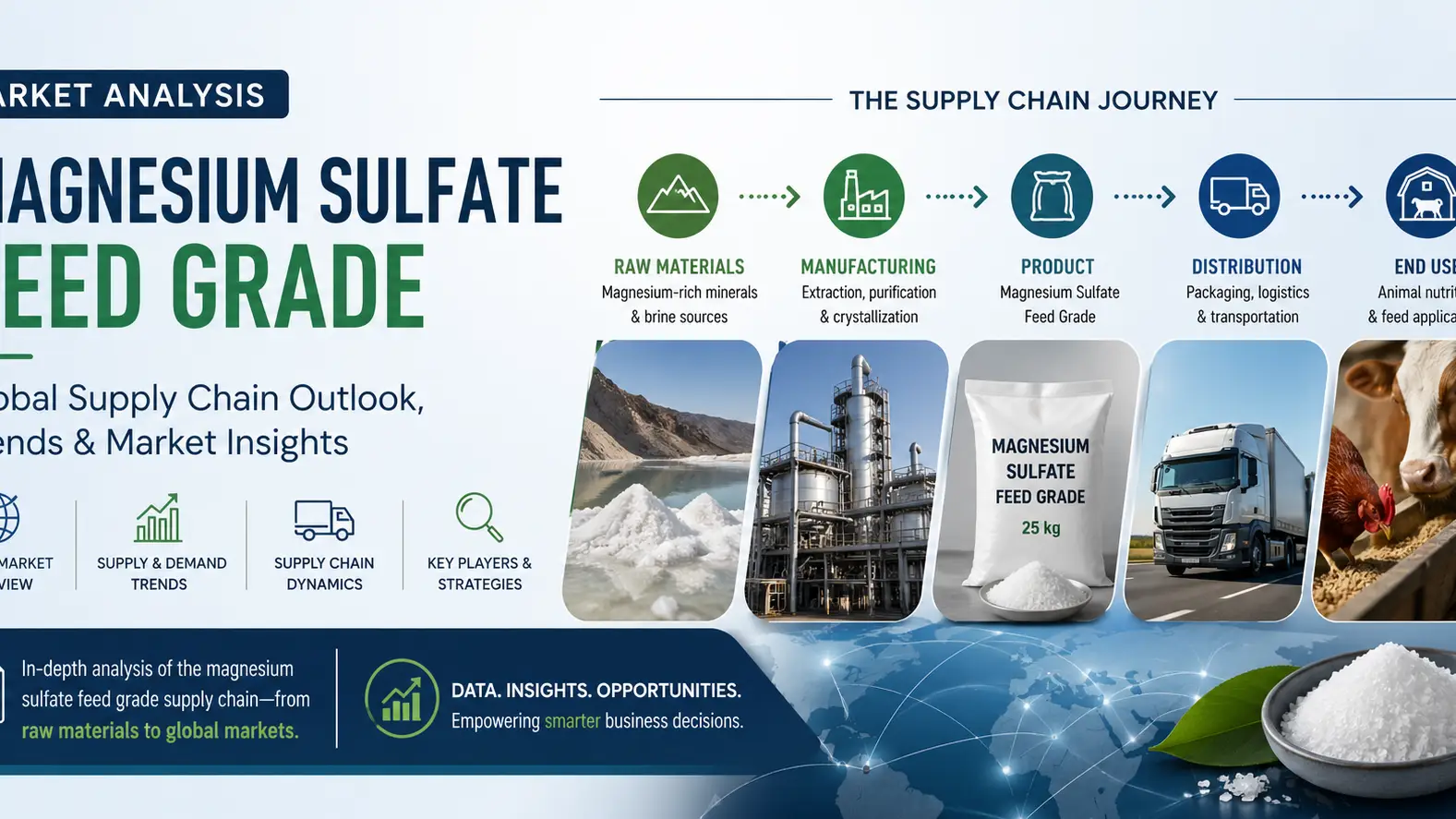
The supply chain for magnesium sulfate feed grade is influenced by raw material availability, manufacturing capacity, and global agricultural demand cycles. Industrial sourcing typically involves large-scale chemical producers and distributors serving feed manufacturers worldwide. According to market logistics analyses by the World Bank agricultural trade reports, mineral feed additives are highly sensitive to freight and energy cost fluctuations.
Production and Raw Material Sourcing
Magnesium sulfate is produced through chemical processing or extraction from mineral-rich brines and natural deposits. Feed-grade refinement requires strict quality control to ensure compliance with livestock safety standards.
Logistics and Bulk Distribution
Due to its bulk nature, magnesium sulfate is transported in large quantities via containerized shipping or bulk bags. Efficient logistics planning is critical to maintaining competitive pricing in global trade.
Supplier Evaluation and Quality Assurance
Buyers typically assess suppliers based on purity levels, certification compliance, and delivery reliability. Traceability and documentation are essential in international feed ingredient procurement.
Reliable sourcing ensures uninterrupted feed production and helps manufacturers maintain formulation consistency across markets.
Market Trends and Demand Drivers
The global demand for feed-grade magnesium sulfate is expanding due to increased livestock production and rising protein consumption. Market research from OECD-FAO Agricultural Outlook reports indicates steady growth in mineral feed additive usage across developing and developed economies.
Growth in Intensive Livestock Farming
Intensive farming systems require precise mineral supplementation to maintain productivity and animal welfare. This has increased demand for high-quality magnesium sources in feed formulations.
Expansion of Feed Manufacturing Industry
The feed manufacturing sector continues to grow globally, driven by poultry and aquaculture expansion. Magnesium sulfate remains a staple ingredient in mineral premixes.
Sustainability and Feed Efficiency Trends
Sustainable livestock production emphasizes feed efficiency and nutrient optimization. Magnesium supplementation contributes to improved feed conversion ratios and reduced waste.
These trends collectively support long-term demand stability for magnesium sulfate feed grade in global markets.
Buyer Intent and Procurement Insights
Understanding buyer intent for magnesium sulfate feed grade is essential for suppliers and distributors operating in the B2B chemical marketplace. Procurement teams in feed manufacturing companies, agricultural cooperatives, and livestock integrators actively source this ingredient for consistent production needs. Industry purchasing behavior is largely driven by formulation stability, price competitiveness, and supply reliability.
Key Buyer Profiles
Primary buyers include feed mills, premix manufacturers, livestock integrators, and agricultural distributors. Each group requires consistent quality and documentation for regulatory compliance.
Procurement decisions often involve technical evaluation of mineral content, solubility, and safety standards.
Procurement Evaluation Criteria
Buyers compare suppliers based on product purity, shipment reliability, and long-term pricing agreements. Bulk availability and logistical efficiency are key differentiators in sourcing decisions.
Strategic Role in Feed Formulation Supply Chains
Magnesium sulfate is not a standalone product but a critical component in broader feed formulation systems. Its consistent availability ensures uninterrupted production cycles.
For B2B buyers, detailed product pages and supplier transparency directly support faster procurement decisions and risk reduction in global sourcing.
Sources
https://www.fao.org
https://www.oecd.org
https://www.worldbank.org

Leave a Comment