Linseed Meal Supply Chain Dynamics in a Shifting Global Feed Economy
Introduction: Resilient Feed Ingredient Flows Driving the Global Linseed Meal Network
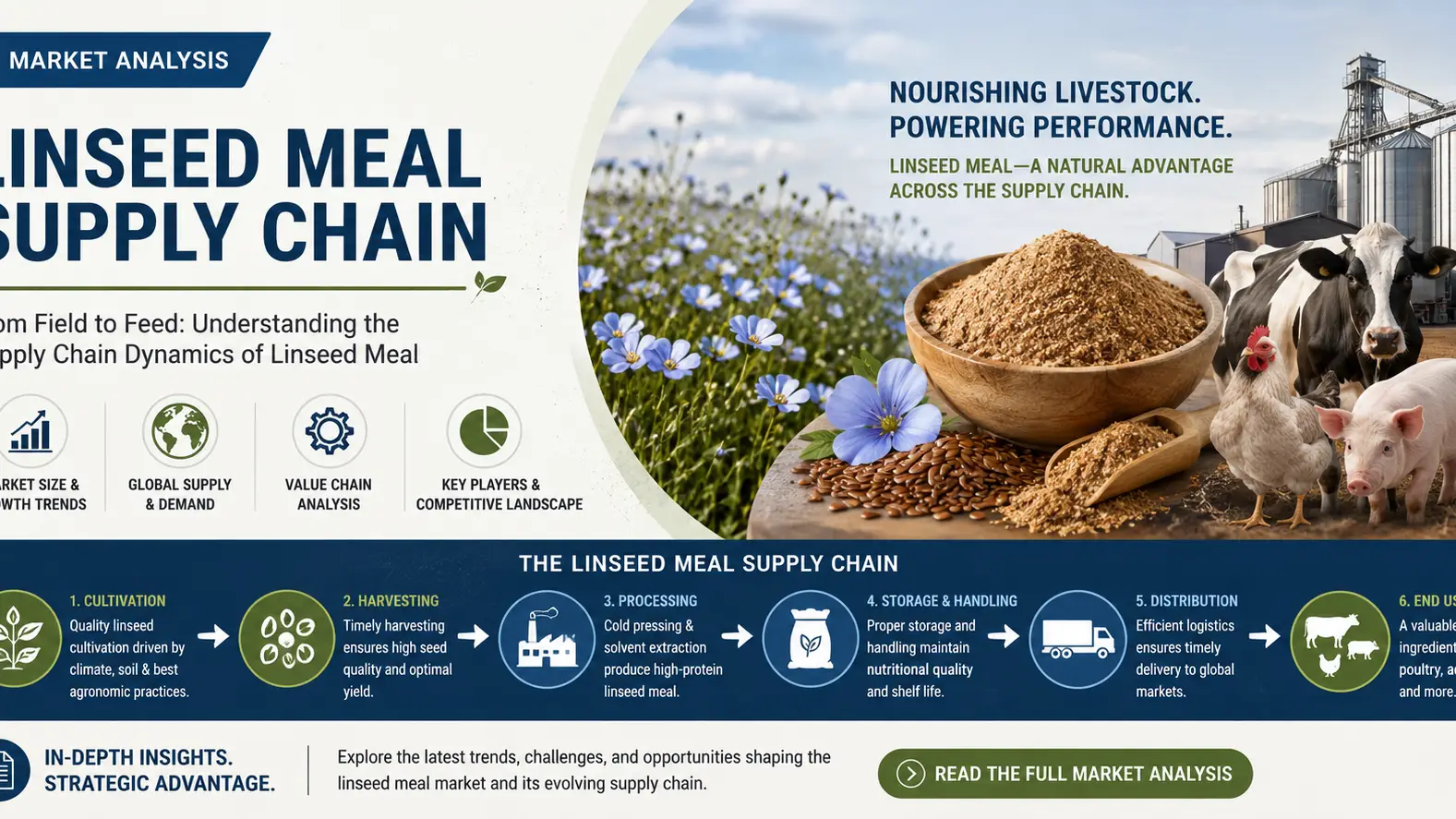
The linseed meal market in 2026 continues to position itself as a critical byproduct within the global oilseed processing ecosystem, driven by rising demand for sustainable, protein-rich feed ingredients. Derived from flaxseed oil extraction, linseed meal is increasingly recognized as a functional platform agricultural feed ingredient supporting livestock nutrition, dairy efficiency, and aquaculture formulations. Global production is estimated at over 2.4 million MT, with a steady CAGR of 4.2% reflecting expanding oilseed crushing capacity and diversified feed applications. As commodity volatility persists, supply chain efficiency and origin traceability have become central to competitive positioning in international trade flows.
Flaxseed Cultivation and Raw Material Concentration
The upstream supply chain remains highly dependent on flaxseed cultivation concentrated in Canada, China, and parts of Eastern Europe. Annual global flaxseed output exceeds 3.1 million MT, directly influencing linseed meal availability. Climate sensitivity and rotational cropping patterns create periodic supply fluctuations, tightening feedstock availability. This upstream concentration forces buyers to adopt multi-origin sourcing strategies to stabilize procurement costs and ensure continuity in downstream feed manufacturing.
Oil Extraction and Processing Efficiency
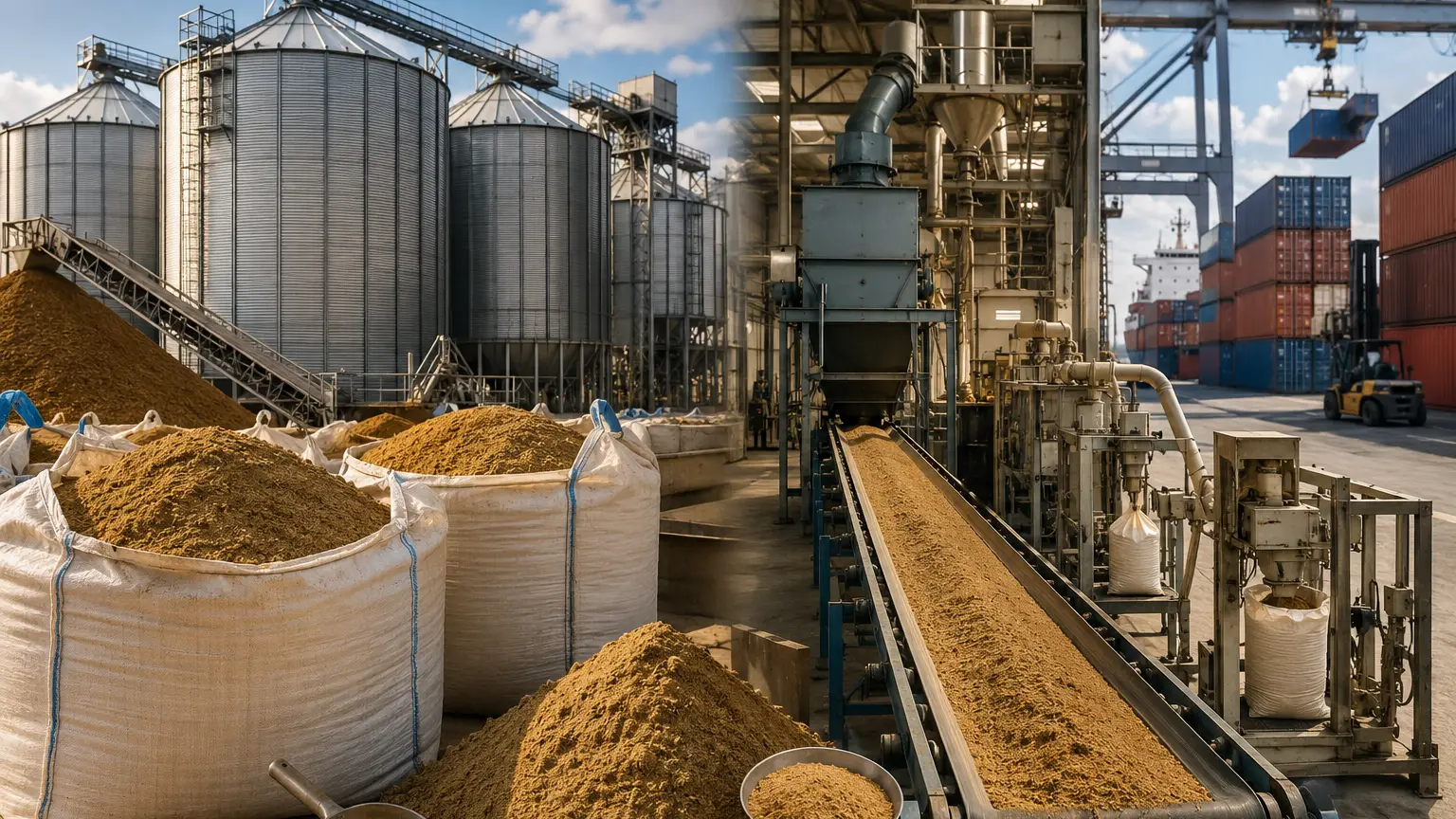
Linseed meal is produced through mechanical pressing and solvent extraction, with oil recovery rates averaging 35–40%. Modern crushing facilities are optimizing throughput efficiency to reduce residual oil content below 8%, improving feed digestibility. Industrial expansion in Asia has increased processing capacity by nearly 12% year-on-year, strengthening regional self-sufficiency. This stage remains capital intensive, where energy consumption and extraction yield directly influence final meal quality and cost structure.
Trade Flows, Pricing Volatility, and Logistics
International trade flows are shaped by export surpluses from Canada and Europe, with average pricing ranging between USD 190–320/MT depending on protein content and moisture levels. Freight disruptions and container imbalances continue to impact landed costs, particularly in Asia-Pacific import markets. Logistics optimization, including bulk vessel consolidation and regional warehousing, has become essential in mitigating price volatility across long-haul supply corridors.
Demand Growth Across Feed Applications
Demand is primarily driven by compound feed manufacturers targeting cattle, poultry, and equine nutrition markets. High crude protein content (34–38%) positions linseed meal as a competitive alternative to soybean meal in cost-sensitive regions. Expanding livestock production in Asia and the Middle East is expected to sustain downstream demand growth, reinforcing its strategic role in balanced feed formulations.
Conclusion
As the linseed meal market evolves, its supply chain complexity underscores the importance of integrated sourcing, processing efficiency, and logistics resilience. Positioned as a versatile agricultural feed ingredient, it continues to gain relevance in global protein markets. In this landscape, Tradeasia International provides a reliable sourcing and distribution network, supporting industrial buyers with consistent quality, optimized pricing structures, and end-to-end commodity solutions across international feed supply chains.
Sources
- https://www.oecd.org/en/publications/oecd-fao-agricultural-outlook-2025-2034_601276cd-en.html
- https://www.fao.org/markets-and-trade/publications/oecd-fao-agricultural-outlook/en
- https://www.oecd.org/en/publications/oecd-fao-agricultural-outlook-2024-2033_4c5d2cfb-en.html
Leave a Comment