Linseed Meal Market Growth Driven by Sustainable Feed Demand
Introduction to Linseed Meal in Global Trade
Understanding Linseed Meal as a Commodity Ingredient
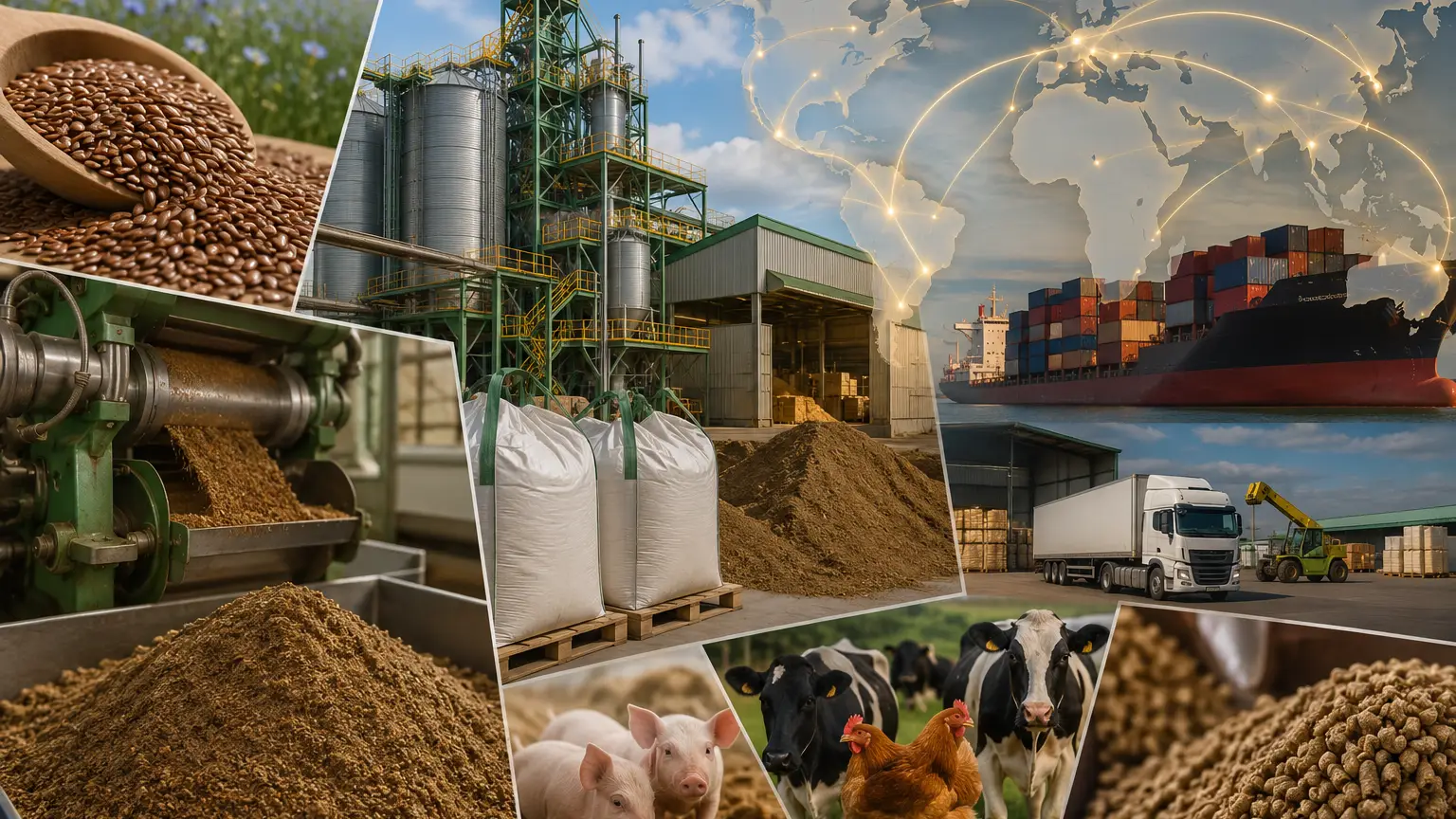
Linseed meal is a protein-rich by-product derived from flaxseed oil extraction and is widely traded in global agricultural commodity markets. It is primarily used in animal nutrition and soil conditioning due to its high fiber and residual oil content. According to the Food and Agriculture Organization (FAO), oilseed meals are increasingly important in balancing global feed protein demand. This positions linseed meal as a strategic bulk ingredient in B2B supply chains.
The product is valued for its functional versatility across feed and agricultural industries. It serves as a cost-effective alternative protein source in livestock diets while also enhancing soil organic matter when used as fertilizer. Market participants include feed manufacturers, agricultural distributors, and commodity traders. Demand patterns are influenced by livestock production cycles and oilseed processing output.
Global Trade Position and Market Structure
Linseed meal is traded as part of the broader oilseed meal market, alongside soybean meal and canola meal. The United States Department of Agriculture (USDA) reports that oilseed meal consumption continues to grow in emerging economies driven by livestock expansion. This creates consistent international trade flows for linseed meal exporters.
Its pricing and availability depend heavily on flaxseed oil production levels, making it a by-product-driven commodity. Traders and distributors typically source it in bulk from oilseed crushers and processors. The global supply chain is characterized by seasonal production and regional agricultural cycles.
The introduction of linseed meal into diversified feed portfolios reflects its rising importance in sustainable agriculture. Its trade relevance continues to expand across Asia-Pacific, Europe, and North America.
Nutritional Profile and Functional Value in Industry
Linseed meal contains moderate protein levels and high dietary fiber, making it suitable for ruminant and poultry feed formulations. According to research published in the Journal of Animal Science, flaxseed-derived meals contribute beneficial fatty acids and digestible nutrients. This enhances its functional value in balanced feed formulations.
Its composition supports digestive health in livestock while improving feed efficiency. The residual oil content also contributes to energy density in animal diets. Feed formulators often incorporate it to diversify protein sources and reduce dependency on soybean meal.
Functional Benefits in Feed Systems
Beyond nutrition, linseed meal offers functional benefits such as improved gut health and feed palatability. It is frequently used in combination with other oilseed meals to optimize amino acid balance. Industry studies highlight its role in improving milk production in dairy cattle when properly formulated.
Its fibrous nature also aids rumen fermentation processes, supporting better nutrient absorption. This makes it particularly valuable in cattle and sheep feed systems. The versatility of its application enhances its commercial demand across feed manufacturers.
The nutritional stability of linseed meal positions it as a reliable ingredient in industrial feed production systems.
Role of Linseed Meal in Animal Feed Applications
Linseed meal is widely integrated into livestock feed formulations, especially for dairy cattle, beef cattle, and sheep. The European Feed Manufacturers’ Federation (FEFAC) highlights increasing diversification of protein sources in animal feed due to sustainability pressures. This trend supports the adoption of alternative oilseed meals like linseed meal.
It is used to supplement protein intake and improve overall feed efficiency. Poultry feed applications also benefit from its fiber content in controlled formulations. However, inclusion rates are carefully managed to maintain nutritional balance.
Aquaculture and Specialty Feed Use
In aquaculture feed systems, linseed meal is used in limited proportions due to its plant-based protein structure. Research from aquaculture nutrition journals shows increasing experimentation with oilseed meals to reduce fishmeal dependency. This supports sustainable aquafeed development globally.
Specialty feed producers also explore linseed meal for niche animal nutrition formulations. Its fatty acid profile contributes to improved animal health outcomes when used appropriately. This diversification enhances its relevance in modern feed innovation.
The expansion of animal protein production globally continues to drive demand for alternative feed ingredients like linseed meal.
Agricultural and Organic Fertilizer Applications
Linseed meal is also used as a natural soil amendment in organic farming systems. According to the United States Department of Agriculture (USDA Organic Program), organic-approved inputs such as oilseed meals help improve soil fertility. This strengthens its position in sustainable agriculture markets.
It enhances soil microbial activity and improves organic matter content. Farmers use it as a slow-release nitrogen source for crops. This supports long-term soil health and productivity.
Role in Sustainable Agriculture Systems
The increasing shift toward organic farming has expanded demand for plant-based fertilizers. Linseed meal fits well into regenerative agriculture systems due to its biodegradable nature. It is often applied in horticulture and specialty crop production.
Its use reduces reliance on synthetic fertilizers, aligning with global sustainability goals. Agricultural cooperatives and distributors are key buyers in this segment.
The dual-use nature of linseed meal strengthens its industrial value proposition across both feed and agriculture sectors.
Global Market Trends and Sustainability Drivers
The global feed industry is experiencing a shift toward diversified protein sources. According to market analysis by OECD-FAO Agricultural Outlook, demand for oilseed meals is expected to increase steadily due to livestock expansion. Linseed meal benefits from this structural demand shift.
Its sustainability profile enhances its attractiveness as a feed ingredient. Environmental concerns surrounding soybean cultivation have encouraged exploration of alternative oilseed meals. This trend supports long-term market growth.
Supply Chain and Trade Dynamics
Linseed meal supply depends on flaxseed oil production, creating a by-product-driven supply chain. Trade flows are influenced by agricultural yields in major producing regions. Seasonal fluctuations impact pricing and availability.
Global logistics networks distribute linseed meal to feed mills, distributors, and agricultural processors. Export-import activity is concentrated in regions with strong livestock industries.
The market structure reflects a balance between agricultural production and industrial demand cycles.
Buyer Intent and Procurement Decision Factors
Linseed meal buyers include animal feed manufacturers, livestock farms, agricultural distributors, and fertilizer producers. According to industry procurement reports, feed ingredient buyers prioritize nutritional consistency and bulk supply reliability. This makes linseed meal a strategic sourcing item.
Large-scale importers and commodity traders also participate in its distribution. These buyers often secure long-term contracts to stabilize supply chains. Industrial demand is driven by livestock production systems.
Procurement Evaluation Criteria
Procurement teams evaluate linseed meal based on protein content, moisture level, consistency, and supply stability. Price competitiveness is also a major factor in supplier selection. Quality certification and traceability are increasingly important in global trade.
Buyers compare suppliers based on logistics capabilities and production capacity. Reliable sourcing ensures uninterrupted feed production. This makes supplier credibility a critical decision factor.
Role of B2B Marketplaces
B2B platforms like Tradeasia / Chemtradeasia / Tradechem Marketplace support global sourcing by connecting buyers with verified suppliers. These platforms improve transparency and procurement efficiency.
Digital marketplaces reduce sourcing friction and enable faster trade decisions. This enhances access to competitive global supply networks.
B2B Sourcing Strategy for Linseed Meal
Effective sourcing requires identifying suppliers with consistent oilseed processing capacity. According to commodity trade reports, vertically integrated processors offer more stable supply chains. This reduces procurement risk for buyers.
Long-term partnerships are preferred in bulk commodity sourcing. Buyers often evaluate supplier export history and logistics reliability. This ensures continuity in industrial operations.
Risk Management in Global Procurement
Linseed meal sourcing involves managing agricultural supply risks and price volatility. Weather conditions and crop yields directly impact availability. Procurement teams use hedging strategies to stabilize costs.
Diversified sourcing across multiple regions reduces dependency risk. This improves resilience in supply chains. Strategic sourcing ensures operational stability for feed manufacturers.
Conclusion and Future Market Outlook
The future of linseed meal is closely tied to global demand for sustainable feed ingredients. Industry forecasts indicate steady growth in oilseed meal consumption. This positions linseed meal as a stable commodity in agro-industrial markets.
Its dual application in feed and agriculture enhances long-term relevance. Market expansion is expected in emerging economies with growing livestock sectors.
Strategic Importance in B2B Trade
Linseed meal continues to gain importance in global commodity trade networks. Its role in sustainable agriculture and feed production strengthens its industrial value.
As supply chains evolve, reliable sourcing will remain key for buyers and distributors. This reinforces its position as a strategic B2B commodity.
Sources
https://www.fao.org
https://www.usda.gov
https://www.oecd.org

Leave a Comment