Linseed Meal Market Demand and Commercial Role
Linseed Meal as an Oilseed Processing By-product
Linseed meal is the protein-rich solid material remaining after oil is extracted from flaxseed, or Linum usitatissimum. The Tradeasia product specification identifies it as a feed-grade material originating from Australia, available as brown powder or pellets, with crude protein specified at 32–36%. The product is also marketed under names including flaxseed meal, linseed expeller, and flaxseed cake. These characteristics place linseed meal within the broader commercial category of oilseed-derived feed ingredients rather than conventional food-grade flaxseed products.
From a procurement perspective, this origin as an oil-extraction by-product is commercially important because it connects linseed meal availability with the economics of the linseed oil-processing chain. FAO identifies linseed meal as an oilseed meal used historically as a protein source, particularly for ruminants and horses. Its commercial value therefore depends not only on nutritional composition but also on processing, consistency, specifications, and the ability of buyers to incorporate it into appropriate feed formulations.
Why Animal Nutrition Remains the Core Demand Driver
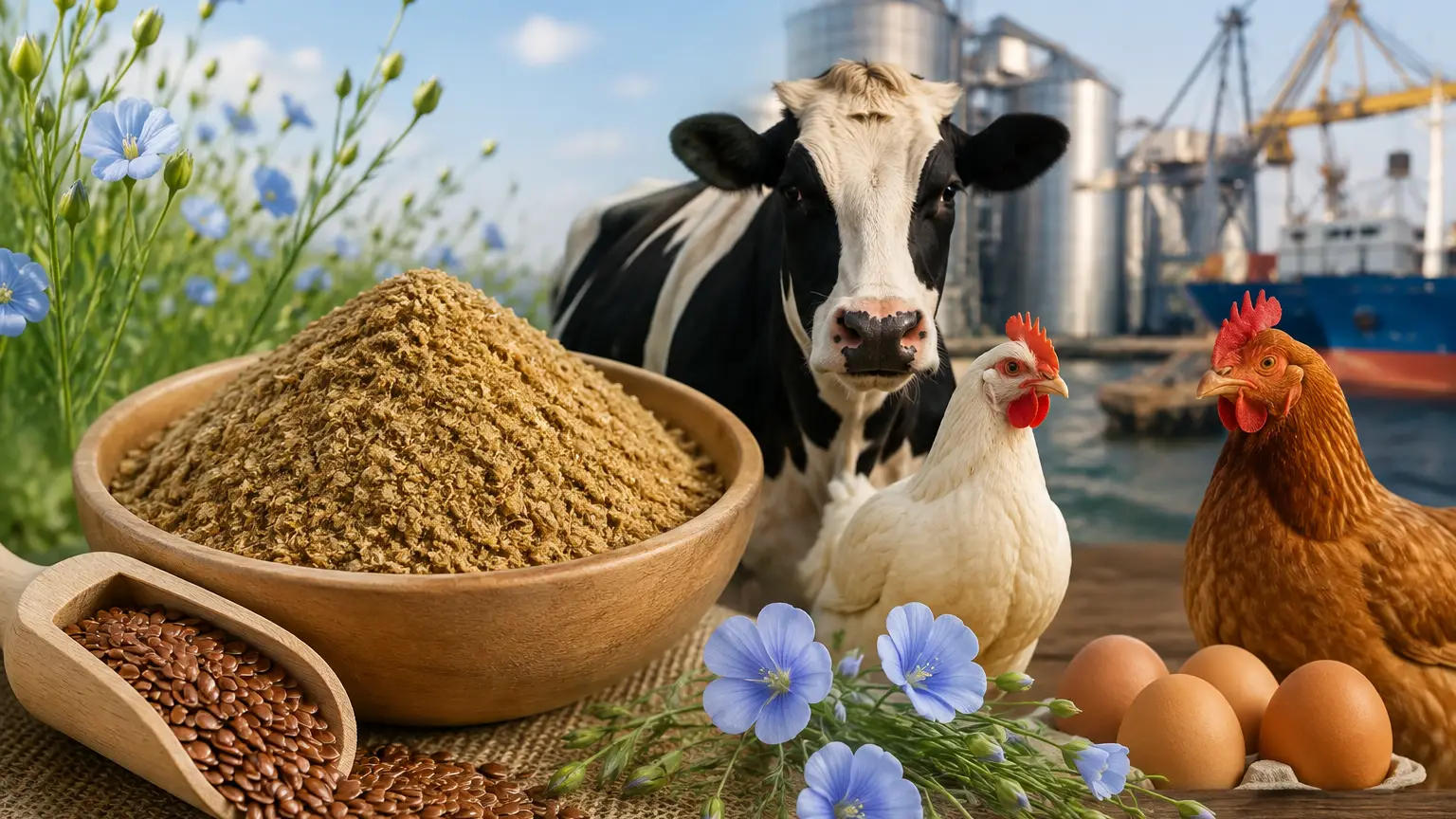
Animal nutrition is the most directly relevant application for the feed-grade material described on the product page. Tradeasia positions linseed meal as a source of protein and energy for swine, horses, and cattle, while the Flax Council of Canada notes that flax-derived feed ingredients are used in livestock diets and can influence the fatty-acid composition of animal products. This gives linseed meal relevance to both conventional feed formulation and differentiated animal-production strategies.
Recent scientific literature also points to renewed interest in flaxseed meal because of its protein, dietary fiber, and alpha-linolenic acid content. A 2022 review published in Agriculture highlights both its nutritional potential and the need to manage anti-nutritional factors. For B2B buyers, this means demand should be viewed through a formulation and specification lens: the value of linseed meal depends on how effectively its nutritional characteristics fit the target feed application.
Linseed Meal Applications in Animal Nutrition
Cattle and Ruminant Feed
Cattle and other ruminants represent an important application category for linseed meal. The Tradeasia product description specifically identifies cattle as a target species, while FAO records linseed meal as a historical protein source for ruminants. Its protein contribution and residual lipid fraction can make it relevant when nutritionists are designing feed programs around a combination of protein, energy, fiber, and fatty-acid characteristics.
The application opportunity is not simply a matter of replacing one protein ingredient with another. Feed formulators must consider inclusion rate, amino-acid balance, fiber, fat, energy contribution, and the characteristics of the complete ration. FAO specifically notes limitations associated with excessive inclusion and describes lysine as a weakness in linseed meal's protein profile. Consequently, commercial buyers are likely to assess linseed meal as part of a balanced formulation rather than as a universal substitute for higher-protein conventional meals.
Swine, Equine, and Poultry Applications
Swine and equine nutrition are also identified on the Tradeasia product page as relevant uses. Scientific research has investigated linseed-derived meals as protein sources for pigs, while the broader literature recognizes the potential of flaxseed ingredients in livestock and poultry nutrition. These applications demonstrate that demand can extend across species, although formulation requirements and appropriate inclusion levels differ substantially by animal category.
Poultry applications require particular technical caution because flaxseed-derived ingredients contain compounds that can limit unrestricted inclusion. The 2022 Agriculture review identifies cyanogenic glycosides and other anti-nutritional factors as considerations in animal diets. For B2B buyers, this reinforces the importance of purchasing feed-grade linseed meal with documented specifications and using it according to species-specific formulation requirements rather than treating the material as a generic bulk protein ingredient.
Buyer Groups and Industry Demand
Feed Manufacturers and Animal Nutrition Companies
Commercial feed manufacturers are among the most relevant linseed meal buyers because they can incorporate the ingredient into formulated diets according to species, nutritional targets, and local feed regulations. These companies typically need dependable specifications covering protein, fat, fiber, ash, moisture, microbiological parameters, and contaminant compliance. The Tradeasia specification provides examples of these procurement variables, including crude protein, crude fiber, moisture, microbiological limits, aflatoxin, and heavy-metal compliance.
Animal nutrition companies may also evaluate linseed meal according to the functional objective of a particular formulation. The presence of alpha-linolenic acid and other flax-derived components can be commercially relevant when feed programs seek to influence the fatty-acid profile of animal products. The Flax Council of Canada describes the use of flax in livestock and poultry diets for this purpose, creating an additional commercial rationale beyond basic protein supply.
Traders, Distributors, and Procurement Teams
Feed ingredient traders and distributors represent another important buyer group because they connect processors and manufacturers across regional supply chains. These businesses generally place greater emphasis on consistency of supply, packaging formats, origin, documentation, logistics, shelf life, and the ability to meet customer specifications. Tradeasia lists 50 kg and bulk packaging options, a six-month shelf life, and cool, dry storage requirements, all of which are relevant to commercial distribution planning.
Procurement teams compare suppliers because two products carrying the same broad commodity name can differ in nutritional profile, processing method, microbiological quality, contaminant status, packaging, and commercial terms. A recent 2024 technical chapter on linseed applications in animal feed likewise emphasizes feed formulation, processing, economic considerations, and management of anti-nutritional factors. These variables make supplier qualification an important part of purchasing rather than an afterthought after price comparison.
Quality Specifications and Procurement Considerations
Nutritional and Physical Specifications
For buyers evaluating feed-grade linseed meal, the first screening stage should focus on measurable product specifications. The Tradeasia product page specifies 32–36% minimum crude protein, up to 9% crude fiber, up to 7.5% ash, 0.4% calcium, 0.8% phosphorus, and 1.2% minimum lysine, while moisture is specified below 12%. The listed physical form is brown powder or pellets, with an approximate bulk density of 0.50 g/cm³.
These parameters matter because feed manufacturers need predictable material behavior in storage, handling, batching, and formulation. Moisture can affect storage stability, while protein, fiber, fat, ash, and mineral values influence formulation calculations. Buyers should therefore compare suppliers using consistent specification sheets rather than relying only on commodity names or headline protein percentages. For larger contracts, technical documentation and representative samples can provide an additional basis for qualification.
Safety, Compliance, and Documentation
Food and feed ingredient procurement also requires attention to microbiological and contaminant controls. The Tradeasia product specification lists total plate count, yeast and mould, E. coli, coliforms, Salmonella, aflatoxin B1, heavy metals, and dioxins/PCBs as quality parameters, with specified compliance values for the listed material. It also identifies ISO/HACCP availability and notes that Halal and Kosher certification can be provided on request.
Scientific literature reinforces why such controls matter for linseed meal. The 2022 review in Agriculture identifies cyanogenic glycosides and other anti-nutritional factors as important considerations when using flaxseed meal in animal diets. Accordingly, a professional linseed meal sourcing process should combine nutritional specifications with safety documentation, processing information, intended-species suitability, certificates where required, and applicable regulatory requirements in the destination market.
Linseed Meal Sourcing and Supplier Evaluation
How B2B Buyers Compare Suppliers
A commercial linseed meal supplier should be evaluated across more than price. Procurement teams can compare origin, grade, protein and fiber specifications, moisture, fat content, microbiological controls, contaminant compliance, packaging, shelf life, documentation, and delivery capabilities. The Tradeasia product page provides these details for its listed Australian-origin material and identifies both 50 kg packaging and bulk supply options.
Processing history can also affect the suitability of a product. Tradeasia describes crushing, pressing, grinding, and extraction steps in the production process, illustrating why buyers may request technical documentation before approving a supplier. For buyers looking for bulk linseed meal, understanding the relationship between processing and the final nutritional profile can help prevent specification mismatches between a feed formulation and the delivered ingredient.
Using a B2B Marketplace for Sourcing
A B2B marketplace can simplify the initial supplier-screening process by bringing product specifications and commercial inquiry channels into one sourcing environment. For procurement teams researching linseed meal applications, the Linseed Meal product page provides access to product information, technical specifications, packaging details, storage conditions, and inquiry options that can support early-stage supplier assessment.
For distributors and manufacturers, the marketplace model can also support a more structured procurement workflow. Instead of evaluating a material solely from a generic commodity description, buyers can use documented specifications to determine whether a product fits their feed application before progressing to commercial discussions. This is particularly relevant for international procurement, where origin, shipping format, regulatory documentation, and quality consistency can influence the total sourcing decision.
Commercial Outlook for Linseed Meal Buyers
Application Trends and Market Opportunities
The commercial outlook for linseed meal is closely tied to developments in animal nutrition and the wider utilization of oilseed-processing by-products. A 2024 technical publication describes growing interest in linseed applications for animal feed while highlighting omega-3 fatty acids, animal-product quality, feed formulation, processing, economics, and environmental considerations. These themes support an outlook in which linseed meal can gain attention where feed manufacturers seek differentiated nutritional inputs and value from agricultural processing streams.
Another important trend is the growing research interest in improving the nutritional value and usability of flaxseed meal. The 2022 scientific review discusses approaches to reducing anti-nutritional factors and improving application potential. For commercial buyers, this suggests that future opportunities may increasingly depend on processing quality and application-specific product development rather than simple volume growth alone.
Opportunities for Manufacturers, Traders, and Distributors
Manufacturers can position linseed meal within feed formulations where its nutritional characteristics fit the target species and product strategy. Traders and distributors can create value by maintaining reliable supply channels, supporting specification matching, and serving buyers that require bulk feed ingredients. The Flax Council of Canada also identifies renewed interest in flax-derived feed ingredients for producing meat and eggs with altered fatty-acid profiles, illustrating how feed ingredients can participate in higher-value animal-product strategies.
For procurement teams, the commercial opportunity is therefore linked to disciplined supplier qualification rather than purchasing on price alone. Buyers can use the linseed meal sourcing information to review the available specification framework and initiate inquiries based on application, quantity, packaging, and technical requirements. This approach can help manufacturers and distributors assess whether the material fits their existing formulation and supply-chain needs.
Conclusion: Turning Linseed Meal Demand into Sourcing Opportunities
What Buyers Should Prioritize
Linseed meal occupies a useful position within the animal-feed ingredient market because it combines the characteristics of an oilseed-processing by-product with protein, fiber, and residual flax-derived nutritional components. Its principal commercial relevance is in animal nutrition, particularly livestock applications identified by Tradeasia and supported by scientific and industry literature. However, appropriate use depends on species, formulation, inclusion level, processing characteristics, and control of relevant anti-nutritional factors.
For procurement teams, the most important buying considerations are therefore specification consistency, feed-grade status, nutritional composition, microbiological and contaminant controls, documentation, packaging, storage, origin, and supply reliability. These factors allow buyers to distinguish between superficially similar offers and determine whether a particular linseed meal supplier can support their technical and commercial requirements.
From Market Research to B2B Procurement
The growing technical interest in linseed meal creates opportunities for feed manufacturers, livestock businesses, ingredient distributors, traders, and procurement professionals that understand how application requirements shape sourcing decisions. Research published in recent years continues to examine linseed's role in animal feed, while industry organizations recognize its use in livestock diets and differentiated animal-product strategies.
For businesses seeking bulk linseed meal, the Linseed Meal supplier information provides a practical starting point for reviewing specifications and initiating a commercial inquiry. By connecting application requirements with documented quality parameters and supplier evaluation, Tradeasia / Chemtradeasia / Tradechem Marketplace can serve as a B2B sourcing entry point for buyers assessing linseed meal for industrial animal-feed applications.
Sources
- MDPI — Agriculture: Flaxseed Meal and Its Application in Animal Husbandry: A Review (2022). This peer-reviewed review supports the discussion of nutritional composition, animal-feed applications, and anti-nutritional factors. MDPI article
- FAO: Protein Sources for the Animal Feed Industry. This FAO technical resource supports the discussion of linseed meal as an oilseed-derived feed protein and its historical use across livestock species. FAO technical resource
- ScienceDirect: Application of linseed in animal feed product development (2024). This technical chapter supports the discussion of contemporary feed applications, omega-3-related opportunities, formulation, processing, economics, and sustainability considerations. ScienceDirect technical chapter
Leave a Comment