Introduction
Linseed meal, derived from flaxseed oil extraction, is increasingly positioned as a versatile platform chemical in global agro-industrial value chains in 2026. Demand is rising for sustainable protein-rich feed inputs and bio-based materials. The market is expanding at a CAGR of 5.2%, supported by livestock intensification and circular economy adoption. Prices range from USD 180–320/MT, reflecting oilseed volatility and regional supply gaps. With global production exceeding 3.5 million MT, linseed meal has become a strategically important co-product shaping feed and industrial applications worldwide.
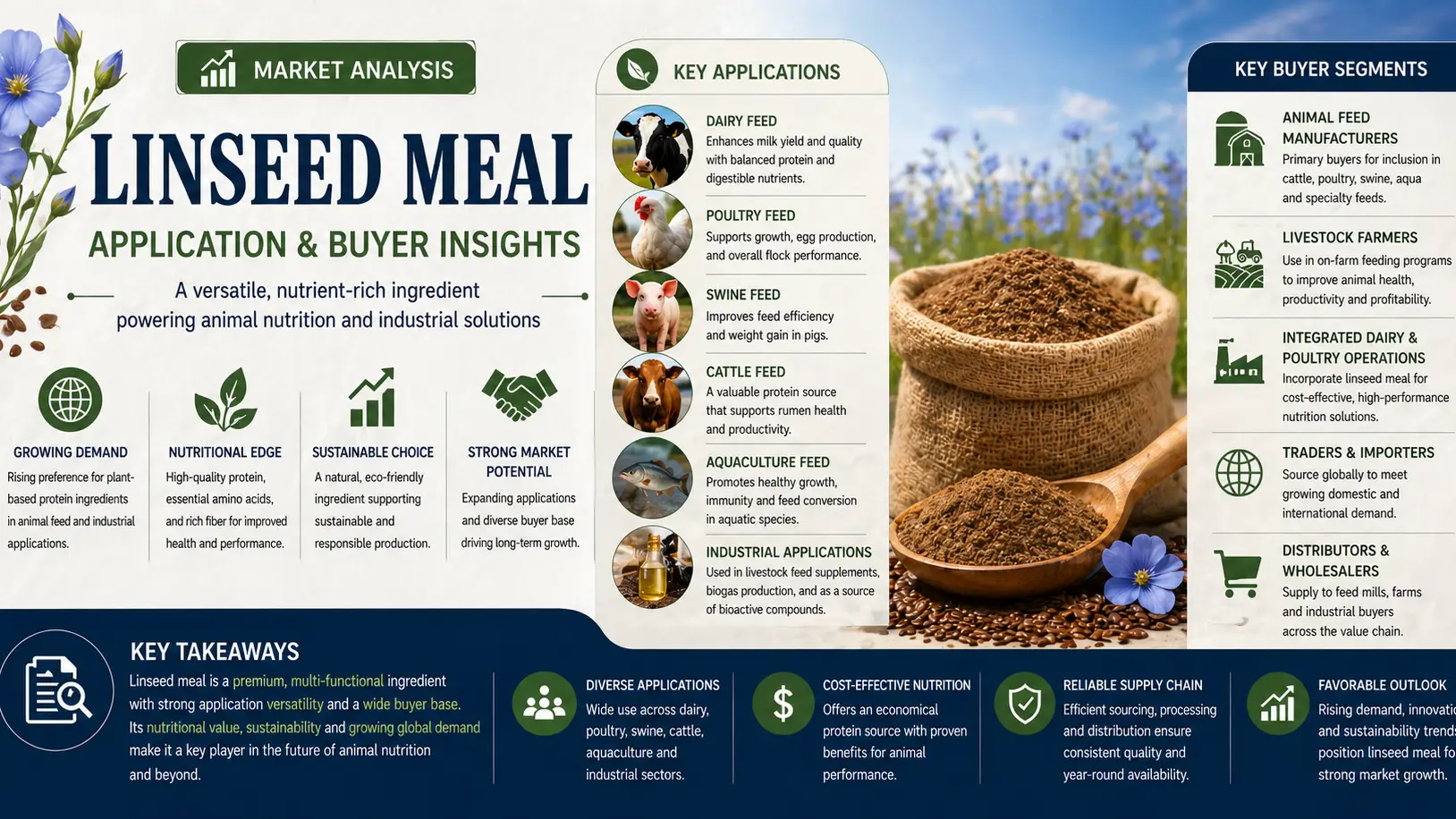
Expanding Applications in Animal Nutrition and Feed Blending
Animal nutrition remains the dominant application, particularly in ruminant, poultry, and dairy feed formulations. In 2026, livestock feed accounts for about 62% of global demand, driven by cost efficiency versus soybean meal. Feed manufacturers in Europe and Asia-Pacific are increasing inclusion rates to stabilize protein sourcing amid volatile oilseed markets, reinforcing linseed meal’s importance in modern feed blending systems.
Industrial Buyers and Emerging Non-Feed Applications
Industrial adoption is expanding, with linseed meal used in organic fertilizers, soil enhancers, and biogas feedstock. Fertilizer producers in India and Brazil are key buyers due to its nitrogen-rich composition. Non-feed applications represent nearly 18% of total demand in 2026, supported by regulatory incentives for bio-based agricultural inputs and renewable energy integration, steadily broadening its commercial footprint beyond livestock nutrition.
Pricing Dynamics and Global Trade Flows
Linseed meal pricing is closely tied to flaxseed harvest output and oil extraction margins. In 2026, export prices average USD 180–320/MT, with European-origin material commanding premiums for higher protein consistency. Trade flows remain concentrated between Eastern Europe, Canada, and Asia, while buyers increasingly rely on long-term procurement contracts to manage freight volatility and stabilize supply chain exposure.
Supply Chain Structure and Production Outlook
Global production exceeds 3.5 million MT, led by Russia, Kazakhstan, Canada, and the EU. Supply remains highly co-product dependent, linking meal availability directly to linseed oil demand. In 2026, efficiency upgrades in crushing facilities are improving yield consistency, though climatic variability in key growing regions continues to create intermittent supply constraints and regional price divergence.
Conclusion
Linseed meal is evolving from a conventional feed input into a multi-sector platform chemical supporting agriculture and bio-based industries. Its expanding role across nutrition, fertilizers, and energy highlights long-term strategic relevance within sustainable supply chains. As volatility persists in oilseed markets, buyers increasingly prioritize reliable sourcing partnerships. In this context, Tradeasia International positions itself as a global solution provider, enabling consistent access to linseed meal and related agro-commodities while supporting procurement efficiency and supply chain resilience.
Sources
Leave a Comment