What Is Linseed Meal and Why Does It Matter?
Definition and production role
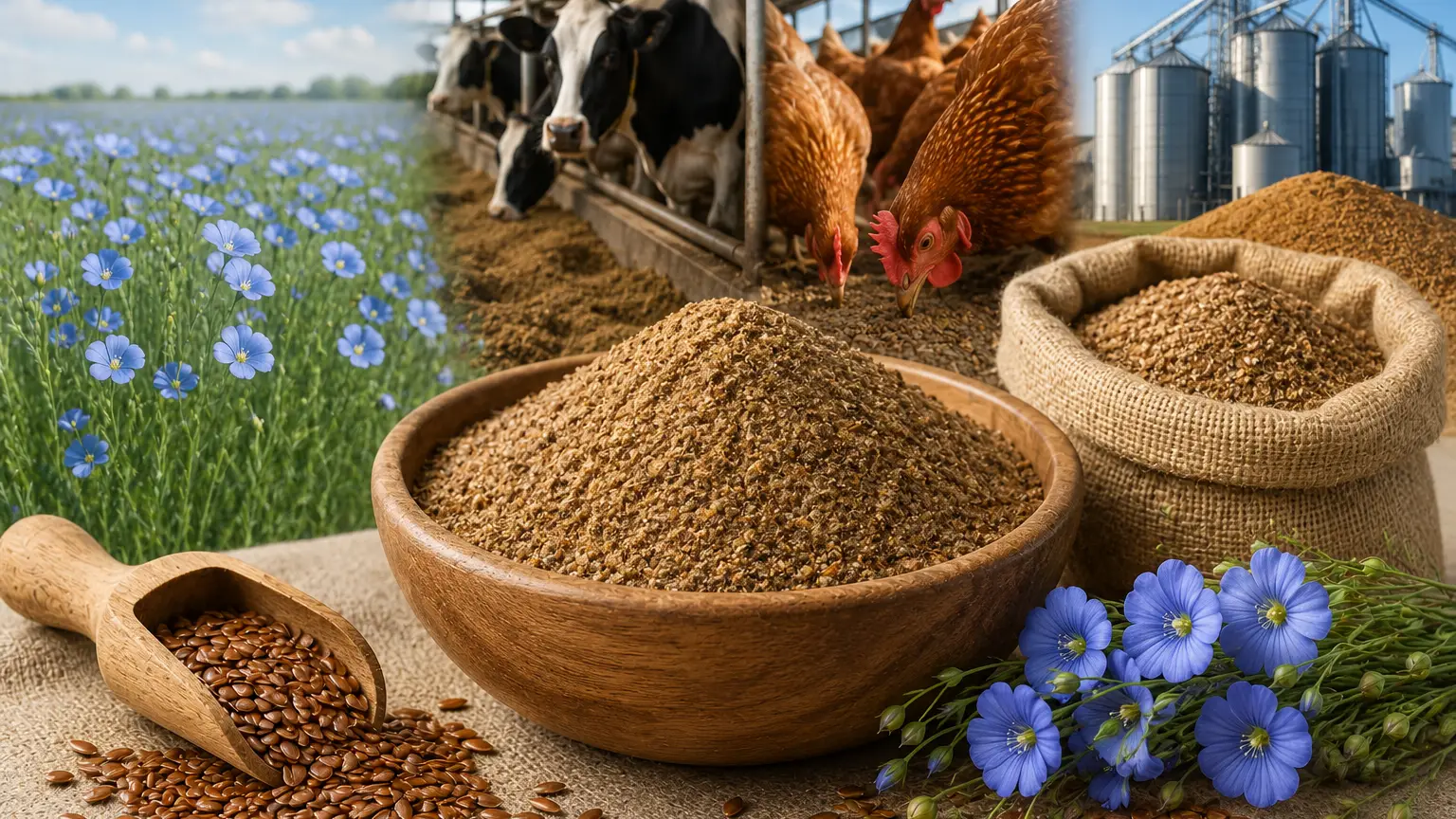
Linseed Meal, also known as flaxseed meal, is a feed-grade by-product generated through the processing of linseed for oil. Its commercial identity therefore sits at the intersection of agricultural commodities, oilseed processing, and animal nutrition. The Tradeasia product specification identifies the material as derived from Linum usitatissimum and describes it as a brown powder or pellets, with feed-grade status and an origin listed as Australia.
Nutritional characteristics
From a feed formulation perspective, Linseed Meal is valued principally for its protein and energy contribution, while its residual oil and fiber characteristics can also influence formulation decisions. The listed Tradeasia specification gives a crude protein range of 32–36%, crude fiber of up to 9%, and crude fat of 1.5–9%, although actual composition can vary according to processing and material characteristics. FAO's Feedipedia likewise identifies linseed meal as a protein-rich feed material and notes differences between expeller and solvent-extracted products.
Why processing matters
Processing history is commercially important because the extraction method affects the resulting meal. Feedipedia reports that cold-pressed linseed meal can retain substantially more residual oil than solvent-extracted material, while the protein and fiber profile can also differ. For buyers, this means the phrase “Linseed Meal” alone does not fully define the specification; procurement teams should consider the extraction process, analytical parameters, physical form, and intended feed application before comparing quotations.
A by-product with commercial value
The broader significance of Linseed Meal is its role in converting an oilseed-processing stream into a commercially useful feed ingredient. Recent research continues to investigate flaxseed meal as an alternative protein resource, particularly as feed manufacturers look beyond conventional protein ingredients. A 2022 review in Agriculture highlighted its protein, α-linolenic acid, dietary fiber, and other components while also emphasizing the importance of managing anti-nutritional factors.
Key Linseed Meal Applications in Animal Feed
Livestock feed formulations
The strongest commercial application for Linseed Meal is animal nutrition. Tradeasia identifies swine, horses, and cattle as key livestock applications, positioning the ingredient as a source of protein and energy feed material. Its residual oil and polyunsaturated fatty acid content can also be relevant where nutrition programs are designed around the fatty-acid composition of animal products.
Swine nutrition
Swine feed is an important application area because research has evaluated Linseed Meal for its digestible protein, amino acid, and energy contribution. A study published in Animal Feed Science and Technology found that flaxseed meal can be included in pig diets as a source of energy and protein, while also identifying amino-acid digestibility differences that matter for precise formulation. This reinforces the need for feed manufacturers to assess Linseed Meal as a formulation ingredient rather than treating it as a one-size-fits-all commodity.
Poultry and animal nutrition research
Poultry represents another area of interest, particularly where flax-derived ingredients are evaluated for their influence on animal-product fatty-acid profiles. The scientific literature also identifies limitations associated with anti-nutritional compounds, nutrient variability, and amino-acid balance. Consequently, commercial use depends on appropriate inclusion levels, product quality, formulation expertise, and compliance with applicable feed requirements.
Alternative protein applications
The application story is also expanding beyond the simple substitution of one feed ingredient for another. Research published in 2024 investigated fermented flaxseed meal for growing pigs, focusing on available energy, amino-acid digestibility, and reduction of cyanogenic glycosides through microbial fermentation. This indicates an ongoing technical trend toward processing approaches that may improve the feed value and usability of flaxseed-derived ingredients.
Market and Application Trends Shaping Demand
Growth of alternative feed resources
One important market trend is the continued interest in alternative protein resources for animal nutrition. The 2022 Agriculture review links this interest to challenges surrounding conventional protein feed resources and feed costs, while identifying flaxseed meal as a potential non-conventional protein ingredient. For B2B buyers, this creates an application-driven demand story rather than a purely commodity-driven one: the value of Linseed Meal depends on where and how effectively it fits into feed formulations.
Oilseed processing and resource efficiency
Linseed Meal also fits the broader movement toward better utilization of agricultural processing co-products. Because it originates from oil extraction, its commercial use gives processors an additional value stream while providing feed manufacturers with an established plant-derived ingredient. FAOSTAT's latest agricultural statistics show the continuing scale and importance of global oil-crop production, providing a broader backdrop for the availability and utilization of oilseed-derived materials.
Processing innovation
Recent technical work suggests that processing innovation is an important application trend. In 2024, researchers evaluated fermented flaxseed meal and reported that microbial fermentation could reduce cyanogenic glycosides while providing additional information on energy and amino-acid utilization. Such research does not mean every commercial Linseed Meal product is fermented, but it demonstrates where technical development is heading: improving consistency, reducing formulation constraints, and extracting greater value from the ingredient.
Demand is application-specific
The resulting market outlook is best understood through end-use requirements rather than through a single universal demand forecast. Buyers may prioritize protein concentration, residual fat, fiber, microbiological parameters, physical form, documentation, and supply reliability differently depending on whether the material is destined for cattle, swine, poultry, or distribution. This application-specific approach is especially relevant when comparing Linseed Meal suppliers across international markets because composition can vary with flax variety, origin, and extraction process.
Who Buys Linseed Meal and What Do They Evaluate?
Feed manufacturers
The primary B2B buyers are feed manufacturers and animal nutrition companies that need reliable ingredients for formulated diets. These businesses generally evaluate Linseed Meal against nutritional specifications, consistency, formulation performance, documentation, and delivered cost. A supplier that can provide a clear specification and stable commercial supply can therefore be more valuable than one offering only a nominally attractive headline price.
Livestock producers and distributors
Livestock operations, agricultural traders, ingredient distributors, and feed-ingredient importers can also represent relevant buyer groups. Their purchasing priorities may differ: livestock businesses can focus heavily on practical feeding value, while distributors may emphasize packaging, shelf life, logistics, documentation, and repeat availability. The Tradeasia listing, for example, specifies 50 kg or bulk packaging, a six-month shelf life, cool and dry storage, and microbiological parameters that can assist commercial evaluation.
Procurement criteria
Before purchasing Linseed Meal, procurement teams should compare the complete specification rather than relying on product name alone. Important considerations include crude protein, fat, fiber, ash, calcium, phosphorus, lysine, moisture, microbiological quality, contaminants, physical form, packaging, shelf life, and certifications or compliance documentation. The listed Tradeasia specification includes ISO/HACCP status, feed-grade classification, Salmonella requirements, aflatoxin B1 limits, and heavy-metal and dioxin/PCB compliance information, illustrating the type of documentation buyers may expect.
Why buyers compare suppliers
Supplier comparison is particularly important for agricultural feed ingredients because material characteristics can change with origin, cultivar, extraction method, and processing conditions. Scientific literature notes variability in the nutritional composition of flaxseed meal, while Feedipedia distinguishes between different extraction formats. Buyers therefore benefit from comparing technical specifications, available documentation, packaging, logistics, and commercial terms alongside price. For buyers evaluating options, the Linseed Meal product page provides a direct starting point for reviewing the available product specification and initiating a sourcing inquiry. F feedingredientsasia.com
Linseed Meal Sourcing and Supplier Evaluation
Specification consistency
A strong Linseed Meal sourcing strategy starts with specification matching. Buyers should establish the acceptable range for protein, fat, fiber, moisture, ash, and other relevant parameters before requesting quotations. This is especially important because Linseed Meal may be supplied as powder or pellets and can differ depending on whether it is derived from expeller or solvent extraction.
Quality and safety documentation
Quality assurance is another central procurement consideration. Feed ingredients must be evaluated for microbiological quality and potential contaminants in accordance with the requirements of the destination market and intended application. The Tradeasia listing provides specific parameters including total plate count, yeast and mould, E. coli, Salmonella, aflatoxin B1, heavy metals, and dioxins/PCBs, demonstrating why technical documentation should form part of supplier qualification rather than being treated as an afterthought.
Logistics and commercial terms
International buyers should also assess logistics alongside laboratory specifications. Packaging format, bulk availability, shelf life, storage conditions, country of origin, shipping requirements, and order economics can materially affect the delivered cost of Linseed Meal. A product that meets the nutritional target but cannot be supplied consistently or stored appropriately may create more procurement risk than a slightly higher-priced product supported by dependable logistics and documentation.
Supplier qualification
For procurement teams, supplier qualification should ultimately combine technical fit, commercial competitiveness, and supply reliability. The goal is not simply to identify a Linseed Meal supplier but to establish whether the material can be integrated consistently into an existing purchasing and formulation process. A B2B marketplace can simplify this first-stage evaluation by bringing product information, inquiry capability, and supplier communication into one sourcing pathway, while buyers retain responsibility for validating specifications against their own requirements.
Commercial Positioning and B2B Marketplace Opportunities
Why Linseed Meal matters commercially
Linseed Meal has commercial relevance because it connects an established oilseed-processing activity with the continuing need for diversified animal-feed inputs. Its protein content, residual oil characteristics, and established livestock applications give feed manufacturers several reasons to evaluate it. At the same time, its limitations mean that commercial positioning should remain specification-led rather than relying on broad claims about nutritional superiority.
Matching applications to buyers
The most relevant commercial audiences include animal-feed manufacturers, livestock nutrition businesses, agricultural distributors, commodity traders, and procurement teams seeking plant-derived feed ingredients. Different buyer groups can approach the same product from different perspectives: a feed formulator may focus on nutrient contribution, a distributor on packaging and repeat supply, and a procurement manager on documentation, delivered cost, and supplier reliability. Clear application information helps each audience determine whether the product warrants further qualification.
Marketplace-led sourcing
Tradeasia, Chemtradeasia, and the Tradechem Marketplace model can position Linseed Meal as a sourcing opportunity by connecting product discovery with practical procurement information. Instead of presenting the material only as a commodity listing, a marketplace-oriented approach can help buyers understand its feed applications, specification parameters, packaging options, certifications, and inquiry pathway. This makes content around Linseed Meal applications and sourcing useful not only for organic search traffic but also for buyers already moving toward supplier evaluation.
Conversion from research to inquiry
For a commercial SEO strategy, the most valuable visitor is not necessarily someone searching only for a definition of Linseed Meal. It is the feed manufacturer, distributor, trader, or procurement professional comparing ingredients and looking for a qualified supply option. Providing technically relevant information before directing that visitor toward the Linseed Meal sourcing page creates a natural progression from search intent to product evaluation and, ultimately, commercial inquiry.
Conclusion: Turning Linseed Meal Demand Into Sourcing Opportunities
From by-product to feed ingredient
Linseed Meal demonstrates how an oilseed-processing by-product can become a commercially relevant feed ingredient when its nutritional characteristics align with formulation needs. Its protein contribution, residual oil, fiber profile, and established use in livestock nutrition make it relevant to multiple animal-feed applications. However, its commercial value depends on the specification and intended use rather than on the product name alone.
Application-led market opportunity
The strongest opportunities are likely to remain application-led. Research continues to examine flaxseed meal as an alternative protein resource and to investigate processing methods such as fermentation that may improve its nutritional usability. At the same time, global agricultural production data provides evidence of the continuing scale of the oilseed sector that supplies the broader ecosystem of oilseed-derived ingredients.
What buyers should do next
For buyers, the practical next step is to translate the desired application into a defined procurement specification. Feed manufacturers and distributors should compare protein, fat, fiber, moisture, safety parameters, physical form, packaging, shelf life, documentation, origin, and logistics before selecting a Linseed Meal supplier. This approach can reduce specification mismatches and make supplier comparisons more meaningful.
A sourcing opportunity for B2B buyers
For companies evaluating Linseed Meal for livestock feed, procurement, distribution, or formulation programs, the Linseed Meal product page offers a direct route to the available technical information and inquiry process. In a B2B marketplace environment, combining credible application intelligence with transparent product specifications can help turn informational search demand into qualified sourcing conversations without overstating the product's capabilities.
Leave a Comment