Introduction
The L-Valine market in 2026 is increasingly positioned as a structurally important segment within the global amino acids industry, functioning as a platform chemical that connects animal nutrition, pharmaceuticals, and advanced fermentation-based biotechnology. With production exceeding 215,000 metric tons globally and consumption heavily concentrated in Asia-Pacific and North America, the market reflects both commodity-scale demand and high-value specialty applications. Pricing dynamics remain segmented, ranging from USD 2,200–3,000/MT for feed-grade material to as high as USD 5,000–7,500/MT for pharmaceutical-grade L-Valine, depending on purity and supply tightness. Industry projections indicate a moderate but stable expansion trajectory, with a global CAGR between 2.1% and 9.3% depending on application tier as of 2026–2035 cycles. (Feedingredients Asia)
Feed Industry Integration and Core Volume Demand
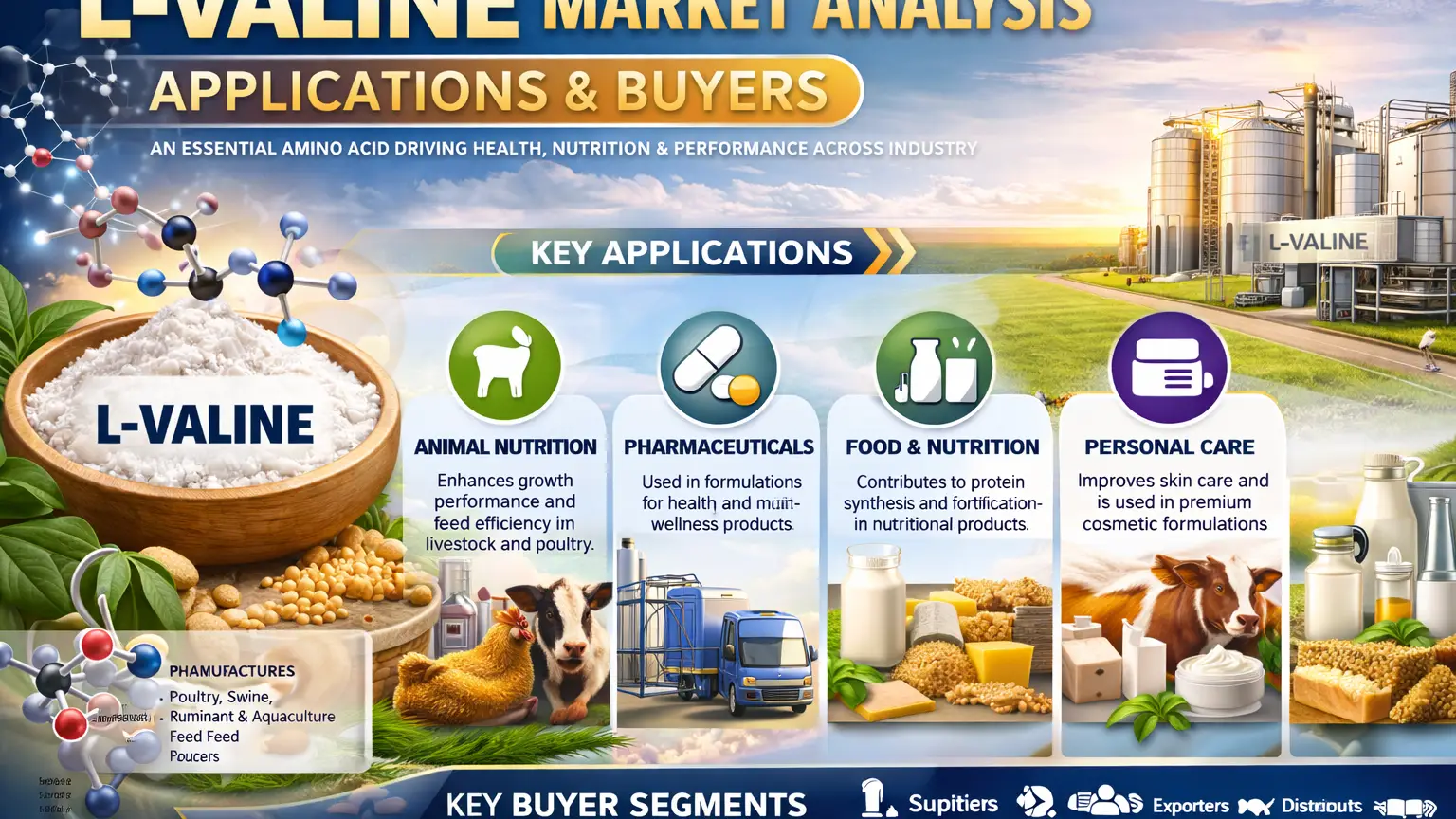
The feed sector remains the dominant application, accounting for over half of global L-Valine consumption. Swine and poultry producers are increasingly adopting precision amino acid nutrition strategies to reduce crude protein levels while maintaining growth efficiency. This structural shift is driving sustained demand growth in integrated livestock markets, particularly in China and Southeast Asia. With feed-grade L-Valine trading near USD 2,200–3,000/MT, buyers are highly cost-sensitive, pushing suppliers toward scale-driven fermentation optimization. Large agribusiness integrators are the primary buyers, often locking in long-term contracts to stabilize input costs and mitigate volatility in corn and sugar-based feedstocks used in fermentation.
Pharmaceutical-Grade Expansion and High-Value Buyers
Pharmaceutical applications represent the most profitable segment of the L-Valine ecosystem. Demand is anchored in clinical nutrition, intravenous solutions, and metabolic disorder therapies. In this segment, purity requirements elevate prices to USD 5,000–7,500/MT, with consistent demand from hospital supply chains, nutraceutical firms, and specialty pharmaceutical manufacturers. Growth is further supported by aging populations in developed economies, particularly Europe and Japan, where amino acid supplementation is increasingly integrated into preventive healthcare systems. This segment is expected to outpace feed applications in value growth, even if volumes remain comparatively smaller.
Production Concentration and Fermentation Economics
Global L-Valine supply is highly concentrated, with China, the United States, and Germany collectively representing nearly 68% of global production capacity. Total output remains above 215,000 metric tons, but supply-side control by a limited number of large fermentation players creates structural pricing sensitivity. Advances in microbial fermentation have improved yield efficiency by up to 20%, gradually lowering marginal production costs. However, dependence on glucose and sucrose feedstocks continues to expose producers to agricultural commodity cycles, directly impacting global price stability.
Food Fortification and Emerging Functional Applications
Beyond traditional feed and pharma uses, L-Valine is gaining traction in functional foods and sports nutrition. Protein beverages, meal replacements, and fortified snacks are increasingly incorporating branched-chain amino acids as consumer demand for performance nutrition rises. Although this segment currently contributes a smaller share of total demand, it is expanding steadily alongside global wellness trends. Buyers in this category include multinational food and beverage corporations focused on clean-label, fermentation-derived ingredients that align with modern dietary expectations.
Conclusion
As L-Valine evolves further into a cross-sector platform chemical, supply chain integration and feedstock reliability are becoming critical differentiators. In this context, Tradeasia International continues to operate as a global solution provider, enabling efficient sourcing of upstream raw materials and strengthening downstream connectivity across feed, food, and pharmaceutical value chains.
Sources
-
https://www.feedingredientsasia.com/en/market-insights/l-valine-market-analysis-2026
-
https://www.industryresearch.biz/market-reports/l-valine-market-110536
-
https://www.chemanalyst.com/industry-report/valine-market-3082
Leave a Comment