Global L Lysine Sulfate Supply Chain: Market Demand and B2B Sourcing Opportunities
Understanding L Lysine Sulfate as a Strategic Feed Ingredient
Role of L Lysine Sulfate in Modern Animal Nutrition
L Lysine Sulfate is an industrially produced amino acid feed additive widely used to improve nutritional efficiency in livestock diets. It is a sulfate-based form of lysine, an essential amino acid that animals cannot naturally synthesize in sufficient quantities and therefore require through balanced feed formulations. The product is commonly supplied in feed-grade specifications for poultry, swine, and other animal nutrition applications where protein optimization and feed efficiency are critical.
According to technical information published by the Food and Agriculture Organization of the United Nations (FAO), improving feed quality and nutrient utilization remains an important factor in increasing livestock productivity while supporting sustainable agricultural practices. Amino acid supplementation plays a significant role in reducing unnecessary protein usage and improving animal growth performance.
L Lysine Sulfate has gained commercial importance because it provides feed manufacturers with a cost-effective solution for meeting lysine requirements in grain-based diets. Many livestock feed formulations rely on cereals that naturally contain insufficient lysine levels, creating consistent industrial demand for concentrated amino acid ingredients.
The global expansion of intensive livestock farming has strengthened demand for reliable L Lysine Sulfate supply chains. Feed producers increasingly require stable sourcing channels that can provide consistent quality, regulatory documentation, and international logistics support.
Production Characteristics and Industrial Supply
Commercial L Lysine Sulfate production is primarily based on microbial fermentation processes using carbohydrate-based raw materials. Large-scale manufacturers utilize biotechnology production systems to convert renewable feedstocks into amino acid products suitable for global feed markets.
Technical data from scientific literature, including research published through institutions such as the National Center for Biotechnology Information (NCBI), highlights fermentation technology as a key industrial method for amino acid manufacturing due to its scalability and efficiency.
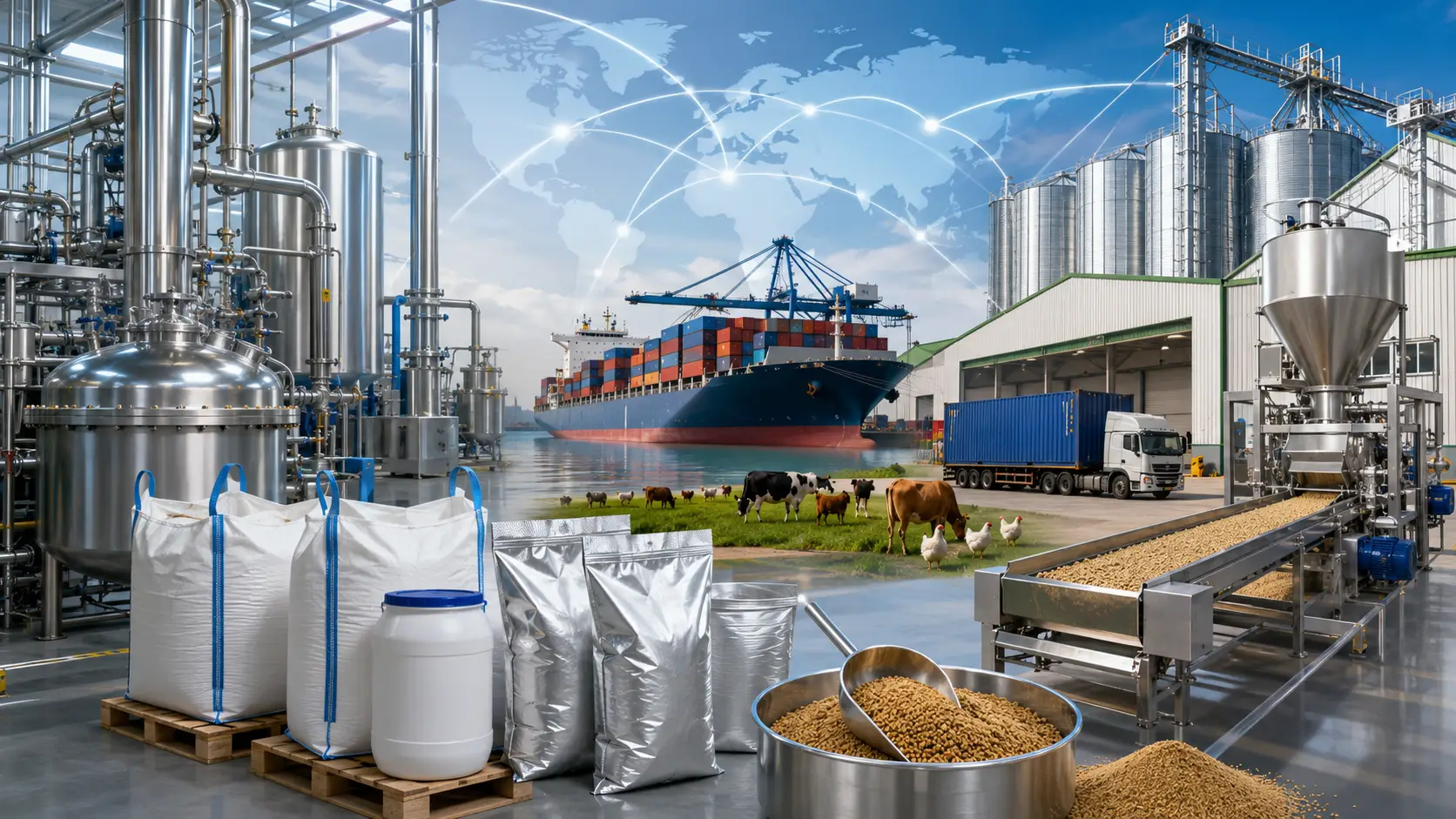
The industrial supply chain involves multiple stages, including raw material sourcing, fermentation, purification, quality testing, packaging, and international distribution. Each stage influences product availability, production cost, and supplier competitiveness in global markets.
For international buyers, understanding production capabilities is essential when evaluating L Lysine Sulfate suppliers. Procurement teams typically assess manufacturing reliability, production capacity, export experience, and compliance documentation before establishing long-term supply agreements.
Market Position of L Lysine Sulfate in Feed Ingredient Trading
The commercial importance of L Lysine Sulfate continues to grow as livestock producers focus on improving feed conversion ratios and reducing production costs. The product has become an important component within the broader amino acid feed additive market, which includes products such as methionine, threonine, and tryptophan.
Industry analysis from market research organizations indicates that increasing global meat consumption, expanding animal farming operations, and greater adoption of precision nutrition strategies are major drivers supporting amino acid demand.
Lysine-based feed ingredients are particularly significant in regions with large poultry and swine industries, where feed efficiency directly impacts profitability. Countries with growing livestock production capacity continue to represent important markets for imported and domestically produced amino acid ingredients.
As international feed supply chains become more interconnected, L Lysine Sulfate suppliers that can provide dependable export solutions are positioned to support manufacturers seeking stable ingredient sourcing.
Global Market Demand and Supply Chain Development of L Lysine Sulfate
The demand for L Lysine Sulfate is closely connected to global livestock production growth and the increasing need for efficient animal nutrition solutions. Feed manufacturers use amino acid supplementation to create balanced diets that maximize animal performance while controlling formulation costs.
According to the International Feed Industry Federation (IFIF), global compound feed production continues to expand as livestock producers adopt advanced nutrition technologies to improve productivity and sustainability.
The poultry and swine sectors remain the largest consumption areas because these animals have significant lysine requirements for muscle development and efficient feed utilization. Growing demand for animal protein has encouraged feed companies to secure long-term sources of amino acid ingredients.
Market participants increasingly view L Lysine Sulfate as a strategic input rather than a simple commodity because supply disruptions can directly affect feed production planning and livestock economics.
The increasing integration of agricultural supply chains has also created opportunities for international chemical marketplaces to connect manufacturers, traders, and buyers across different regions.
Global Market Demand and Supply Chain Development of L Lysine Sulfate
The global L Lysine Sulfate market is supported by established manufacturing hubs located near major agricultural and industrial regions. Production capacity is concentrated among companies with access to fermentation technology, raw material availability, and large-scale export infrastructure.
According to market analysis from organizations tracking global feed additive industries, Asia-Pacific remains one of the most important regions for amino acid production due to its extensive livestock sector, manufacturing capabilities, and competitive production environment. Other regions, including Europe, North America, and Latin America, represent significant consumption markets due to their developed animal feed industries.
International trade in L Lysine Sulfate requires efficient coordination between manufacturers, distributors, logistics providers, and end users. Factors such as shipping availability, port infrastructure, regulatory requirements, and inventory management influence the reliability of supply chains.
For global buyers, selecting suppliers with established export capabilities is increasingly important. Companies involved in feed production often prioritize partners capable of maintaining consistent deliveries despite changing market conditions.
Market Factors Influencing L Lysine Sulfate Pricing
L Lysine Sulfate pricing is influenced by several commercial factors, including fermentation raw material costs, energy prices, production capacity utilization, transportation expenses, and regional supply-demand conditions.
Industry reports on amino acid markets indicate that feed ingredient prices often experience fluctuations due to changes in agricultural commodity markets and operational costs. Raw materials such as corn-derived glucose or other carbohydrate sources can influence production economics because fermentation-based manufacturing depends on stable feedstock availability.
Buyers commonly evaluate pricing together with product quality, supplier reliability, packaging options, and logistics performance. A lower purchase price does not always represent the most competitive sourcing option if supply consistency or technical support is limited.
For procurement teams, total sourcing value includes product specifications, delivery reliability, documentation support, and long-term supplier relationships rather than only short-term price advantages.
Supply Chain Optimization for Industrial Buyers
Efficient supply chain management has become a major competitive factor for companies purchasing L Lysine Sulfate in bulk quantities. Feed manufacturers and distributors require predictable supply schedules to maintain continuous production and customer commitments.
According to supply chain research from industry associations, agricultural ingredient markets increasingly depend on digital procurement platforms, supplier transparency, and international sourcing networks to improve purchasing efficiency.
B2B marketplaces provide buyers with access to multiple supplier options, enabling comparison of specifications, certifications, production capabilities, and commercial terms. These platforms help reduce sourcing complexity for companies entering international amino acid markets.
A reliable L Lysine Sulfate supply chain allows manufacturers to improve inventory planning, reduce procurement risks, and maintain stable operations across changing market environments.
Industrial Applications Driving L Lysine Sulfate Consumption
Poultry production represents one of the largest application areas for L Lysine Sulfate due to the high nutritional requirements of broiler chickens and laying hens. Feed manufacturers incorporate lysine supplements to balance amino acid profiles and improve feed utilization.
Technical guidance from the National Research Council (NRC) highlights lysine as an essential nutrient required for optimal growth, maintenance, and production performance in livestock species.
Modern poultry diets commonly rely on cereal-based ingredients such as corn and wheat, which may require amino acid supplementation to achieve recommended nutritional levels. L Lysine Sulfate provides manufacturers with an efficient method to improve dietary balance.
The increasing global demand for poultry meat has supported continued consumption growth for lysine-based feed additives. Producers seeking improved productivity and reduced feed waste continue to invest in scientifically formulated nutrition programs.
Swine Nutrition and Feed Efficiency Improvement
The swine industry is another major consumer of L Lysine Sulfate because lysine plays a critical role in lean tissue development and protein metabolism. Commercial pig feed formulations frequently include lysine supplementation to optimize growth rates.
According to livestock nutrition research published by academic institutions, balanced amino acid supplementation allows producers to reduce excessive crude protein levels while maintaining animal performance.
Feed manufacturers supplying pig farming operations require consistent-quality L Lysine Sulfate to support standardized feed formulas across different production stages. Supplier reliability is therefore a key factor in procurement decisions.
As global pork production continues to evolve, especially in regions investing in modern farming systems, demand for functional amino acid ingredients remains commercially significant.
Expanding Applications Beyond Traditional Livestock Feed
Although animal nutrition represents the primary market for L Lysine Sulfate, improvements in feed technology continue to create broader opportunities for amino acid applications.
Aquaculture feed manufacturers, specialty animal nutrition companies, and integrated agricultural producers increasingly evaluate amino acid supplementation as part of advanced feeding strategies.
Industry studies from agricultural research organizations emphasize the importance of optimized nutrition in improving resource efficiency and supporting sustainable food production systems.
This trend creates additional opportunities for suppliers capable of delivering consistent industrial-grade amino acid products with reliable documentation and global distribution capabilities.
Key Buyers and Procurement Factors in the L Lysine Sulfate Market
The primary buyers of L Lysine Sulfate are compound feed manufacturers producing commercial diets for livestock producers. These companies purchase amino acid ingredients in bulk quantities to integrate into large-scale feed production systems.
Feed companies evaluate suppliers based on product quality, technical specifications, production capacity, and ability to maintain stable deliveries. Consistent supply is essential because amino acid shortages can disrupt manufacturing schedules.
According to industry information from the International Feed Industry Federation (IFIF), efficient feed production depends on reliable access to high-quality nutritional ingredients.
For these buyers, L Lysine Sulfate sourcing decisions are closely connected to production planning, customer requirements, and cost management strategies.
Distributors, Traders, and Global Importers
Chemical distributors and agricultural ingredient traders represent another important buyer segment. These companies purchase L Lysine Sulfate from manufacturers and supply regional markets where local feed producers require imported materials.
Distributors typically evaluate supplier competitiveness through factors such as export experience, packaging flexibility, documentation availability, and shipment reliability.
Global sourcing networks allow distributors to expand product portfolios while supporting smaller feed manufacturers that may not directly purchase from international producers.
For marketplace buyers, access to verified suppliers creates opportunities to compare offers and establish efficient procurement channels.
Procurement Considerations for Industrial Buyers
When purchasing L Lysine Sulfate, industrial buyers typically review technical specifications, quality certificates, manufacturing standards, and regulatory compliance documentation.
Feed-grade buyers commonly require confirmation of amino acid content, moisture levels, safety parameters, and product consistency. Reliable documentation helps manufacturers meet internal quality control requirements.
Technical standards provided by recognized agricultural and feed organizations support buyers in establishing appropriate quality benchmarks.
Suppliers that demonstrate transparency and strong quality management systems often gain stronger credibility among international procurement teams.
Why Buyers Compare Multiple Suppliers
L Lysine Sulfate buyers frequently compare suppliers because market conditions, production availability, and logistics costs can change significantly across regions.
Supplier comparison allows companies to evaluate pricing competitiveness, delivery capability, technical support, and long-term partnership potential.
Digital B2B chemical marketplaces support this process by connecting buyers with multiple sources and providing access to commercial information required for purchasing decisions.
A well-structured product listing helps buyers understand applications, specifications, and sourcing advantages before initiating supplier discussions.
Global Sourcing Opportunities and Supplier Selection Strategies
The international sourcing landscape for L Lysine Sulfate continues to develop as feed manufacturers and agricultural distributors seek dependable suppliers with global export capabilities. Increasing livestock production, regional feed expansion, and demand for cost-efficient nutrition solutions have encouraged companies to diversify sourcing channels.
According to market analysis from agricultural industry organizations, feed ingredient procurement is becoming increasingly strategic as manufacturers focus on supply security, traceability, and operational resilience. Buyers are no longer evaluating suppliers only on product price but also on production reliability, technical support, and logistics capability.
For international purchasers, sourcing L Lysine Sulfate involves evaluating manufacturers that can support bulk requirements, maintain consistent specifications, and provide documentation suitable for import regulations. These factors are particularly important for companies operating across multiple countries.
The growth of digital B2B marketplaces has improved access to global suppliers by allowing buyers to identify potential partners, compare commercial conditions, and streamline communication with manufacturers and exporters.
Selecting Reliable L Lysine Sulfate Suppliers
Supplier selection is one of the most important stages in the procurement process because L Lysine Sulfate directly affects feed manufacturing efficiency and product consistency. Buyers generally assess supplier reputation, production capacity, quality management systems, and export experience before entering long-term agreements.
Technical information from feed industry organizations emphasizes the importance of quality assurance systems in maintaining the safety and effectiveness of animal nutrition products. Suppliers with transparent manufacturing processes and established quality controls are generally preferred by professional buyers.
Procurement teams also consider practical factors such as packaging options, shipment flexibility, lead times, and responsiveness to market changes. A supplier capable of supporting different purchasing volumes can provide greater value to distributors and manufacturers.
For global companies, choosing the right sourcing partner helps reduce operational risks while creating a more stable supply chain for essential feed ingredients.
Role of B2B Marketplaces in L Lysine Sulfate Trade
B2B chemical marketplaces play an increasingly important role in connecting international buyers with verified suppliers of industrial ingredients. These platforms provide a structured environment where procurement teams can discover products, evaluate supplier capabilities, and initiate commercial discussions.
According to digital commerce research published by industry analysts, online sourcing platforms are transforming industrial procurement by improving supplier visibility and reducing barriers between global buyers and manufacturers.
For L Lysine Sulfate buyers, marketplace platforms provide access to product information, application details, and supplier networks that support faster purchasing decisions.
A comprehensive product page containing technical details, commercial information, and sourcing guidance helps buyers move from initial research to supplier engagement more efficiently.
Future Outlook for L Lysine Sulfate Trade and Market Expansion
The future demand outlook for L Lysine Sulfate is closely connected to global efforts to improve livestock production efficiency and sustainability. Feed manufacturers are increasingly adopting precision nutrition strategies that optimize amino acid balance and reduce unnecessary resource consumption.
Research from agricultural science institutions indicates that targeted amino acid supplementation can support improved feed conversion efficiency and reduce the environmental impact associated with excessive protein feeding.
As livestock producers face increasing pressure to improve productivity while controlling operational costs, functional feed additives such as L Lysine Sulfate are expected to remain strategically important.
This trend creates continued opportunities for manufacturers and suppliers that can provide reliable, high-quality amino acid products for global agricultural markets.
Expanding Regional Demand and Market Opportunities
Emerging agricultural markets are expected to contribute significantly to future L Lysine Sulfate demand. Growth in poultry, swine, and aquaculture production across developing regions continues to create new opportunities for feed ingredient suppliers.
Industry reports from global agricultural organizations indicate that increasing food demand and modernization of farming systems are driving investment in efficient animal nutrition solutions.
Regional distributors and feed manufacturers require international supply partners capable of supporting market expansion through consistent product availability and competitive commercial solutions.
Suppliers that understand regional requirements, logistics challenges, and customer expectations will be better positioned to participate in expanding amino acid markets.
Digital Transformation of Chemical and Feed Ingredient Procurement
The future of L Lysine Sulfate sourcing will increasingly involve digital procurement tools that improve transparency and efficiency. Buyers are becoming more comfortable using online platforms to research suppliers, compare products, and manage international purchasing processes.
Digital marketplaces help bridge the gap between manufacturers and global buyers by providing access to broader supplier networks and improving communication throughout the sourcing cycle.
For chemical trading companies and marketplace platforms, providing accurate product information, industry insights, and sourcing support creates stronger relationships with procurement professionals.
The combination of biotechnology production growth, expanding livestock markets, and digital trade development is expected to support continued evolution of the L Lysine Sulfate supply chain.
Conclusion: Building Reliable L Lysine Sulfate Supply Partnerships
L Lysine Sulfate has become an important industrial amino acid ingredient supporting the global animal nutrition industry. Its role in improving feed efficiency, balancing livestock diets, and supporting modern agricultural production has created consistent demand among feed manufacturers, distributors, and agricultural businesses.
The future market outlook for L Lysine Sulfate will depend on several factors, including livestock industry expansion, advances in fermentation technology, raw material availability, and the ability of suppliers to provide stable international supply solutions.
For buyers, successful sourcing requires more than product availability. Procurement teams increasingly evaluate supplier reliability, technical documentation, logistics performance, and long-term partnership capabilities when selecting amino acid suppliers.
As a global chemical and industrial sourcing platform, Tradeasia International supports businesses seeking reliable connections with international suppliers and manufacturers. Through marketplace solutions, product information, and global trade expertise, Tradeasia helps buyers explore sourcing opportunities for L Lysine Sulfate and other industrial ingredients across international markets.
Sources
https://www.fao.org/animal-production/en/
https://www.nationalacademies.org/

Leave a Comment