Global L-Lysine HCl Supply Chain Opportunities for Feed Markets
Understanding L-Lysine HCl and Its Role in Global Supply Chains
L-Lysine HCl as an Essential Feed Ingredient
L-Lysine HCl (L-Lysine Hydrochloride) is a concentrated amino acid ingredient widely used in animal nutrition formulations to improve protein efficiency and livestock growth performance. Produced mainly through microbial fermentation processes, L-Lysine HCl provides a reliable source of lysine, an essential amino acid that animals cannot synthesize naturally in sufficient quantities. According to technical information from the Food and Agriculture Organization of the United Nations, amino acids play an important role in optimizing feed efficiency and supporting sustainable livestock production.
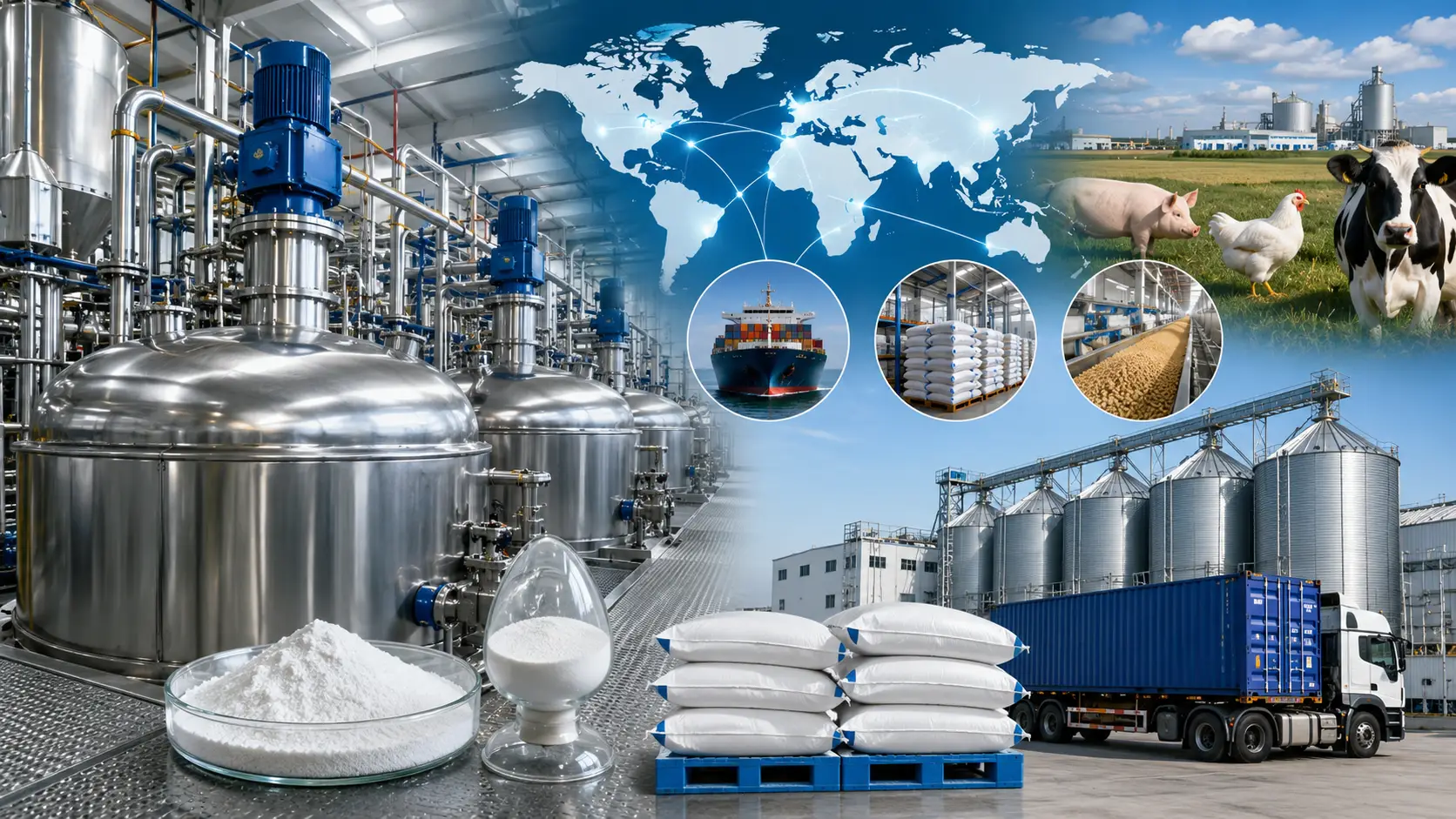
The global supply chain for L-Lysine HCl connects biotechnology manufacturers, feed additive producers, international traders, distributors, and livestock feed companies. As animal protein consumption continues increasing worldwide, demand for efficient nutritional solutions has strengthened the importance of reliable lysine supply networks.
Role of Fermentation-Based Production
Commercial L-Lysine HCl production depends heavily on advanced fermentation technology using microorganisms to convert renewable carbohydrate sources into amino acids. Manufacturers invest in production efficiency, quality control systems, and large-scale fermentation facilities to serve international feed markets.
Industry data from the European Feed Manufacturers' Federation highlights the importance of feed additives in improving livestock production efficiency while supporting modern animal nutrition practices.
The competitive landscape of L-Lysine HCl supply is influenced by production capacity, raw material availability, transportation infrastructure, and regulatory compliance requirements. These factors determine supplier reliability and purchasing decisions among global buyers.
Growing Market Demand for L-Lysine HCl in Animal Nutrition
The demand for L-Lysine HCl continues expanding alongside global growth in poultry, swine, and aquaculture production. Feed manufacturers increasingly use amino acid supplementation to reduce dependency on high-protein raw materials while maintaining balanced animal diets.
According to market analysis from Grand View Research, the global amino acids market is supported by rising demand for functional feed ingredients, improved livestock productivity, and increasing focus on cost-efficient nutrition solutions.
L-Lysine HCl allows feed producers to formulate diets with optimized amino acid profiles, helping reduce unnecessary protein levels and improve feed conversion efficiency. This creates consistent demand from commercial farming operations and integrated livestock producers.
Sustainability Trends in Feed Formulation
Sustainability has become an important factor influencing amino acid adoption. By supplementing feeds with L-Lysine HCl, manufacturers can lower excess nitrogen output associated with inefficient protein utilization.
Technical research published through scientific databases such as National Center for Biotechnology Information demonstrates the nutritional importance of amino acid balancing in animal diets.
As environmental regulations and efficiency targets become stricter, feed producers are increasingly evaluating amino acid solutions as part of sustainable livestock production strategies. This trend supports long-term market opportunities for L-Lysine HCl suppliers.
Industrial Applications Driving L-Lysine HCl Procurement
The largest application area for L-Lysine HCl is animal feed manufacturing, particularly poultry and swine nutrition. Feed producers incorporate lysine hydrochloride into formulations to support muscle development, growth rates, and efficient nutrient utilization.
Research from the National Research Council identifies lysine as one of the critical amino acids required in livestock nutritional programs.
Commercial feed manufacturers purchase L-Lysine HCl based on factors including purity level, feed-grade certification, consistency, and supplier capability. Large-scale buyers often establish long-term sourcing relationships to secure stable supply.
Expanding Use in Aquaculture Nutrition
Aquaculture feed producers are also increasing their use of amino acid supplements as global fish farming expands. Balanced amino acid formulations help improve growth performance and optimize feed utilization in aquatic species.
The increasing commercialization of aquaculture has encouraged demand for high-quality feed additives, creating additional opportunities for L-Lysine HCl suppliers serving international markets.
Key Buyers and Procurement Factors in the L-Lysine HCl Market
The main buyers of L-Lysine HCl include compound feed manufacturers, premix producers, livestock integrators, animal nutrition companies, distributors, and agricultural ingredient traders.
These buyers typically require consistent supply volumes, competitive pricing, technical documentation, and compliance with regional feed regulations. Procurement teams evaluate suppliers based on production capacity, logistics capability, certifications, and market reputation.
According to industry reports from the International Feed Industry Federation, global feed production networks rely heavily on dependable ingredient supply chains to maintain production continuity.
Buyer Evaluation and Sourcing Decisions
When sourcing L-Lysine HCl, buyers compare multiple suppliers to manage cost, quality, and supply risks. Factors such as origin, packaging options, shipping routes, and documentation requirements influence purchasing decisions.
B2B chemical marketplaces support procurement teams by providing access to supplier information, product specifications, and international sourcing opportunities. A professional product page helps buyers evaluate available solutions before initiating commercial discussions.
Global Sourcing Strategies and Supply Chain Considerations
The L-Lysine HCl market depends on efficient international logistics connecting manufacturing regions with feed production centers. Suppliers must manage transportation planning, inventory availability, and regulatory requirements across different markets.
Global buyers often diversify suppliers to reduce risks associated with production disruptions, freight challenges, or regional market fluctuations.
Importance of Reliable Chemical Trading Partners
For distributors and industrial buyers, selecting a reliable trading partner is essential for maintaining stable product availability. Companies involved in amino acid sourcing require partners that understand international trade procedures, documentation, and customer requirements.
Trade platforms connecting manufacturers and buyers help simplify sourcing processes by improving visibility across global supply networks.
Future Outlook for L-Lysine HCl Trade and Market Opportunities
The long-term outlook for L-Lysine HCl remains positive as global livestock production continues developing and feed manufacturers focus on efficient nutrition solutions. Rising demand for animal protein, feed optimization, and sustainable production methods will continue supporting market growth.
Market studies indicate that amino acid feed additives will remain important components of modern livestock nutrition strategies.
Opportunities for Global Suppliers and Distributors
Manufacturers, traders, and distributors have opportunities to expand their market presence by improving supply reliability, maintaining quality standards, and supporting international buyers with efficient sourcing solutions.
As procurement teams increasingly seek dependable partners, companies offering transparent supply chains and technical expertise can strengthen their position in the global L-Lysine HCl marketplace.
Conclusion: Building Reliable L-Lysine HCl Supply Partnerships
L-Lysine HCl serves as a strategic amino acid ingredient supporting modern animal nutrition and efficient feed production worldwide. Its importance within poultry, swine, and aquaculture industries continues to increase as producers focus on productivity, sustainability, and cost optimization.
For manufacturers, distributors, and procurement teams, securing a reliable L-Lysine HCl supply chain is essential for maintaining consistent production and meeting growing market demand.
Tradeasia International provides global sourcing solutions by connecting industrial buyers with reliable chemical and feed ingredient supply networks. Through international market knowledge, supplier coordination, and B2B trading expertise, Tradeasia supports companies seeking dependable L-Lysine HCl procurement opportunities.
Sources
https://www.fao.org
https://www.nationalacademies.org
Leave a Comment