L-Lysine HCl Applications and Buyer Opportunities in Global Feed Markets
Introduction to L-Lysine HCl and Its Global Market Importance
Understanding L-Lysine HCl as a Strategic Amino Acid Ingredient
L-Lysine Hydrochloride (L-Lysine HCl) is one of the most commercially important essential amino acids used in modern animal nutrition. As animals cannot naturally produce sufficient lysine to meet their biological requirements, supplementation through feed additives has become a critical practice for improving growth performance, feed conversion efficiency, and nutritional balance.
The increasing global demand for meat, poultry products, and aquaculture production continues to strengthen the importance of L-Lysine HCl in feed manufacturing. Feed producers use this amino acid to optimize formulations while reducing unnecessary protein levels and improving overall production efficiency.
Role of L-Lysine HCl in Industrial Feed Formulation
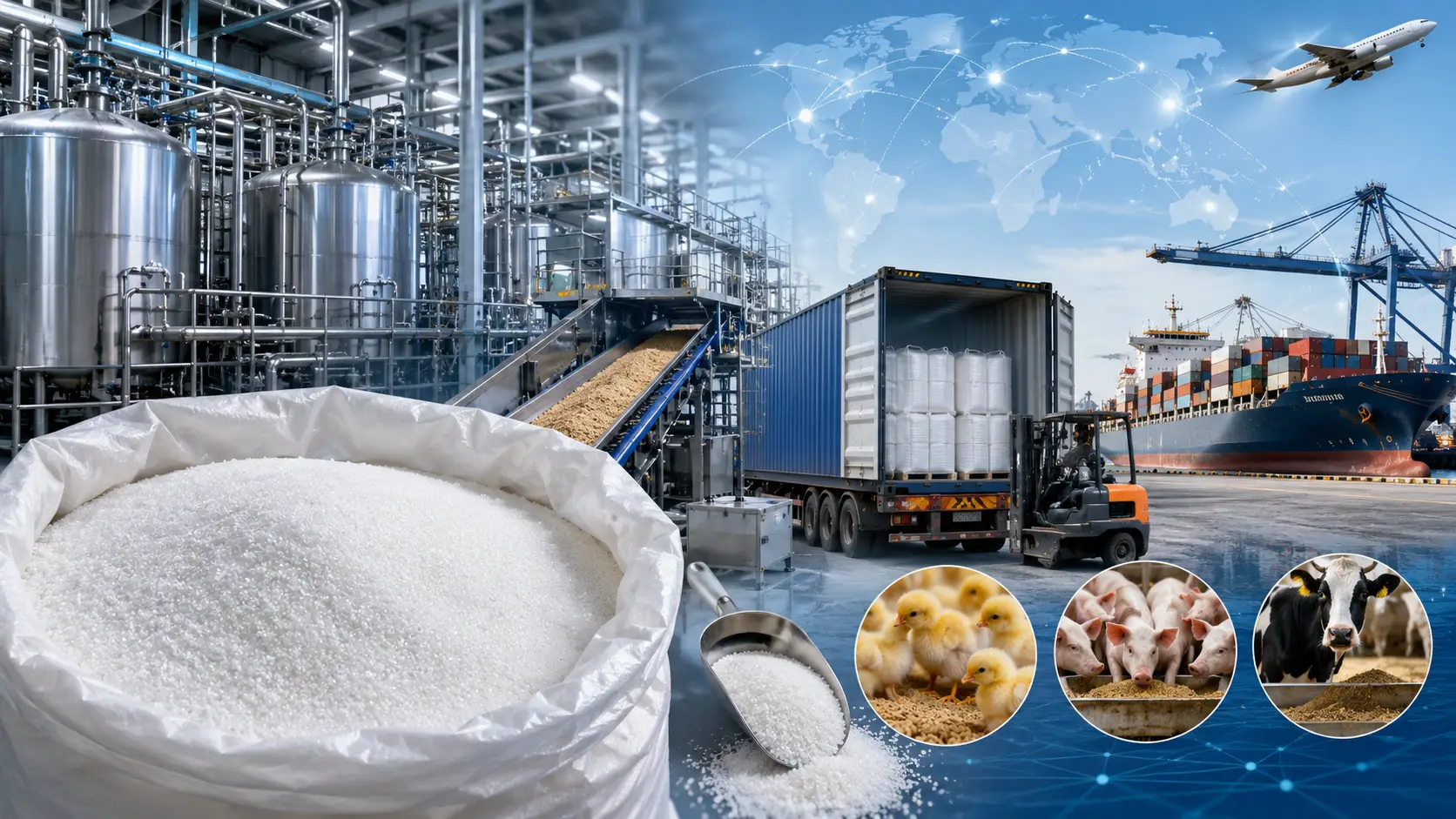
The primary commercial application of L-Lysine HCl is as a feed-grade amino acid additive for livestock nutrition. It is commonly incorporated into poultry, swine, and aquaculture diets where lysine availability directly affects muscle development, weight gain, and production performance.
The global amino acid feed additive market continues expanding as producers focus on precision nutrition strategies. Market estimates indicate that the feed amino acid sector is growing at a CAGR of approximately 6–8%, supported by increasing livestock production and efficiency-driven farming practices.
L-Lysine HCl has become an essential procurement product for feed manufacturers because it provides a concentrated and cost-effective source of lysine compared with traditional protein ingredients. Its consistent quality and compatibility with different feed formulations make it a preferred choice among industrial buyers.
L-Lysine HCl Applications in Animal Nutrition Industries
The poultry industry represents one of the largest consumption segments for L-Lysine HCl worldwide. Broiler producers rely on lysine supplementation to support rapid growth, improve feed utilization, and maintain balanced amino acid profiles in formulated diets.
Feed manufacturers incorporate L-Lysine HCl into poultry feed products because modern production systems require precise nutritional control. With global poultry consumption increasing, demand from commercial feed mills continues to support long-term lysine procurement opportunities.
Swine and Aquaculture Nutrition Uses
Swine production is another major application area where L-Lysine HCl plays an important role. Pig diets frequently require lysine supplementation to improve lean tissue development and optimize feed efficiency, especially during growth and finishing stages.
Aquaculture producers are also increasing their usage of amino acid supplements as fish and shrimp farming expands globally. L-Lysine HCl helps balance plant-based feed formulations by improving amino acid availability and supporting healthier growth performance.
The versatility of L-Lysine HCl across multiple animal nutrition segments creates strong demand from integrated feed companies, livestock producers, and specialized animal nutrition suppliers seeking dependable raw material sources.
Key Buyers and Industries Driving L-Lysine HCl Demand
Large-scale animal feed manufacturers represent the main buyer group for L-Lysine HCl. These companies purchase amino acids in bulk quantities to produce commercial feed formulations for poultry, livestock, and aquaculture markets.
Procurement teams typically evaluate suppliers based on product consistency, production capacity, logistics reliability, documentation availability, and the ability to support long-term supply agreements.
Distributors and Global Trading Companies
Chemical distributors and commodity trading companies also play an important role in the L-Lysine HCl supply network. They connect manufacturers with regional buyers by managing storage, transportation, and market access across different countries.
B2B marketplaces have become increasingly relevant for connecting international suppliers with buyers searching for competitive pricing, verified product availability, and efficient sourcing channels.
Global Market Trends and Commercial Opportunities for L-Lysine HCl
The expansion of global livestock and aquaculture industries continues to create strong commercial opportunities for L-Lysine HCl suppliers. Rising consumption of poultry, pork, and seafood products has encouraged feed manufacturers to improve production efficiency through scientifically balanced nutrition programs.
As farmers and feed producers focus on reducing production costs while maintaining animal performance, amino acid supplementation has become an important strategy. L-Lysine HCl allows manufacturers to formulate diets with optimized protein levels while ensuring animals receive adequate essential amino acids.
The global L-Lysine market is estimated to maintain steady growth, supported by increasing compound feed production and the adoption of precision feeding practices. Market analysts commonly project amino acid feed additives to experience sustained expansion, with demand growth linked to livestock population increases and improvements in commercial farming systems.
Regional Market Opportunities for L-Lysine HCl Suppliers
Asia-Pacific remains one of the largest demand regions for L-Lysine HCl due to its significant livestock production capacity, expanding feed manufacturing sector, and increasing consumption of animal-based products. Countries with large poultry and swine industries continue to represent important markets for amino acid suppliers.
North America, Europe, Latin America, and the Middle East also contribute to market demand through established feed industries and growing investments in animal nutrition technologies. Regional differences in livestock production, import requirements, and feed ingredient availability create opportunities for international suppliers and distributors.
For global buyers, sourcing L-Lysine HCl from reliable international suppliers provides access to competitive pricing, stable availability, and diversified supply channels. Companies increasingly evaluate suppliers that can provide consistent quality and dependable logistics support.
Procurement Factors for L-Lysine HCl Buyers and Distributors
Industrial buyers of L-Lysine HCl prioritize quality assurance when selecting suppliers. Feed manufacturers typically require products that meet specific nutritional specifications, including consistent lysine content, purity levels, and compliance with applicable feed safety standards.
Technical documentation such as certificates of analysis (COA), product specifications, and quality management certifications are important factors during supplier evaluation. Reliable documentation helps buyers maintain regulatory compliance and ensure consistent performance in finished feed products.
Supplier transparency and technical support have become increasingly valuable in international trade. Buyers prefer partners that can provide accurate product information, responsive communication, and dependable order fulfillment.
Pricing, Volume Supply, and Contract Purchasing
Price competitiveness remains a major consideration for L-Lysine HCl procurement. Since feed manufacturers purchase amino acids in large volumes, even small price differences can significantly influence production costs and purchasing decisions.
Commercial L-Lysine HCl pricing is influenced by raw material availability, manufacturing capacity, energy costs, transportation expenses, and global supply-demand conditions. Bulk purchasing agreements and long-term supply contracts are commonly used by large buyers to secure stable supply and manage cost fluctuations.
Distributors and importers often seek suppliers capable of handling container-scale shipments and providing flexible commercial terms. Efficient supply management enables buyers to maintain inventory stability while responding to changing market demand.
Supply Chain Considerations for Reliable L-Lysine HCl Sourcing
A strong international supply chain is essential for companies purchasing L-Lysine HCl for industrial applications. Buyers increasingly consider supplier location, export capability, logistics experience, and market coverage when developing sourcing strategies.
Global amino acid supply networks involve manufacturers, exporters, distributors, freight providers, and regional feed companies. Each stage influences product availability, delivery schedules, and overall procurement efficiency.
Companies operating in competitive feed markets benefit from working with suppliers that understand international trade requirements and can support consistent shipments across multiple regions.
Digital B2B Platforms and Modern Chemical Sourcing
Digital marketplaces have transformed how industrial buyers discover and evaluate L-Lysine HCl suppliers. Online B2B platforms allow procurement teams to compare supplier capabilities, review product information, and connect with international trading partners more efficiently.
Modern chemical sourcing requires more than product availability. Buyers increasingly look for suppliers that provide market knowledge, reliable communication, transparent transactions, and long-term cooperation opportunities.
Platforms such as Tradeasia International and Chemtradeasia support global industrial buyers by connecting businesses with chemical suppliers and facilitating international sourcing solutions across different markets.
Conclusion: Building Long-Term L-Lysine HCl Supply Partnerships
L-Lysine HCl will continue to play an important role in global animal nutrition as feed producers seek efficient solutions for improving animal performance and managing production costs. Growing demand for poultry, livestock, and aquaculture products is expected to maintain steady market opportunities for manufacturers, distributors, and industrial buyers.
The increasing adoption of precision nutrition strategies further strengthens the position of L-Lysine HCl as a valuable feed ingredient. Companies involved in animal nutrition will continue seeking reliable sources that provide consistent quality, competitive pricing, and dependable supply availability.
Partnering with Reliable Global Chemical Suppliers
For businesses purchasing L-Lysine HCl, selecting the right supplier is essential for maintaining operational stability and meeting customer demand. Reliable sourcing partners can help buyers manage supply requirements, improve procurement efficiency, and access international markets.
Tradeasia International provides global sourcing solutions for industrial buyers seeking dependable chemical and feed ingredient supply networks. Through established supplier relationships, market expertise, and international distribution capabilities, Tradeasia supports businesses looking for efficient and reliable L-Lysine HCl procurement solutions.
Sources
https://www.fao.org
https://ifif.org
https://www.marketsandmarkets.com

Leave a Comment