Global L-Arginine Supply Chain & B2B Sourcing Guide for Buyers
Overview of L-Arginine in Global Chemical Markets
Understanding L-Arginine as a Functional Amino Acid
L-Arginine is a semi-essential amino acid widely recognized for its role in protein synthesis and nitric oxide production. In industrial terms, it is manufactured through fermentation processes and refined for pharmaceutical, nutraceutical, and feed applications. According to the U.S. National Library of Medicine (PubChem database), L-Arginine plays a key role in metabolic and vascular functions, making it a high-value biochemical ingredient in multiple sectors.
From a B2B perspective, L-Arginine is not a consumer-facing commodity but a strategic raw material used in formulations requiring physiological functionality. Its demand is closely tied to healthcare innovation, dietary supplementation trends, and animal nutrition optimization. The chemical’s versatility positions it as a stable and recurring procurement item for global distributors and manufacturers.
The global amino acid market continues to expand due to rising demand for functional health ingredients. Market research published by industry analysts such as Grand View Research indicates steady growth in amino acid consumption, driven by pharmaceuticals and nutrition sectors.
Market Positioning in Chemical Supply Chains
In supply chain terms, L-Arginine sits within the high-value amino acid category, often sourced through fermentation-based production from glucose or plant-derived feedstocks. Manufacturers typically operate under strict quality and purity controls to meet pharmaceutical-grade specifications.
The chemical is traded globally through bulk suppliers, distributors, and integrated chemical marketplaces such as Tradeasia, where procurement teams evaluate consistency, certification, and logistics efficiency. Its positioning as a dual-use ingredient increases its commercial resilience across cycles.
Demand stability is further supported by regulatory recognition of amino acids as safe ingredients in food and pharmaceutical formulations, as referenced by EFSA scientific opinions on amino acid safety assessments.
Industrial Applications of L-Arginine Across Key Sectors
L-Arginine is extensively used in pharmaceutical formulations, particularly in cardiovascular therapies, metabolic treatments, and clinical nutrition solutions. The U.S. Food and Drug Administration (FDA) recognizes amino acids as critical components in parenteral nutrition products.
In injectable and oral pharmaceutical preparations, L-Arginine supports nitric oxide synthesis, which is essential for vascular dilation and blood flow regulation. This makes it a key ingredient in hospital-grade nutrition products and therapeutic formulations.
Its role in clinical medicine ensures consistent demand from pharmaceutical manufacturers requiring high-purity, GMP-compliant amino acids for drug development and production.
Nutraceutical and Food Industry Applications
Beyond pharmaceuticals, L-Arginine is widely used in dietary supplements and functional food products. It is commonly incorporated into formulations targeting cardiovascular health, exercise performance, and immune support.
The food-grade amino acid market benefits from increasing consumer awareness of functional nutrition, as reported by the World Health Organization (WHO) in its nutritional supplementation guidelines.
This has created a strong downstream demand from nutraceutical manufacturers seeking reliable bulk supply of L-Arginine for capsules, powders, and fortified food formulations.
Pharmaceutical Demand Drivers and Clinical Applications
L-Arginine plays a significant role in clinical nutrition, particularly in hospital settings where patients require amino acid-enriched intravenous solutions. Clinical studies referenced by NIH-supported research highlight its importance in wound healing and immune function.
Hospitals and healthcare institutions rely on pharmaceutical suppliers for consistent-grade L-Arginine that meets sterility and purity standards. This demand is highly regulated and requires strict adherence to pharmacopeial guidelines.
The steady expansion of healthcare infrastructure globally continues to strengthen pharmaceutical procurement of amino acids.
Cardiovascular and Metabolic Research Demand
L-Arginine is widely studied for its role in nitric oxide production, which supports cardiovascular health and endothelial function. Academic research published in biomedical journals confirms its relevance in hypertension and vascular therapy studies.
This has led to increased procurement by pharmaceutical R&D organizations and contract manufacturers engaged in clinical trials and formulation development.
As cardiovascular diseases remain a leading global health concern, demand for L-Arginine-based solutions continues to grow steadily.
Nutraceutical and Sports Nutrition Market Expansion
The nutraceutical industry is one of the fastest-growing consumers of L-Arginine, particularly in sports nutrition products. It is commonly used in pre-workout supplements due to its role in improving blood flow and exercise endurance.
According to market insights from industry research firms, the global sports nutrition sector continues to expand due to increased fitness awareness and lifestyle changes.
This creates strong demand from supplement manufacturers sourcing bulk amino acids from reliable chemical suppliers and distributors.
Functional Food and Wellness Applications
L-Arginine is increasingly incorporated into functional foods designed to support cardiovascular health and general wellness. These include fortified beverages, protein blends, and health-focused dietary products.
The rise of preventive healthcare trends, supported by WHO nutrition frameworks, has accelerated demand for bioactive ingredients like amino acids.
Manufacturers require consistent sourcing channels to maintain product quality and regulatory compliance in international markets.
Animal Feed and Livestock Nutrition Applications
In the animal nutrition industry, L-Arginine is used as a feed additive to support growth performance and metabolic efficiency, particularly in poultry and swine production.
Research from agricultural institutions indicates that amino acid supplementation improves feed conversion ratios and overall livestock health outcomes.
This has made L-Arginine an important component in modern feed formulation strategies for large-scale agricultural producers.
Industrial Feed Manufacturing Demand
Feed manufacturers integrate L-Arginine into premix formulations to enhance nutritional balance in livestock diets. This is especially important in high-density farming systems where optimized nutrition is critical.
Global agricultural demand continues to support steady consumption of amino acids in feed-grade applications.
Procurement teams in this sector prioritize cost-efficiency and supply stability when sourcing bulk amino acids from global suppliers.
Global Supply Chain Structure and Sourcing Dynamics
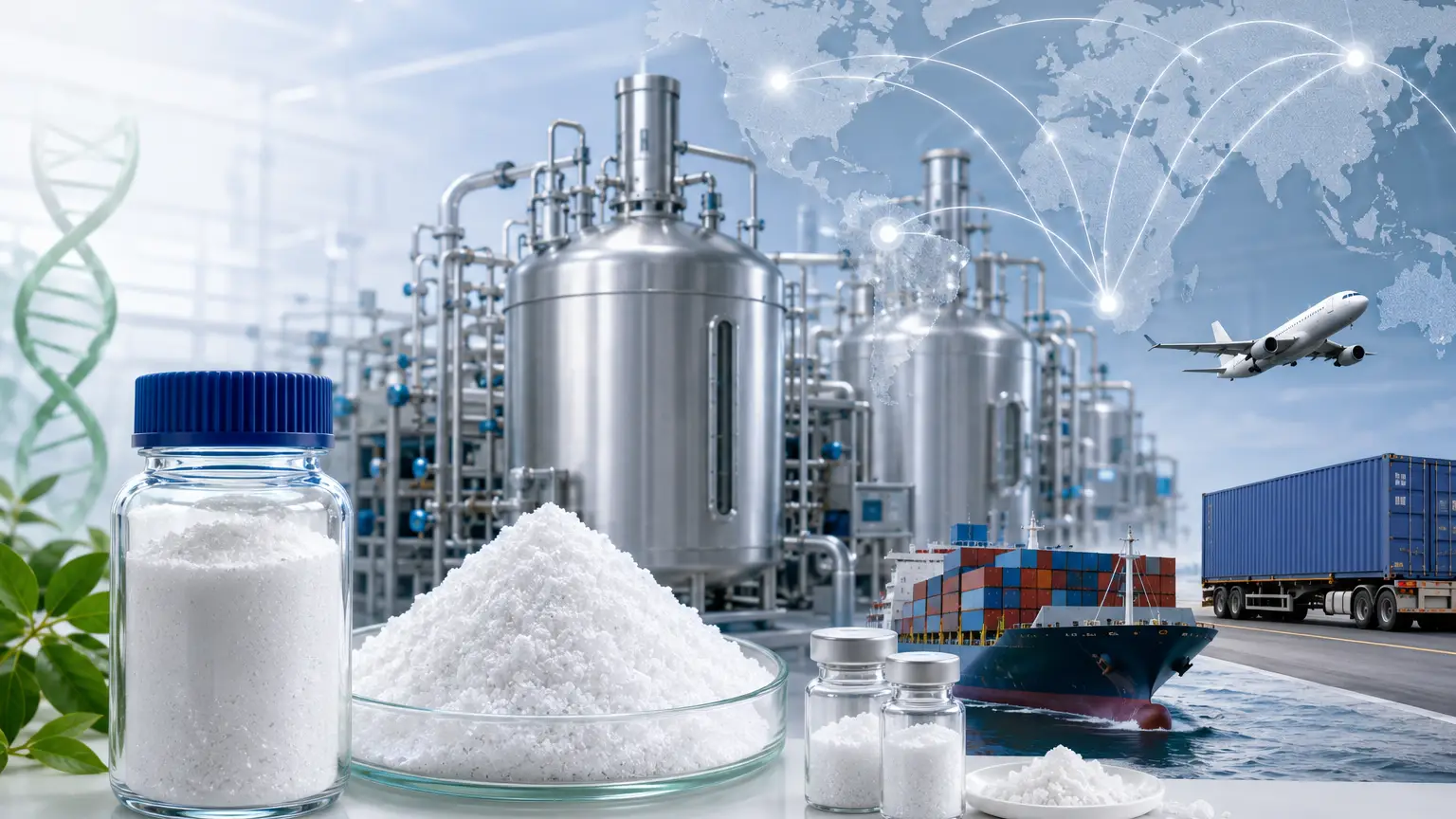
L-Arginine is primarily produced through microbial fermentation processes using glucose-based raw materials. Major production hubs are located in Asia, where large-scale fermentation facilities supply global markets.
According to chemical industry reports, fermentation-based amino acid production allows scalable output with consistent quality control.
This production model supports global distribution networks serving pharmaceutical, feed, and nutraceutical industries.
Distribution and Trade Flow Patterns
The global supply chain for L-Arginine involves manufacturers, exporters, distributors, and B2B marketplaces. Chemical trading platforms streamline procurement by connecting buyers with verified suppliers.
Logistics efficiency and regulatory compliance are key factors influencing trade flow across regions.
Stable supply chains are essential for industries requiring uninterrupted raw material availability.
Quality Standards and Procurement Evaluation Criteria
L-Arginine used in pharmaceutical and food applications must comply with pharmacopeial standards such as USP and EP specifications. These ensure purity, safety, and consistency.
Regulatory bodies such as the FDA enforce strict guidelines for amino acid usage in drug formulations and nutritional products.
Compliance with these standards is a critical factor in supplier qualification processes.
Procurement and Supplier Selection Factors
Buyers evaluate suppliers based on purity levels, certification, batch consistency, and supply reliability. Pricing is important, but quality assurance is the primary procurement driver.
Global chemical procurement teams also assess logistics capabilities and documentation support for international trade compliance.
Reliable sourcing partners reduce operational risk and ensure continuity in production processes.
Conclusion: Future Outlook for L-Arginine Trade
The global demand for L-Arginine is expected to remain strong due to expanding pharmaceutical, nutraceutical, and feed applications. Market research from multiple industry analysts confirms steady growth in amino acid consumption.
Healthcare innovation and preventive nutrition trends will continue to drive demand across developed and emerging markets.
This positions L-Arginine as a strategically important biochemical in global supply chains.
Strategic Importance for B2B Buyers
For procurement teams, securing reliable L-Arginine supply is essential for maintaining production continuity and product quality. Supplier diversification and long-term contracts are commonly used strategies.
Chemical marketplaces play a key role in connecting buyers with verified global suppliers.
As industries evolve, L-Arginine will remain a core ingredient in multiple high-growth sectors.
Sources
https://www.nih.gov
https://www.fda.gov
https://www.grandviewresearch.com

Leave a Comment