Introduction Coconut Oil
Industrial coconut oil has evolved from a traditional tropical commodity into a critical ingredient for the modern food and beverage industry. As a versatile lauric oil, it underpins a wide range of food additives, including emulsifiers, medium-chain triglyceride (MCT) oils, flavor carriers, and specialty fats. By 2026, the global supply chain for coconut oil is expected to be more integrated, data-driven, and sustainability-focused, reflecting rising consumer demand for natural and plant-based ingredients.
The global coconut oil market has grown steadily over the last decade, supported by robust demand from both food and non-food sectors. According to various industry estimates, the value of the coconut oil market has been expanding at a CAGR in the mid-single digits, with food applications accounting for a significant share. For food additive manufacturers, the reliability, quality, and traceability of industrial coconut oil are now just as important as price, especially as major brands commit to stricter ESG and sourcing standards.
This article provides an in-depth look at the global supply chain of industrial coconut oil for food additives as we approach 2026. It covers production geographies, logistics, product specifications, market trends, risk factors, and the strategic role of specialized distributors such as chemtradeasia in ensuring consistent, compliant, and cost-effective supply for food industry stakeholders worldwide.
Global Coconut Oil Supply Chain Landscape to 2026
The industrial coconut oil supply chain is highly concentrated in a few tropical producing countries, but its consumption is truly global. The Philippines, Indonesia, and India together account for the majority of world coconut oil production, leveraging extensive coconut plantations in coastal and island regions. Crude coconut oil is typically extracted via pressing and copra processing, then refined, bleached, and deodorized (RBD) to meet food-grade standards for international trade.
From 2020 to 2024, the sector faced multiple disruptions: pandemic-related logistics bottlenecks, container shortages, and weather-related production volatility due to typhoons and changing rainfall patterns. These events highlighted the vulnerability of single-origin sourcing strategies. By 2026, many multinational food manufacturers are expected to rely on multi-origin sourcing (Philippines plus Indonesia or India) and maintain buffer stocks at strategic hubs in Asia, Europe, and North America to mitigate supply risk.
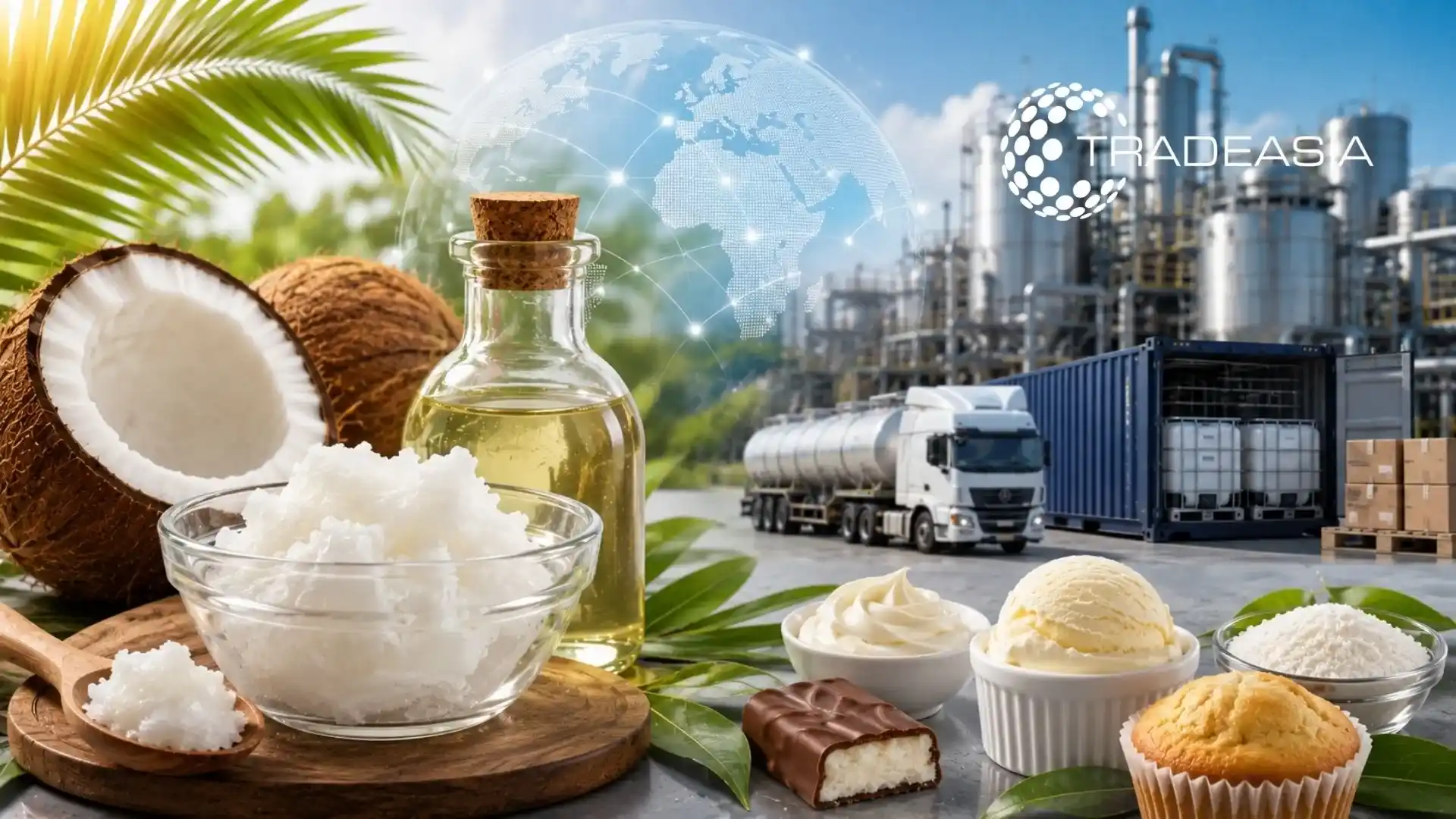
Downstream, the supply chain branches into specialized processors that convert RBD coconut oil into tailored food additives. These include fractionation plants producing coconut stearin and olein, esterification units making mono- and diglycerides, and facilities manufacturing MCT oils and flavor carrier systems. Coordination between plantation-level suppliers, crushers, refineries, additive manufacturers, and distributors such as chemtradeasia is increasingly supported by digital tools, real-time shipment tracking, and quality data sharing to meet strict food safety and traceability requirements.
Industrial Coconut Oil for Food Additives: Properties and Specifications
Industrial coconut oil for food additives is valued primarily for its unique fatty acid profile, dominated by lauric acid (typically around 45–52%), along with significant levels of caprylic, capric, and myristic acids. This composition provides excellent oxidative stability, clean flavor, and desirable melting characteristics for use in confectionery fats, creamers, bakery shortenings, and encapsulated flavors. Compared with other vegetable oils, coconut oil offers a relatively sharp melting curve, contributing to pleasant mouthfeel in many finished products.
For food additive applications, the most commonly traded grade is RBD coconut oil, which is refined, bleached, and deodorized to meet international food standards. Typical specifications include low free fatty acid content (often ≤0.1–0.2%), controlled moisture and impurities (usually ≤0.1%), bland taste and odor, and compliance with microbiological limits. Many buyers also require conformity with Codex Alimentarius standards, HACCP, ISO 22000, and, increasingly, certifications such as Halal, Kosher, and non-GMO status. Suppliers and distributors like chemtradeasia often maintain detailed certificates of analysis and documentation to support regulatory and customer audits.
Industrial coconut oil is further processed into a variety of food additives and functional ingredients. Fractionated coconut oil yields MCT-rich fractions (primarily caprylic and capric triglycerides) used in nutritional supplements, medical nutrition, and performance beverages. Hydrogenated or interesterified coconut oil can be formulated into specialized bakery fats and confectionery coatings. Coconut-derived mono- and diglycerides act as emulsifiers in margarine, ice cream, and whipped toppings, while coconut-based esters serve as carriers and stabilizers in flavors and colors. These downstream products require consistent base oil quality, making reliable sourcing of food-grade coconut oil a foundational requirement for additive manufacturers.
Market Trends, Demand Drivers, and Pricing Dynamics
Several structural trends are shaping demand for industrial coconut oil in food additives through 2026. The global shift toward plant-based and clean-label formulations is a key driver, as food brands seek natural and recognizable ingredients to replace synthetic additives or animal-derived fats. Coconut oil, often perceived as a “natural” and tropical ingredient, fits well into this narrative, especially in bakery, confectionery, and dairy alternative applications. At the same time, MCT oils derived from coconut are benefitting from interest in functional nutrition, ketogenic diets, and sports performance products.
Another important driver is the expansion of processed and convenience foods in emerging markets across Asia, Africa, and Latin America. As urbanization and income growth increase consumption of packaged snacks, bakery products, and ready-to-drink beverages, demand for emulsifiers, texturizers, and flavor carriers is rising. Coconut oil–based additives are particularly competitive in regions with established coconut supply chains, but they are also gaining ground globally as manufacturers diversify away from single-source oils like palm or soybean for risk management and marketing reasons.
Pricing dynamics for coconut oil remain influenced by agricultural yields, weather patterns, and competition from substitute oils. Historically, coconut oil prices have been more volatile than those of some major seed oils due to the concentration of production in cyclone-prone regions and the relatively long maturation cycle of coconut trees. Price relationships with palm kernel oil, another lauric oil, are especially important; when palm kernel oil prices rise, demand for coconut oil in surfactants and oleochemicals can shift, affecting availability for food applications. By 2026, many buyers are expected to adopt longer-term contracts, diversified supplier portfolios, and closer collaboration with distributors like chemtradeasia to smooth out price volatility and ensure supply continuity.
Supply Chain Strategies and the Role of chemtradeasia
Managing the global supply chain for industrial coconut oil used in food additives requires balancing cost, quality, risk, and compliance. Leading food manufacturers are increasingly adopting integrated sourcing strategies that combine direct relationships with origin refineries and crushers with partnerships through specialized distributors. This hybrid model helps secure volume while retaining flexibility to respond to demand surges, specification changes, or regional disruptions. Effective strategies often include multi-origin sourcing, inventory positioning near key production sites, and the use of forward contracts or hedging mechanisms for price risk management.
In this context, distributors such as chemtradeasia play a central coordinating role. With a network that spans major coconut oil producing countries and consuming regions, chemtradeasia can consolidate demand from multiple food additive manufacturers, negotiate competitive terms with refineries, and provide just-in-time deliveries to processing plants. Their capabilities typically include quality assurance, documentation management, and compliance support, ensuring that RBD coconut oil and derivative products meet local and international food safety regulations. This is especially valuable for mid-sized manufacturers that may not have the scale to manage complex global sourcing directly.
Beyond basic logistics, value-added services are becoming more important by 2026. These include digital order tracking, batch-level traceability back to origin, support with sustainability and certification programs, and technical input on matching coconut oil grades to specific food additive applications. For example, a manufacturer of powdered creamers may require a specific melting profile or peroxide value, while a producer of encapsulated flavors might prioritize low odor and narrow color parameters. Working with a partner like chemtradeasia allows such manufacturers to align product specifications, supply reliability, and cost-effectiveness, while also navigating evolving regulations and expectations around responsible sourcing and environmental impact.
Conclusion
By 2026, the global supply chain for industrial coconut oil in food additives is set to be more resilient, transparent, and sustainability-oriented than ever before. As consumer preferences shift toward natural, plant-based, and functional foods, coconut oil and its derivatives will continue to serve as key building blocks in emulsifiers, specialty fats, and flavor systems. However, ensuring consistent quality, competitive pricing, and regulatory compliance will require carefully designed sourcing strategies that account for agricultural risks, logistics constraints, and the growing complexity of international food standards.
Producers, formulators, and brand owners that proactively engage with their supply partners, invest in traceability, and diversify their sourcing base will be better positioned to capture growth opportunities in this evolving market. Industrial coconut oil offers a compelling combination of functionality and market appeal, but its full value is realized only when supported by robust procurement, technical understanding, and collaborative relationships across the value chain. Leveraging the expertise and network of specialized distributors such as chemtradeasia can help companies navigate market volatility, optimize inventories, and align product specifications with application needs in the competitive landscape leading up to 2026 and beyond.
This article is provided solely for informational and market insight purposes and does not constitute technical, safety, regulatory, or professional advice. Users should independently verify all information with qualified experts, consult official documentation such as MSDS/SDS and relevant regulations, and, where appropriate, contact our team or their own advisors before selecting products or applying industrial coconut oil in specific food additive formulations.
Leave a Comment