Hydrogen Peroxide Market 2026: Demand Is Moving Toward Cleaner Oxidation
Hydrogen peroxide demand in 2026 is becoming more application-specific as buyers shift from basic oxidation requirements toward cleaner, residue-minimizing treatment systems. Recent market coverage cited in the brief places the hydrogen peroxide market at around US$3.7 billion in 2026 and projects it to reach US$5.4 billion by 2033, reflecting a 5.6% CAGR across industrial, healthcare, and environmental applications.
Cleaner Oxidation as a Commercial Buying Factor
According to a 2025 scientific review on hydrogen peroxide electrogeneration and environmental applications, hydrogen peroxide is used as a major oxidizing agent, while newer research is focused on greener production pathways and advanced oxidation systems for pollutant treatment. That makes hydrogen peroxide applications commercially relevant to buyers that need oxidation performance without persistent chlorinated byproducts.
For B2B buyers, the main demand shift is not that legacy uses are disappearing. Pulp and paper bleaching, textile processing, chemical synthesis, disinfection, and wastewater treatment still represent strong consumption channels, but the growth narrative is increasingly tied to higher-value technical use cases.
Hydrogen peroxide market 2026 demand is therefore shaped by two procurement layers. Bulk buyers continue to purchase 35% to 50% technical-grade material for bleaching, cleaning, and treatment operations, while specialty buyers increasingly evaluate hydrogen peroxide electronics grade, disinfectant formulations, and controlled oxidation systems for process-sensitive industries.
Water Treatment Demand: AOP, Wastewater, and Water Reuse
Water treatment is one of the strongest application-development channels for hydrogen peroxide because utilities and industrial plants are under pressure to remove more complex contaminants from wastewater and reuse streams. According to references on advanced oxidation processes, AOP systems commonly use ozone, hydrogen peroxide, UV light, or combined processes to generate hydroxyl radicals that oxidize difficult organic pollutants.
Advanced Oxidation for Difficult Pollutants
Hydrogen peroxide advanced oxidation process demand is growing because conventional biological treatment is not always sufficient for pharmaceutical residues, dyes, pesticides, solvents, and refractory industrial organics. In AOP systems, hydrogen peroxide becomes commercially valuable because it can be activated by UV, iron catalysts, ozone, or electrochemical systems to form more reactive oxidizing species.
For buyers, hydrogen peroxide for water treatment is not only a chemical purchase but also part of a process design decision. Municipal water utilities, industrial wastewater operators, textile effluent treatment plants, and chemical manufacturers must evaluate dosage, activation method, residual control, storage safety, and compatibility with existing treatment assets.
This is why hydrogen peroxide wastewater treatment demand is becoming more resilient in 2026. Buyers are not simply replacing one disinfectant with another; they are adopting oxidation chemistry to meet stricter discharge expectations, support water reuse, and reduce reliance on treatment methods that may leave more persistent secondary residues.
Electronics Demand: Semiconductor Cleaning and Etching
Electronics is a higher-value demand channel for hydrogen peroxide because semiconductor fabrication requires high-purity chemicals for wafer cleaning, surface preparation, and contamination control. The RCA clean process, documented in semiconductor wafer-cleaning references, uses hydrogen peroxide in both SC-1 and SC-2 cleaning stages to remove organic residues, particles, and metallic contaminants from silicon wafers.
Ultra-Pure Hydrogen Peroxide for Wafer Processing
Hydrogen peroxide for semiconductor cleaning is commercially different from conventional technical-grade consumption because impurity tolerance is much lower. Semiconductor manufacturers and electronics chemical distributors usually require hydrogen peroxide electronics grade with tight controls on metals, particles, organic contamination, and documentation traceability.
This makes electronics-grade hydrogen peroxide a strategic product for suppliers serving semiconductor fabs, display manufacturing, photovoltaic production, and precision electronics processing. Demand is linked less to bulk volume and more to purity assurance, supply reliability, packaging integrity, and quality consistency across repeated cleanroom operations.
For sourcing teams, the electronics opportunity also changes how hydrogen peroxide supplier evaluation works. Buyers need more than competitive pricing; they need grade clarity, certificate support, packaging suitability, storage guidance, and the ability to coordinate supply around strict production schedules where chemical quality directly affects wafer yield.
Healthcare Demand: Disinfection and Sterilization Buyers
Healthcare and infection-control buyers continue to support hydrogen peroxide demand because the product is widely used in disinfectant systems, sterilization workflows, and surface decontamination. Recent healthcare coverage reported that the FDA recognized vaporized hydrogen peroxide as an established sterilization method for medical devices, creating stronger commercial interest in hydrogen peroxide-based sterilization alternatives.
Disinfectant Formulation and Sterilization Demand
Hydrogen peroxide for healthcare is driven by hospitals, medical device sterilization providers, disinfectant formulators, laboratory operators, and pharmaceutical cleanroom facilities. These buyers are usually less focused on bulk chemical volume and more focused on controlled antimicrobial performance, residue profile, occupational safety, and compatibility with sensitive equipment.
Hydrogen peroxide disinfectant demand also benefits from its decomposition pathway into water and oxygen under appropriate conditions. This gives it a useful positioning in applications where buyers want strong oxidizing performance while reducing concerns linked to certain persistent disinfectant residues.
The market signal became stronger after regulatory and public-health pressure on ethylene oxide sterilization increased in the United States. AP reported in March 2024 that EPA rules aimed to reduce ethylene oxide emissions from commercial sterilization facilities by about 90%, while healthcare supply-chain participants continued evaluating sterilization alternatives.
Traditional Industrial Uses: Pulp, Paper, Textile, and Food Processing
Legacy industrial applications still represent the volume backbone of hydrogen peroxide uses, especially pulp and paper bleaching, textile bleaching, detergent intermediates, and selected food-processing roles. A textile bleaching reference cites Angewandte Chemie research noting hydrogen peroxide’s major role in textile and wood-pulp bleaching, with bleaching historically accounting for a large share of global hydrogen peroxide consumption.
Bleaching and Processing Applications
Hydrogen peroxide for pulp and paper remains important because mills use it to brighten pulp, support chlorine-reduced bleaching sequences, and improve whiteness in paper production. In markets where packaging paper, tissue, and recycled fiber processing expand, peroxide-based bleaching remains commercially relevant because buyers need scalable oxidation chemistry.
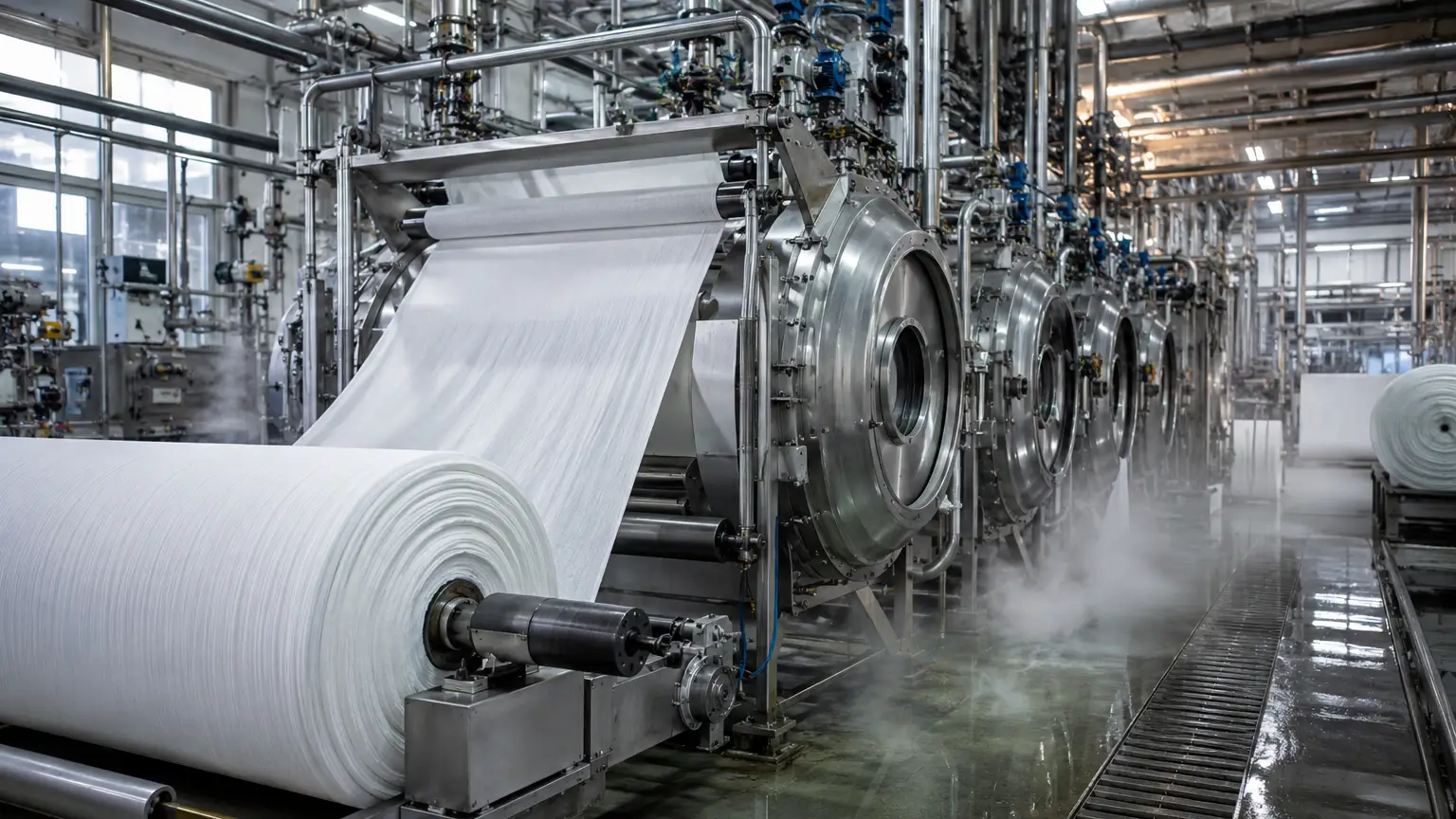
Textile buyers use hydrogen peroxide in cotton and fabric preparation because it removes natural color bodies and prepares fibers for dyeing, printing, and finishing. For textile mills, the procurement decision usually depends on concentration, stabilizer system, storage condition, supplier reliability, and how consistently the peroxide performs in bleaching ranges.
Hydrogen peroxide food processing demand is more selective and compliance-sensitive than bleaching demand. Food processors may use peroxide-based systems for antimicrobial or processing-related functions under applicable regulatory frameworks, so procurement teams must align grade selection, documentation, and intended use with local food safety rules before purchase.
Buyer Groups Driving Hydrogen Peroxide Procurement in 2026
The hydrogen peroxide buyer base in 2026 is becoming broader because the product now serves both bulk oxidation users and specialty-grade technical users. Market reporting and scientific literature both point to a widening application mix, from established bleaching demand to advanced oxidation, semiconductor processing, and healthcare sterilization.
Industrial and Specialty Buyer Segments
Municipal water utilities and wastewater treatment companies are among the most application-driven buyers because hydrogen peroxide supports odor control, oxidation, effluent polishing, and AOP systems. Their purchasing decisions often depend on treatment objectives, dosage economics, storage safety, and compatibility with downstream biological or polishing stages.
Semiconductor manufacturers and electronics chemical suppliers represent a smaller but higher-value buyer group. These buyers require hydrogen peroxide for semiconductor cleaning and etching support, but their commercial expectations are centered on purity, packaging, traceability, and uninterrupted supply rather than only price per metric ton.
Healthcare disinfectant formulators, pulp and paper mills, textile processors, food processors, and specialty chemical producers complete the main buyer landscape. Buyers comparing regional product availability may evaluate Hydrogen Peroxide 50% South Korea supply when planning sourcing for industrial oxidation, bleaching, treatment, and formulation needs.
Sourcing Strategy for Hydrogen Peroxide Buyers
Hydrogen peroxide sourcing in 2026 requires tighter alignment between grade, application, logistics, and regulatory documentation because buyer expectations differ sharply by end-use sector. Safety references note that hydrogen peroxide concentration, decomposition risk, storage conditions, and exposure controls are important handling considerations, especially for higher-strength solutions used in industrial and sterilization settings.
Matching Grade and Documentation to Application
Buyers sourcing hydrogen peroxide for water treatment, pulp and paper, textile bleaching, and general industrial oxidation often focus on concentration, stability, packaging, and delivery reliability. Buyers in electronics and healthcare, by contrast, place more weight on purity profile, contaminant control, technical documentation, and quality assurance procedures.
Regional sourcing also matters because hydrogen peroxide is commonly supplied as an aqueous solution, which makes logistics, lead time, container selection, and handling infrastructure part of the commercial equation. Buyers seeking Bangladesh-linked procurement references may review Hydrogen Peroxide 50% Bangladesh supply for industrial application planning and product comparison.
For procurement teams moving from research to quotation, the Textile Chemicals Asia sourcing inquiry page can support RFQ coordination, while the technical document download center can help buyers review available product information before sourcing. In 2026, the most prepared hydrogen peroxide buyers will be those that specify application, concentration, grade, packaging, documentation, and handling requirements before finalizing supply discussions.

Leave a Comment