Global L-Lysine HCl Supply Trends and Sourcing Opportunities for Feed Buyers
Understanding L-Lysine HCl as a Strategic Amino Acid Ingredient
Role of L-Lysine HCl in Modern Nutrition Formulations
L-Lysine HCl is a concentrated amino acid ingredient produced mainly through microbial fermentation processes and widely used as a nutritional supplement in animal feed formulations. As one of the essential amino acids required for protein synthesis, L-Lysine helps improve feed efficiency and supports balanced animal growth when incorporated into livestock diets. The hydrochloride form provides high stability, making it suitable for industrial-scale feed production and international transportation.
The importance of L-Lysine HCl has increased as global livestock producers continue improving feed efficiency while reducing dependency on high-protein raw materials. According to technical information from the Food and Agriculture Organization of the United Nations, improving livestock productivity through optimized nutrition remains an important strategy for meeting rising global food demand.
Production Characteristics and Commercial Importance
Commercial L-Lysine HCl is manufactured through fermentation using carbohydrate-based raw materials such as corn, sugar, or other agricultural feedstocks. After fermentation, purification and crystallization processes produce a stable amino acid ingredient commonly supplied in feed-grade specifications. Industrial producers typically offer L-Lysine HCl with high purity levels suitable for compound feed manufacturing.
The global amino acid industry has developed into a significant segment of agricultural biotechnology, with large-scale producers supplying international markets through established logistics networks. Industry analysis from the European Food Safety Authority highlights the importance of amino acids as regulated nutritional ingredients used in animal feed applications.
Commercial Market Position of L-Lysine HCl
From a B2B perspective, L-Lysine HCl functions as a strategic ingredient rather than a simple commodity chemical. Feed manufacturers purchase it based on factors including amino acid concentration, production consistency, regulatory compliance, documentation availability, and supply reliability.
According to market assessments from industry research publishers, global demand for feed-grade amino acids continues to expand alongside growth in poultry, swine, and aquaculture production. This creates opportunities for manufacturers, traders, and distributors involved in international amino acid supply chains.
Growing Demand for L-Lysine HCl in Animal Nutrition Markets
The largest commercial application of L-Lysine HCl is in animal nutrition, particularly in poultry and swine feed formulations. Modern feed producers use amino acid supplementation to optimize protein utilization, improve feed conversion ratios, and maintain nutritional balance while controlling raw material costs.
Growing meat and protein consumption worldwide has increased demand for efficient livestock production systems. According to the United States Department of Agriculture, global livestock production continues to influence demand for feed ingredients, creating ongoing requirements for nutritional additives such as amino acids.
Buyer Demand from Feed Manufacturers
The primary buyers of L-Lysine HCl include compound feed manufacturers, premix producers, animal nutrition companies, agricultural distributors, and livestock integrators. These companies purchase bulk quantities to incorporate amino acids into customized feed formulas designed for specific animal species and production stages.
Procurement teams typically evaluate suppliers based on product quality certificates, production capacity, export capability, pricing competitiveness, and consistency of supply. Reliable sourcing is especially important because amino acids are essential components in continuous feed production operations.
Market Factors Influencing L-Lysine HCl Consumption
Several factors influence L-Lysine HCl demand, including global livestock population growth, feed formulation trends, raw material prices, and increasing adoption of precision nutrition practices. Feed producers are increasingly seeking functional ingredients that improve efficiency while maintaining cost control.
Industry reports indicate that amino acid markets are benefiting from advancements in biotechnology fermentation and increased adoption of sustainable feed strategies. These trends support continued investment in L-Lysine HCl production capacity and international distribution networks.
Global Supply Chain and Procurement Considerations for L-Lysine HCl
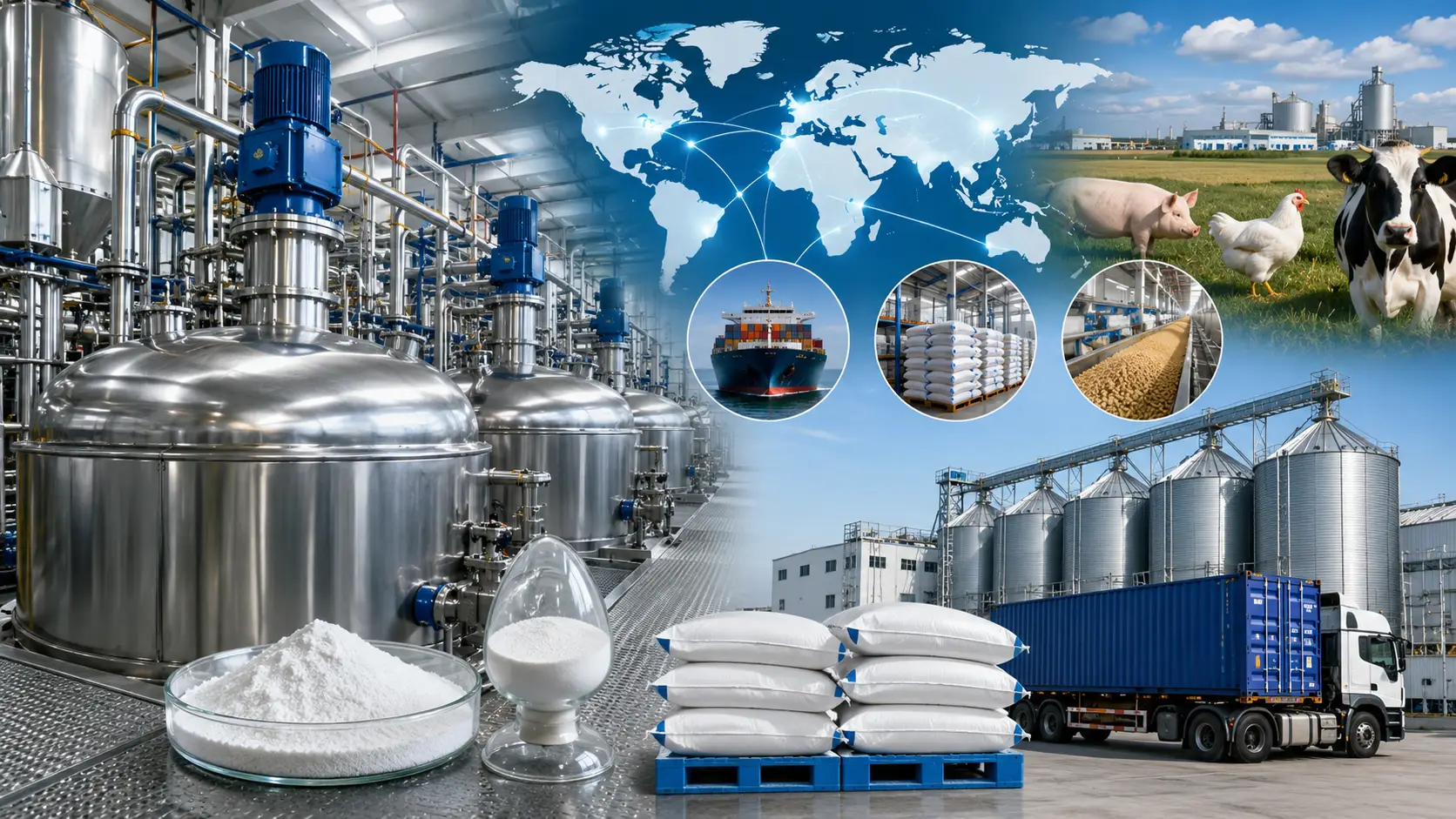
The global L-Lysine HCl supply chain involves biotechnology manufacturers, exporters, chemical distributors, feed ingredient traders, and industrial buyers operating across multiple regions. Major production hubs have developed around areas with strong agricultural feedstock availability, advanced fermentation technology, and established export infrastructure.
For international buyers, sourcing L-Lysine HCl requires evaluating supplier capability beyond price. Factors such as manufacturing reliability, production scale, export documentation, logistics performance, and regulatory compliance influence long-term purchasing decisions. According to market information from the International Feed Industry Federation, efficient supply chains and consistent ingredient availability are critical factors supporting the global animal feed sector.
Key Procurement Factors for Industrial Buyers
Feed manufacturers and distributors usually assess L-Lysine HCl suppliers based on technical specifications, packaging options, minimum order quantities, lead times, and quality assurance systems. Bulk buyers often require supporting documents such as certificates of analysis, product specifications, and compliance records before approving suppliers.
Price competitiveness is another important consideration because amino acids represent a significant input cost in large-scale feed production. However, procurement teams increasingly balance cost with supply security, especially when managing international sourcing risks and market fluctuations.
Role of B2B Marketplaces in L-Lysine HCl Sourcing
Digital B2B chemical marketplaces provide buyers with improved access to international suppliers and market information. Platforms connecting manufacturers, distributors, and industrial users help simplify supplier discovery, quotation comparison, and cross-border procurement processes.
For companies sourcing L-Lysine HCl, marketplace platforms create opportunities to identify reliable supply partners while improving transparency across global trade networks. This approach supports purchasing teams seeking efficient sourcing channels for recurring amino acid requirements.
Industrial Applications and Key Buyer Segments of L-Lysine HCl
L-Lysine HCl is extensively used in poultry and swine nutrition because these animals require balanced amino acid profiles for efficient growth. Feed producers add L-Lysine HCl to formulations containing grains and plant proteins where naturally occurring lysine levels may not meet nutritional requirements.
By supplementing lysine, manufacturers can optimize feed formulas and reduce dependence on expensive protein sources. This makes L-Lysine HCl an important ingredient for commercial livestock operations focused on productivity and cost efficiency.
Applications in Aquaculture and Specialized Animal Nutrition
Beyond traditional livestock markets, L-Lysine HCl is also relevant in aquaculture and specialty animal nutrition. Fish and aquatic species require carefully balanced amino acid profiles to support growth, feed utilization, and overall nutritional performance.
As aquaculture production expands globally, demand for high-quality feed additives continues to increase. Technical evaluations from organizations such as the National Research Council emphasize the importance of amino acid requirements in animal nutrition research and feed formulation.
Main Buyer Groups Across the Value Chain
The commercial buyer landscape for L-Lysine HCl includes feed mills, premix manufacturers, animal nutrition specialists, agricultural distributors, livestock producers, and international commodity traders. Each buyer group has different purchasing requirements depending on production scale, application needs, and regional regulations.
For procurement professionals, selecting the right supplier involves comparing technical quality, supply capacity, commercial terms, and market experience. Product pages on B2B chemical platforms help buyers evaluate available options and connect with suppliers capable of supporting industrial demand.
Market Trends and Future Opportunities for L-Lysine HCl Buyers
The livestock industry is increasingly focused on improving productivity while controlling production costs. This has encouraged greater use of precision nutrition strategies where amino acids such as L-Lysine HCl are added to optimize animal diets.
According to industry analysis from agricultural and feed market organizations, global demand for feed additives is supported by population growth, increasing protein consumption, and continued modernization of livestock production systems.
Biotechnology and Sustainable Production Trends
Advances in fermentation technology are improving the efficiency of amino acid manufacturing. Producers are investing in optimized microorganisms, improved processing methods, and sustainable production approaches to increase output and reduce environmental impact.
These developments create opportunities for suppliers capable of offering stable, scalable, and environmentally responsible L-Lysine HCl production. Buyers increasingly consider manufacturing practices and supply chain transparency when selecting long-term partners.
Future Outlook for Global Buyers and Suppliers
The outlook for L-Lysine HCl remains closely connected with the expansion of global animal nutrition markets. Manufacturers, traders, and distributors that provide consistent quality, competitive pricing, and dependable logistics are positioned to benefit from continued demand growth.
For industrial buyers, establishing relationships with experienced suppliers can improve sourcing efficiency and reduce supply risks. Tradeasia International supports global chemical and feed ingredient sourcing by connecting buyers with reliable supply solutions for industrial applications.
Conclusion: Building Reliable L-Lysine HCl Sourcing Partnerships
L-Lysine HCl has become an essential amino acid ingredient supporting modern animal nutrition, particularly in poultry, swine, and aquaculture feed production. Its role in improving feed efficiency and balancing nutritional formulations makes it a strategic product for manufacturers and agricultural supply chains worldwide.
Market growth is supported by increasing demand for animal protein, advancements in feed technology, and the continued expansion of precision nutrition practices. These factors create ongoing opportunities for producers, distributors, and buyers involved in the global amino acid trade.
Supporting Global Procurement Through Reliable Supply Channels
For companies searching for dependable L-Lysine HCl suppliers, evaluating production capability, quality standards, documentation, and logistics performance remains essential. Efficient sourcing strategies help feed manufacturers maintain stable production while responding to changing market conditions.
As a global chemical and ingredient sourcing platform, Tradeasia International helps connect industrial buyers with international suppliers across multiple markets. Through reliable supply networks and B2B procurement solutions, Tradeasia supports companies seeking efficient sourcing options for L-Lysine HCl and other essential industrial ingredients.
Sources
https://www.fao.or
https://www.efsa.europa.eu
Leave a Comment