Global Folic Acid Applications and Market Opportunities for Industrial Buyers
Introduction to Folic Acid in Industrial Markets
Folic acid is the synthetic form of vitamin B9 widely used in pharmaceutical formulations, fortified food products, nutraceutical supplements, and animal nutrition. Its essential role in DNA synthesis, red blood cell formation, and cell growth has made it one of the most important micronutrients traded globally. As public health initiatives continue to encourage vitamin fortification, industrial demand for high-quality folic acid remains strong.
Manufacturers increasingly require pharmaceutical- and food-grade folic acid that complies with international quality standards. Growing consumer awareness regarding preventive healthcare has also accelerated demand for vitamin-enriched products across developed and emerging economies.
Industrial Importance of Folic Acid
According to the World Health Organization (WHO), folic acid fortification is an effective strategy for reducing neural tube defects and improving maternal health outcomes. These recommendations have encouraged governments and food manufacturers to expand the use of folic acid in staple foods and dietary supplements.
Technical information published by the U.S. National Institutes of Health (NIH) also highlights folic acid's critical nutritional functions, supporting its widespread adoption across pharmaceutical, nutrition, and functional food industries. These scientific endorsements continue to strengthen commercial demand while encouraging manufacturers to invest in reliable ingredient sourcing.
Expanding Industrial Applications of Folic Acid
Industrial consumption of folic acid extends well beyond traditional vitamin tablets. Pharmaceutical manufacturers formulate folic acid into prescription medicines, prenatal supplements, and combination vitamin products. Meanwhile, food producers incorporate it into flour, breakfast cereals, dairy products, beverages, and infant nutrition to meet regulatory fortification requirements in many countries.
The nutraceutical sector has become another significant growth area as consumers increasingly seek preventive wellness products. This trend has encouraged supplement manufacturers to develop premium formulations targeting pregnancy health, cardiovascular wellness, cognitive support, and healthy aging.
Growth Across Multiple End-Use Industries
According to the Food and Agriculture Organization (FAO), vitamin fortification programs continue expanding in numerous countries to improve nutritional outcomes. This creates long-term opportunities for ingredient suppliers capable of delivering consistent product quality and regulatory compliance.
The animal nutrition industry also represents an important market, with folic acid incorporated into premixes and specialty feed formulations to support livestock productivity and reproductive performance. Continued innovation across pharmaceutical, food, feed, and nutraceutical sectors is expected to sustain industrial demand over the coming years.
Market Trends Driving Global Demand
Global demand for folic acid continues to rise due to population growth, expanding healthcare access, and increasing consumer interest in preventive nutrition. Industry analysts report particularly strong growth in Asia-Pacific, where pharmaceutical production, dietary supplement manufacturing, and fortified food consumption continue to expand rapidly.
Governments and healthcare organizations are also encouraging nutritional interventions that improve maternal and infant health. These initiatives create stable long-term demand for folic acid among ingredient manufacturers, contract manufacturers, and global distributors.
Commercial Outlook for Industrial Buyers
Market research published by organizations such as Grand View Research indicates that global vitamin ingredients continue benefiting from sustained investment in pharmaceutical manufacturing and functional nutrition. Procurement teams increasingly seek suppliers capable of providing product traceability, regulatory documentation, and dependable international logistics.
As supply chains become more globalized, buyers also evaluate manufacturing certifications, consistent batch quality, packaging options, inventory availability, and technical support before selecting a supplier. These commercial considerations make reliable sourcing partners increasingly valuable for businesses serving competitive healthcare and nutrition markets.
Buyer Intent and Procurement Considerations
Industrial buyers purchase folic acid for a wide range of commercial applications, including pharmaceutical manufacturing, food fortification, dietary supplements, and animal nutrition. Procurement teams typically include raw material buyers, sourcing managers, product development specialists, contract manufacturers, and distributors seeking reliable vitamin ingredients that meet international quality standards. As global demand for preventive healthcare products grows, buyers increasingly prioritize suppliers capable of supporting long-term production requirements.
Product consistency is one of the most important purchasing factors. Manufacturers require folic acid with stable potency, controlled particle size, high purity, and compliance with recognized pharmacopeia standards such as USP, EP, or BP where applicable. According to technical guidance from the U.S. Pharmacopeia (USP) and international regulatory frameworks, ingredient quality directly influences formulation performance, regulatory compliance, and finished product stability.
What Procurement Teams Evaluate Before Purchasing
Before placing bulk orders, procurement departments commonly assess supplier certifications, manufacturing capabilities, certificates of analysis, regulatory documentation, packaging options, shelf life, logistics reliability, and production capacity. Buyers serving regulated industries also evaluate traceability, quality management systems, and consistency between production batches to minimize manufacturing risks.
A comprehensive product page supports sourcing decisions by presenting technical specifications, application suitability, packaging information, documentation availability, and supply capabilities. For B2B buyers comparing multiple suppliers, transparent technical information and responsive commercial support help streamline procurement while reducing qualification time and supply chain uncertainty.
Global Sourcing Opportunities and Supply Chain
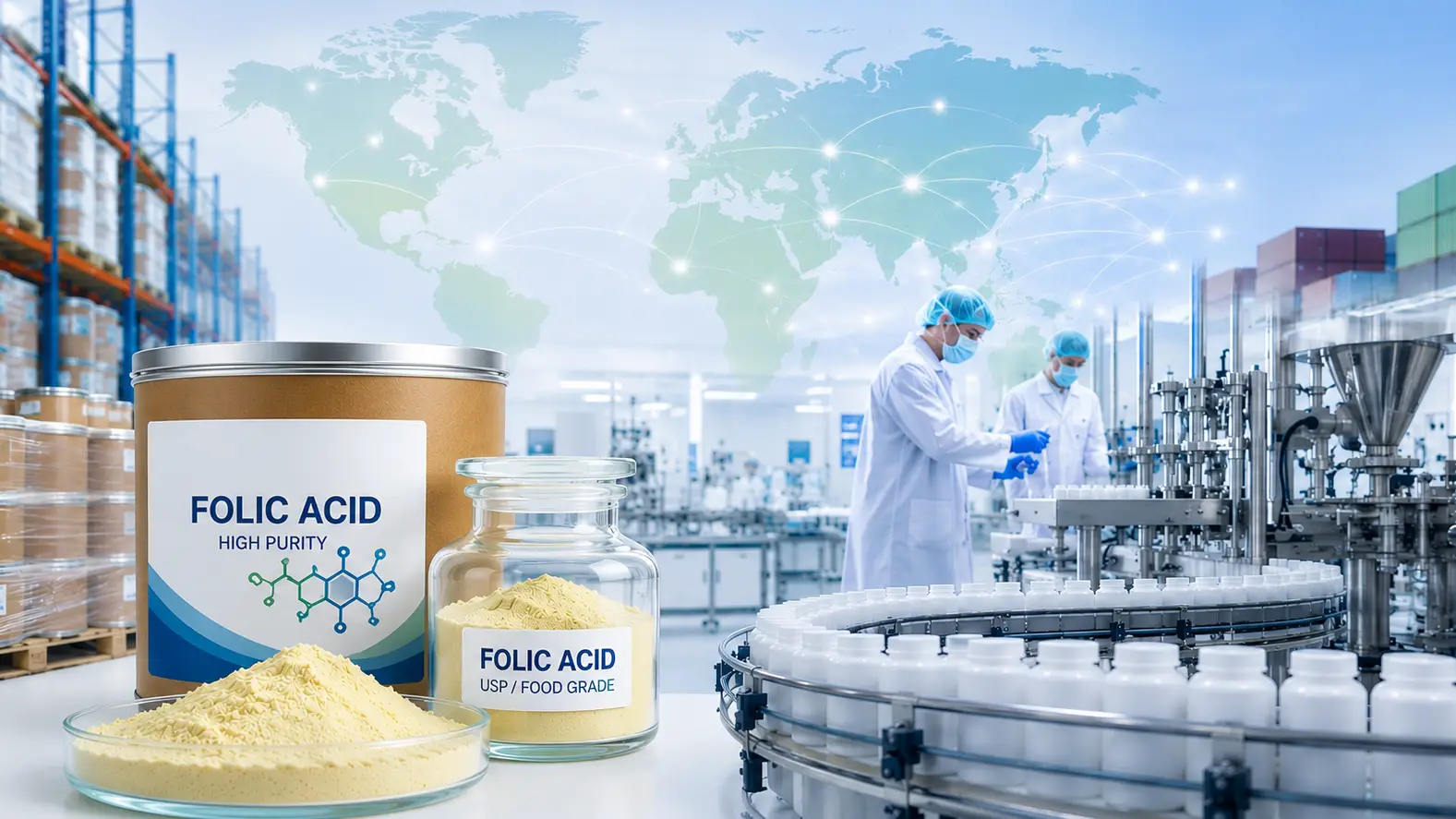
The international folic acid supply chain is supported by manufacturers, distributors, and chemical trading companies serving pharmaceutical, food, nutraceutical, and feed industries across Asia, Europe, and North America. Large-scale production facilities combined with global logistics networks enable international buyers to source consistent volumes for both regional distribution and manufacturing operations. According to industry trade data published by organizations such as UN Comtrade, vitamin ingredients continue to experience active cross-border trade driven by expanding healthcare and nutrition markets.
As demand increases for fortified foods and nutritional supplements, manufacturers are strengthening supply chain resilience through diversified sourcing strategies and strategic inventory management. Reliable suppliers help minimize disruptions by maintaining production capacity, ensuring regulatory compliance, and providing documentation required for international shipments.
Why Businesses Compare Suppliers
Industrial buyers rarely select suppliers based solely on price. Instead, they compare product quality, production reliability, regulatory compliance, export experience, lead times, technical support, and logistics performance. Companies operating in regulated sectors require dependable partners capable of supporting long-term manufacturing programs while maintaining consistent quality standards.
Tradeasia International, through Chemtradeasia and Tradechem Marketplace, supports global sourcing by connecting industrial buyers with dependable chemical supply solutions. By offering access to internationally sourced raw materials, technical documentation, and commercial support, the platform helps manufacturers, distributors, and procurement professionals identify sourcing opportunities that align with their operational and regulatory requirements.
Conclusion
Folic acid continues to play an essential role in pharmaceutical manufacturing, food fortification, nutraceutical production, and animal nutrition. Growing awareness of preventive healthcare, expanding fortification initiatives, and increasing global demand for nutritional ingredients are driving sustained commercial opportunities for manufacturers, distributors, and industrial buyers. As product quality and regulatory compliance become increasingly important, sourcing decisions are based on more than competitive pricing alone.
For procurement teams, selecting a trusted supplier means evaluating consistency, documentation, manufacturing standards, logistics capability, and long-term supply reliability. Businesses that establish resilient sourcing partnerships are better positioned to maintain uninterrupted production while meeting evolving customer and regulatory expectations.
Tradeasia International, together with Chemtradeasia and Tradechem Marketplace, provides comprehensive B2B chemical sourcing solutions for global industries. With extensive experience in international chemical distribution and supply chain management, the company supports buyers seeking dependable folic acid supply for pharmaceutical, food, nutraceutical, and feed applications.
Sources
https://www.who.int
https://ods.od.nih.gov
https://comtradeplus.un.org

Leave a Comment