Introduction
Fish meal plays a central role in global animal nutrition, particularly in aquaculture, poultry, livestock, and pet food production. Valued for its high protein content, digestible amino acids, and marine-derived fatty acids, fish meal represents a premium commodity in international trade. Its economic value, however, comes with logistical challenges. Fish meal is biologically active and sensitive to moisture, oxygen, heat, and contamination. Poor handling at any stage between production and end use can lead to quality degradation, safety risks, and significant financial loss.
From packaging and warehousing to long-distance transportation, fish meal requires carefully controlled conditions. Moisture absorption can cause caking, microbial growth, and nutrient loss. Oxidation reduces fat quality and shortens shelf life. Physical damage during transport can lead to product rejection and reputational damage for suppliers.
For producers, traders, and feed manufacturers, logistics management is not simply an operational task. It directly affects product performance, regulatory compliance, and commercial credibility. This article outlines best practices in fish meal packaging, storage, and bulk transport, drawing on widely accepted industry standards and current logistics trends.
The Role of Packaging in Fish Meal Protection
Packaging serves as the first barrier between fish meal and environmental threats. Its primary function involves protecting the product from moisture ingress, oxygen exposure, and physical damage during handling and transit. Even small increases in moisture can accelerate microbial activity, increase histamine formation, and promote mold growth. Oxidation of fish oil reduces omega-3 content and can lead to off-odors and reduced feed acceptance.
Inadequate packaging increases the risk of product heating during storage, especially in warm climates. In extreme cases, self-heating fish meal has been linked to fire hazards in poorly ventilated warehouses. From a commercial standpoint, damaged or caked fish meal often fails incoming quality inspections and may be rejected by buyers.
Effective packaging therefore supports both product integrity and supply chain reliability. Investment in suitable materials and proper packaging design remains essential for maintaining fish meal quality over long distances.
Modern Packaging Solutions for Fish Meal
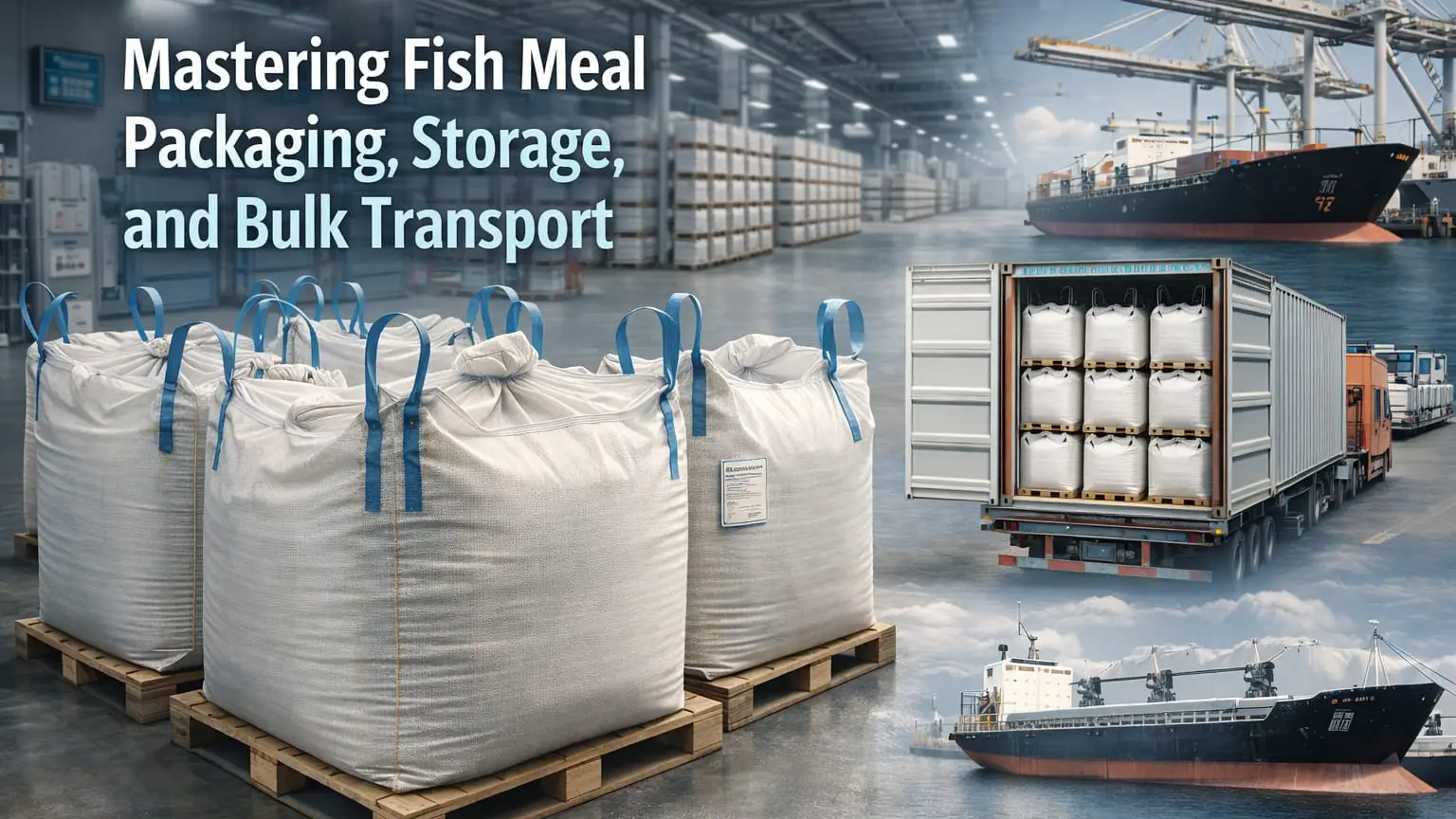
For bulk quantities, the fish meal industry has largely shifted toward Flexible Intermediate Bulk Containers, commonly known as FIBCs or bulk bags. These woven polypropylene containers typically hold between 500 and 2,000 kilograms and offer practical advantages in handling, stacking, and transportation efficiency.
Several features define FIBCs suitable for fish meal:
Laminated or poly-lined construction
An internal polyethylene liner or laminated outer layer acts as a moisture and oxygen barrier. This feature significantly reduces the risk of moisture absorption and oxidation during transit and storage.
UV-stabilized fabric
Exposure to sunlight during port handling or outdoor storage can weaken polypropylene fibers. UV stabilization helps maintain bag strength and safety.
Food-grade materials
FIBCs used for fish meal must meet food contact standards to prevent contamination. In certain handling environments, anti-static or conductive properties may be required to reduce electrostatic discharge risks.
Structural design features
Reinforced lifting loops, stable base construction, and controlled discharge spouts help prevent damage during loading and unloading.
Compared with smaller paper bags or rigid containers, FIBCs reduce packaging weight, improve handling efficiency, and lower transportation costs. Some suppliers also offer reusable or recyclable bulk bags, supporting sustainability goals in international trade.
Storage and Warehousing Best Practices
Proper storage conditions play a critical role in preserving fish meal quality after packaging. Warehouses should remain dry, well ventilated, and protected from temperature extremes. While exact conditions vary by region, temperatures below 20°C and relative humidity below 60 percent are widely recommended to slow oxidation and moisture migration.
Fish meal should always be stored on pallets rather than directly on concrete floors. This practice reduces moisture transfer and allows air circulation around the bags. Stacking height must follow manufacturer guidelines to prevent compression damage and seam stress in lower bags.
Stock rotation also matters. Applying a First-In, First-Out system helps limit prolonged storage, which increases the risk of fat oxidation and nutrient loss. Warehouses should remain clean, pest-controlled, and free from chemicals, fertilizers, or strong odors that could contaminate the product.
Routine inspections help detect early signs of packaging damage, condensation, or temperature fluctuations. These measures form part of an effective quality assurance system during storage.
Bulk Transport and International Shipping
Transportation represents the most variable and risk-prone stage of fish meal logistics. The chosen mode, whether containerized shipping, bulk vessel transport, or inland trucking, determines handling requirements and risk exposure.
For containerized shipments using FIBCs, proper container preparation is essential. Containers must be clean, dry, and structurally sound. Moisture residues or leaks can compromise even well-packaged fish meal. During loading, bags should be tightly stowed and secured using dunnage materials such as air cushions or wooden bracing to prevent movement and abrasion during transit.
Bulk vessel transport, used mainly for very large volumes, requires strict control of cargo hold cleanliness and temperature. Holds must be free of previous cargo residues and moisture. Monitoring during the voyage helps reduce the risk of heating or condensation.
Documentation also plays a key role. Common requirements include certificates of analysis, safety data sheets, and compliance with importing country regulations. Although fish meal is generally classified as non-hazardous, some shipments require additional declarations related to self-heating risk or feed safety standards.
Experienced logistics partners familiar with food-grade bulk commodities reduce the likelihood of delays, contamination, or regulatory issues at ports of entry.
Emerging Trends in Fish Meal Logistics
Fish meal logistics continue to evolve as technology and sustainability expectations advance. Real-time monitoring systems using temperature and humidity sensors are becoming more common. These tools provide early warnings of adverse conditions during transit and allow corrective action before quality loss occurs.
Sustainability initiatives are also influencing packaging choices. Reusable FIBCs, recyclable materials, and reduced packaging waste align with broader environmental targets across the feed and agriculture industries. At the same time, digital documentation platforms are simplifying compliance and improving traceability in international trade.
For traders and feed manufacturers, adopting these innovations improves risk management, strengthens transparency, and enhances supply chain efficiency.
Conclusion
Fish meal delivers high nutritional and commercial value, but that value depends heavily on how the product is handled after production. Packaging, storage, and transportation form an interconnected system that determines whether fish meal reaches its destination in optimal condition or arrives compromised.
Using barrier-protected bulk packaging, maintaining controlled storage environments, and applying disciplined transport practices help protect protein quality, fat stability, and safety standards. As global trade volumes increase and regulatory expectations tighten, attention to logistics becomes a defining factor in market competitiveness.
By following established best practices and embracing emerging technologies, stakeholders across the fish meal supply chain can preserve product integrity, reduce losses, and support reliable animal nutrition outcomes worldwide.
Leave a Comment