Fish Meal and Its Role in Commercial Feed Markets
Understanding Fish Meal as a Feed Ingredient
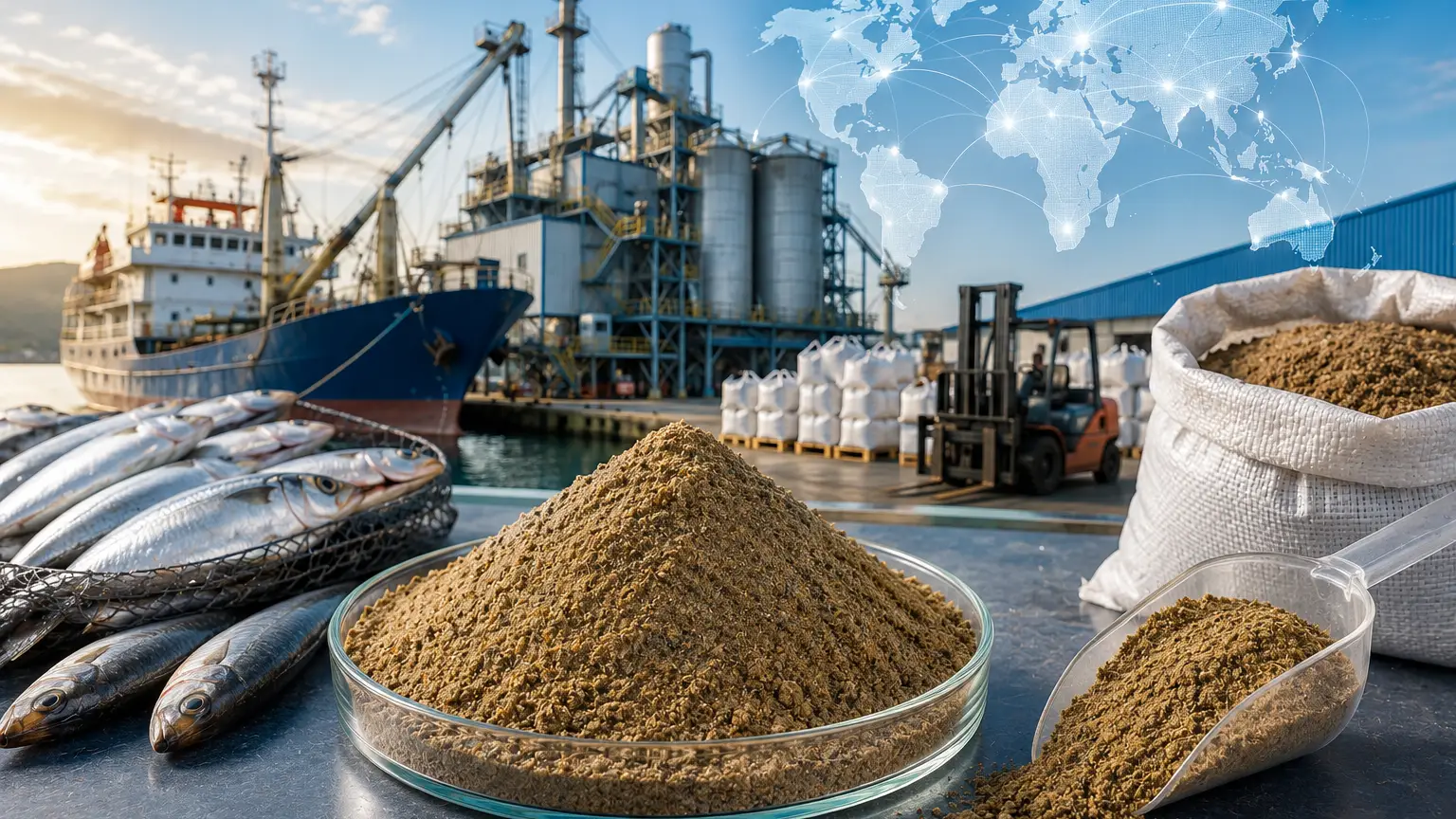
Fish meal is a concentrated animal-protein feed ingredient produced by processing fish or fish-processing raw materials. The Tradeasia product page identifies the listed material as Fish Meal (60%) from Indonesia, supplied in powder or pellet form, with a stated crude protein range of 60–66%. The product is categorized as feed grade and is positioned primarily as a protein source for feed applications.
From a formulation perspective, fish meal is valued not simply because it supplies protein, but because feed manufacturers assess the broader nutritional profile of an ingredient. Technical literature on fish nutrition emphasizes the importance of protein quality, amino-acid availability, digestibility and ingredient characteristics when formulating diets for cultured aquatic species.
Why Protein Concentration Matters
For commercial feed manufacturers, crude protein is an important starting point when comparing protein ingredients. The listed Fish Meal (60%) specification indicates 60–66% minimum crude protein, together with stated lysine of 4.5–5.0% and pepsin digestibility of at least 88%. These specifications provide procurement teams with measurable parameters for preliminary supplier and formulation evaluation.
Fish meal also contributes minerals and other nutritional components to formulated diets. The product information lists calcium at 4.0–5.0% and phosphorus at 2.5–3.0%, while technical aquaculture literature notes that feed formulation requires simultaneous consideration of nutrient requirements, ingredient characteristics, processing and production economics rather than relying on protein percentage alone.
Key Industrial Applications of Fish Meal
Aquaculture Feed Formulation
Aquaculture is the most commercially important application area for fish meal. According to FAO's latest fisheries and aquaculture reporting, approximately 90% of fish meal is used in aquaculture, illustrating how closely fish meal demand is connected to aquatic feed production.
For aquafeed manufacturers, fish meal can function as a protein-rich component within formulated diets for farmed aquatic animals. Its role is determined by species, growth stage, formulation objectives and the balance between nutritional performance and ingredient cost. Research on aquafeed formulation similarly highlights the need to match ingredient characteristics with the nutritional requirements of cultured species.
Animal Feed Applications Beyond Aquaculture
Fish meal can also be used in other animal-feed applications, although the relative importance of these markets varies by region, formulation economics and regulatory requirements. FAO material has historically identified livestock and poultry as additional users of fishmeal, while aquaculture has become the dominant overall application.
For B2B buyers, this means the addressable market is broader than a single feed category, but application suitability must remain central to procurement. Feed manufacturers need to consider the intended animal species, formulation requirements, regulatory framework and target product specifications before selecting fish meal or comparing it with alternative protein ingredients.
Fish Meal Market Demand and Application Trends
Aquaculture as the Primary Demand Driver
Fish meal demand is increasingly connected to the expansion and intensification of aquaculture. FAO's 2026 reporting states that fishmeal and fish oil account for the vast majority of aquatic products used for non-food purposes and that around 90% of fishmeal is used in aquaculture. This makes aquaculture production trends a critical indicator for understanding the commercial environment surrounding fish meal.
At the same time, the market is not simply a story of continually increasing fish meal consumption. Scientific literature describes growing attention to alternative protein sources because of fish meal availability, cost and sustainability considerations. This creates a more complex procurement environment in which fish meal remains valuable while feed manufacturers increasingly evaluate blended or replacement strategies.
Supply Volatility and Alternative Ingredients
Global fish meal trade can be affected by fish catches, environmental conditions and production in major supplying regions. FAO reported that global fishmeal production fell sharply in 2023 because of poor Peruvian anchoveta catches, while 2024 production and trade conditions improved as fishing conditions recovered. China remained the largest fishmeal importer, accounting for approximately 40% of global fishmeal imports in the reported period.
This supply variability is one reason feed manufacturers increasingly pay attention to supplier diversification and formulation flexibility. Research into insect meals, rendered animal proteins and other alternatives demonstrates an ongoing industry effort to reduce dependence on conventional fish meal while maintaining nutritional and economic performance.
Who Buys Fish Meal and What Procurement Teams Evaluate
Primary B2B Buyer Groups
Typical buyers include aquafeed manufacturers, compound-feed producers, fish and shrimp feed formulators, animal nutrition companies, feed distributors, ingredient traders and procurement teams serving commercial aquaculture operations. These organizations generally purchase fish meal as an industrial feed ingredient rather than as a consumer product, making specification, documentation and supply continuity important commercial considerations.
The buyer profile is closely connected to the application. An aquafeed manufacturer may prioritize protein quality, digestibility, amino-acid characteristics and formulation performance, while a distributor may place greater emphasis on packaging, shelf life, logistics, consistency and commercial availability. The product page presents Fish Meal (60%) in 50 kg bags or bulk formats, providing relevant information for industrial purchasing discussions.
Procurement Criteria
Procurement teams normally compare more than the headline protein percentage. For the listed product, available specifications include moisture below 10%, crude fat of 6–10%, ash up to 18%, salt up to 1.5%, TVBN below 100 mg/100 g and pepsin digestibility of at least 88%. Microbiological specifications and declarations concerning heavy metals and dioxins/PCBs are also provided on the product page.
Quality evaluation is particularly important when ingredients enter large-scale feed manufacturing. Technical literature on feed analysis emphasizes chemical testing, assessment of ingredient quality, detection of adulteration or heat damage, digestibility evaluation and economic assessment as components of responsible feed-ingredient selection.
Fish Meal Quality Specifications and Sourcing Considerations
Specification-Based Supplier Evaluation
A practical fish meal sourcing process begins with a defined specification. Buyers should establish acceptable ranges for protein, moisture, fat, ash, minerals, salt, digestibility and microbiological parameters according to the intended feed formulation and applicable regulations. For the Fish Meal (60%) product, the published technical information gives buyers a concrete starting point for specification comparison.
Origin is another commercial consideration. The product is identified as originating from Indonesia, while its species-of-origin declaration references marine fish sources including anchovy, menhaden and herring. For procurement teams, understanding raw-material origin can help with traceability, supplier qualification and consistency assessments.
Storage, Packaging and Logistics
Fish meal is a processed biological feed ingredient, so handling and storage conditions matter throughout the supply chain. The product information recommends cool, dry and pest-free storage and identifies a six-month shelf life, with antioxidant treatment specified. Such details are relevant when buyers calculate inventory requirements and plan international shipments.
Packaging can also influence procurement economics. The listed product is available in 50 kg PP woven bags or bulk formats, giving industrial buyers options depending on warehouse infrastructure, consumption volume and handling capabilities. For procurement teams assessing a Fish Meal (60%) product sourcing page, these technical and logistical details can be reviewed alongside commercial discussions on pricing, customization and shipping.
Indonesia Fish Meal Supply and B2B Procurement Opportunities
Indonesia as a Regional Sourcing Point
Indonesia is relevant to the regional feed-ingredient trade because of its large fisheries and aquaculture ecosystem and its position within Asian supply chains. The Tradeasia listing specifically identifies the Fish Meal (60%) product as Indonesian origin and provides industrial packaging, feed-grade classification and technical specifications for prospective buyers.
For Asian procurement teams, regional sourcing can be evaluated alongside international alternatives based on landed cost, lead time, documentation, specification consistency and supplier reliability. A sourcing decision should therefore consider the complete supply proposition rather than comparing nominal fish meal prices in isolation.
Supply Opportunities for Traders and Distributors
Fish meal can present opportunities for ingredient traders and distributors that serve feed manufacturers with recurring requirements. These businesses can add value by consolidating supply, managing inventory, coordinating logistics and matching different grades or packaging formats with customer requirements. The commercial opportunity is strongest where the distributor understands the technical requirements of the feed formulation rather than treating fish meal solely as a commodity.
Market conditions also reinforce the importance of flexible sourcing. FAO's reporting on recent fluctuations in fishmeal production and trade illustrates how changes in raw-material availability can influence international supply. Buyers and distributors that maintain qualified supplier relationships can therefore be better positioned to respond when availability or pricing changes.
Commercial Sourcing Strategy for Fish Meal Buyers
Comparing Suppliers on More Than Price
For B2B fish meal procurement, the lowest quoted price is not necessarily the lowest total procurement cost. Buyers should compare the nutritional specification, consistency between lots, microbiological controls, regulatory documentation, packaging, shelf life, shipping terms and expected delivery performance. These factors can influence production efficiency and the practical cost of using an ingredient in commercial feed.
A supplier comparison should also consider whether technical documents are available for qualification. The Tradeasia listing provides access to technical documentation and identifies ISO/HACCP status, feed-grade classification, packaging, storage requirements and analytical specifications. Such information can help procurement and technical teams move from initial supplier discovery toward structured qualification.
Using a B2B Marketplace for Supplier Discovery
A B2B marketplace can reduce the friction between ingredient discovery and commercial inquiry by bringing product information, specifications and supplier contact pathways into one purchasing environment. For buyers searching for a fish meal supplier, this can be particularly useful when comparing regional sources or preparing an initial procurement shortlist.
Tradeasia / Chemtradeasia Marketplace can serve as a sourcing entry point by connecting product-specific information with commercial inquiry. Buyers evaluating fish meal for aquaculture or animal-feed applications can use the Fish Meal (60%) supplier information as a starting point for discussing pricing, customization, shipping and technical requirements. The marketplace positioning is most valuable when product discovery is followed by specification verification and direct supplier evaluation.
Conclusion: Turning Fish Meal Demand Into Better Sourcing Decisions
From Application Demand to Procurement Action
Fish meal remains an important feed protein ingredient because of its established role in aquaculture nutrition, but its commercial market is increasingly shaped by supply variability, feed-cost pressures, sustainability considerations and competition from alternative proteins. FAO's recent data showing that approximately 90% of fishmeal is used in aquaculture underscores why developments in aquafeed production remain central to fish meal demand.
For buyers, the practical implication is that sourcing decisions should connect application requirements with measurable product specifications. Protein concentration, digestibility, amino-acid profile, mineral content, microbiological quality, contaminants, storage conditions, packaging and origin all contribute to determining whether a particular fish meal is appropriate for a commercial feed program.
Building a Reliable B2B Supply Pipeline
The most relevant buyers are aquafeed manufacturers, compound-feed producers, animal nutrition businesses, distributors, traders and procurement teams seeking consistent feed-grade protein ingredients. Their supplier evaluations increasingly need to balance nutritional performance with commercial reliability, documentation, logistics and the ability to maintain supply when global fishmeal markets become volatile.
For organizations currently evaluating Indonesian-origin fish meal, the Fish Meal (60%) product page for industrial applications provides a practical starting point for reviewing specifications and initiating a commercial inquiry. By combining application knowledge with specification-based supplier qualification, Tradeasia / Chemtradeasia Marketplace can support a more informed B2B sourcing process without reducing procurement decisions to price alone.
Sources
Leave a Comment