Dipotassium Phosphate: Product Overview and Commercial Role
Dipotassium Phosphate, also known as potassium phosphate dibasic or dipotassium hydrogen phosphate, is an inorganic phosphate salt with the chemical formula K₂HPO₄ and CAS No. 7758-11-4. Its commercial relevance comes from the combination of potassium and phosphate with useful buffering and formulation properties, making it applicable across food processing, pharmaceuticals, biotechnology, agriculture, and selected industrial processes. For B2B buyers, understanding the product's technical role is essential because grade, purity, documentation, physical form, and intended application can materially affect purchasing decisions. The U.S. Food and Drug Administration identifies Dipotassium Phosphate as having functions including pH control, stabilization, sequestration, nutrient supplementation, and emulsifier-related effects in food applications.
Chemical identity and functional characteristics
From a procurement perspective, Dipotassium Phosphate is more than a commodity phosphate because its functional performance depends on the specification required by the end application. Food processors may prioritize food-grade compliance and consistency, while pharmaceutical, biotechnology, or laboratory users can require tighter specifications and application-specific documentation. Its buffering capability is particularly important where manufacturers need controlled pH conditions during formulation or processing. FDA technical information describes Dipotassium Phosphate as a white, granular or milled material and identifies food buffering and stabilization applications, illustrating why physical and functional characteristics matter during supplier qualification.
The distinction between Dipotassium Phosphate and other potassium phosphate products is also commercially important. Monopotassium phosphate and tripotassium phosphate have different chemical compositions and application profiles, so buyers should match the exact product identity with their formulation or process requirements rather than treating potassium phosphates as interchangeable commodities. EFSA documentation categorizes monopotassium, dipotassium, and tripotassium phosphates separately within the E340 potassium phosphate group, reinforcing the importance of accurate product identification in regulated applications.
For chemical distributors and procurement teams, this creates a clear opportunity for application-led product positioning. Instead of presenting Dipotassium Phosphate only by chemical name, a B2B marketplace can connect the product with food ingredients, pharmaceutical materials, biotechnology inputs, agricultural formulations, and technical chemical requirements. Such positioning helps buyers move from an initial product search toward specification review, supplier comparison, documentation assessment, and commercial inquiry.
Major Industrial Applications of Dipotassium Phosphate
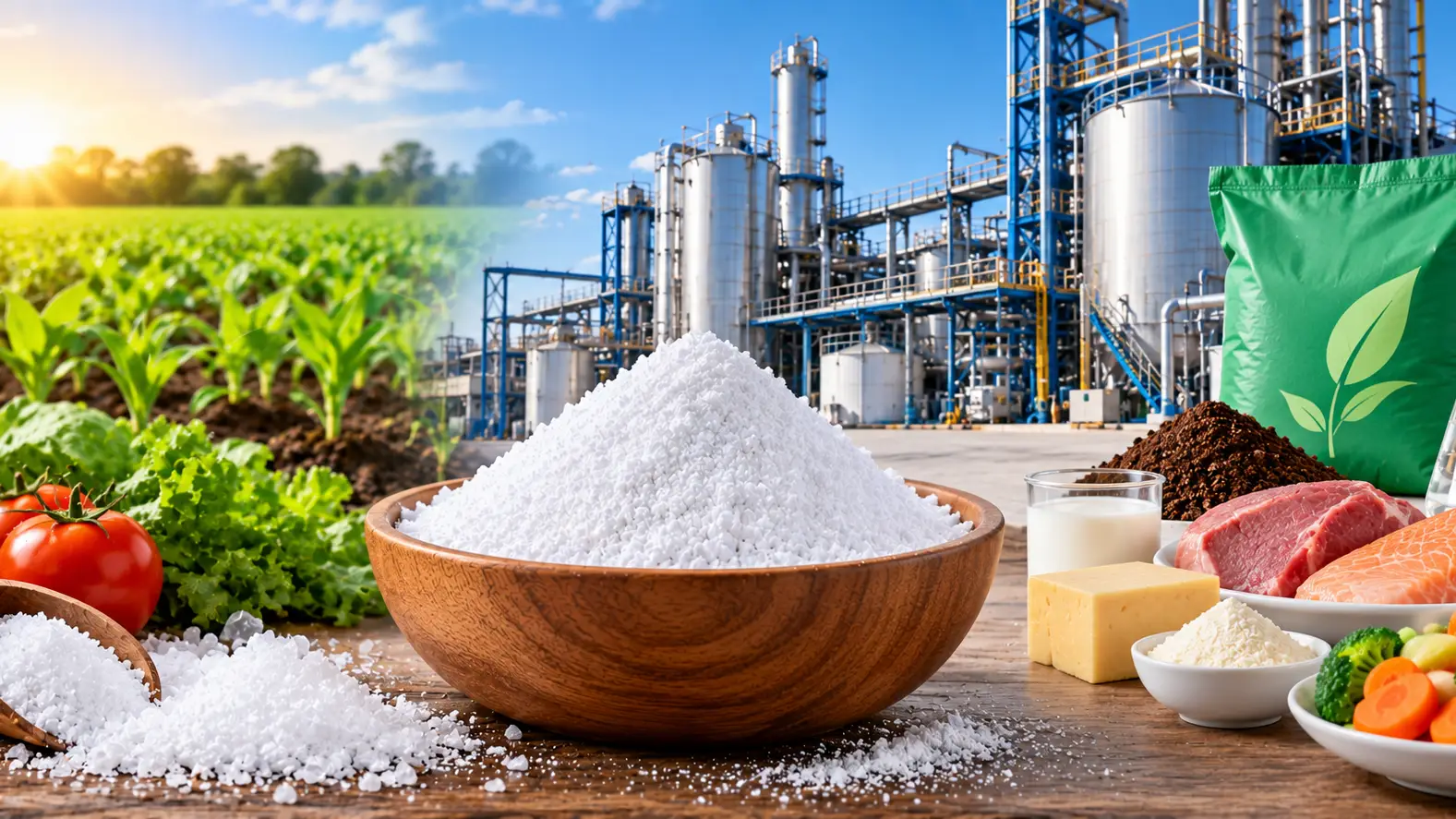
Dipotassium Phosphate has a diversified application base, which is one reason it can attract buyers from multiple industrial sectors. In food processing, it can function as a buffering and stabilizing ingredient; in pharmaceutical and biotechnology settings, phosphate systems can provide nutrients or help maintain controlled chemical conditions; and in agriculture, potassium and phosphorus are commercially important plant nutrients. The breadth of these applications means demand should be assessed by end-use segment rather than by a single market category. Market research on the broader potassium phosphate market similarly identifies fertilizers, food and beverages, pharmaceuticals, water treatment, and industrial processing among the principal application areas.
Food, beverage and formulation applications
Food and beverage processing represents one of the clearest commercial application areas for food-grade Dipotassium Phosphate. FDA information identifies its use as a buffering agent for processed foods and as a stabilizer for non-dairy coffee creamers, while its broader food-substance record identifies functions such as pH control, sequestration, nutrient supplementation, and stabilization. These functions make the material relevant to manufacturers seeking consistent processing performance rather than simply adding a phosphate source.
The commercial demand opportunity extends into processed foods, dairy-related formulations, beverages, bakery products, and specialty nutritional formulations where pH management and ingredient functionality can influence product consistency. Market research focused specifically on food-grade Dipotassium Phosphate identifies meat, dairy, bakery, confectionery, and beverage applications as important market segments. For buyers, the precise application determines which grade, purity, certification, packaging format, and regulatory documentation should be requested from a supplier.
Pharmaceutical and biotechnology applications form another technically important segment. FDA product information identifies pharmaceutical uses including nutrient applications in antibiotic production and humectant functionality, while scientific literature demonstrates the use of K₂HPO₄ in buffered biological production systems. A PubMed-indexed study, for example, examined Dipotassium Phosphate as part of a controlled culture system for polysialic acid production, showing the relevance of the compound to industrial biotechnology research and production environments.
Agricultural and industrial applications broaden the addressable buyer base further. Potassium and phosphorus are core plant nutrients, and phosphate salts can be incorporated into nutrient-management and fertilizer systems depending on formulation requirements. FAO data show that global agricultural use of potassium fertilizer nutrients reached 38 million tonnes in 2024, while phosphorus use was approximately 44 million tonnes, underlining the continuing scale of the underlying nutrient markets even though these figures do not represent Dipotassium Phosphate specifically.
Key Buyers and Industries Driving Demand
The buyer landscape for Dipotassium Phosphate is diverse because the product serves both formulation and process functions. Typical buyers can include food ingredient manufacturers, beverage producers, pharmaceutical companies, biotechnology manufacturers, agricultural input companies, chemical distributors, laboratory and technical users, and industrial formulators. Each buyer group evaluates the product differently, so commercial suppliers need to understand the relationship between the chemical specification and the buyer's downstream process. This application-driven approach is particularly important in B2B chemical markets, where the lowest nominal price may not represent the lowest total procurement cost.
Who buys Dipotassium Phosphate
Food manufacturers generally focus on regulatory status, purity, consistency, traceability, packaging, and suitability for the intended food application. Pharmaceutical and biotechnology buyers can place greater emphasis on specification control, analytical documentation, batch consistency, and manufacturing quality systems. Agricultural buyers may place greater emphasis on nutrient content, solubility, formulation compatibility, delivery reliability, and economics. The FDA's classification of Dipotassium Phosphate according to several technical effects illustrates why buyer requirements can differ substantially even when the chemical identity remains the same.
Distributors and chemical traders form another important buyer group because they purchase with resale and supply-chain requirements in mind. Their priorities can include supplier reliability, minimum order quantities, packaging options, lead times, export documentation, product certificates, and the ability to support recurring customer demand. A distributor may therefore compare several Dipotassium Phosphate suppliers not simply on unit price, but on the supplier's ability to provide consistent material across multiple shipments and markets.
Procurement teams typically compare suppliers across technical, regulatory, commercial, and logistical criteria before approving a source. They may request specifications, certificates of analysis, safety documentation, country of origin, packaging information, production or dispatch lead times, and information about applicable certifications. In regulated food applications, the need for appropriate regulatory compliance is especially relevant because food additives must meet applicable authorization and labeling requirements in the destination market. EFSA explains that authorized food additives are subject to safety evaluation and regulatory requirements, reinforcing the importance of compliance documentation in European-facing supply chains.
For a B2B marketplace, these buyer requirements create a conversion opportunity around transparency. A well-structured Dipotassium Phosphate product page can help buyers identify the chemical, application, grade, supplier information, available documentation, and commercial inquiry pathway in one place. This reduces the gap between informational searches such as “Dipotassium Phosphate uses” and transactional searches such as “buy Dipotassium Phosphate” or “Dipotassium Phosphate supplier,” making the product page more valuable to both procurement teams and distributors.
Dipotassium Phosphate Market Demand and Application Trends
Current demand for Dipotassium Phosphate should be understood within several interconnected markets rather than as an isolated chemical category. Food processing continues to create demand for functional phosphate ingredients, while agriculture supports demand for potassium and phosphorus nutrients, and pharmaceutical and biotechnology applications create more specialized requirements. Recent market research on potassium phosphates identifies fertilizers, food and beverages, pharmaceuticals, water treatment, and industrial processing as major application categories and forecasts continued expansion of the broader potassium phosphate market.
Demand drivers across end-use markets
One significant demand driver is the continuing scale of global food processing. Functional ingredients that help control pH, stabilize formulations, or support processing performance can become important inputs for manufacturers seeking consistent production outcomes. Recent market research on food-grade Dipotassium Phosphate links market expansion with processed foods, convenience products, and applications in dairy, beverages, bakery, confectionery, and meat products. While individual market forecasts vary by methodology and scope, the common commercial signal is that diversified food applications support continuing demand for functional phosphate ingredients.
Agriculture provides a second demand context, although buyers should distinguish Dipotassium Phosphate itself from the broader potassium and phosphorus fertilizer markets. FAOSTAT's latest fertilizer data show that global agricultural use of inorganic fertilizer nutrients reached 197 million tonnes in 2024, with potassium use at 38 million tonnes and phosphorus use at 44 million tonnes. FAO also reports that nutrient trends vary by region, making regional agricultural demand, crop economics, and fertilizer efficiency important considerations for suppliers assessing market opportunities.
A third trend is the increasing importance of efficiency and specification management in industrial procurement. FAO's recent nutrient-balance work emphasizes that fertilizer use must be considered alongside nutrient requirements and efficiency rather than simply maximizing input volumes. In chemical procurement, a similar principle applies: buyers increasingly need products that fit precisely into a process, formulation, regulatory framework, or supply-chain model. This favors suppliers and marketplaces that can provide reliable technical information rather than relying solely on commodity pricing.
Regional demand can also influence sourcing strategies. Asia-Pacific is identified by recent potassium phosphate market analysis as the largest regional market, while other regions maintain significant demand from food, pharmaceutical, agriculture, and industrial applications. For international buyers, regional sourcing decisions can therefore involve more than freight cost: buyers may consider supplier proximity, trade routes, production concentration, regulatory requirements, currency exposure, lead times, and inventory availability when selecting a Dipotassium Phosphate source.
B2B Sourcing Considerations for Dipotassium Phosphate
For buyers searching for a Dipotassium Phosphate supplier, sourcing should begin with the intended application rather than price alone. A food manufacturer, pharmaceutical producer, fertilizer formulator, and industrial chemical distributor may all purchase the same basic chemical but require different documentation and specifications. Establishing the target application first allows procurement teams to define the correct grade, purity, physical form, packaging, compliance requirements, and delivery conditions before comparing supplier quotations.
What procurement teams should evaluate
Technical specification is one of the first areas buyers should verify. The product identity, CAS number, chemical formula, assay or purity, moisture characteristics, physical form, and relevant impurity limits should align with the intended process. For food applications, buyers may additionally need evidence of compliance with applicable food regulations and customer requirements. FDA records identify Dipotassium Phosphate under CAS 7758-11-4 and describe its recognized technical effects, providing a useful reference point for product identification.
Documentation and quality assurance are equally important. Depending on the application and destination market, procurement teams may request a certificate of analysis, safety data sheet, technical data sheet, product specification, origin information, batch details, and relevant food or quality certifications. These documents help buyers determine whether a supplier can support qualification and ongoing production requirements. For regulated applications, documentation also helps downstream manufacturers demonstrate that their raw-material supply chain is aligned with applicable standards.
Commercial terms should then be assessed alongside technical suitability. Important variables can include minimum order quantity, bulk versus smaller packaging, availability, lead time, payment terms, delivery terms, freight arrangements, and the supplier's ability to maintain continuity of supply. Market conditions can affect phosphate and fertilizer-related pricing, and FAO's recent fertilizer market reporting highlights how energy costs, trade conditions, policy risks, and supply dynamics can influence global fertilizer markets. Buyers should therefore evaluate supply resilience rather than treating a single quotation as a complete sourcing decision.
Supplier comparison is particularly valuable for international chemical buyers because sourcing risks can extend beyond product price. A B2B marketplace can make the process more efficient by allowing buyers to identify potential suppliers, compare product information, communicate specifications, and initiate commercial inquiries. For Tradeasia, Chemtradeasia, or Tradechem Marketplace positioning, the objective should be to provide a structured pathway from “Dipotassium Phosphate applications” to qualified sourcing discussions without overstating product performance or supplier capabilities.
Commercial Opportunities and Outlook for Buyers and Suppliers
Dipotassium Phosphate occupies a commercially attractive position because its applications span multiple industries with different purchasing cycles and technical requirements. Food and beverage manufacturers can require functional food-grade material, pharmaceutical and biotechnology companies can seek controlled chemical inputs, and agricultural businesses operate within broader potassium and phosphorus nutrient markets. This diversity gives suppliers several routes to market while giving buyers a broader sourcing ecosystem. The broader potassium phosphate market is expected to expand across fertilizers, food and beverages, pharmaceuticals, water treatment, and industrial processing, according to recent market analysis.
Opportunities for manufacturers, traders and distributors
Manufacturers can use application segmentation to identify higher-value customer groups instead of marketing Dipotassium Phosphate as a generic phosphate salt. Product positioning can emphasize food processing, pharmaceutical and biotechnology applications, agricultural formulations, or technical uses according to the grade and documentation available. This approach allows suppliers to align technical information with buyer needs and can make product discovery more relevant for procurement professionals.
Traders and distributors can benefit from the fragmented nature of industrial demand. Different regions and industries may require different packaging sizes, delivery schedules, specifications, and documentation packages, creating opportunities for suppliers that can coordinate international distribution effectively. The continued importance of global fertilizer and chemical trade also means that logistics, sourcing diversification, and supply continuity remain relevant commercial considerations. FAO's fertilizer statistics specifically track international production and trade corridors, demonstrating the importance of cross-border supply chains in agricultural inputs.
For procurement teams, the key commercial opportunity is to treat Dipotassium Phosphate sourcing as a structured qualification exercise. Rather than selecting a supplier solely from a commodity price comparison, buyers can evaluate application suitability, quality consistency, regulatory documentation, supply capacity, logistics, and communication. This approach can reduce the risk of receiving a technically unsuitable product or experiencing avoidable supply interruptions, particularly when Dipotassium Phosphate is incorporated into a continuous manufacturing process.
Tradeasia, Chemtradeasia, and Tradechem Marketplace can position Dipotassium Phosphate as a B2B sourcing opportunity by connecting product discovery with application information and supplier engagement. The strongest marketplace proposition is not simply that buyers can find a chemical, but that they can use structured product information to identify appropriate suppliers and begin commercial discussions. As demand remains distributed across food, agriculture, pharmaceutical, biotechnology, and industrial applications, an application-led marketplace strategy can help manufacturers, traders, distributors, and procurement teams identify relevant opportunities while keeping sourcing decisions grounded in technical and commercial requirements.
Leave a Comment