Introduction to the Diammonium Phosphate Supply Chain
DAP as a Strategic Phosphate Commodity
Diammonium Phosphate, commonly abbreviated as DAP, is a major phosphate fertilizer commodity that connects phosphate-rock processing, ammonia, phosphoric acid, fertilizer manufacturing, international trade, logistics, and agricultural demand. The conventional fertilizer grade is widely identified as 18-46-0, representing nitrogen and phosphate content. For B2B buyers, DAP is therefore not simply a chemical product but a globally traded agricultural input whose availability and delivered cost depend on multiple upstream and downstream variables.
The supply chain begins with mineral and chemical feedstocks and extends through production plants, granulation, quality control, warehouses, ports, ocean freight, distributors, and agricultural end users. This interconnected structure means procurement teams must evaluate more than a supplier's quoted price. Product specification, origin, shipment timing, packaging, freight, payment terms, regulatory requirements, and supply continuity can all influence the final commercial value of DAP.
Market conditions have remained particularly sensitive during 2025–2026. The World Bank reported that fertilizer prices remained elevated in late 2025 despite a short-term easing in DAP prices, with prices still around 17% above the previous year. The institution also identified input costs, resilient consumption, and trade restrictions as important factors affecting fertilizer markets.
For international procurement teams, this environment makes supply-chain visibility increasingly important. A reliable DAP sourcing strategy should connect verified product specifications with dependable producers, realistic shipment schedules, competitive freight options, and contingency sourcing. B2B marketplaces and chemical trading platforms can support this process by connecting buyers with qualified supply partners while improving visibility across international sourcing opportunities.
Raw Materials and DAP Production
Feedstocks and Manufacturing Economics
DAP production is closely linked to the availability and cost of phosphate rock, phosphoric acid, ammonia, sulphur, and energy. Changes in any of these inputs can alter manufacturing economics and ultimately influence export offers. The relationship is especially important when global buyers negotiate contracts because a nominally attractive DAP price can change significantly depending on the timing of production, freight, and feedstock movements.
The manufacturing process generally integrates ammonia with phosphoric acid to produce ammonium phosphate material, followed by granulation, drying, screening, cooling, and quality control for fertilizer applications. Consistent particle size, nutrient content, moisture characteristics, and handling performance are commercially important because downstream distributors and agricultural users require material that can be stored and applied efficiently.
The upstream cost structure also explains why DAP prices can react quickly to energy and raw-material disruptions. In 2026, market commentary identified sulphur, ammonia, phosphoric acid, and geopolitical disruptions as significant influences on ammonium phosphate economics. The market was described as structurally tighter, with export restrictions contributing to reduced availability from some origins.
For B2B buyers, understanding production economics improves supplier evaluation. Procurement teams can compare offers not only by price per metric ton but also by origin, grade, production consistency, shipment window, packaging configuration, and freight exposure. This approach helps buyers distinguish between a genuinely competitive DAP offer and a low initial quotation that may carry higher landed-cost or delivery risks.
Global Production and Trade Dynamics
International DAP Trade Flows
DAP is traded through an extensive international network linking major producing regions with fertilizer-importing countries. Trade flows can change rapidly when export restrictions, domestic fertilizer policies, agricultural seasons, freight disruptions, or geopolitical events alter the relative attractiveness of different origins. Consequently, buyers increasingly benefit from maintaining multiple sourcing channels rather than depending on a single exporting country.
China has been a particularly important factor in recent phosphate fertilizer trade. Market analysis published in 2026 reported that China exported 129,900 tonnes of DAP/MAP during January–March 2026, while subsequent export restrictions created concerns about reduced availability in the seaborne market. This has encouraged buyers to reassess alternative origins and has contributed to changes in global trade patterns.
Trade data also illustrates the importance of regional sourcing diversification. World Integrated Trade Solution data for HS 310530, covering diammonium hydrogenorthophosphate, shows substantial international flows into the UAE, including shipments from Australia, China, India, Egypt, and Jordan in 2024. Such trade activity demonstrates the importance of origin diversification for Middle Eastern procurement and distribution networks.
For suppliers and distributors, these trade dynamics create both opportunities and risks. A supplier capable of serving multiple destinations can potentially redirect inventory toward markets experiencing tighter availability, while buyers can reduce exposure by developing relationships with producers across different regions. In practice, successful DAP procurement increasingly depends on monitoring trade policy, origin availability, freight conditions, and seasonal demand together rather than evaluating each factor independently.
Logistics, Storage, and Distribution
Moving DAP from Plant to Buyer
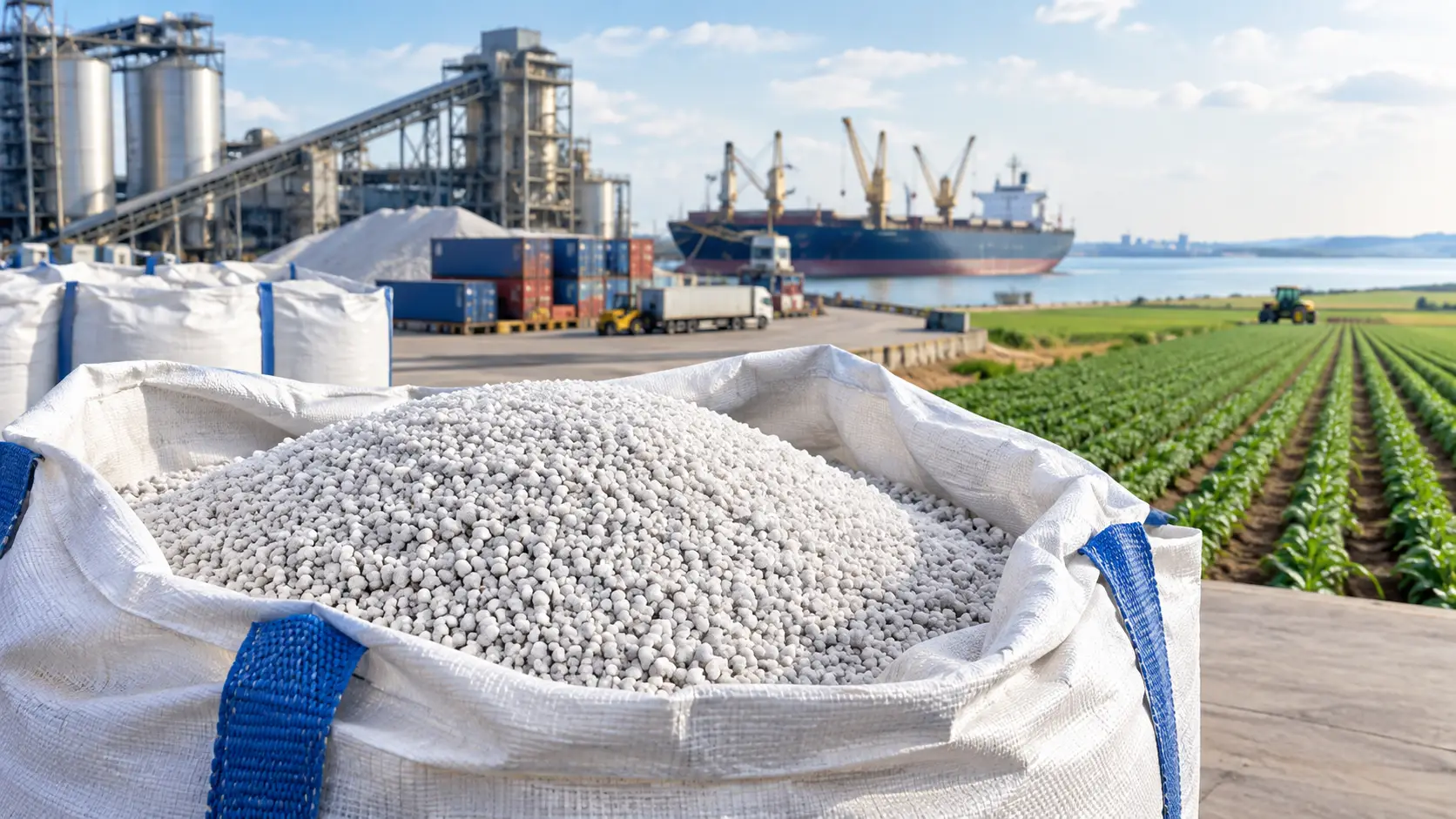
DAP logistics typically involve movement from production facilities to inland storage, export terminals, ocean vessels, destination ports, warehouses, and finally agricultural distributors or industrial customers. Depending on the origin and destination, cargo can move through combinations of rail, truck, conveyor systems, covered storage, bulk terminals, containers, or breakbulk facilities. Each stage introduces cost, scheduling, and handling considerations.
Storage conditions are commercially significant because fertilizer materials must be protected from excessive moisture and unsuitable handling conditions. Buyers therefore need to establish clear requirements for packaging, warehouse conditions, loading procedures, product protection, and inspection. For international contracts, these details should be aligned with the agreed Incoterm and responsibility for freight, insurance, customs clearance, and destination handling.
Logistics disruptions became particularly important during 2026. The OPEC Fund reported that the closure of the Strait of Hormuz put approximately 4 million metric tons of annual DAP export capacity at risk and contributed to an estimated 35% increase in DAP prices through April. Such disruption demonstrates how concentrated maritime routes can influence fertilizer availability and delivered costs far beyond the immediate region.
Procurement teams should therefore evaluate DAP on a delivered-cost basis rather than focusing solely on the origin price. Freight, port congestion, vessel availability, insurance, inland transportation, storage charges, demurrage exposure, and customs requirements can materially affect total procurement cost. A robust supply-chain strategy combines competitive product pricing with dependable logistics execution.
Key Buyers and Procurement Requirements
B2B Buyer Profiles
The principal DAP demand base is associated with agricultural fertilizer supply, including fertilizer distributors, agricultural-input companies, cooperatives, wholesalers, and organizations supplying crop producers. Large buyers generally require predictable volumes and consistent specifications because procurement interruptions can affect seasonal fertilizer availability. Distributors may additionally require flexible packaging and shipment configurations to serve different downstream markets.
Procurement teams typically evaluate nutrient specification, product grade, origin, quantity, packaging, loading point, shipment schedule, documentation, and commercial terms. Depending on the destination, buyers may also require certificates of analysis, safety documentation, certificates of origin, inspection records, and other regulatory or customs documents. Supplier responsiveness is therefore an important part of commercial performance.
Demand timing can also influence purchasing strategy. Fertilizer buying is strongly connected to planting and application seasons, meaning a delay that appears minor from a logistics perspective can become commercially significant if it causes inventory shortages during a critical agricultural window. The 2026 market has demonstrated this sensitivity, with regional supply constraints and seasonal demand supporting procurement activity in several markets.
For distributors and international traders, supplier qualification should therefore extend beyond basic product availability. Buyers benefit from assessing production capability, export experience, quality consistency, documentation standards, logistics reliability, financial terms, and contingency capacity. These criteria help procurement teams build longer-term supplier relationships instead of repeatedly sourcing DAP through spot-market transactions.
Market Risks, Pricing, and Supply Outlook
Price Drivers and Supply Volatility
DAP pricing is influenced by a combination of feedstock costs, agricultural demand, production availability, trade policies, freight, currency movements, and geopolitical developments. This makes DAP particularly sensitive to disruptions occurring anywhere between raw-material extraction and the final destination. Buyers seeking predictable budgets must therefore monitor both physical market fundamentals and trade-policy developments.
Recent price indicators demonstrate the volatility. IMARC reported that Northeast Asian DAP prices reached approximately US$0.74/kg in March 2026, representing a 25.4% increase between December and March, while its Middle East assessment showed a different regional direction and a March level of approximately US$0.63/kg. The divergence illustrates why a single global DAP price is insufficient for procurement decisions.
Trade restrictions are another major risk factor. S&P Global reported that U.S. ammonium phosphate imports declined 12.92% year over year during the first half of 2026, while DAP imports specifically increased 3.10% to 579,349 metric tons. These contrasting figures highlight how individual product grades and regional markets can behave differently even within the broader ammonium-phosphate category.
The medium-term outlook is therefore likely to remain supply-sensitive. Buyers should expect price movements to reflect changes in Chinese export policy, Middle Eastern production and logistics, phosphate and ammonia feedstocks, agricultural demand, and international freight. Rather than attempting to predict a single price point, procurement teams can improve resilience through diversified origins, scheduled purchasing, appropriate inventory buffers, and clear contractual mechanisms.
Strategic B2B Sourcing of Diammonium Phosphate
Building a Reliable Procurement Strategy
Strategic DAP sourcing begins with a precise purchasing specification. Buyers should define required grade, nutrient content, physical form, packaging, annual or shipment quantity, destination, preferred Incoterm, documentation requirements, inspection standards, and delivery window before requesting quotations. This creates a consistent basis for comparing suppliers and prevents price comparisons from being distorted by different commercial conditions.
Supplier diversification is equally important. Recent restrictions and logistics disruptions have demonstrated that a previously reliable exporting origin can become constrained with limited notice. Developing alternative supply relationships across regions can provide procurement teams with greater flexibility when one origin experiences export restrictions, production interruptions, freight challenges, or unusually high delivered costs.
Digital B2B sourcing platforms can add value by helping buyers identify suppliers, compare commercial offers, communicate specifications, and coordinate international procurement requirements. For DAP, the most useful sourcing process is one that combines product availability with supplier credibility, logistics capability, documentation support, and transparent commercial terms. This is particularly relevant for distributors and trading companies serving multiple agricultural markets.
Tradeasia International can support B2B chemical and fertilizer procurement by connecting buyers with international supply opportunities and helping streamline sourcing, trade coordination, and logistics requirements. For organizations purchasing Diammonium Phosphate in commercial quantities, a structured sourcing approach can improve supply continuity while creating a stronger basis for managing price, quality, delivery, and market risk.
Sources
www.blogs.worldbank.org
www.spglobal.com
www.wits.worldbank.org
Leave a Comment