Introduction
Deoiled rice bran (DORB) continues to emerge as a strategic platform feed ingredient within the global agro-industrial ecosystem, driven by its cost efficiency and high fiber-protein balance. As of 2026, the market reflects steady structural expansion supported by rising livestock consumption and feed optimization trends. Global production is estimated at 7.8 million MT, with pricing averaging around USD 165/MT, while the sector maintains a projected 6.2% CAGR. Its relevance extends beyond conventional feed use, positioning it as a versatile input across multiple industrial value chains.
Animal Feed Integration as Primary Demand Driver
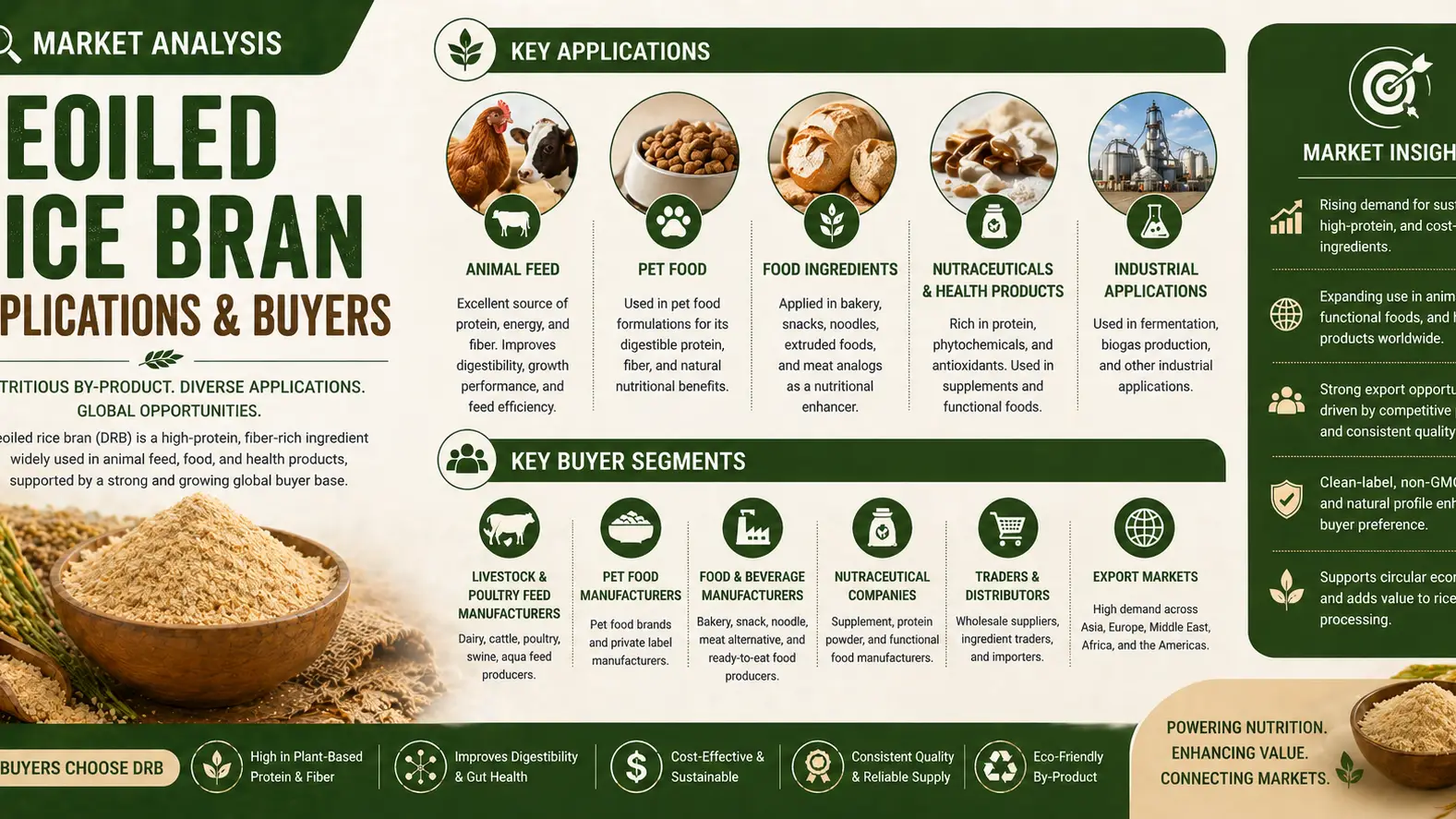
The dominant application of DORB remains livestock feed, where it serves as a cost-effective energy and fiber source in poultry, cattle, and swine diets. Feed manufacturers across Asia account for over 60% of global consumption, leveraging its stable nutrient profile to reduce reliance on more volatile corn and soybean meal markets. Buyers in this segment prioritize bulk procurement contracts, particularly in India, Bangladesh, and Vietnam, where livestock feed demand continues to accelerate with expanding meat consumption patterns.
Aquaculture Expansion and Protein Substitution Trends
Aquaculture is increasingly shaping new demand channels for DORB, particularly in tilapia and carp farming systems. With fish feed costs rising, producers are integrating deoiled rice bran as a partial substitute for fishmeal, improving cost efficiency without significantly compromising feed conversion ratios. The aquaculture sector is estimated to absorb nearly 18% of global DORB volumes, supported by rising seafood consumption and feed diversification strategies across Southeast Asia and parts of Latin America.
Feed Mill Procurement Dynamics and Price Sensitivity
Feed mills remain the central institutional buyers, driving procurement cycles based on seasonal rice milling output and regional supply fluctuations. Price volatility, ranging between USD 140–190/MT, strongly influences purchasing strategies, with mills often engaging in forward contracting to stabilize margins. Competitive pressure among regional suppliers has also intensified, pushing efficiency in logistics, storage, and quality standardization to maintain long-term buyer relationships.
Industrial and Fertilizer Applications Broadening Buyer Base
Beyond feed, DORB is gaining traction in organic fertilizer production and industrial biomass applications due to its residual oil and nutrient content. Fertilizer manufacturers increasingly utilize it as a soil conditioner, expanding the buyer base beyond traditional agro-feed industries. This diversification is gradually reducing dependency on feed mills alone, opening new revenue streams for producers in emerging bio-based economies.
Conclusion
As global demand for cost-efficient and sustainable feed ingredients intensifies, deoiled rice bran is positioned as a resilient intermediary in agricultural value chains. Its expanding applications across aquaculture and fertilizer sectors reinforce its long-term market relevance. For stakeholders seeking reliable sourcing, logistics optimization, and global market access, Tradeasia International serves as a trusted partner, enabling seamless integration of DORB into diversified industrial supply networks.
Sources
Leave a Comment