Crude Glycerine Price Volatility in 2026
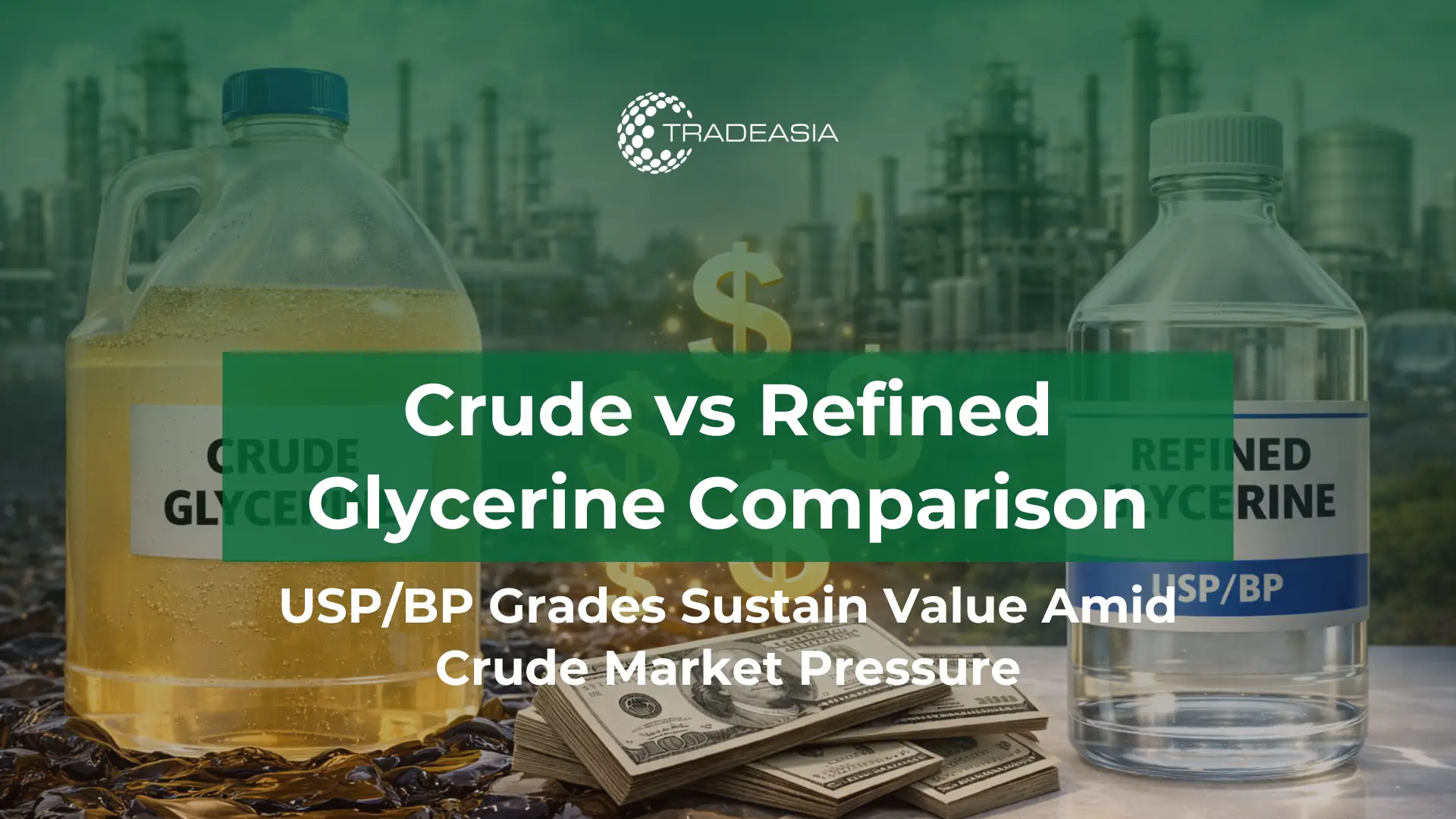
The global glycerine market in 2026 presents a clear divergence between crude and refined segments. While crude glycerine—primarily derived as a biodiesel by-product—has experienced sharp downward price adjustments, refined glycerine continues to demonstrate greater resilience. Oversupply in biodiesel production has pressured technical-grade glycerine values in multiple regions.
According to market analysis published by ICIS, crude glycerine prices have been influenced by biodiesel output fluctuations and weaker industrial absorption rates. As biodiesel production expanded in Southeast Asia and South America, surplus volumes weighed heavily on technical-grade pricing.
Oversupply and Technical-Grade Adjustments
Crude glycerine containing approximately 80% purity is widely used in industrial and feed applications. However, inconsistent quality and impurity levels limit its use in higher-value sectors. As a result, price sensitivity in the technical-grade segment remains high.
Industry commentary from Argus Media indicates that crude glycerine margins have narrowed significantly since late 2025. This divergence has amplified the pricing gap between crude and refined glycerine, reinforcing premium positioning for higher purity grades.
Why Refined Glycerine Maintains Premium Pricing
Unlike crude material, refined glycerine—particularly USP/BP grades—serves regulated industries requiring strict purity standards. This distinction provides price resilience even during periods of upstream volatility.
According to the United States Pharmacopeia (USP), pharmaceutical-grade glycerine must meet rigorous impurity thresholds and quality control specifications. These compliance requirements support high purity glycerine demand in medical and food applications.
Quality Certification and Regulatory Requirements
Refined glycerine with 99.5% minimum purity, especially USP/BP certified grades, ensures consistent performance in pharmaceutical syrups, injectables, and food formulations. This regulatory compliance limits substitution risk and protects pricing stability.
Buyers seeking pharmaceutical-grade material can review specifications through the
Refined Glycerine 99.5% Min USP/BP Product Page, which outlines compliance standards and application suitability for high-value industries.
As refined glycerine industry trends shift toward greater traceability and documentation, suppliers capable of meeting certification requirements maintain stronger pricing leverage.
High Purity Glycerine Demand in Pharma and Food
The pharmaceutical and food sectors continue to drive high purity glycerine demand in 2026. These industries prioritize safety, stability, and consistent organoleptic properties, making refined glycerine essential for production processes.
According to a report published by Grand View Research, pharmaceutical excipients represent a stable growth segment globally, supported by expanding healthcare access and aging populations. Refined glycerine functions as a humectant, solvent, and sweetener in numerous formulations.
Personal Care and Cosmetic Stability
Beyond pharma and food, personal care applications such as skincare, oral care, and cosmetics require high-grade glycerine to maintain formulation consistency. These sectors show less sensitivity to commodity price swings compared to industrial segments.
Industry data from Cosmetics & Toiletries confirms sustained global growth in skincare products, reinforcing stable refined glycerine market fundamentals. This consistent offtake explains why USP/BP grades command a premium of approximately USD 40–50 per ton over technical-grade material in early 2026.
Southeast Asia’s Role in Premium Grade Supply
Southeast Asia remains a critical production hub for both crude and refined glycerine. Abundant palm-based feedstock and established biodiesel industries provide reliable raw material supply for downstream refining operations.
According to industry analysis published in the
Asia Industrial Capacity Expansion Report, the region continues to strengthen its role in global chemical capacity additions, supporting integrated oleochemical production chains.
Palm-Based Origin and Sustainable Glycerine Sourcing
Palm-derived glycerine from Indonesia and Malaysia supports sustainable glycerine sourcing initiatives when managed under responsible supply frameworks. Refining capabilities in the region allow conversion of crude glycerine into pharmaceutical-grade material.
Industrial buyers evaluating crude options can review product information via the
Crude Glycerine 80% Min Palm Indonesia Supply Page, while refined grade sourcing remains focused on high-value certified material.
As sustainability reporting becomes standard practice, traceable Southeast Asian supply strengthens the refined glycerine market 2026 outlook.
Refined Glycerine Market 2026: Margin and Price Outlook
The refined glycerine market 2026 is characterized by steady demand growth and improved supply balance. While crude glycerine prices fluctuate with biodiesel cycles, refined material demonstrates stronger structural support.
According to market intelligence published by Mordor Intelligence, pharmaceutical and personal care consumption will continue expanding at moderate but stable rates. This trend underpins long-term premium pricing for USP/BP grades.
Price Gap Between Crude and Refined Grades
The pricing differential between crude and refined glycerine has widened in early 2026. High purity glycerine demand in regulated sectors prevents significant downward corrections even when feedstock costs soften.
As refined glycerine industry trends emphasize compliance and sustainability, buyers increasingly secure long-term contracts to protect against volatility. The refined glycerine market benefits from structural end-use demand rather than purely cyclical drivers.
Strategic Sourcing for Industrial Buyers
For manufacturers in pharmaceuticals, food processing, and personal care, selecting the right grade of glycerine directly affects product safety and regulatory compliance. Procurement teams must evaluate purity, origin, and certification documentation before contracting supply.
Buyers seeking reliable documentation can access regulatory and safety information via the
Oleochemicals Asia Download Center, ensuring alignment with internal quality standards.
Partnering with a Bulk Refined Glycerine Supplier
Long-term partnerships with a trusted bulk refined glycerine supplier reduce procurement risk and improve supply continuity. High-purity sourcing strategies support consistent production output and margin protection.
For tailored supply arrangements, contract negotiation, or sustainability verification, industrial buyers can coordinate directly through the
Oleochemicals Asia Contact Page. In a market where crude glycerine faces downward adjustments, refined glycerine maintains premium positioning due to its indispensable role in regulated industries.
Conclusion
The divergence between crude and refined glycerine pricing in 2026 underscores the importance of purity, certification, and end-use stability. While crude glycerine values have softened under biodiesel-driven oversupply, refined glycerine—especially USP/BP grades—continues to command a premium supported by high purity glycerine demand in pharmaceutical, food, and personal care sectors.
As refined glycerine industry trends emphasize regulatory compliance and sustainable glycerine sourcing, buyers are increasingly prioritizing certified material available through the Refined Glycerine 99.5% Min USP/BP Product Page, while monitoring technical-grade alternatives via the Crude Glycerine 80% Min Palm Indonesia Supply Page. Access to documentation through the Oleochemicals Asia Download Center and direct coordination via the Oleochemicals Asia Contact Page ensures procurement resilience within the evolving refined glycerine market 2026 landscape.
Leave a Comment