Introduction Crude Palm Olein
The global oleochemicals industry is entering a decisive phase as manufacturers, brand owners, and regulators push for bio-based, low-carbon alternatives to petrochemicals. At the center of this transition is Crude Palm Olein, a primary fraction of palm oil that serves as a versatile and cost-effective feedstock for a wide range of oleochemical products. As we look toward 2026, understanding the evolving supply chain of crude palm olein is critical for procurement teams, strategists, and technical managers across surfactants, lubricants, personal care, home care, and industrial chemicals.
Between 2023 and 2030, the global oleochemicals market is projected to grow at a CAGR in the range of 5–7%, driven by demand for biodegradable surfactants, bio-lubricants, and renewable plasticizers. A large share of this growth will rely on palm-based feedstocks, with crude palm olein and palm stearin as the primary inputs. Countries in Southeast Asia, particularly Indonesia and Malaysia, account for more than 80% of global palm oil output, making them central nodes in the supply chain. For global buyers, this concentration brings both economies of scale and exposure to region-specific risks.
Against this backdrop, companies such as chemtradeasia and other international distributors play a pivotal role in bridging producers and end-users, optimizing logistics, and ensuring product quality consistency. This article examines the strategic role of crude palm olein in oleochemicals, maps the global supply chain, analyzes market and pricing trends up to 2026, and highlights key sustainability and regulatory developments shaping sourcing decisions worldwide.
Crude Palm Olein as a Strategic Feedstock for Oleochemicals
Crude Palm Olein is the liquid fraction obtained from the physical or chemical fractionation of crude palm oil. It has a relatively high content of monounsaturated and saturated fatty acids, predominantly palmitic (C16:0) and oleic (C18:1), with minor amounts of linoleic acid (C18:2). Typical iodine values range around 56–60 g I₂/100 g, and free fatty acid (FFA) content in crude grades often lies between 3–5% as oleic acid, depending on origin and handling. These characteristics make crude palm olein an efficient feedstock for downstream refining and conversion into fatty acids, fatty alcohols, methyl esters, and glycerin.
In oleochemical applications, the choice of feedstock affects not only cost but also process efficiency, product performance, and regulatory compliance. Crude palm olein offers an attractive balance: it is abundant, relatively stable against oxidation compared with more unsaturated oils, and compatible with established processing routes such as hydrolysis, transesterification, and hydrogenation. Oleochemical producers convert crude palm olein into distilled fatty acids for soaps and detergents, into fatty alcohols for surfactants and personal care ingredients, and into esters for lubricants and plasticizers.
Compared with alternative feedstocks such as soybean oil, tallow, or rapeseed oil, crude palm olein typically offers higher oil yield per hectare and a more concentrated, well-developed supply chain in key producing countries. This leads to competitive pricing and predictable availability, which is essential for high-volume sectors like home and personal care. For buyers sourcing via platforms such as chemtradeasia, standardized specifications for crude palm olein (moisture and impurities < 0.25%, FFA tailored to application, controlled color and odor) help ensure compatibility with existing oleochemical processes and minimize unexpected variability.
Global Supply Chain Landscape for Crude Palm Olein
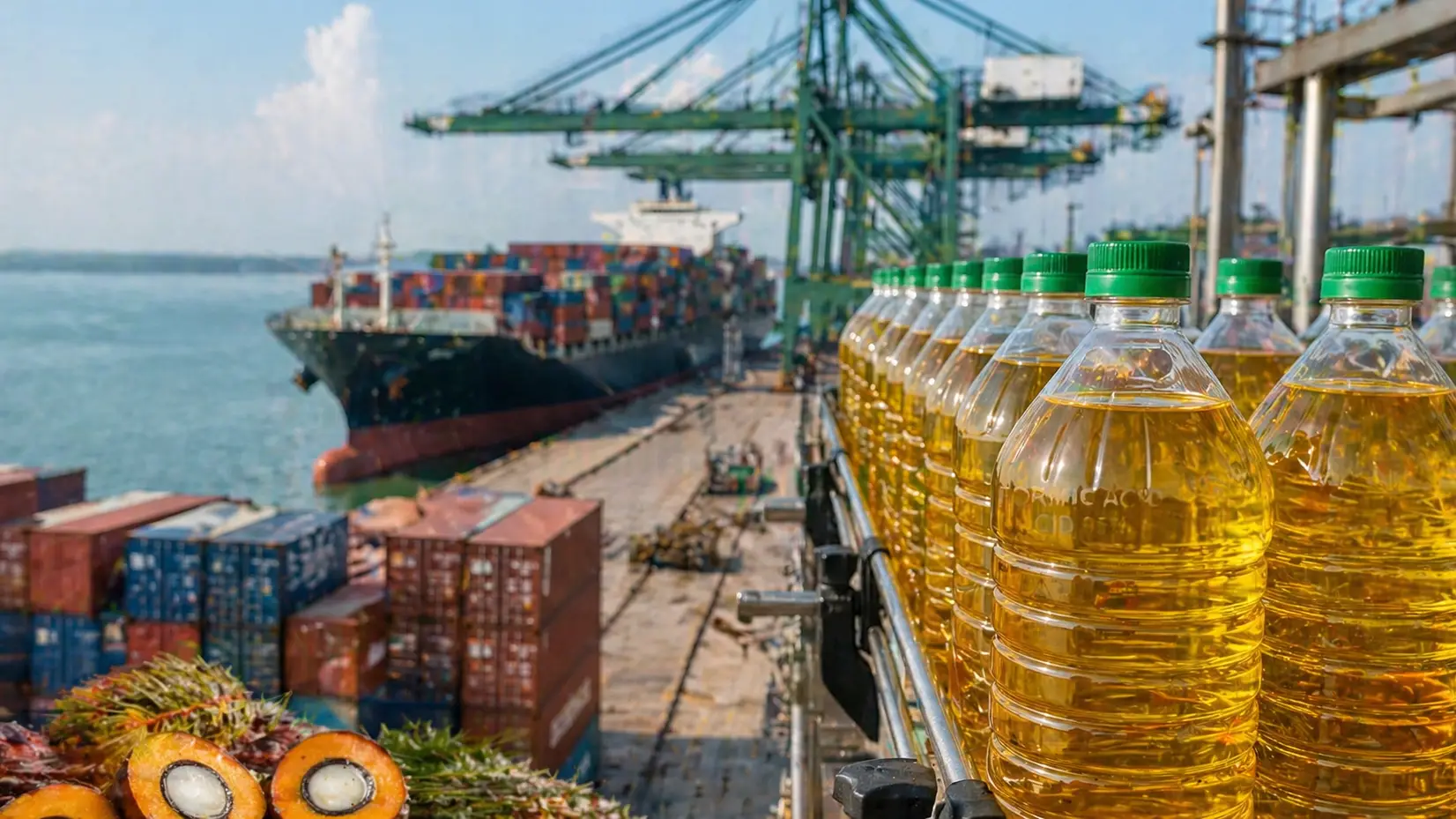
The supply chain for crude palm olein begins at the plantation level, where fresh fruit bunches (FFB) are harvested and transported to mills for crude palm oil (CPO) extraction. From there, refineries in Indonesia, Malaysia, and increasingly in Thailand and Latin American countries fractionate CPO into palm olein and palm stearin. Crude palm olein is then either refined, bleached, and deodorized for food applications or directed to oleochemical plants for industrial use. The main export hubs are major ports in Indonesia (such as Belawan and Dumai) and Malaysia (Port Klang, Pasir Gudang), which handle large volumes destined for Asia, Europe, the Middle East, and Africa.
The logistics chain from Southeast Asia to downstream oleochemical clusters is complex and sensitive to freight rates, port congestion, and geopolitical developments. Bulk shipments in parcel tankers, ISO tanks, and flexitanks are common for industrial buyers, while some buyers in Europe and North America also rely on storage terminals for inventory management. Global distributors like chemtradeasia help mitigate these complexities by aggregating supply from multiple refineries, offering flexible shipment sizes, and providing documentation support (including quality certificates, RSPO or ISCC certification where applicable, and technical data sheets).
Supply chain resilience has become a central concern since the COVID-19 pandemic, the Russia–Ukraine conflict, and disruptions in key shipping lanes. For crude palm olein, risks include weather-driven yield fluctuations (El Niño and La Niña events), labor shortages in plantations, changes in export policies (such as temporary export bans or levy adjustments), and competition between food and industrial uses. By 2026, many buyers are expected to diversify sourcing within the palm-producing region, increase safety stocks, or adopt multi-origin strategies that combine palm olein with alternative oils. Strengthening relationships with reliable suppliers and traders, including platforms such as chemtradeasia, is becoming an integral part of risk management.
Market Outlook and Pricing Dynamics Toward 2026
Global demand for crude palm olein in oleochemicals is closely tied to macro trends in consumer products, industrial manufacturing, and regulatory shifts away from fossil-based inputs. Market assessments indicate that palm-based oleochemicals could maintain or slightly increase their share of the overall oleochemicals market through 2026, supported by population growth, rising hygiene standards in emerging markets, and ongoing substitution of petrochemical surfactants with bio-based alternatives. Demand growth is particularly strong in Asia-Pacific, where local availability of palm oil and expanding manufacturing capacity create a natural advantage.
Price dynamics for crude palm olein are influenced by a combination of factors: palm oil production volumes, weather patterns, fertilizer and labor costs, currency movements, and competition from biodiesel and food sectors. Historically, palm oil prices have shown cyclical behavior, with periods of tight supply and elevated prices followed by phases of expansion and correction. Toward 2026, analysts expect relatively firm but volatile pricing, with additional sensitivity to sustainability policies, carbon pricing, and biofuel mandates. When biodiesel programs in producing countries absorb more palm oil, less material is available for oleochemicals, which can tighten supply and raise feedstock costs.
For industrial buyers and formulators, managing this volatility requires a combination of hedging strategies, flexible formulations, and strategic sourcing. Long-term contracts, index-linked pricing, and diversified supplier portfolios are increasingly common practices. Suppliers and traders such as chemtradeasia can support buyers by providing timely market intelligence, access to multiple origins and grades of crude palm olein, and options to switch between palm olein and other palm fractions or alternative oils where technically feasible. By 2026, digital platforms and data analytics are expected to play a larger role in forecasting demand, optimizing inventory, and reducing the overall cost-to-serve in the crude palm olein supply chain.
Sustainability, Certification, and Regulatory Drivers
Sustainability has become a defining issue for palm-based products, including crude palm olein used in oleochemicals. Concerns about deforestation, peatland conversion, biodiversity loss, and social impacts have led to heightened scrutiny from regulators, NGOs, and consumers. In response, certification schemes such as the Roundtable on Sustainable Palm Oil (RSPO), the Indonesian Sustainable Palm Oil (ISPO), and the Malaysian Sustainable Palm Oil (MSPO), as well as chain-of-custody standards like ISCC, are being adopted more widely. For oleochemical buyers, access to certified crude palm olein helps meet corporate sustainability commitments and the requirements of downstream brand owners.
Regulatory measures in key markets are also reshaping the landscape. The European Union’s deforestation regulation, due diligence requirements in various jurisdictions, and evolving ecolabel criteria all influence sourcing decisions. In addition, carbon footprint considerations and life cycle assessment (LCA) are increasingly used to evaluate feedstocks. Palm oil, including crude palm olein, can offer a favorable greenhouse gas profile when produced under best practices, but performance varies significantly depending on land-use history and management practices. This makes traceability and supplier selection crucial.
Distributors and solution providers such as chemtradeasia are responding by expanding their portfolios of certified and traceable crude palm olein, offering documentation support, and collaborating with refineries and plantations that comply with international standards. For buyers planning toward 2026, integrating sustainability into procurement criteria is no longer optional; it is a core requirement for maintaining market access, protecting brand reputation, and aligning with investor expectations. This includes specifying certification types in purchase contracts, monitoring supplier performance, and engaging in continuous improvement initiatives across the palm supply chain.
Conclusion
As the global oleochemicals industry advances toward 2026, crude palm olein will remain a cornerstone feedstock, valued for its availability, cost-effectiveness, and compatibility with a broad range of chemical processes. Its role in producing surfactants, detergents, personal care ingredients, lubricants, and other industrial chemicals positions it at the heart of the transition to more sustainable, bio-based value chains. At the same time, the concentration of supply in a few producing countries, exposure to climate and policy risks, and evolving sustainability expectations make supply chain management more complex and strategically important.
Companies that proactively understand market dynamics, invest in resilient sourcing strategies, and engage with credible partners will be best positioned to capture growth opportunities. Working with experienced suppliers and distributors such as chemtradeasia can help buyers secure consistent quality crude palm olein, navigate certification and regulatory requirements, and respond quickly to shifts in demand or logistics conditions. Looking ahead, integrating digital tools, robust risk management, and sustainability criteria into procurement will be essential to unlocking the full potential of crude palm olein in the global oleochemicals sector.
This article is provided solely for informational and market insight purposes and is not intended as technical, safety, regulatory, or professional advice. Readers should independently verify all information with qualified experts, consult official documentation such as MSDS/SDS and relevant standards, and contact appropriate technical or commercial teams, including ours, for guidance on specific applications or compliance requirements.

Leave a Comment