Cottonseed Meal Supply Chain Trends Driving Global Feed Industry Growth
Introduction to Cottonseed Meal
Cottonseed meal is a high-protein by-product obtained after extracting oil from cottonseed. It has become one of the most valuable plant-based protein ingredients used in commercial animal feed formulations. Due to its nutritional profile and broad availability in cotton-producing countries, cottonseed meal plays an important role in supporting livestock production while maximizing the value of agricultural processing.
Growing demand for sustainable and cost-efficient feed ingredients has strengthened the commercial relevance of cottonseed meal. Feed manufacturers increasingly incorporate it into formulations for cattle, sheep, goats, and other ruminants as an economical protein source that complements soybean meal and other vegetable proteins.
Understanding Its Role in the Feed Industry
The cottonseed processing industry connects agriculture, oil extraction, feed manufacturing, logistics providers, and international commodity traders. According to the United States Department of Agriculture (USDA), cotton-producing countries continue to optimize by-product utilization, allowing cottonseed meal to remain an important ingredient in integrated agricultural supply chains.
In recent years, increasing livestock production and growing protein consumption have encouraged feed producers to diversify ingredient sourcing. This trend has expanded international trade opportunities for cottonseed meal suppliers serving both developed and emerging livestock markets.
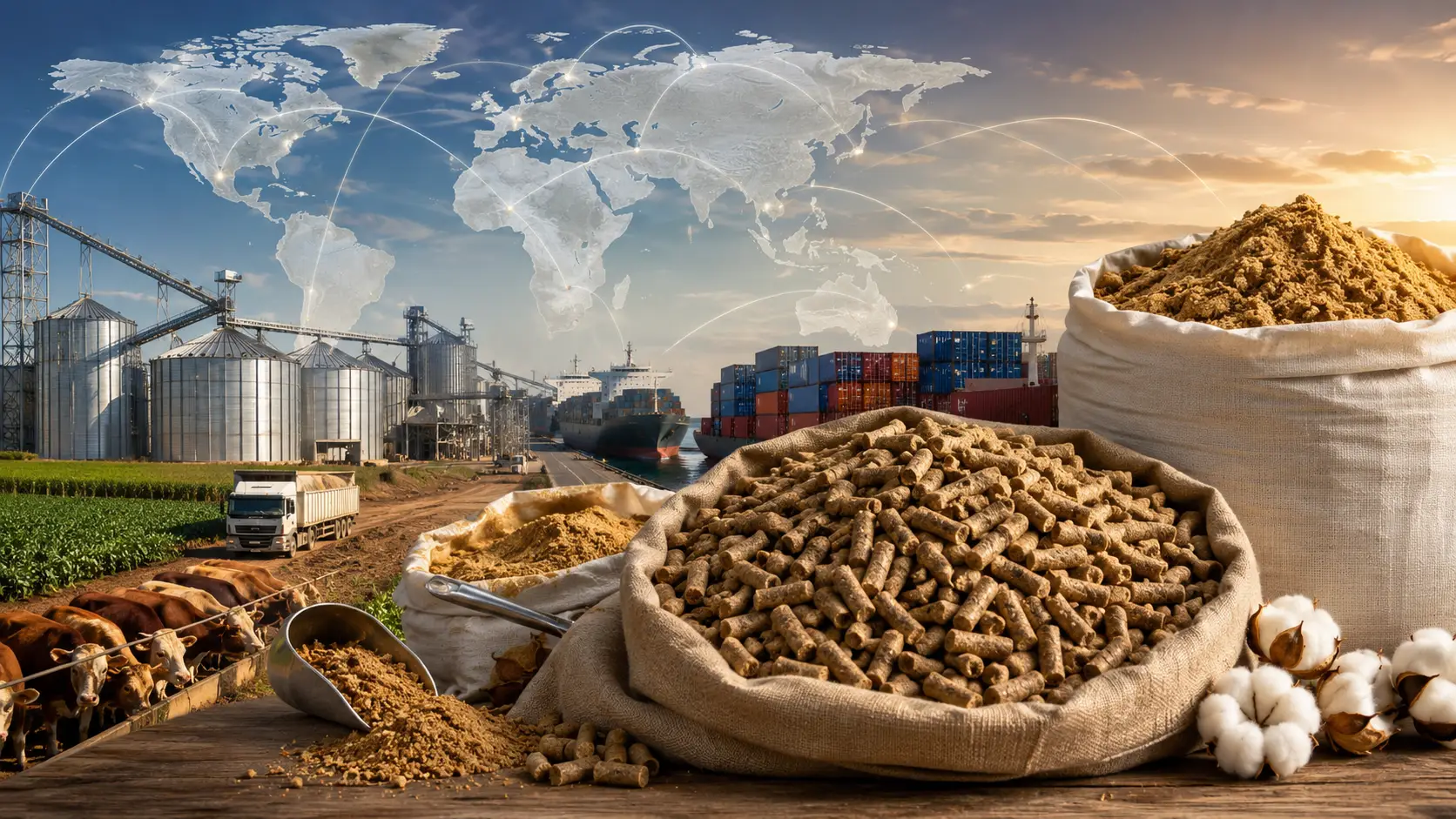
Global Cottonseed Meal Supply Chain Overview
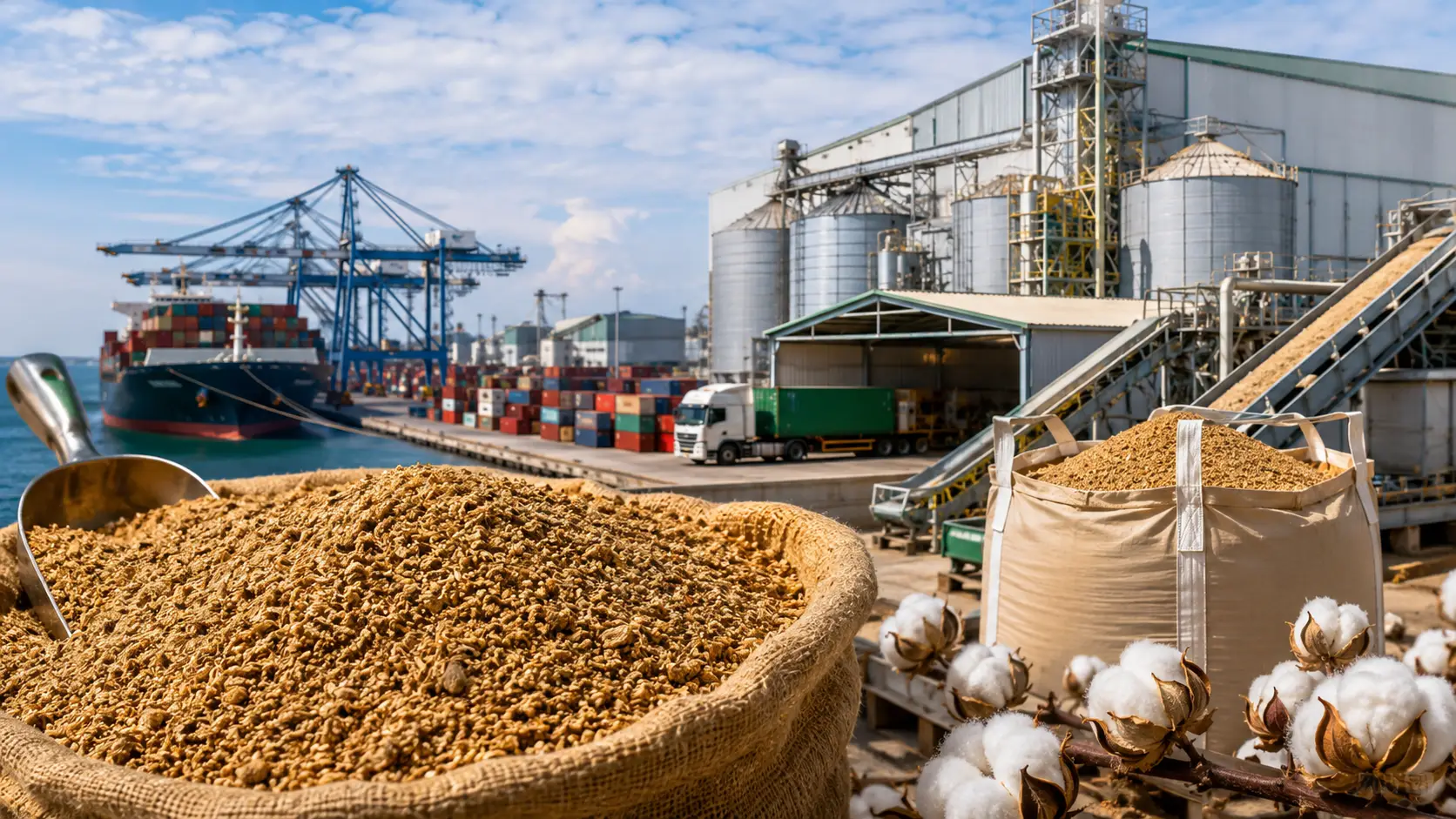
The cottonseed meal supply chain begins with cotton cultivation, where cottonseed is collected after fiber separation during ginning. The seeds are transported to crushing facilities, where oil extraction leaves behind protein-rich meal suitable for feed production. Efficient coordination between farmers, processors, logistics providers, and distributors is essential to maintaining consistent product quality and supply.
International trade continues to influence cottonseed meal availability, particularly as weather conditions, cotton acreage, and oil demand affect raw material production. Countries with large cotton industries often serve as both domestic suppliers and export hubs for feed ingredients.
Key Supply Chain Drivers
According to the Food and Agriculture Organization (FAO), agricultural by-products such as cottonseed meal contribute to sustainable resource utilization by converting processing residues into valuable livestock nutrition products. This circular approach supports environmental sustainability while improving profitability across the agricultural value chain.
Supply chain resilience has become increasingly important as buyers seek dependable suppliers capable of ensuring consistent quality, competitive pricing, regulatory compliance, and reliable logistics. These factors continue to shape procurement strategies for feed manufacturers operating in international markets.
Market Demand and Industry Growth
Global demand for cottonseed meal continues to rise alongside expanding livestock production and the need for affordable, protein-rich feed ingredients. As feed manufacturers seek alternatives to soybean meal to manage costs and diversify supply sources, cottonseed meal has gained greater commercial importance. Its nutritional value, availability in cotton-producing regions, and competitive pricing make it an attractive option for ruminant feed formulations.
The increasing commercialization of dairy and beef farming, particularly in Asia, Africa, and South America, has further strengthened market demand. As producers strive to improve feed efficiency and animal performance, procurement teams are evaluating cottonseed meal based on protein content, digestibility, fiber composition, and consistency of supply.
Commercial Demand Across the Feed Industry
According to the Organisation for Economic Co-operation and Development (OECD) and the Food and Agriculture Organization (FAO) Agricultural Outlook, global meat and dairy production is expected to continue expanding over the coming decade, driving sustained demand for high-quality feed ingredients. This long-term outlook positions cottonseed meal as an important component of commercial feed formulations, especially where cost optimization is a priority.
Market analysts also note that feed manufacturers increasingly prioritize supply chain resilience over relying on a single protein source. Cottonseed meal therefore serves as both a nutritional ingredient and a strategic procurement option, helping manufacturers reduce sourcing risks while maintaining production efficiency. Growing investments in modern feed mills and improved quality assurance systems are expected to further support market expansion.
Regional Production and Trade Landscape
Cottonseed meal production is closely linked to global cotton cultivation. Major cotton-producing countries such as India, China, the United States, Brazil, Pakistan, and Australia generate significant quantities of cottonseed during fiber processing, creating stable supplies for domestic feed markets and international trade. Production volumes often fluctuate with cotton harvests, weather conditions, and agricultural policies, making regional diversification an important sourcing strategy.
International trade flows continue to evolve as importing countries seek dependable suppliers capable of meeting nutritional specifications, phytosanitary requirements, and delivery schedules. Exporters with integrated processing facilities and established logistics networks are increasingly favored by procurement teams managing large-scale feed manufacturing operations.
Regional Supply Opportunities for Global Buyers
According to the International Cotton Advisory Committee (ICAC), improvements in cotton production efficiency and processing technologies have enhanced the availability of cottonseed by-products for commercial applications. At the same time, government initiatives supporting agricultural exports in major producing countries continue to strengthen international supply capabilities.
Regional sourcing has become a key competitive advantage for manufacturers, distributors, and commodity traders. Buyers increasingly compare suppliers based on quality certifications, production capacity, shipment reliability, sustainability practices, and technical support rather than focusing solely on price. As global feed demand grows, establishing diversified sourcing partnerships across multiple producing regions helps organizations improve supply security and respond more effectively to market fluctuations.
Buyer Intent and Procurement Considerations
Organizations purchasing cottonseed meal typically include commercial feed manufacturers, livestock nutrition companies, dairy cooperatives, cattle feed producers, agricultural distributors, commodity traders, and feed ingredient importers. These buyers require a dependable source of plant-based protein that supports consistent feed quality while remaining cost-effective for large-scale production.
As competition in the livestock industry increases, procurement teams evaluate more than price when selecting suppliers. Purchasing decisions are influenced by crude protein levels, fiber content, moisture specifications, residual oil, gossypol levels, packaging options, production capacity, compliance with feed safety regulations, and the supplier's ability to deliver consistent shipments throughout the year.
Why Buyers Compare Suppliers Before Purchasing
According to technical guidance published by the U.S. Food and Drug Administration (FDA) and nutritional resources from the National Research Council (NRC), maintaining consistent feed ingredient quality is essential for livestock performance and regulatory compliance. Variations in nutritional composition can directly affect feed formulation efficiency and production costs, making supplier reliability a key purchasing criterion.
A comprehensive product page on a B2B marketplace helps buyers make informed sourcing decisions by providing detailed specifications, quality standards, available packaging, export capabilities, documentation, and logistics information. Procurement professionals also value suppliers that offer responsive communication, transparent quality assurance, and flexible international shipping solutions, reducing supply chain risks and supporting long-term partnerships.
Future Outlook and Strategic Sourcing
The outlook for the cottonseed meal market remains positive as global demand for animal protein continues to increase and feed manufacturers seek diversified protein sources. Advances in cotton cultivation, oilseed processing technologies, and international logistics are expected to improve product availability and strengthen supply chain efficiency. Sustainability initiatives promoting full utilization of agricultural by-products also support the long-term commercial value of cottonseed meal.
Manufacturers and distributors are increasingly investing in quality control systems, traceability programs, and supply chain resilience to meet the evolving expectations of international buyers. These developments position cottonseed meal as a competitive ingredient within the global feed industry while helping businesses adapt to changing market conditions and procurement strategies.
Strategic Sourcing for Long-Term Business Growth
Market intelligence from the OECD-FAO Agricultural Outlook indicates that global livestock production and feed consumption are projected to continue growing over the next decade, reinforcing demand for reliable protein feed ingredients. Businesses that establish diversified supplier networks and monitor regional production trends will be better positioned to manage price volatility and maintain uninterrupted operations.
For procurement teams seeking dependable sourcing solutions, partnering with an experienced international chemical and feed ingredient supplier can streamline purchasing, simplify logistics, and improve supply reliability. Tradeasia International supports global buyers through an extensive sourcing network, quality-focused supply management, and international distribution capabilities, helping manufacturers and distributors secure cottonseed meal for their long-term operational requirements.
Sources
https://www.fao.org
https://www.fas.usda.gov
https://www.icac.org
Leave a Comment