Introduction
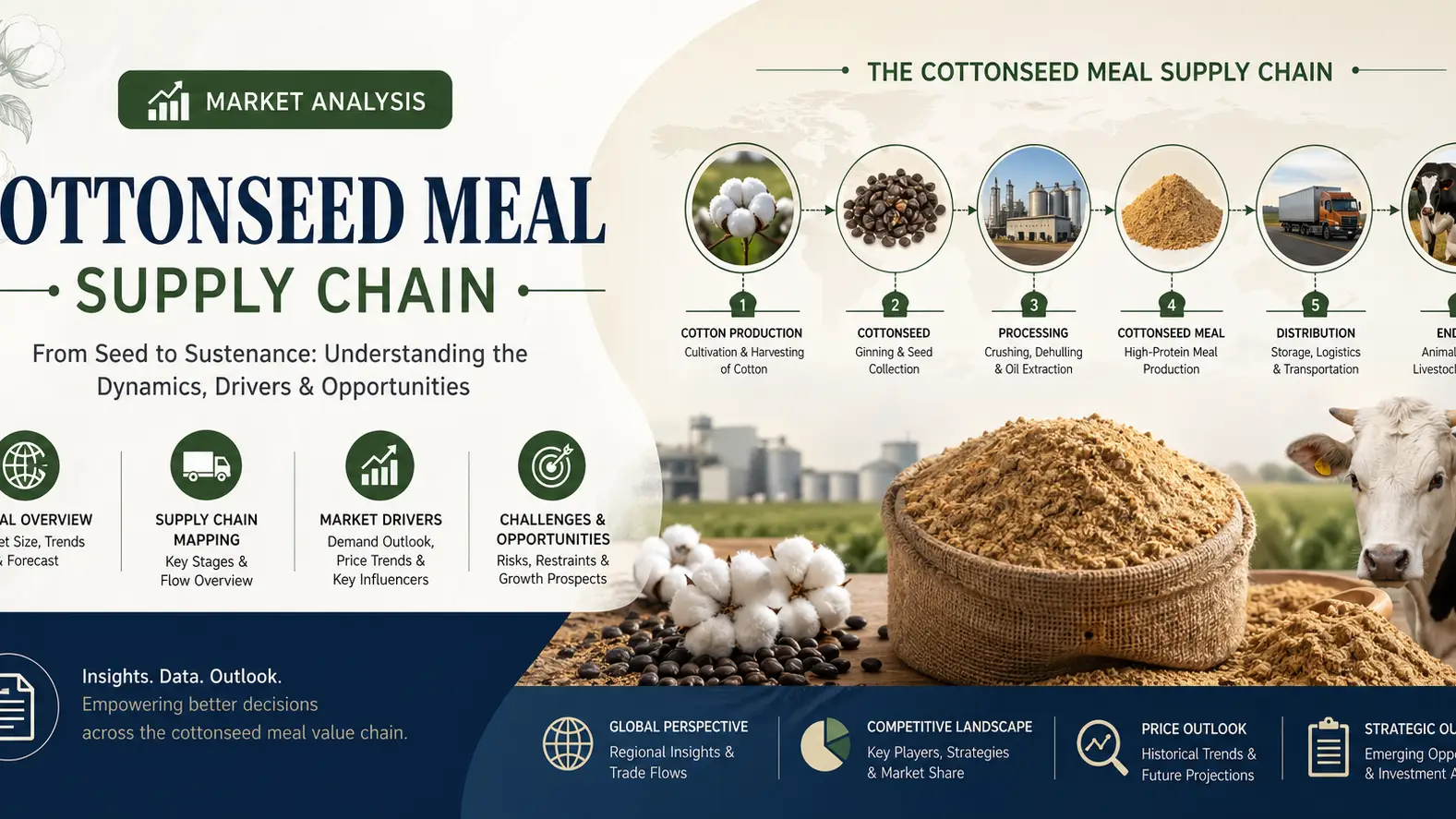
Cottonseed meal, a protein-rich byproduct of cottonseed oil extraction, remains a strategically important platform ingredient in the global feed supply chain in 2026. With livestock nutrition industries seeking alternatives to soybean meal, demand has grown steadily at a 5.2% CAGR, while average global prices stabilize between USD 290–360/MT. Global production is estimated at 18.4 million MT, concentrated in India, China, and the United States. Its supply chain is increasingly shaped by crop yields, crushing efficiency, and freight volatility.
Upstream Cottonseed Procurement and Crop Dependency
The upstream segment is tightly linked to raw cotton production cycles, making supply highly sensitive to weather and acreage shifts. India contributes nearly 6.1 million MT of cottonseed meal output, followed by China at 5.4 million MT. Seasonal monsoons and pest pressures directly influence availability, creating intermittent tightness in feedstock supply. This dependency forces processors to adopt diversified sourcing strategies and inventory buffering to stabilize year-round crushing operations.
Crushing Capacity and Processing Bottlenecks
Processing infrastructure remains unevenly distributed, with modern solvent extraction plants in the U.S. operating at higher efficiency compared to older facilities in South Asia. Capacity utilization averages 78–82%, constrained by energy costs and seed quality variability. Investment in automated crushing lines has improved protein consistency to 36–41% crude protein, enhancing feed-grade acceptance. However, bottlenecks persist during peak harvest seasons, tightening regional availability and pushing short-term price spikes above USD 360/MT.
Global Logistics and Trade Corridor Realignment
Trade flows of cottonseed meal are increasingly influenced by freight optimization and port congestion. Major export corridors from India and the U.S. to Southeast Asia and the Middle East have experienced freight cost volatility exceeding 18% year-on-year. Bulk shipping inefficiencies and container shortages intermittently disrupt supply continuity. As a result, buyers are shifting toward regional sourcing hubs, reducing reliance on long-haul imports and encouraging localized blending operations.
Feed Industry Demand and Substitution Dynamics
Demand is primarily driven by poultry and ruminant feed manufacturers seeking cost-effective protein alternatives. Cottonseed meal’s price advantage over soybean meal—often 12–18% lower per MT—supports steady adoption. However, gossypol content limitations restrict inclusion rates in certain formulations. Despite this, its role in compound feed blends continues to expand, especially in emerging markets where protein affordability outweighs formulation constraints, reinforcing its structural demand growth.
Conclusion
Cottonseed meal’s positioning as a platform protein ingredient underscores its resilience within evolving global feed supply chains. As procurement complexity and trade volatility intensify, integrated sourcing and distribution solutions become essential. In this landscape, Tradeasia International offers a reliable global network and market expertise, enabling consistent supply access and efficient trade facilitation across key agricultural input markets.
Sources
-
https://www.fao.org
-
https://www.usda.gov
-
https://www.indexmundi.com
Leave a Comment