Cottonseed Meal: Product and Commercial Positioning
What Cottonseed Meal Is
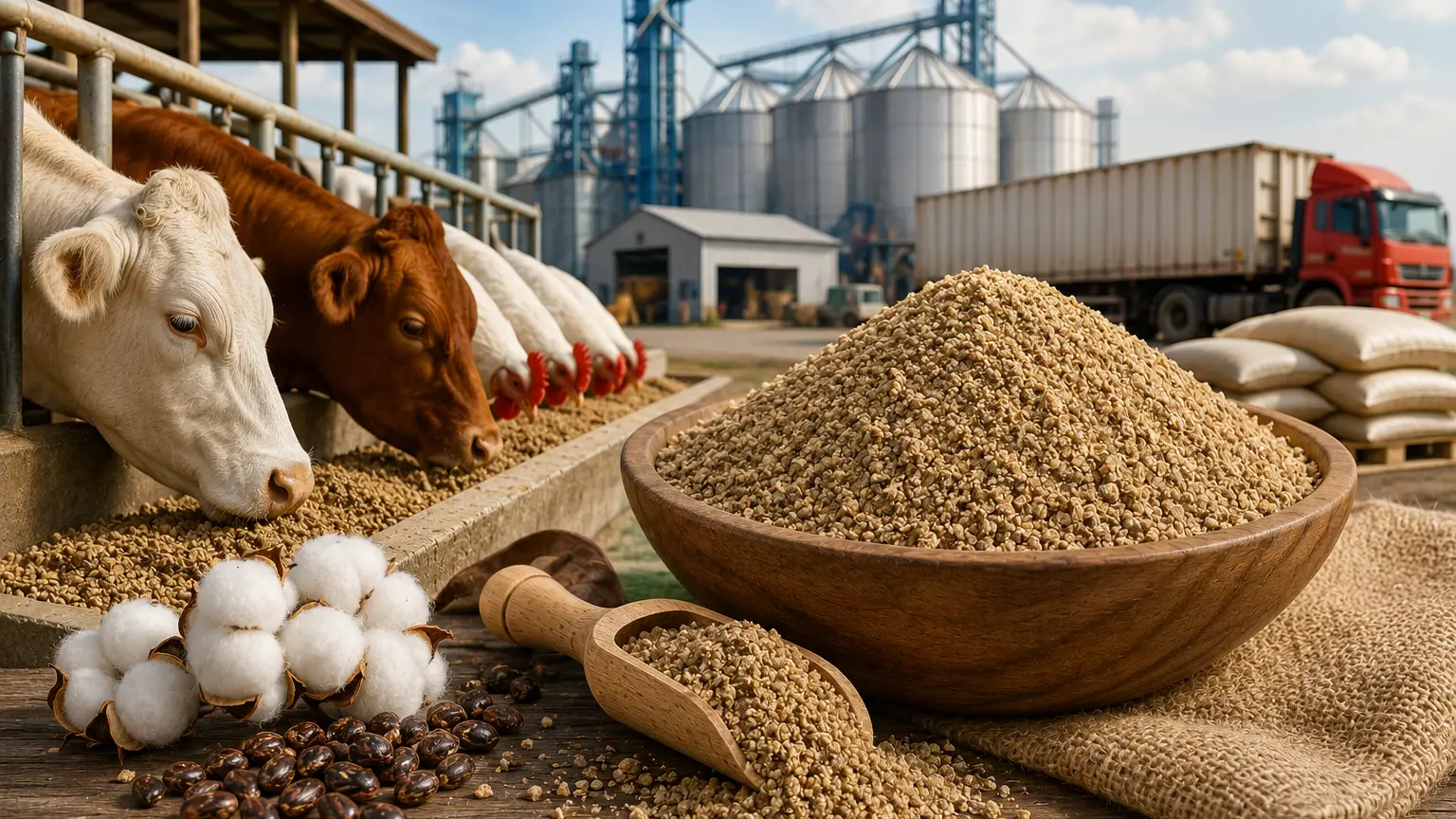
Cottonseed Meal is a feed-grade agricultural by-product generated after oil extraction from cottonseed. The Tradeasia product specification identifies the material as a solid, light-brown powder or granule originating from China, with CAS Number 68308-87-2 and HS Code 230610. The listed product has a crude protein specification of 36–41%, crude fat of 1–4%, crude fibre of up to 12%, and feed-grade status, positioning it commercially as a protein ingredient for animal nutrition.
From a supply-chain perspective, the product is more than a commodity agricultural residue because processing directly influences its nutritional profile and suitability for different feed formulations. The product information explains that cottonseed is cleaned, decorticated, separated, crushed, cooked, and subjected to oil extraction, with heat during expeller processing contributing to the conversion of more free gossypol into bound form. This makes processing history and specification transparency important considerations for industrial buyers.
Why the Product Matters Commercially
Cottonseed Meal's commercial value is linked to its role as an alternative plant-based protein source. FAO technical information describes cottonseed meal as a commonly used protein ingredient in cattle rations in cotton-producing regions and notes that solvent-extracted cottonseed meal can contain approximately 44% protein, while the exact composition varies according to processing. The 2024 peer-reviewed review on pig nutrition likewise identifies Cottonseed Meal as a potential alternative protein source as feed manufacturers investigate alternatives to conventional protein ingredients.
For B2B procurement teams, this creates a clear sourcing proposition: buyers are not simply looking for cottonseed-derived material, but for a feed-grade ingredient whose protein, fibre, fat, microbiological, contaminant, packaging, and documentation characteristics fit their formulation and regulatory requirements. The Tradeasia product page lists 50 kg and bulk packaging, cool and dry storage, ISO/HACCP availability, and feed-grade status, providing a practical starting point for supplier qualification.
Cottonseed Meal Applications Across Feed Industries
Livestock Feed Applications
The strongest established application for Cottonseed Meal is animal nutrition, particularly as a protein ingredient for adult ruminants. FAO identifies cottonseed meal as a suitable protein source and notes its use in cattle rations, while technical literature has historically documented its nutritional role in dairy and other ruminant feeding systems. The Tradeasia product description extends the stated application range to adult ruminants, pigs, poultry, rabbits, horses, fish, and crustaceans.
Application decisions nevertheless depend on species, formulation, processing, and the concentration of anti-nutritional compounds. Gossypol is the principal technical consideration because its effects vary among animal species. FAO explains that gossypol can make cottonseed meal toxic to monogastric animals, while ruminants are generally more tolerant. Consequently, buyers serving multiple feed segments need specifications that allow formulation teams to determine appropriate use rather than treating Cottonseed Meal as an interchangeable protein ingredient.
Aquaculture and Specialty Feed
Cottonseed Meal also has relevance to aquaculture feed, although its use requires more careful formulation than simply replacing another protein source on a one-for-one basis. FAO technical material describes cottonseed meal as an oil-extraction residue used in fish-feed manufacture and highlights protein concentration, fibre, and free-gossypol content as important considerations. The same technical literature indicates that amino-acid balance and gossypol can restrict its inclusion in some aquatic diets.
This makes aquaculture a technically driven rather than purely volume-driven application opportunity. Buyers supplying fish and shrimp feed manufacturers should evaluate the product against species requirements, formulation targets, fibre tolerance, amino-acid supplementation, and gossypol specifications. For procurement teams comparing Cottonseed Meal suppliers, application suitability therefore depends on analytical documentation as much as on headline protein content.
Quality Specifications Buyers Should Evaluate
Nutritional and Physical Specifications
A B2B Cottonseed Meal purchase should begin with a clear specification rather than price alone. The Tradeasia product page lists 36–41% minimum crude protein, 1–4% crude fat, maximum 12% crude fibre, maximum 6.5% ash, 0.15% calcium, 0.9% phosphorus, and minimum 1.6% lysine. It also identifies light-brown powder or granules, approximately 0.55 g/cm³ bulk density, less than 12% moisture, and a six-month shelf life under cool, dry storage.
These parameters can influence formulation efficiency, handling, storage, freight economics, and finished-feed consistency. Protein concentration can affect the amount of ingredient required in a formulation, while fibre and residual fat influence nutritional calculations. FAO data also demonstrates that Cottonseed Meal composition varies according to extraction method and processing, reinforcing the need for buyers to compare actual technical specifications rather than relying solely on the generic product name.
Safety, Compliance, and Documentation
Safety-related specifications are particularly important when purchasing Cottonseed Meal for commercial feed manufacture. The Tradeasia listing specifies Salmonella as negative per 25 g, total plate count below 500,000 CFU/g, yeast and mould below 50,000 CFU/g, E. coli below 100 CFU/g, and aflatoxin B1 below 5 ppb. It also states that heavy metals and dioxins/PCBs are compliant and that Halal and Kosher certification are available on request.
Gossypol should receive separate attention during supplier qualification because its concentration and chemical form can influence species suitability. Recent scientific literature continues to examine ways of improving Cottonseed Meal utilization by managing gossypol and other anti-nutritional factors, while FAO technical guidance explains that processing can affect the proportion of free versus bound gossypol. Buyers should therefore request the relevant certificate of analysis, product specification, safety documentation, and applicable regulatory information for every commercial grade under consideration.
Cottonseed Meal Market and Buyer Trends
Alternative Protein Demand
One important recent application trend is the continued investigation of alternative protein sources for animal feed. A 2024 review published in Animal Nutrition describes Cottonseed Meal as a promising protein source for pig nutrition because of its protein content, availability, cost potential, and accessibility, while also emphasizing the limitations created by gossypol and other anti-nutritional factors. This points to a market direction in which Cottonseed Meal can attract interest when formulation economics and technical controls make it competitive with other protein ingredients.
The commercial implication is not that Cottonseed Meal will universally replace soybean meal or fish meal. Instead, its opportunity lies in serving formulations where its nutritional characteristics, supply availability, and delivered cost create a useful combination. For traders and procurement teams, this makes supplier comparison increasingly application-specific: the preferred supplier is the one capable of meeting the required grade consistently, rather than simply offering the lowest nominal price.
Processing and Utilization Trends
Processing technology is another relevant trend because it can affect the nutritional usability of cottonseed-derived feed ingredients. Scientific and FAO literature shows that heat and extraction conditions can change gossypol behavior, protein characteristics, residual oil, and overall nutritional value. The Tradeasia product description similarly identifies cooking and expeller extraction as part of the manufacturing process and notes the effect of heat on free-gossypol binding.
For buyers, this means the term “Cottonseed Meal” alone may not provide enough information to compare two offers. Feed manufacturers increasingly benefit from evaluating the complete specification, including extraction method, protein level, fibre, fat, moisture, microbiological profile, contaminant limits, and available technical documentation. This is particularly important when procurement teams are sourcing internationally and need consistent material across repeated shipments.
How B2B Buyers Should Source Cottonseed Meal
Who Buys Cottonseed Meal
The primary buyer groups include feed manufacturers, livestock nutrition companies, agricultural commodity traders, feed ingredient distributors, aquaculture feed producers, and procurement teams purchasing protein ingredients for commercial formulations. The product's stated application range covers adult ruminants as well as pigs, poultry, rabbits, horses, fish, and crustaceans, creating potential demand across several animal-feed segments.
Procurement teams typically evaluate more than availability. They need to assess protein concentration, fibre and fat levels, moisture, microbiological quality, contaminant limits, gossypol considerations, packaging, certifications, shelf life, and delivery capability. A supplier comparison is therefore a risk-management exercise: inconsistency in feed ingredients can affect formulation performance, production planning, inventory management, and the commercial reliability of finished feed products.
Supplier Comparison and Procurement
A practical sourcing process should compare suppliers using a standardized technical and commercial specification. Buyers can begin by reviewing the Cottonseed Meal product information and then request current pricing, availability, certificates, packaging options, and shipping details for the intended destination. The Tradeasia listing provides a baseline specification and identifies 50 kg and bulk packaging, helping procurement teams define the material they need before requesting quotations.
Supplier comparison becomes particularly important for international B2B purchasing because Cottonseed Meal is an agricultural by-product whose characteristics can vary with seed origin, processing method, and degree of decortication. FAO and Feedipedia both emphasize variability in composition and processing, making product-specific documentation essential. Buyers should therefore compare offers on delivered specifications and supply reliability, not just the quoted price per metric ton.
Commercial Opportunities and the Next Step for Buyers
Why Reliable Sourcing Matters
Cottonseed Meal offers a commercially relevant route for feed manufacturers seeking plant-based protein ingredients with established applications in animal nutrition. Its role as an oil-extraction by-product also connects feed sourcing with broader agricultural value chains, while its protein content and availability can make it useful in formulations where technical requirements and economics align. Recent research into its use in pig nutrition further illustrates ongoing interest in expanding the effective utilization of this ingredient.
For manufacturers, traders, and distributors, reliable supply is therefore part of the product value proposition. Consistent specifications, appropriate packaging, documentation, contaminant controls, and predictable logistics help procurement teams reduce uncertainty when incorporating Cottonseed Meal into recurring feed-ingredient purchasing programs. These considerations are especially relevant when a buyer needs repeat shipments rather than a one-time commodity transaction.
Turning Product Interest Into a Sourcing Opportunity
The most relevant commercial buyers are those that can match Cottonseed Meal's specification to a defined feed application and procurement requirement. Rather than approaching the product solely as a generic agricultural commodity, buyers can evaluate it according to protein contribution, fibre profile, gossypol considerations, microbiological quality, certifications, packaging, and supply requirements. This application-led approach supports more informed supplier selection and reduces the risk of comparing technically different materials as though they were identical.
For B2B buyers evaluating supply options, the Cottonseed Meal sourcing information provides a starting point for reviewing the available feed-grade specification and initiating a commercial inquiry. Tradeasia's marketplace positioning can connect product information with procurement discussions around pricing, customization, shipping, and documentation, helping buyers move from ingredient research toward a qualified sourcing decision.
Sources
- 2024 peer-reviewed research: “Research progress on cottonseed meal as a protein source in pig nutrition: An updated review,” Animal Nutrition. ScienceDirect article
- FAO technical reference: “Protein Sources for the Animal Feed Industry,” covering Cottonseed Meal's nutritional role, protein content, and gossypol considerations. FAO technical article
- USDA reference: USDA APHIS technical material describing Cottonseed Meal as the oil-extracted product of cottonseed and its use as a protein supplement in animal feed. USDA APHIS technical document
Leave a Comment