Introduction
Cottonseed meal, derived from oil extraction of cottonseed, continues to strengthen its position as a vital protein-rich feed ingredient in the global agribusiness landscape. In 2026, the market is shaped by rising demand for cost-effective alternative proteins, particularly in poultry and ruminant nutrition. Global consumption is estimated at around 18.5 million MT, supported by a steady CAGR of 4.8% from 2022–2026. Average export prices fluctuate between $220–$320/MT, reflecting cottonseed supply variability and oilseed processing margins. As a platform feed ingredient, cottonseed meal is increasingly integrated into diversified livestock feed formulations to improve protein efficiency and reduce soybean dependency.
Applications in livestock nutrition demand drivers
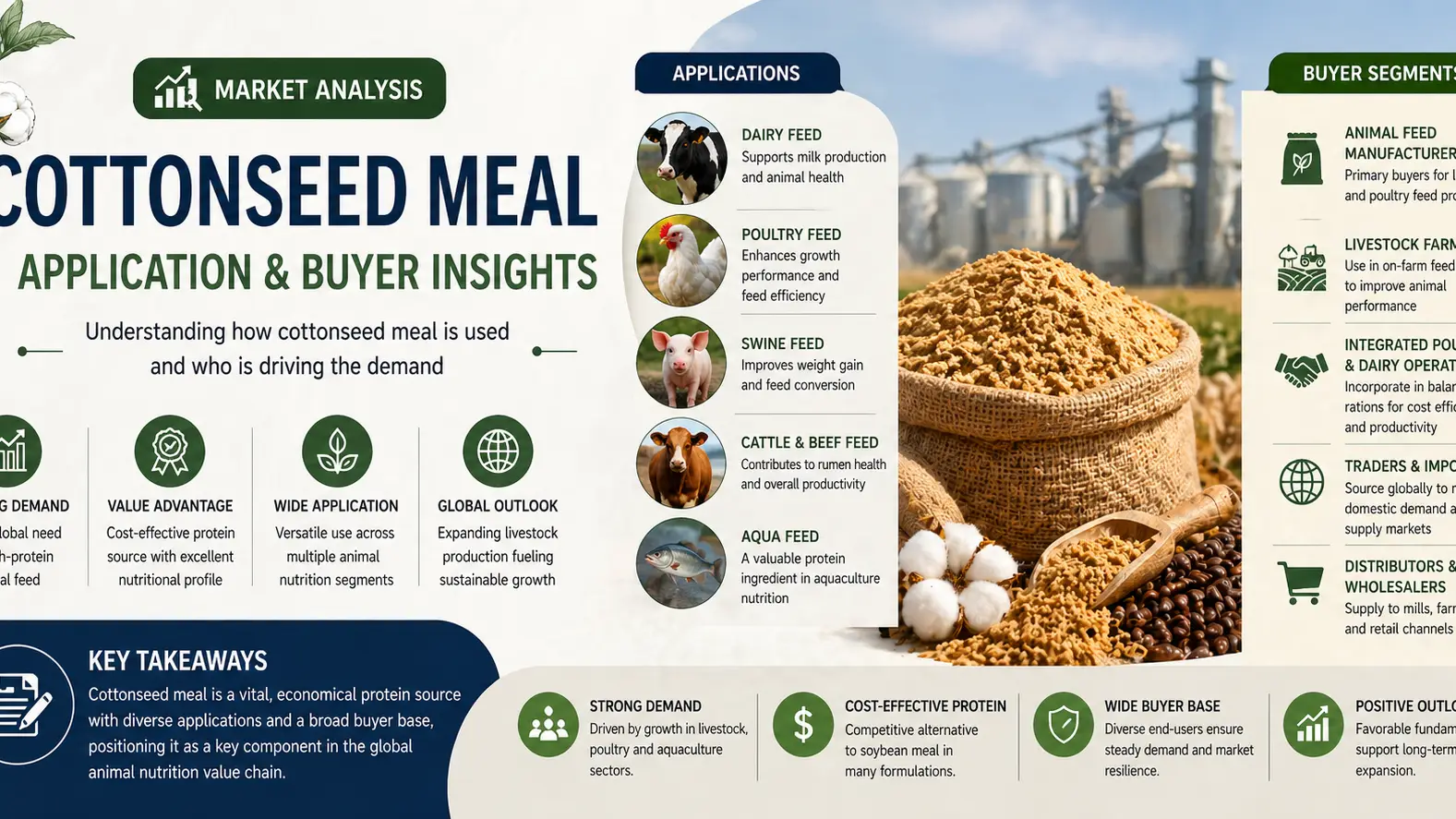
Cottonseed meal is predominantly utilized in poultry and ruminant feed formulations, where its crude protein content of 36–42% makes it a competitive substitute for soybean meal. In 2026, poultry feed accounts for nearly 45% of total consumption, driven by expanding meat production in Asia-Pacific. Ruminant applications follow closely, particularly in dairy cattle diets where fiber content supports digestion efficiency and feed cost optimization across intensive farming systems.
Key buyers feed mills integrators and aquaculture companies
The buyer base for cottonseed meal is anchored by large-scale feed manufacturers and integrated livestock producers seeking cost-efficient protein inputs. Feed mills represent the largest procurement segment, often blending cottonseed meal with corn and soybean derivatives. In aquaculture, demand is rising modestly, supported by a 3.2% CAGR in alternative protein feeds. Major buyers in China, India, and the United States collectively account for over 60% of global trade volumes.
Pricing dynamics and trade flows
Cottonseed meal pricing remains volatile due to seasonal cotton harvest fluctuations and competing oilseed meal markets. In 2026, average FOB export prices range between $220–$320/MT, with premium protein-grade variants exceeding this band in North America. India, the United States, and Brazil are key exporters, while Southeast Asia and the Middle East drive import demand, influenced by livestock expansion and feed cost sensitivity across industrial farming operations.
Supply chain and production outlook
Global cottonseed meal production is estimated at 19 million MT in 2026, closely tied to cotton lint output and oil extraction efficiency. The supply chain is highly integrated with crushing facilities located near cotton-growing regions to reduce logistics costs. Sustainability initiatives and improved solvent extraction technologies are enhancing yield recovery rates. Emerging economies are investing in feed-grade processing capacity, supporting long-term market resilience and export competitiveness.
Conclusion
Cottonseed meal continues to evolve as a strategic platform feed ingredient supporting cost-efficient protein supply chains in global livestock industries. As demand intensifies, market participants are prioritizing reliable sourcing and quality consistency. In this landscape, Tradeasia International offers integrated procurement and distribution solutions, enabling seamless access to industrial-grade feed materials across global markets.
Sources
-
https://www.fao.org
-
https://www.ers.usda.gov
-
https://www.britannica.com/topic/cottonseed-meal
Leave a Comment