Global Cottonseed Meal Supply Chain Outlook for Feed Industry Buyers
Understanding Cottonseed Meal in the Global Feed Industry
Cottonseed meal is a protein-rich by-product generated during the extraction of oil from cotton seeds. It is widely utilized as a feed ingredient in livestock nutrition due to its favorable protein content and availability in major cotton-producing regions.
As the livestock industry continues to expand globally, demand for alternative protein feed ingredients remains strong. Cottonseed meal serves as an important component in feed formulations for cattle, sheep, goats, and other ruminants.
Role in Animal Nutrition
Feed manufacturers often use cottonseed meal to supplement protein requirements while optimizing feed costs. Its nutritional profile makes it particularly attractive in regions where soybean meal prices experience volatility.
According to technical information published by the Food and Agriculture Organization (FAO), oilseed meals remain essential protein sources within commercial animal feed production systems, supporting livestock productivity and feed efficiency.
Key Supply Chain Dynamics Shaping Cottonseed Meal Availability
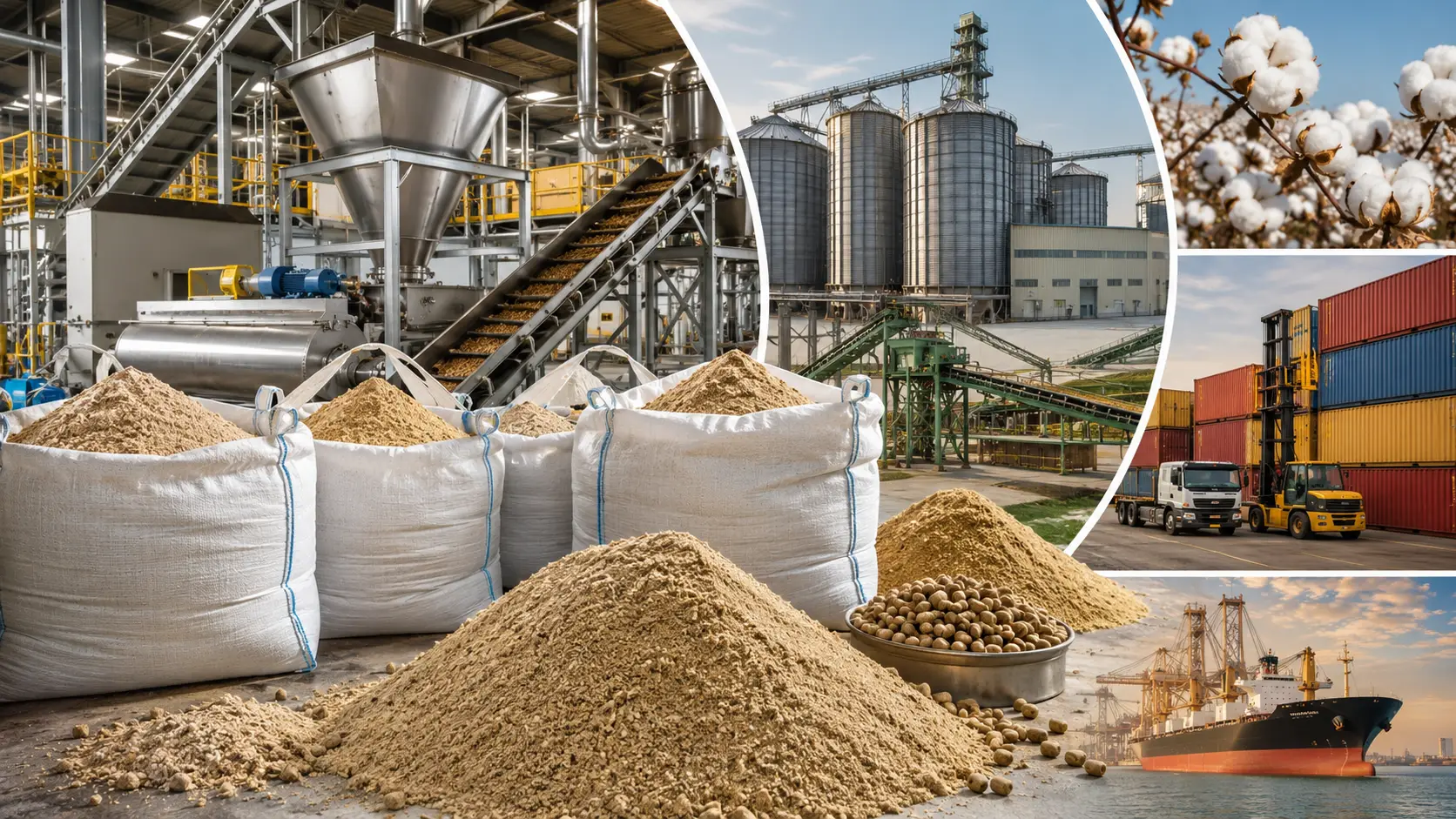
The availability of cottonseed meal is closely linked to global cotton production and cottonseed crushing activities. Since cottonseed meal is a by-product, fluctuations in cotton cultivation directly affect supply volumes.
Weather conditions, agricultural policies, and regional harvesting performance all contribute to changes in cottonseed availability and processing output.
Dependence on Cotton Production
Major cotton-producing countries such as India, China, the United States, Brazil, and Pakistan play critical roles in determining global cottonseed meal supply. Variations in cotton acreage and crop yields can significantly impact export opportunities.
According to production statistics from the United States Department of Agriculture (USDA), global cotton production trends remain a primary factor influencing the availability of downstream products such as cottonseed meal and cottonseed oil.
Logistics and Distribution Challenges
Transportation costs, port congestion, and regional infrastructure capabilities affect the movement of bulk feed ingredients worldwide. Buyers increasingly evaluate logistics reliability alongside product specifications.
Market assessments published by agricultural trade organizations indicate that supply chain resilience has become a strategic procurement priority for feed manufacturers seeking stable ingredient supplies.
Global Market Trends Influencing Cottonseed Meal Trade
Growing demand for livestock protein is supporting continued consumption of feed ingredients across emerging and developed markets. This trend contributes to stable demand for cottonseed meal in commercial feed production.
Increasing focus on feed cost optimization is encouraging nutritionists and procurement teams to evaluate multiple protein sources rather than relying solely on soybean meal.
Rising Demand from Livestock Production
Expansion in dairy farming, beef production, and small ruminant operations continues to create opportunities for cottonseed meal suppliers. Developing economies in Asia, Africa, and Latin America remain important demand centers.
According to market observations reported by the International Cotton Advisory Committee (ICAC), growing agricultural productivity and livestock sector expansion continue to support demand for cottonseed-derived products.
Sustainability and Resource Efficiency
The utilization of cottonseed meal aligns with broader agricultural sustainability goals by maximizing the value extracted from cotton crops. Buyers increasingly recognize the importance of circular resource utilization in agricultural supply chains.
Industry analyses from agricultural sustainability organizations suggest that by-product utilization strategies can contribute to improved resource efficiency and supply chain economics.
Buyer Intent and Procurement Considerations
Cottonseed meal is commonly purchased by feed manufacturers, livestock nutrition companies, feed distributors, agricultural cooperatives, and large farming operations. These buyers seek reliable protein ingredients that support consistent feed formulation performance.
Procurement teams typically compare multiple suppliers before making purchasing decisions, particularly when sourcing large-volume shipments for commercial operations.
Key Evaluation Criteria
Buyers frequently evaluate protein content, moisture levels, consistency, origin, processing quality, logistics capabilities, and supplier reliability. Documentation and quality assurance standards are also important factors.
According to feed industry best practices published by agricultural research institutions, ingredient consistency remains one of the most critical procurement considerations in commercial feed manufacturing.
Why Buyers Compare Suppliers
Supplier diversification helps organizations manage price fluctuations, supply disruptions, and logistical risks. Procurement teams often assess multiple sourcing channels to secure competitive pricing and dependable delivery schedules.
A comprehensive product page on a B2B marketplace supports sourcing decisions by providing specifications, supply information, documentation, and direct communication channels between buyers and suppliers.
Regional Supply Opportunities and Trade Flows
Cottonseed meal production is concentrated in countries with significant cotton industries. These regions frequently serve as both domestic supply centers and export hubs for international buyers.
Global trade flows are influenced by harvest conditions, local feed demand, export regulations, and transportation infrastructure.
Asia's Growing Importance
Asia remains one of the largest production and consumption regions for cottonseed meal due to substantial cotton cultivation and livestock industries. Countries such as India and China play particularly important roles in market dynamics.
According to agricultural commodity reports from the FAO, Asia continues to account for a significant share of both cotton production and animal feed consumption.
Export Opportunities from Major Producers
The United States, Brazil, and India offer important export opportunities for international buyers seeking diversified sourcing options. These suppliers help support regional feed industries where local production is insufficient.
Trade data published by the USDA Foreign Agricultural Service demonstrates the continued importance of international agricultural commodity flows in balancing global feed ingredient demand.
Sourcing Cottonseed Meal Through B2B Marketplaces
Digital procurement platforms are transforming how feed manufacturers identify suppliers and manage sourcing activities. B2B marketplaces provide access to multiple suppliers within a centralized environment.
These platforms help streamline supplier discovery, quotation requests, and product comparison processes across international markets.
Benefits for Procurement Teams
Procurement professionals can evaluate product specifications, compare supplier capabilities, and identify potential sourcing partners more efficiently than traditional procurement methods.
Industry digitalization studies indicate that online B2B procurement solutions are increasingly adopted to improve sourcing transparency and operational efficiency.
Supporting Global Supplier Networks
Marketplaces such as Tradeasia, Chemtradeasia, and Tradechem Marketplace facilitate connections between manufacturers, distributors, traders, and buyers seeking feed ingredients and agricultural commodities.
The ability to access multiple sourcing options through a single platform can help organizations strengthen supply continuity and improve procurement flexibility.
Future Outlook for Cottonseed Meal Supply Chains
The long-term outlook for cottonseed meal remains closely tied to developments in global cotton production and livestock industry growth. Continued demand for animal protein is expected to support feed ingredient consumption.
Supply chain resilience, sustainability initiatives, and procurement diversification are likely to remain major strategic priorities across the feed industry.
Emerging Procurement Strategies
Buyers are increasingly adopting multi-supplier sourcing models to reduce risk and improve supply security. Digital procurement tools are expected to play a larger role in supplier evaluation and contract management.
According to agricultural market analysts, procurement diversification is becoming a key strategy for maintaining stable ingredient availability amid evolving market conditions.
Long-Term Market Potential
As livestock production expands and feed efficiency remains a priority, cottonseed meal is expected to maintain its relevance within commercial feed formulations. Market participants that build reliable sourcing networks may benefit from improved supply stability.
The combination of global agricultural production growth and continued investment in feed manufacturing supports a positive outlook for cottonseed meal supply chains.
Conclusion
Cottonseed meal remains an important protein ingredient within the global animal feed industry. Its supply chain is influenced by cotton production, processing capacity, logistics networks, and international trade dynamics.
For feed manufacturers, distributors, and procurement teams, understanding market trends and developing diversified sourcing strategies can support supply continuity and cost management. As digital procurement continues to evolve, B2B marketplaces provide valuable tools for identifying reliable cottonseed meal suppliers and navigating a competitive global marketplace.
Sources
https://www.fao.org
https://www.usda.gov
https://www.icac.org

Leave a Comment