Corn Steep Liquor and Its Industrial Market Role
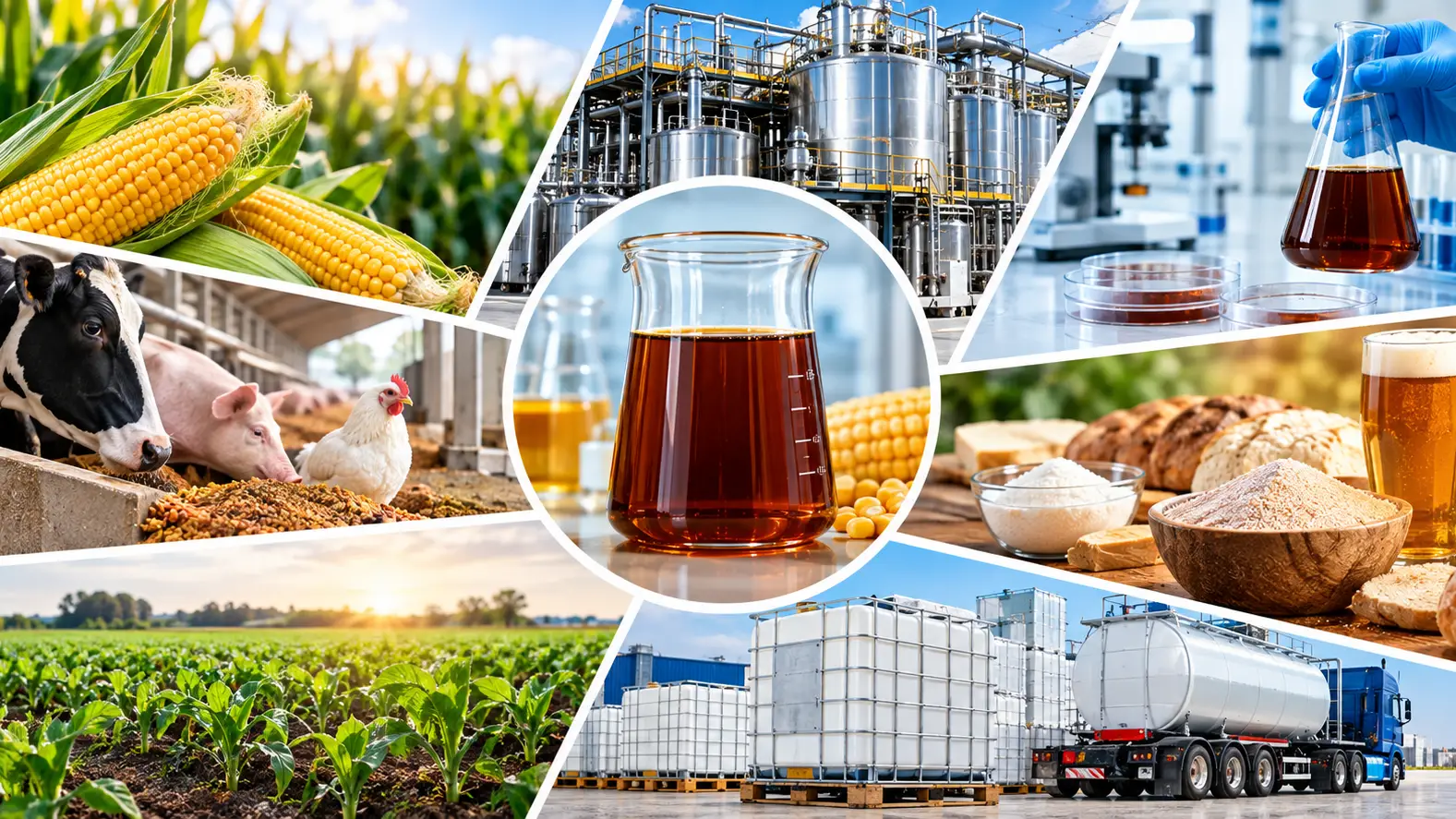
Corn Steep Liquor (CSL) is a nutrient-rich liquid coproduct generated during corn wet milling. During wet milling, corn is steeped to facilitate separation of starch, protein, germ, and other fractions, while nutrients from the grain move into the steep water. The Corn Refiners Association explains that steep water is subsequently recycled into material streams used in animal feed, illustrating why CSL has commercial relevance beyond its original role in starch processing.
What Corn Steep Liquor Is
From an industrial perspective, CSL is valued less as a conventional single-compound chemical and more as a complex nutrient material. Scientific literature describes it as containing nitrogenous compounds, amino acids, vitamins, minerals, sugars, organic acids, and other nutrients. Its composition can vary according to corn processing conditions and producer, making specification and quality consistency important considerations for industrial users.
Why Its Composition Matters
The nutritional profile of Corn Steep Liquor is particularly relevant when it is incorporated into microbial culture media. Nitrogen, amino acids, peptides, minerals, and vitamins can contribute to microbial growth, allowing CSL to function as an economical nutrient component in selected fermentation systems. For buyers, this means that product specifications should be assessed according to the intended process rather than by price alone.
Commercial Role in Supply Chains
The commercial position of CSL is closely connected to the corn wet-milling supply chain. Buyers may approach the material as a fermentation nutrient, feed-related ingredient, or industrial coproduct, while producers and distributors can create additional value by matching CSL specifications with application requirements. This makes Corn Steep Liquor sourcing a specification-driven B2B activity in which origin, concentration, consistency, handling, and intended use all influence purchasing decisions.
Corn Steep Liquor Applications in Fermentation
Fermentation is one of the most established industrial applications for Corn Steep Liquor because microorganisms require nitrogen and other growth factors in addition to their principal carbon source. Research has documented CSL use in fermentation processes involving products such as lactic acid and other microbial metabolites. A recent 2026 study in Biochemical Engineering Journal further examined CSL as a fermentation supplement for Lactobacillus cultures, supporting continued interest in its use within integrated bioprocessing systems.
Nutrient Source for Microbial Fermentation
CSL can provide nitrogenous nutrients and growth-supporting components to microbial cultures. Research on lactic acid fermentation has investigated CSL as an alternative or complementary nutrient source to more expensive media components. Earlier studies reported successful use of CSL in fermentation media, including processes designed to reduce reliance on conventional nutrient sources such as yeast extract.
Applications Across Bioprocessing
The relevance of CSL extends beyond one fermentation product. Scientific literature has associated the material with processes for producing lactic acid, ethanol, amino acids, enzymes, antibiotics, and other biotechnology products. This breadth gives CSL commercial relevance to industrial biotechnology companies that formulate microbial media and seek cost-effective nutrient inputs compatible with their production organisms and process conditions.
Implications for Fermentation Buyers
For fermentation industry buyers, sourcing decisions should consider whether a particular CSL grade is compatible with the organism, medium formulation, downstream process, and quality requirements. Consistency can be especially important because variations in nutrient composition may affect process performance. Procurement teams therefore benefit from evaluating technical specifications, analytical data, batch consistency, packaging or bulk logistics, and supplier capability alongside commercial pricing.
Corn Steep Liquor in Animal Feed and Agricultural Processing
Animal feed represents another important commercial pathway for CSL and related concentrated corn extractives. The material contains organic nitrogen and other nutritional components that can contribute to feed formulations. Industry literature identifies concentrated fermented corn extractives as a feed-related coproduct, while the Corn Refiners Association describes the recycling of nutrients from corn steeping into animal feed materials.
Feed Industry Relevance
In feed applications, the value proposition of Corn Steep Liquor is associated with its nutrient contribution rather than a single active ingredient. Its composition can include protein-derived nitrogen, amino acids, vitamins, minerals, and organic acids. Buyers therefore need to assess the material against the nutritional and regulatory requirements applicable to their particular feed formulation and destination market.
Agricultural Processing Connections
The feed application also demonstrates how CSL fits within a broader circular utilization model for corn processing. Rather than treating nutrient-containing steep streams solely as residual material, wet-milling operations can direct them toward productive downstream uses. This resource-efficiency dimension is increasingly relevant to industrial buyers evaluating agricultural coproducts as functional inputs.
Quality and Compliance Considerations
Feed buyers need to distinguish between general industrial CSL and material suitable for a particular regulated feed application. Specification requirements may cover moisture or solids content, protein or nitrogen contribution, mineral composition, microbiological parameters, contaminants, storage stability, and applicable feed regulations. Consequently, procurement teams should confirm the intended application and destination-market requirements before selecting a supplier or grade.
Market Trends and Emerging Commercial Opportunities
The market outlook for Corn Steep Liquor is closely connected to two established demand areas: microbial fermentation and feed utilization. At the same time, research is increasingly examining ways to extract additional value from CSL before reusing the remaining nutrient stream. A 2026 Biochemical Engineering Journal study investigated cascading valorization and found that selected post-extraction CSL streams could continue supporting Lactobacillus growth, illustrating the potential for more integrated use of industrial coproduct streams.
Growth of Resource-Efficient Bioprocessing
One notable application trend is the development of fermentation processes that use lower-cost agricultural and industrial inputs. Research has repeatedly investigated CSL as a nutrient source for fermentation because its nutrient profile can reduce dependence on more expensive media components. This aligns CSL with broader industrial biotechnology efforts to improve substrate economics and increase the utilization of renewable or recovered resources.
Increasing Interest in Valorization
The concept of valorization is also creating new research opportunities around CSL. Instead of viewing the material only as a coproduct for a single downstream market, researchers are exploring sequential extraction, fermentation, and reuse pathways. The 2026 study on post-extraction CSL is particularly relevant because it demonstrates continued scientific interest in retaining nutritional value through cascading biorefinery processes.
Opportunities for Suppliers and Distributors
For suppliers, these developments create an opportunity to position CSL around application-specific value rather than commodity availability alone. Fermentation companies may require consistent nutrient performance, while feed-related customers may prioritize nutritional specifications and regulatory documentation. Distributors and traders can therefore add value by connecting suitable product specifications with regional buyer requirements, logistics capabilities, and application knowledge.
Buyer Intent and B2B Procurement Considerations
Commercial search intent for Corn Steep Liquor typically extends beyond learning what the material is. Buyers searching for a Corn Steep Liquor supplier may already be evaluating raw materials for fermentation, feed production, biotechnology, or related industrial processes. The procurement objective is usually to identify a technically suitable material, compare suppliers, verify commercial terms, and establish a dependable supply route.
Who Buys Corn Steep Liquor
Typical buyer groups include fermentation manufacturers, biotechnology companies, feed manufacturers, agricultural processors, industrial raw-material distributors, traders, and procurement teams responsible for microbial production inputs. Their requirements can differ substantially depending on whether CSL is being used as a fermentation nutrient or as part of a feed-related formulation. Scientific literature demonstrating CSL use in microbial processes reinforces its relevance to industrial biotechnology procurement.
What Procurement Teams Evaluate
A B2B buyer evaluating Corn Steep Liquor will generally need to consider technical specifications, solids concentration, nutrient profile, batch consistency, storage and handling requirements, available quantities, packaging or bulk delivery, documentation, and regulatory suitability. Application-specific testing can also be important where CSL is incorporated directly into a controlled fermentation process. These factors explain why supplier comparisons should extend beyond quoted unit price.
Why Supplier Comparison Matters
Corn Steep Liquor is a variable biological coproduct rather than a narrowly defined pure chemical compound. Differences in processing conditions and source can influence composition, which makes supplier qualification important for repeat industrial use. A marketplace product page can support the initial sourcing stage by giving buyers access to product information, supplier communication, specifications, and commercial inquiry pathways before formal qualification and purchasing decisions are completed.
Sourcing Corn Steep Liquor Through a B2B Marketplace
A B2B chemical marketplace can function as an entry point between industrial demand and available supply. For Corn Steep Liquor, this is particularly relevant because potential buyers may need to locate suppliers capable of providing the required grade, volume, documentation, and logistics arrangement. A structured marketplace environment can make supplier discovery more efficient while allowing procurement teams to focus subsequent evaluation on technical and commercial suitability.
Matching Product Specifications to Applications
The most effective sourcing process starts with the intended application. A fermentation buyer may prioritize nutrient consistency and compatibility with its culture medium, while a feed manufacturer may place greater emphasis on nutritional composition and regulatory documentation. Clearly communicating the intended use allows suppliers to determine whether their available Corn Steep Liquor specification is appropriate for the application.
Supporting International Procurement
For cross-border procurement, logistics can be as important as product availability. Buyers may need to evaluate minimum order quantities, delivery formats, lead times, storage requirements, shipping conditions, and destination-country compliance. Tradeasia, Chemtradeasia, or Tradechem Marketplace can be positioned as a commercial discovery channel where buyers begin supplier discussions and compare sourcing possibilities without assuming that every listed product is automatically suitable for every application.
Building a Reliable Supply Relationship
Long-term CSL procurement depends on more than securing an initial shipment. Buyers should establish clear specifications, testing requirements, documentation expectations, delivery schedules, and communication procedures with suppliers. For distributors and manufacturers, repeatability of supply can be especially important because changes in raw-material characteristics can require adjustments to production or formulation processes.
Commercial Outlook for Corn Steep Liquor
Corn Steep Liquor occupies a distinctive position within industrial supply chains because its commercial value comes from its nutrient composition and its connection to the corn wet-milling industry. Established uses in fermentation and feed provide a foundation for demand, while current research into biorefinery and cascading valorization indicates that additional applications may emerge as manufacturers seek greater value from agricultural processing streams.
Demand Drivers for Industrial Buyers
The principal commercial drivers are the continuing need for economical fermentation nutrients, the utilization of agricultural coproducts, and demand for functional nutritional inputs in appropriate feed applications. CSL can be particularly relevant where manufacturers need a nutrient-rich material that can complement a primary carbon source in microbial processes. Research on lactic acid fermentation provides documented examples of this role.
Sourcing Opportunities Across the Value Chain
Manufacturers, traders, distributors, and procurement teams can approach CSL from different commercial perspectives, but all benefit from application-specific specifications and reliable supply information. For suppliers, presenting clear technical data and intended-use information can help attract qualified inquiries. For buyers, comparing product specifications, supplier capabilities, commercial terms, and logistics arrangements can help establish a more informed sourcing process.
Conclusion
For B2B chemical and industrial buyers, Corn Steep Liquor should be evaluated as a functional industrial coproduct with established relevance to fermentation and feed-related applications rather than simply as a corn-processing residual. Its value is closely tied to composition, application compatibility, supply consistency, and the requirements of the end-use process. As industrial biotechnology and resource-efficient processing continue to attract attention, CSL remains relevant to companies looking for practical nutrient inputs and opportunities to utilize agricultural coproducts more efficiently.
Leave a Comment