Corn Gluten Meal Supply Chain Intelligence and Global Sourcing Trends
Overview of Corn Gluten Meal in Global Commodity Markets
What Corn Gluten Meal Represents in Agro-Industrial Trade
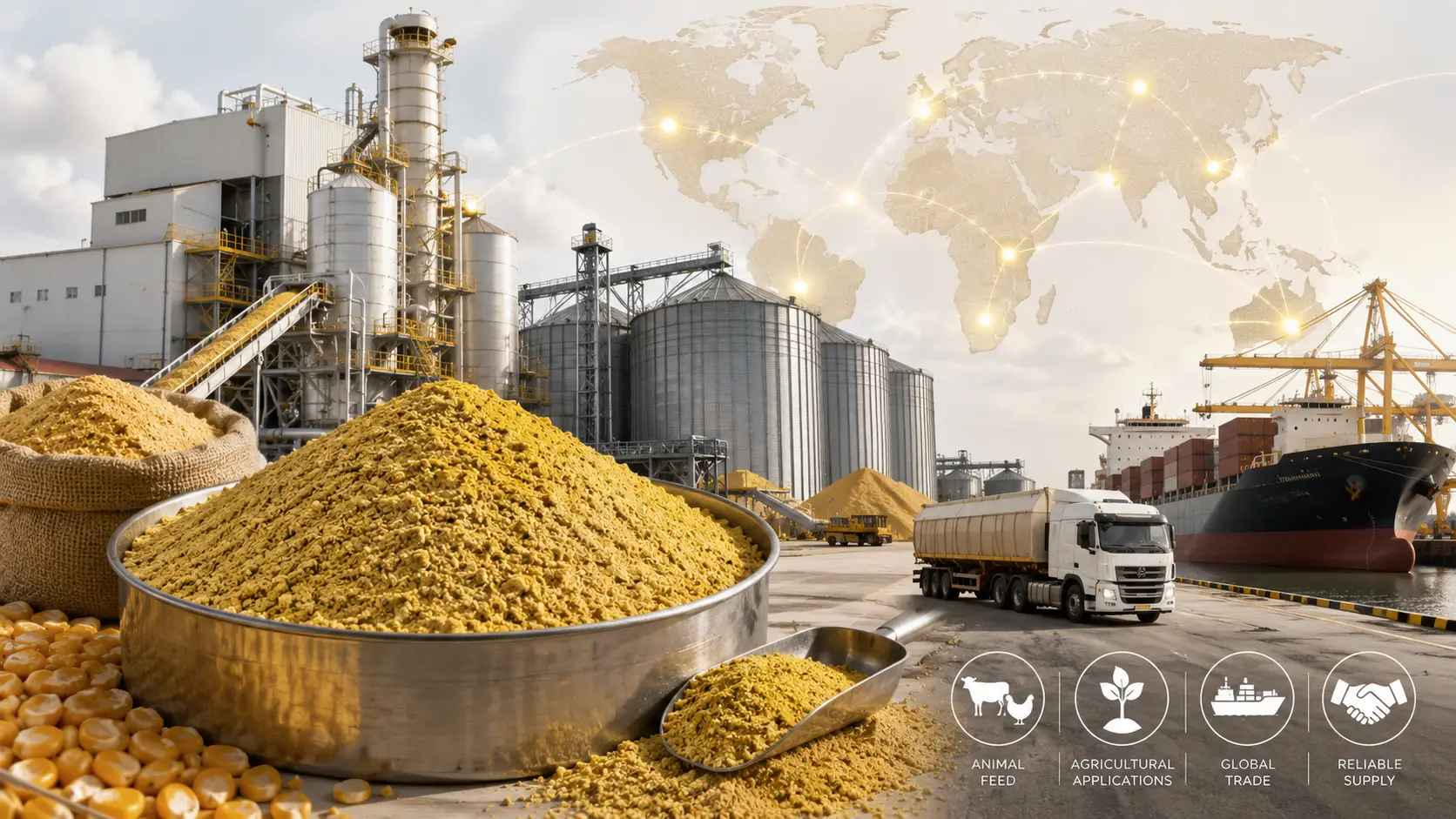
Corn gluten meal is a high-protein by-product derived from corn wet milling, widely used in animal feed and agricultural applications. It plays a critical role in global commodity supply chains due to its nutritional profile and cost efficiency. According to the U.S. Department of Agriculture (USDA), corn co-products remain essential components in livestock feed formulations.
From a trade perspective, corn gluten meal is categorized as a value-added agricultural commodity with strong demand across livestock-intensive economies. Its production is closely tied to corn processing hubs in North America, South America, and parts of Asia. This makes it a globally traded ingredient influenced by corn harvest cycles and milling capacity.
Market participation includes feed manufacturers, distributors, and bulk commodity traders. These stakeholders rely on consistent supply availability and standardized protein content specifications. The product’s industrial relevance continues to expand with increasing demand for protein-rich feed inputs.
Strategic Importance in Feed Supply Chains
Corn gluten meal functions as a substitute or complementary ingredient to soybean meal in feed formulations. Industry data from FAO highlights growing pressure on protein feed alternatives due to livestock expansion and feed cost volatility.
Its role in balancing feed cost structures makes it strategically important in procurement planning. Feed producers often incorporate it into rations for poultry and ruminants based on regional availability and price competitiveness.
As a result, corn gluten meal is not only a commodity but also a supply chain stabilizer in global feed markets. This positioning increases its relevance in long-term sourcing strategies.
Market Position and Trade Classification
Corn gluten meal is classified under feed-grade agricultural derivatives in international trade systems. Its pricing is influenced by corn futures, milling output, and protein demand cycles.
OECD-FAO Agricultural Outlook reports indicate steady growth in demand for feed protein sources driven by livestock production expansion. This reinforces corn gluten meal’s position as a structurally important feed input.
Its trade flow typically follows corn production corridors, with strong export activity from the United States, Brazil, and Argentina. Import-dependent regions include Southeast Asia and the Middle East.
Production Process and Industrial Supply Chain Structure
Corn gluten meal is produced through the corn wet milling process, where corn kernels are separated into starch, fiber, germ, and protein fractions. The protein-rich fraction is then dried to form corn gluten meal.
According to technical documentation from the Renewable Fuels Association (RFA), wet milling is a highly optimized industrial process designed for maximum yield extraction. This ensures consistent protein concentration in the final product.
The efficiency of this process directly impacts global supply availability, as production is tied to starch and ethanol industries. This interconnectedness makes supply chains sensitive to industrial demand fluctuations.
Supply Chain Integration and Co-Product Economics
Corn gluten meal is a co-product of starch, sweeteners, and ethanol industries, meaning its availability depends on broader corn processing demand. This integration creates a multi-output value chain.
Market research from USDA Economic Research Service highlights that co-product pricing is often indirectly influenced by energy markets and biofuel demand. This adds complexity to procurement planning.
Supply chain participants must therefore monitor multiple industries simultaneously to anticipate price shifts and availability constraints.
Logistics and Global Distribution Channels
Distribution of corn gluten meal relies heavily on bulk shipping, containerized freight, and regional storage facilities. Its powdered form allows for efficient transportation across long distances.
Export logistics are typically centered around port-based grain terminals in major producing countries. Importers rely on consistent shipment schedules to maintain feed production continuity.
This logistics structure makes supply chain efficiency a critical factor in competitive pricing and contract negotiation.
Corn Gluten Meal in Animal Feed Applications
Corn gluten meal is widely used in poultry feed due to its high protein and amino acid content. FAO livestock reports highlight its importance in supporting rapid growth cycles in poultry production.
It is also used in cattle and swine feed as a supplemental protein source. Feed formulators adjust inclusion rates based on protein requirements and cost optimization strategies.
This versatility increases its demand across multiple livestock sectors, making it a core ingredient in feed manufacturing.
Nutritional Value and Feed Efficiency
The protein content of corn gluten meal makes it an efficient ingredient for improving feed conversion ratios. Industry studies published in animal nutrition journals emphasize its digestibility advantages.
It also contains carotenoids that can enhance pigmentation in poultry products, adding functional value beyond protein supply.
This dual functionality strengthens its adoption in commercial feed operations.
Feed Industry Demand Drivers
Global livestock expansion is the primary driver of corn gluten meal demand. OECD data indicates increasing meat and poultry consumption in emerging economies.
Feed manufacturers prioritize ingredients that balance cost and nutritional performance, positioning corn gluten meal as a competitive alternative.
This trend reinforces its role in long-term feed formulation strategies.
Agricultural Uses and Fertilizer Market Demand
Corn gluten meal is also used as a natural nitrogen source in agriculture. Research from USDA Agricultural Research Service highlights its effectiveness in soil conditioning and weed suppression.
Its organic nature makes it suitable for sustainable farming practices and eco-friendly agricultural inputs.
This expands its market beyond feed into the agricultural input sector.
Soil Health and Nitrogen Release
When applied to soil, corn gluten meal releases nitrogen gradually, improving soil fertility over time. Agricultural extension studies show its effectiveness in turf management and crop enhancement.
Its slow-release properties make it valuable for controlled nutrient delivery systems.
This feature is increasingly important in precision agriculture applications.
Growth in Sustainable Agriculture Markets
Sustainable farming trends are driving demand for bio-based fertilizers. Market research from Grand View Research highlights rising adoption of organic soil amendments globally.
Corn gluten meal benefits from this shift toward environmentally friendly agricultural inputs.
This creates additional demand channels beyond traditional feed markets.
Global Trade Trends and Market Outlook
Global corn gluten meal trade is closely tied to corn production and processing capacity. USDA trade reports show strong export dependency from major corn-producing nations.
Import markets are driven by livestock density and feed manufacturing capacity.
This creates predictable trade corridors between producing and consuming regions.
Price Volatility and Market Sensitivity
Prices are influenced by corn futures, energy costs, and feed demand cycles. OECD-FAO reports highlight volatility risks in agricultural commodity markets.
This makes hedging and long-term contracts important in procurement strategies.
Buyers often negotiate based on protein content and delivery consistency.
Long-Term Demand Outlook
The global outlook remains positive due to increasing protein consumption and livestock expansion. Market analysts forecast steady growth in feed ingredient demand over the next decade.
Corn gluten meal is expected to maintain its role as a cost-effective protein source.
This reinforces its strategic importance in global feed supply chains.
Procurement Strategy and B2B Sourcing Considerations
Procurement teams evaluate protein content, moisture levels, and consistency when sourcing corn gluten meal. Industry standards vary depending on feed application requirements.
According to USDA feed grading frameworks, consistency in nutrient composition is critical for livestock performance.
Reliable suppliers must demonstrate batch stability and quality assurance systems.
Contracting and Supply Chain Reliability
Long-term contracts are commonly used to secure stable supply. Feed manufacturers prioritize suppliers with predictable logistics and inventory availability.
Supply chain disruptions in corn production directly impact procurement planning.
Therefore, diversification of suppliers is a key risk mitigation strategy.
Role of B2B Marketplaces in Sourcing
Digital B2B marketplaces simplify supplier discovery and price benchmarking. Platforms like Tradeasia enable buyers to compare sourcing options globally.
This improves transparency in pricing and reduces procurement lead times.
As a result, marketplaces play an increasingly important role in modern commodity sourcing.
Sources
https://www.usda.gov
https://www.fao.org
https://www.grandviewresearch.com
Leave a Comment