Understanding Corn Gluten Meal and Its Role in Industrial Supply Chains
What Is Corn Gluten Meal?
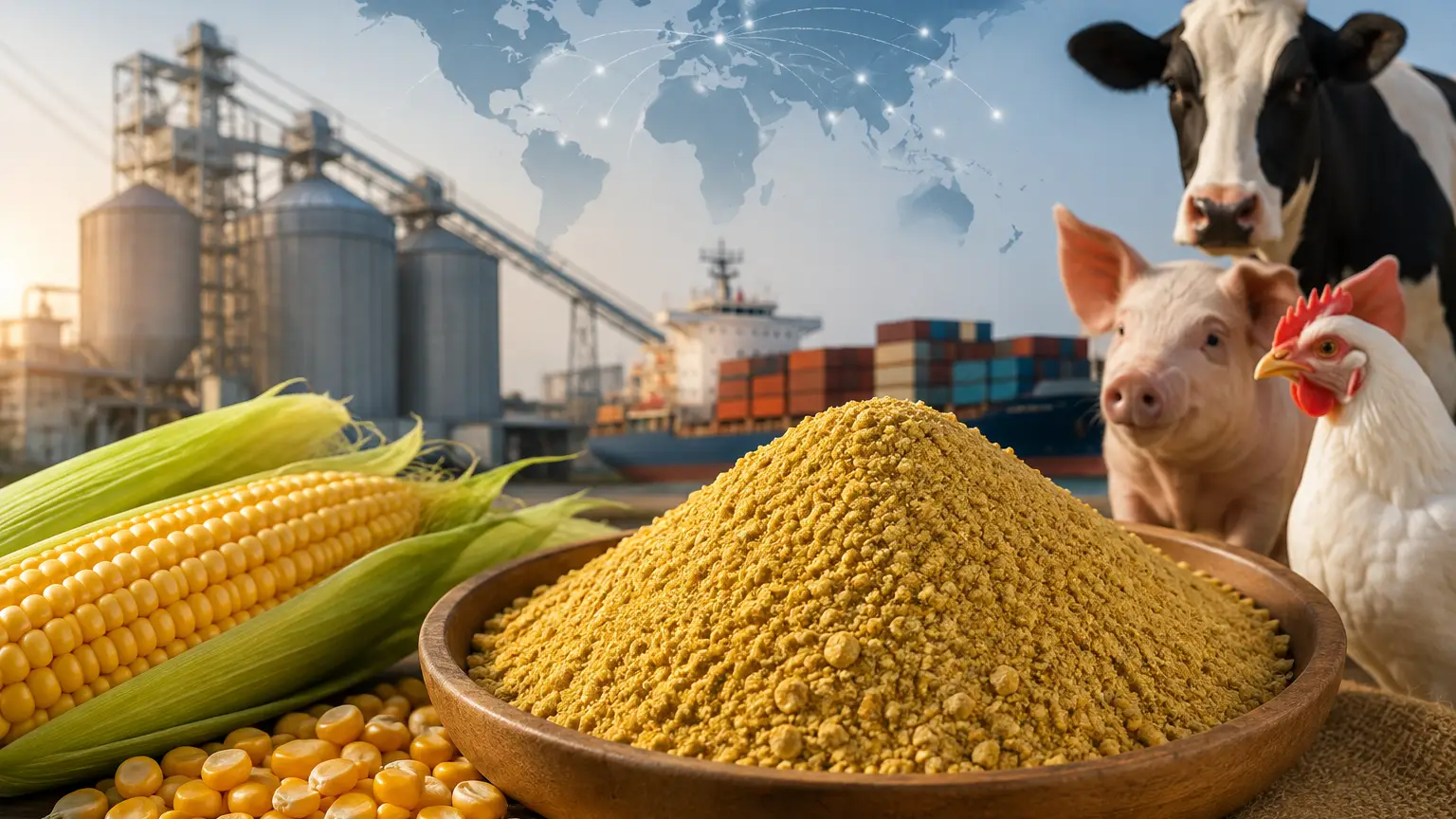
Corn Gluten Meal is a protein-rich co-product obtained during corn wet milling, where starch and other corn components are separated for industrial processing. It is recognized as a valuable feed ingredient because of its concentrated protein content, amino acid profile, and nutritional contribution to animal diets. According to technical information from the Corn Refiners Association, corn wet milling produces several important coproducts that support food, feed, and industrial markets.
For industrial buyers, Corn Gluten Meal represents more than a commodity ingredient; it is part of a broader agricultural supply chain connecting corn processors, ingredient distributors, feed manufacturers, and livestock producers. The product is commonly traded according to specifications such as protein content, moisture level, packaging format, and shipment requirements.
Corn Gluten Meal with approximately 60% protein is particularly relevant for feed manufacturers seeking concentrated plant-based protein sources. Buyers evaluating supply options often compare nutritional specifications, production consistency, supplier reliability, and logistics capabilities before establishing procurement relationships.
Tradeasia supports industrial sourcing requirements by connecting buyers with product information and supply solutions. Companies looking for specifications, availability, and commercial details can review the Corn Gluten Meal product page for additional sourcing information.
Why Corn Gluten Meal Matters in Feed Ingredient Markets
The importance of Corn Gluten Meal comes from its role as a functional ingredient in animal nutrition systems. Feed manufacturers use protein-rich ingredients to formulate balanced diets for poultry, livestock, and other agricultural animals while managing nutritional targets and production costs.
According to the Food and Agriculture Organization of the United Nations, livestock production depends heavily on efficient feed systems because feed represents one of the largest cost components in animal production. This creates continuous demand for reliable feed ingredient supply chains.
As global agriculture becomes increasingly focused on efficiency and resource utilization, corn processing byproducts such as Corn Gluten Meal provide commercial value by transforming agricultural outputs into useful nutritional materials. This supports circular approaches within food and agriculture industries.
For distributors and procurement teams, understanding the role of Corn Gluten Meal within the feed supply chain helps improve purchasing decisions. Reliable sourcing strategies allow businesses to maintain consistent ingredient availability while responding to changing market requirements.
Key Industrial Applications Driving Corn Gluten Meal Demand
Corn Gluten Meal in Animal Feed Manufacturing
The primary commercial application of Corn Gluten Meal is animal nutrition, where it is used as a high-protein feed ingredient. Poultry feed manufacturers, livestock nutrition companies, and agricultural producers commonly evaluate Corn Gluten Meal as part of formulated feed programs because of its protein concentration and nutritional value.
According to research published by agricultural institutions such as Iowa State University, corn-derived feed products are important components within livestock feeding systems because corn processing creates multiple nutritional ingredients used by the agricultural sector.
Feed manufacturers typically assess Corn Gluten Meal based on protein percentage, digestibility, storage stability, and compatibility with other feed components. These factors influence formulation decisions and determine whether the ingredient meets specific production objectives.
For global buyers, sourcing Corn Gluten Meal requires understanding both technical performance and supply reliability. Manufacturers often prefer suppliers that can provide consistent product quality, documentation support, and dependable shipment schedules.
Agricultural and Specialty Applications of Corn Gluten Meal
Beyond traditional feed manufacturing, Corn Gluten Meal has also attracted attention for agricultural applications, including use as an organic nitrogen source in certain farming practices. Its natural composition allows it to serve different roles depending on regional agricultural requirements and regulatory considerations.
Agricultural research organizations have studied corn-based protein materials for their potential contribution to soil management and crop production systems. Information from institutions such as University of Minnesota Extension highlights research interest in corn gluten meal applications beyond conventional feed markets.
The diversity of applications creates additional commercial opportunities for suppliers and distributors. Companies serving agriculture, feed production, and specialty markets may evaluate Corn Gluten Meal as a multi-purpose ingredient with different end-user segments.
For B2B marketplaces, highlighting application diversity helps buyers identify suitable sourcing opportunities. Understanding end-use requirements allows suppliers to position Corn Gluten Meal effectively across different industrial sectors.
Market Trends and Commercial Opportunities for Corn Gluten Meal Buyers
Growing Demand for Alternative Protein Feed Ingredients
The global animal feed industry continues to seek dependable protein sources as livestock production expands and manufacturers optimize feed formulations. Corn Gluten Meal provides an alternative plant-based protein ingredient that supports diversification within feed supply chains.
Market analysis from organizations such as the International Feed Industry Federation indicates that feed production remains closely connected with global trends in livestock demand, ingredient availability, and agricultural commodity markets.
Buyers increasingly evaluate suppliers based on factors beyond price, including traceability, production capability, technical documentation, and supply continuity. These considerations are becoming important as feed manufacturers manage supply risks across international markets.
For suppliers and distributors, this creates opportunities to develop stronger commercial relationships with feed producers and agricultural companies. A transparent supply chain approach can improve buyer confidence and support long-term purchasing agreements.
Regional Supply and Trade Opportunities
Corn Gluten Meal trading depends on regional corn processing capacity, agricultural production patterns, and international logistics networks. Countries with established corn processing industries can become important supply sources for global feed ingredient markets.
According to trade and agricultural data published by organizations such as the United States Department of Agriculture, corn remains one of the world’s major agricultural commodities, supporting extensive food, feed, and industrial value chains.
For international buyers, regional sourcing strategies can improve supply flexibility by creating access to multiple supplier markets. Importers and distributors often compare supplier locations based on availability, shipping efficiency, and commercial terms.
Trade platforms help simplify connections between manufacturers, exporters, and buyers by providing access to product information and supplier networks. This enables companies to identify suitable Corn Gluten Meal supply opportunities based on their operational needs.
Buyer Intent: Who Purchases Corn Gluten Meal and Why?
Main Buyer Groups in the Supply Chain
Corn Gluten Meal attracts demand from several industrial buyer groups involved in agriculture and feed production. The primary buyers include animal feed manufacturers, livestock nutrition companies, agricultural distributors, commodity traders, and importers seeking reliable sources of protein-rich feed ingredients.
Feed producers typically purchase Corn Gluten Meal in bulk quantities because it is incorporated into commercial feed formulations. These companies require stable supply arrangements to support continuous manufacturing operations and meet customer demand across poultry, livestock, and agricultural markets.
Distributors and traders also play an important role by connecting producers with regional buyers. They evaluate suppliers based on export capability, documentation, packaging options, production consistency, and the ability to support different market requirements.
According to industry information from the International Feed Industry Federation, global feed production depends on coordinated supply networks involving ingredient producers, manufacturers, and distribution channels. This reinforces the importance of dependable sourcing partnerships for feed ingredient buyers.
Procurement Factors Considered by Industrial Buyers
When sourcing Corn Gluten Meal, procurement teams generally evaluate multiple commercial and technical factors before selecting suppliers. Product specifications, protein content, quality consistency, certifications, logistics capability, and supplier responsiveness are important considerations during purchasing decisions.
Technical documentation is especially important for industrial buyers because feed manufacturers must ensure that purchased ingredients meet internal quality standards and customer requirements. Reliable suppliers are expected to provide accurate product information and maintain consistent supply performance.
Cost competitiveness remains a consideration, but many buyers increasingly focus on total supply reliability rather than only purchase price. Delays, inconsistent specifications, or limited supplier communication can create operational challenges for manufacturers.
A professional B2B marketplace approach helps buyers compare available supply options more efficiently. Platforms such as Tradeasia / Chemtradeasia support sourcing activities by providing structured product information and connecting industrial buyers with potential suppliers.
How to Source Corn Gluten Meal from Reliable Suppliers
Evaluating Quality, Specifications, and Supplier Capability
Selecting a suitable Corn Gluten Meal supplier requires buyers to evaluate both product quality and supplier capability. Industrial purchasers typically review protein concentration, moisture specifications, packaging requirements, production capacity, and export experience before moving forward with procurement.
For buyers requiring Corn Gluten Meal with approximately 60% minimum protein, consistent product specifications are essential because feed manufacturers depend on predictable nutritional performance. Supplier transparency regarding technical details helps reduce risks during commercial evaluation.
Quality management systems and supply chain reliability are also important indicators of supplier capability. Companies with established production processes and export experience are often better positioned to support long-term business relationships.
Technical guidance from organizations such as the National Corn Growers Association highlights the importance of corn-based value chains in agriculture, where processing efficiency creates commercially valuable products for different industries.
Using Digital B2B Marketplaces for Feed Ingredient Sourcing
Digital marketplaces are increasingly becoming valuable tools for industrial procurement teams searching for agricultural ingredients. Online platforms allow buyers to review product details, compare supply options, and establish communication with suppliers across international markets.
For Corn Gluten Meal buyers, digital sourcing channels can simplify supplier discovery by providing access to structured information about applications, specifications, and availability. This is particularly useful for companies entering new sourcing regions or expanding supplier networks.
Tradeasia / Chemtradeasia positions marketplace solutions around connecting global buyers with industrial suppliers. Through product-focused information pages, buyers can better understand sourcing opportunities and evaluate whether a product matches their operational requirements.
Companies interested in Corn Gluten Meal supply options can explore the Corn Gluten Meal sourcing page to review product information relevant to industrial procurement decisions.
Commercial Outlook for Corn Gluten Meal Supply and Distribution
Future Opportunities Across Global Feed Markets
The commercial outlook for Corn Gluten Meal remains connected to long-term trends in animal nutrition, agricultural productivity, and demand for efficient feed ingredients. As livestock industries continue developing, manufacturers require dependable sources of protein and nutritional components.
Market reports from research organizations such as MarketsandMarkets indicate continued interest in feed ingredient markets due to increasing livestock production, changing consumer food demand, and evolving agricultural practices.
Suppliers that can provide consistent quality, competitive logistics, and transparent communication are better positioned to serve international buyers. The ability to support different regions and purchasing requirements can create stronger commercial opportunities.
For traders, distributors, and manufacturers, Corn Gluten Meal represents a product category where supply chain expertise is highly valuable. Understanding market demand and buyer expectations allows companies to build more effective sourcing strategies.
Building Reliable Supply Partnerships
Long-term success in Corn Gluten Meal trading depends on developing reliable relationships between producers, suppliers, distributors, and end users. Buyers increasingly prefer supply partners that understand technical requirements and provide consistent commercial support.
Effective supply partnerships involve more than product transactions. They include communication, documentation, logistics coordination, and the ability to respond to changing market conditions.
For suppliers, participating in global B2B marketplaces can improve visibility among qualified industrial buyers. For buyers, marketplace platforms provide a more efficient pathway to discover potential supply partners.
Tradeasia / Chemtradeasia supports industrial sourcing by helping businesses identify relevant product information and connect with supply opportunities. A structured marketplace approach can help companies improve procurement efficiency while expanding international supplier networks.
Conclusion: Supporting Efficient Corn Gluten Meal Procurement
The Role of Strategic Sourcing
Corn Gluten Meal continues to hold commercial importance as a protein-rich ingredient supporting global animal feed supply chains. Its applications in livestock nutrition and agricultural markets create ongoing demand among manufacturers, distributors, and industrial buyers.
Successful procurement depends on understanding product specifications, evaluating supplier reliability, and selecting sourcing partners capable of maintaining consistent supply. Buyers that apply a strategic sourcing approach can better manage quality expectations and operational requirements.
The increasing importance of resilient supply chains makes supplier transparency and marketplace accessibility valuable factors in international trade. Companies need reliable channels that provide accurate product information and support informed purchasing decisions.
For organizations seeking Corn Gluten Meal supply opportunities, the Corn Gluten Meal product page provides a starting point for evaluating product details and sourcing requirements.
Connecting Buyers with Supply Solutions
The role of B2B marketplaces continues to expand as industries search for more efficient ways to connect suppliers and buyers. Platforms supporting agricultural and industrial ingredients help reduce sourcing complexity by improving access to relevant product information.
Corn Gluten Meal buyers are typically looking for dependable supply, clear specifications, and commercial partners who understand their industry needs. A marketplace environment can support these objectives by improving supplier visibility and communication.
For manufacturers, distributors, and procurement teams, selecting the right supply channel is an important part of maintaining competitive operations. Reliable sourcing supports consistent production, better planning, and stronger business relationships.
Tradeasia / Chemtradeasia provides a marketplace-based approach for industrial sourcing, helping businesses explore ingredient supply opportunities and connect with relevant suppliers. Through informed procurement strategies, companies can better respond to evolving feed ingredient market requirements.
Sources
Leave a Comment